 Best Trick or Treating Neighborhoods Near Me: Park Slope
Neighborhood Guides
Best Trick or Treating Neighborhoods Near Me: West Village
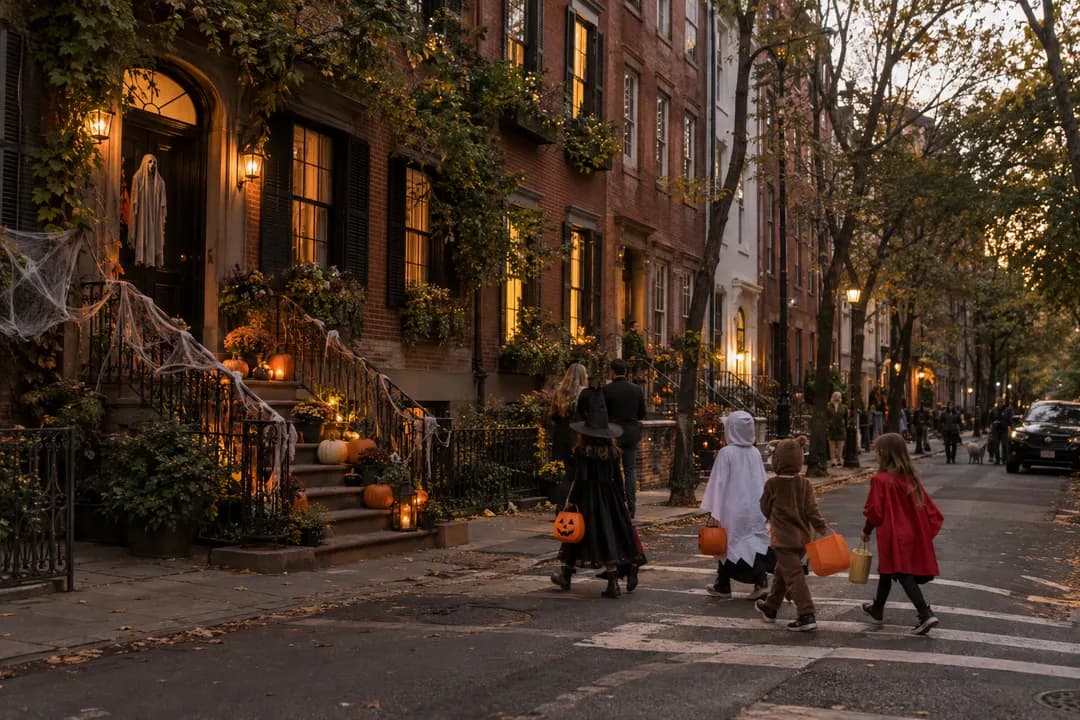
A West Village Halloween walk through Grove, Bedford, and Christopher Streets, with timing, stoop etiquette, parent coffee stops, and practical safety notes.
When the search is best trick or treating neighborhoods near me and the answer needs to work for a Manhattan family, the West Village offers a memorable but detailed route. Focus on Grove Street, Bedford Street, and the quieter residential stretches near Christopher Street rather than trying to cover every famous corner. The neighborhood's narrow lanes, historic row houses, and active restaurants make the walk atmospheric, but adults need a clear plan for crossings and for keeping small groups together.
A practical start is the pocket around Grove and Bedford Streets, where the historic houses create a recognizable loop. Begin before sunset, then move west or north one block at a time according to which stoops are lit and welcoming. The West Village is compact, but its streets do not run in a simple grid. Put one adult at the front and one at the back, and use a major avenue as the regrouping point if the group stretches out.
The West Village story is written in its irregular streets and old houses. A short walk can move from a narrow lane with brick facades to a busier restaurant block, then back into a quiet residential passage. That contrast makes the neighborhood exciting for older children, but it also means costumes and candy bags should stay controlled. Do not let children run ahead around corners, and keep oversized props close to the body when the sidewalk narrows.
The best time for young children is roughly 4:30 to 5:45 p.m. on Saturday, October 31, 2026. The light makes the uneven paving and curb edges easier to read, and the first wave of families tends to be less dense. School-age groups may prefer 5:30 to 7:00, when more homes are active, but the residential lanes become slower as dinner traffic builds. Any 2026 street closure or organized Halloween activity should be marked 2026 dates TBA until officially posted.
The rule at a West Village stoop is to wait for a clear invitation. Some homes will place a bowl outside; others will open the door only when a group is visible. Let one child say trick or treat, keep the rest behind the threshold, and move aside immediately after the exchange. Never sit on a stoop, touch decorative objects, or photograph a doorway without permission. The streets are residential first, even when Halloween makes them feel theatrical.
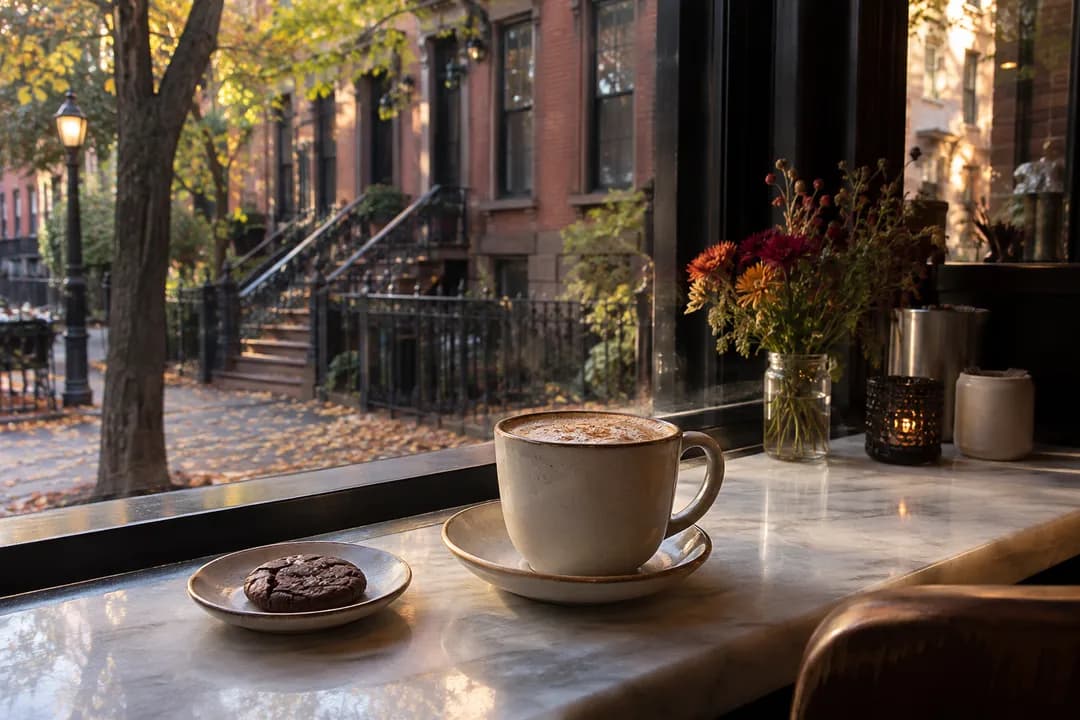
For a parent coffee or hot drink, use a cafe along the edge of the route rather than carrying a full cup through the narrowest blocks. A latte is generally about $5 to $6, hot chocolate around $4 to $5, and tea about $4 before tax. Ask for a spill-resistant lid and take the first sip before returning to the sidewalks. A warm drink is useful in late October, but it should support the route rather than become another object children have to avoid.
The along-the-way must-stops are the corners and doorways that make the West Village feel distinct: a pumpkin-lined stoop on Grove, a brick facade on Bedford, or a small garden gate near Christopher Street. Treat these as observation points, not guaranteed candy stations. Children can pause for a quick look while adults check the next crossing. If a block is too crowded, turn onto a parallel lane and keep moving. The best route is the one where everyone can still hear the adult's instructions.
Washington Square Park can serve as a nearby reset, but it is better as a before-or-after landmark than as the center of door-to-door collecting. Use the park edge to remove a jacket, adjust a mask, or sort who is walking with whom. Keep children away from curb edges while adults reorganize. If the group is tired, finish early and use the park as a calm exit rather than adding another residential loop simply to fill time.
The neighborhood's long history of artists, small businesses, and preserved residential architecture gives Halloween a particular texture. A front door may sit beside a tiny garden, a basement window, or a cafe that has been part of the block for years. That mix makes the route feel like a walk through a living village, not a themed attraction. It also creates a responsibility to leave doorways and restaurant entrances usable for residents, workers, and diners.
For a compact itinerary, begin at Grove Street, move toward Bedford Street, then angle to Christopher Street for a warm drink and a final short residential pass. Families arriving by subway should choose a station edge that avoids the busiest crowd before entering the side streets. If the group includes a wheelchair or a wide stroller, scout the route in daylight and stay closer to the avenues, where sidewalk widths and crossings are easier to manage.
West Village traffic requires more attention than a suburban cul-de-sac. Bicycles, taxis, delivery vehicles, and pedestrians can appear from unexpected directions, especially near Christopher Street. Cross only at corners, keep reflective details visible, and avoid dark capes that drag near wheels. A flashlight is useful even in a bright costume. Adults should keep candy bags low and closed while crossing so children are not distracted by spills or exchanges at the curb.
Practical notes: plan a restroom stop before the route, carry tissues and a small water bottle, and choose face coverings that allow peripheral vision. A parent pair should budget roughly $10 to $15 for two hot drinks and perhaps a cookie or pastry. Do not assume a cafe will welcome a large costumed group without an order; send one adult inside first, keep the doorway clear, and ask where the group can stand while drinks are prepared.
There is no reason to promise a 2026 West Village road closure before one is officially announced. Mark any organized event, merchant giveaway, or temporary traffic plan as 2026 dates TBA until the city or organizer publishes details for October 31. The dependable plan is a self-guided residential walk. That approach also lets families leave a crowded lane, skip a dark block, or stop when a younger child has had enough without feeling they missed a ticketed event.
The West Village is best for families who value atmosphere and a flexible walking route. It can work beautifully for older children who understand street rules and enjoy architecture, costumes, and small neighborhood details. It is less forgiving for a very large group with several strollers, because narrow sidewalks and irregular corners magnify every delay. Keep the party small if possible, choose one lead adult, and agree on a meeting point before the first doorbell.
End the evening with a count at the avenue meeting point, then head home before candy fatigue turns into street fatigue. Put fragile props away, check that each child has a visible adult, and save the sorting of candy for a table indoors. A West Village Halloween walk works when it stays observant and considerate: a few historic streets, a handful of welcoming stoops, one $5-ish warm drink, and enough time to enjoy the neighborhood without treating private homes like a stage.
Ask Karpo for more information.
Keep reading
- Best Trick or Treating Neighborhoods Near Me: Park Slope
 Best Trick or Treating Neighborhoods Near Me: Carroll Gardens
 Vintage Shopping Near Me: A Williamsburg Sunday Route That Works