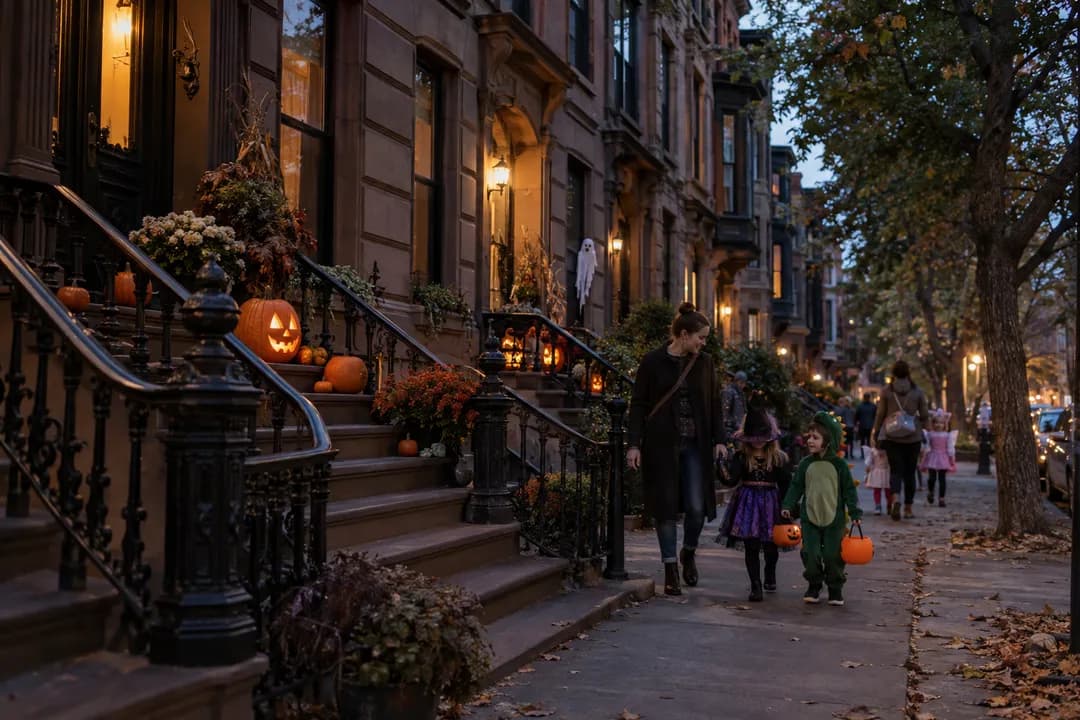
 Best Trick or Treating Neighborhoods Near Me: Carroll Gardens
Neighborhood Guides
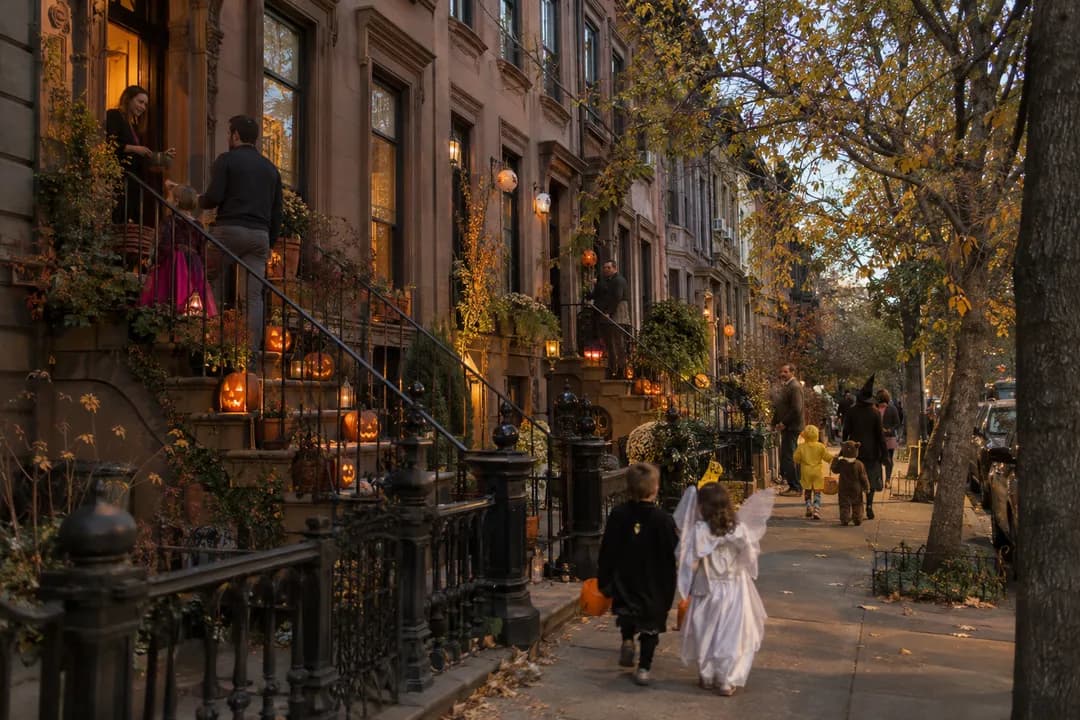
Best Trick or Treating Neighborhoods Near Me: Park Slope
A practical Halloween walk through Park Slope's brownstone blocks, with the best stoops, timing, warm drinks, and family-friendly route planning.
If you are searching for the best trick or treating neighborhoods near me in New York, Park Slope is the kind of place where the route matters as much as the candy. Start around Seventh Avenue and 3rd Street, then work west toward the brownstone blocks between 5th and 8th Avenue. The sidewalks are lively without feeling like a single giant street festival, and the stoops give children a steady rhythm of doorbells, pumpkins, and neighbors who know how to keep the line moving.
The most useful starting point is the Park Slope grid south of Prospect Park, where blocks such as 4th, 5th, and 6th Street have closely spaced row houses and enough lighting to make costumes visible. A good first pass runs from 7th Avenue toward 8th Avenue, then turns back one street over instead of sending children across the same crowded corner twice. In 2026, any official Open Street or block-specific Halloween closure should be treated as 2026 dates TBA until the city or the local block association posts it.
Park Slope's Halloween character comes from the architecture. Many homes have shallow stoops, iron railings, and small front gardens, so children can approach one household at a time rather than crowding a deep porch. The brownstones on 8th Street and the side streets near Prospect Park often make a particularly good visual stretch, but decorations change every year. Look for a lit pumpkin or open front gate as the clearest sign that a household is participating, and skip dark stoops without making a second attempt.
Aim to arrive between 4:30 and 5:00 p.m. for younger children. That window gives families enough daylight to see curb cuts, parked cars, and costume hems before the busiest wave begins. Older children can start closer to 5:30, but the popular blocks become slower once strollers, wagons, and larger groups converge. Halloween falls on Saturday, October 31, 2026, so the afternoon will likely have a long family runway before the neighborhood shifts into the louder evening crowd.
The practical rule on a Park Slope stoop is simple: let the smallest child in the group ring first, keep the landing clear, and move to the sidewalk after candy is handed over. Children should not climb railings, open gates, or reach into a bowl before an adult points them forward. If a house has a sign asking for one piece or indicating an allergy-aware bowl, follow it exactly. The best routes feel generous because everyone keeps the door area calm.
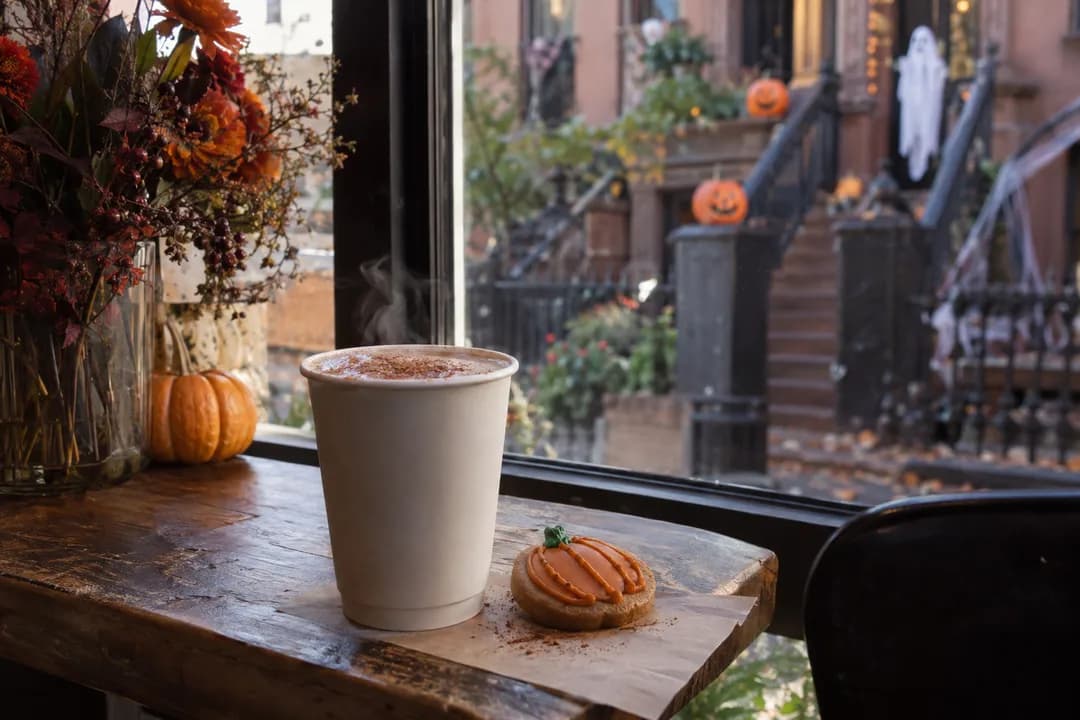
For a warm drink, plan a pause along 7th Avenue rather than waiting until everyone is tired. A neighborhood coffee shop latte is usually about $5 to $6, while hot chocolate tends to land around $4 to $5 before tax. Ask for a lid and avoid carrying a full cup up a crowded stoop. Parents often do better with one shared hot chocolate for the first break, then water for children as the candy bags get heavier.
Along the route, the must-stop moments are the blocks with the most distinctive front steps, not a single official attraction. Look for a house with a paper-bat canopy, a row of small pumpkins on every stair, or a porch that has arranged candy in separate bowls for younger children. These details give kids something to notice between stops and make the walk feel like a neighborhood visit rather than a speed contest. Do not assume a decorated home is handing out candy; wait for an invitation.
Prospect Park is the natural breathing space. Use the park edge for a short reset before crossing into another block, especially if a child needs to adjust a mask, remove a cape, or check a shoe. Stay on well-lit paths and do not let a costume sword, wand, or oversized prop swing into passersby. The park is useful as a landmark, but the actual door-to-door route should stay on residential streets where participating households are visible.
The neighborhood's story is tied to its long brownstone blocks and unusually strong community life. Park Slope has been shaped by row-house preservation, families who use the sidewalks daily, and local businesses that make 7th and 5th Avenue feel like neighborhood spines. That history explains why Halloween here often feels organized without looking corporate. You are moving through a residential district where the front step is part of the social geography, so basic courtesy matters as much as the costume.
If the first route becomes crowded, move east toward 5th Avenue for a different pace. The commercial avenue offers restaurants, bakeries, and larger sidewalks, while the side streets supply the actual doorbell stops. A short loop can begin at 7th Avenue, run south to 3rd Street, turn east to 5th Avenue, and finish near 1st Street. Keep the loop flexible: the goal is to find several welcoming blocks, not to complete every street on a map.
Parking is a poor strategy on October 31. Street space is tight, children step off curbs unpredictably, and a car parked several blocks away can turn a simple candy run into a long return walk. The subway is generally the easier choice, with several stations serving the 7th Avenue and Atlantic Avenue edges, but check weekend service before leaving. For strollers, choose the wider avenue approach and use the brownstone side streets once the group is ready.
Practical notes: bring a small flashlight even if the route begins in daylight, use reflective tape on dark costumes, and pack a backup tote because thin plastic bags tear quickly. Avoid masks that block peripheral vision, especially near driveways. Many households will not have a public restroom, so use a cafe or restaurant before beginning and ask staff rather than assuming. A $5 to $6 hot drink is a reasonable parent budget, but bring a card and a small backup payment method.
There is no single guaranteed 2026 Park Slope street closure to rely on yet. Treat event listings, block-party announcements, and temporary traffic controls as 2026 dates TBA until they are posted by the relevant city agency or neighborhood organizer. That does not make the neighborhood a bad choice; it simply means a normal residential route is the dependable plan. Build around open sidewalks, visible homes, and a meeting point near 7th Avenue in case the group separates.
Park Slope works best for families who want a substantial but manageable evening. Younger children can collect a satisfying amount of candy in an hour, while older kids can extend the walk toward Prospect Park or 5th Avenue. It is less ideal for anyone seeking one huge closed-off festival zone, because the experience is distributed across blocks. The reward is a more personal Halloween: brownstone stoops, neighborhood hellos, warm drinks, and enough flexibility to stop before the bags become too heavy.
Before leaving, set three rules: stay within sight of the adult, cross only at corners, and stop eating candy until the group has returned to its meeting point. Pick a clear regrouping location near a major avenue and write a caregiver's phone number inside each child's pocket. Then let the evening unfold at Park Slope speed. The best trick or treating here comes from choosing a few beautiful blocks, reading the signals at each stoop, and leaving room for the neighborhood to feel like itself.
Ask Karpo for more information.
Keep reading
- Best Trick or Treating Neighborhoods Near Me: Carroll Gardens
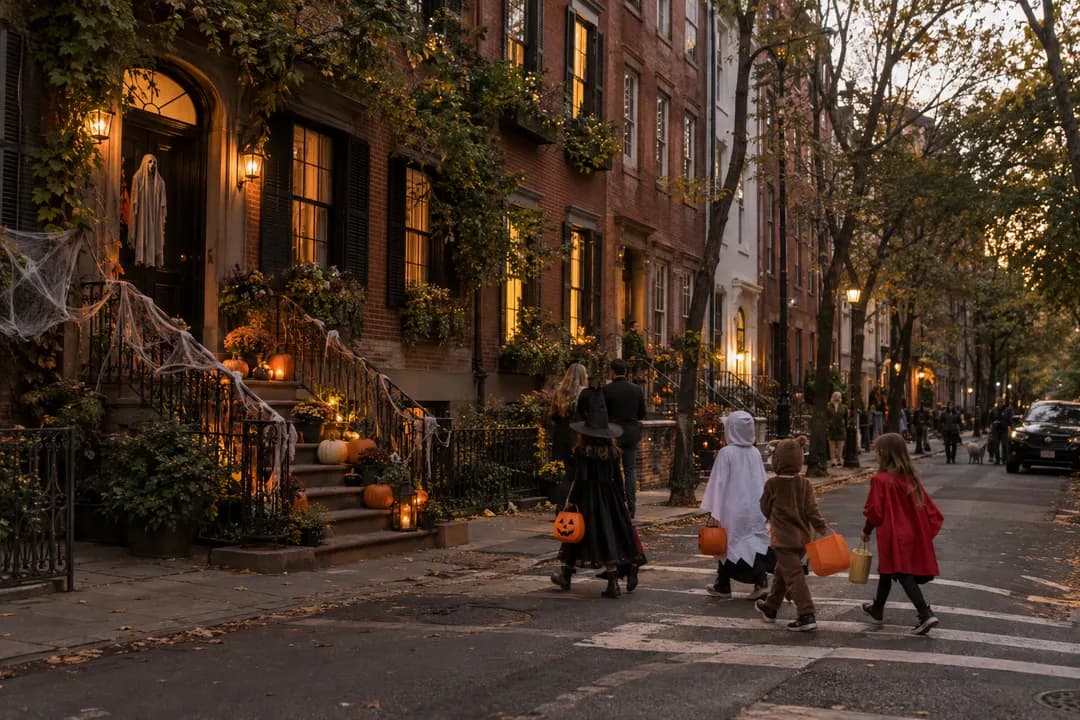 Best Trick or Treating Neighborhoods Near Me: West Village
 Vintage Shopping Near Me: A Williamsburg Sunday Route That Works