 Inwood Winter Greenmarket Picker for Hikers on Cold Mornings
Weekend Plans
NYC Thanksgiving Outing Planner for 4 Alcohol-Free Friends
A good Friendsgiving does not need a bar: compare a meal, a shared activity, and a neighborhood stroll that keep everyone included.
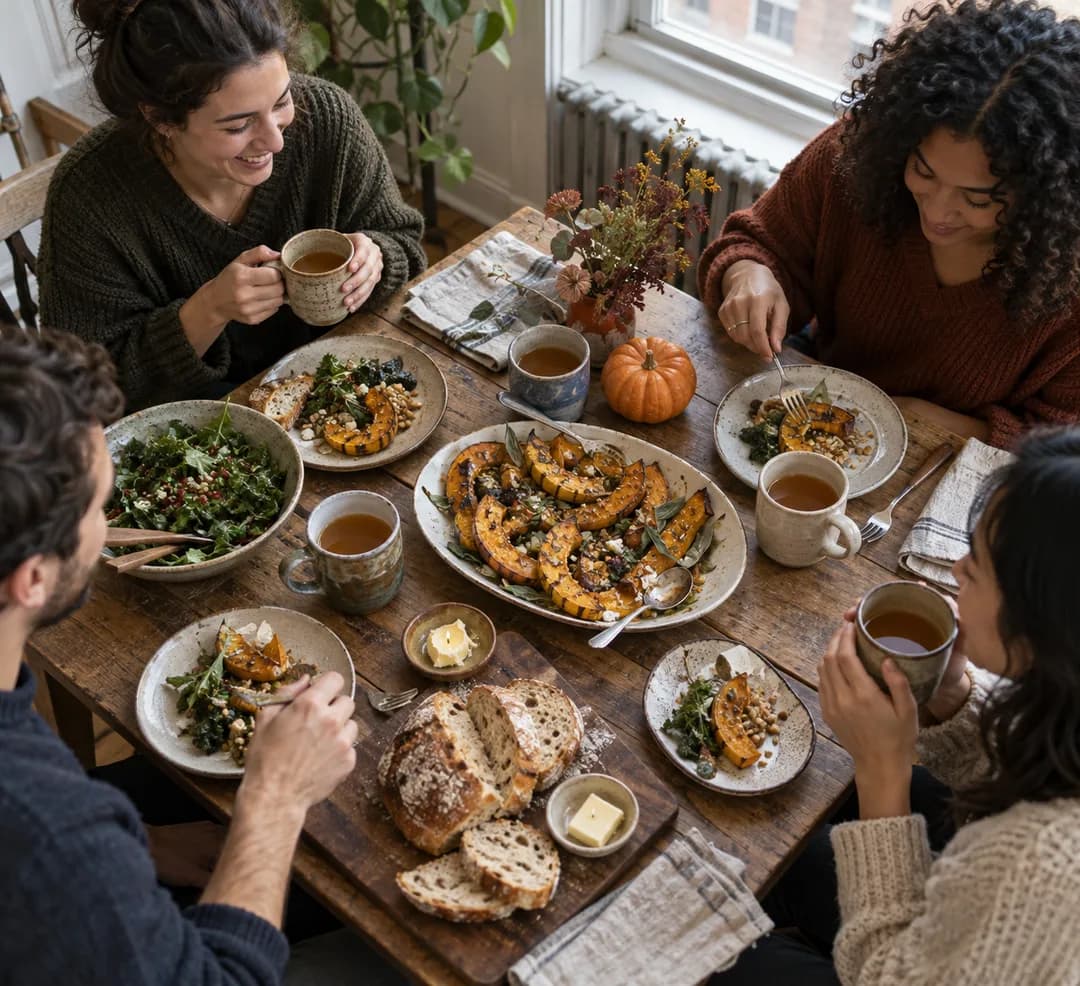
An alcohol-free Friendsgiving outing in NYC deserves a positive plan: something enjoyable to do together, room for conversation, and a cost everyone can accept. Begin with the people and their interests, then decide whether a meal, an activity, or a walk gives the gathering its shape. In the Karpo APP, ask for ideas using those details. There is no need to explain anyone's relationship with alcohol to make a useful request or arrange a welcoming holiday afternoon.
Choose what brings the friends together
Four people saying “anything is fine” can mean four different things. One wants a proper catch-up, another wants to make something, a third hopes to get outside, and the fourth has already eaten with family. Ask each person for one thing they would enjoy. Keep the answer small enough to act on, such as a seat and a conversation, an activity with a beginning and end, or a gentle neighborhood stroll. Those preferences are more useful than a long list of venues.
Keep alcohol-free separate from the wider atmosphere. Some friends are comfortable eating somewhere that serves alcohol, while others prefer a setting where drinking is absent. Ask about the setting privately if that matters to someone. A personal boundary can become a simple group constraint without naming who supplied it. “Please suggest a gathering that does not revolve around drinking” is a starting point. “We need a fully alcohol-free setting” asks a narrower question and requires evidence about any named venue.
A meal works when eating is the shared activity
Choose a meal-centered outing when everyone wants the table to be the main event. Establish whether the group wants a complete dinner, a light lunch, or something sweet. Friendsgiving does not have to repeat a large family meal. A person arriving after another celebration may want company and a small order, while someone who has worked all day may need a substantial meal. Put those differences into the brief so the suggestions fit the actual group.
For this approach, request places to consider within one agreed area and describe the desired atmosphere. Conversation might matter more than a distinctive menu. Seating may matter more than a fashionable address. If anyone has dietary needs, state them precisely rather than treating a broad category as a guarantee. A proposed restaurant remains a candidate until its relevant menu and booking terms support the plan. Keep the outing focused on the meal instead of adding an unrelated activity just to lengthen it.

An activity gives the afternoon a different center
An activity-centered gathering can suit friends who like doing something with their hands or prefer a little structure before talking. Ask for ideas around a shared interest, such as making, playing, or looking at art. Specify whether the group wants casual participation or a session led by someone else. Those are different experiences, with different expectations about arrival and commitment. Avoid treating the word “workshop” as proof that every participant can join casually without advance arrangements.
Use the date and the number of participants in the request. For example: “Four friends want an alcohol-free Friendsgiving activity in Brooklyn on our chosen Saturday. We prefer something collaborative, want time to talk afterward, and need an option suitable for beginners.” This is a suggested prompt, not a list of scheduled sessions. Evaluate any activity against the group's interest first, then use the provider's dated description to establish what participation actually involves. A good fit should be understandable without marketing superlatives.
A stroll puts conversation ahead of spending
A walking gathering can be the simplest choice when people mainly want to see one another. Pick an area that is practical for the friends attending, rather than automatically choosing the most photographed destination. Ask Karpo for a neighborhood idea that matches the group's mood and explain how long everyone wants to be outside. A slow walk with an agreed meeting point can feel complete without a purchase. An optional drink or snack should stay optional in the invitation.
Be specific about comfort. “Short walk” may mean something different to each person, so describe a maximum time on foot and whether seated breaks are necessary. If someone needs a step-free route or cannot stand for long, include that requirement before selecting a route. A general description of an area does not establish every access detail. Choose a route only when the information needed for your group is available, and retain an easy way to end the outing together.
Make the spending decision before sending suggestions
Set a personal spending ceiling as a planning preference, not a claim about what a business charges. Tell the group whether the ceiling needs to include food, admission, transportation, and any shared items. A low entry price can still be a poor fit if the plan assumes several additional purchases. Ask for options described by what the group would pay for, so the comparison does not hide costs inside a vague promise of an inexpensive afternoon.
Keep equal participation separate from equal spending. At a casual meal, one friend may want only tea while another orders food. At a ticketed activity, everyone may face the same entry requirement. Choose the format that feels comfortable to the group, and decide how shared items will be handled before anyone orders them. There is no need to publish each person's budget. The organizer can use the lowest agreed ceiling and leave individual conversations private.
A prompt that keeps the tone light
Try this message in the Karpo APP: “Help me plan an alcohol-free Friendsgiving outing for four friends in NYC. We want to catch up, start in one neighborhood, and finish early enough for separate evening plans. Compare a meal, a beginner-friendly shared activity, and a relaxed walk. Explain the commitment each involves. We will choose and arrange any booking ourselves.” Add the actual date, preferred area, and spending limit where they belong. The request supplies enough direction without becoming a form.
When an idea appeals, refine the relevant detail. You might ask for a quieter setting, fewer transfers, or a version centered on food rather than an activity. Keep the alcohol boundary intact during that revision. Otherwise a broad request for “something more festive” may obscure what made the original brief useful. Read the answer as suggestions for discussion. A comparison can help the friends decide, while the decision about where to gather stays theirs.
Send an invitation people can answer
Write the invitation around the experience: an afternoon of conversation, a shared activity, or a walk together. Include the date, meeting area, expected finish, and how spending will work. If the setting must be alcohol-free, state that clearly and neutrally. Let friends answer yes or no without explaining personal circumstances. Someone who cannot attend the whole outing can be invited to a defined portion, provided their arrival does not disrupt a booked session or leave the group waiting indefinitely.
Practical preparation is modest: bring the details of any actual reservation, choose a recognizable meeting point, and name the person who will contact the provider if arrangements are needed. For an outdoor gathering, have a group decision about unsuitable weather and a comfortable alternative. Start in the Karpo APP with the kind of company you want to create, then add the constraints that protect it. The strongest Friendsgiving plan gives everyone a reason to come and no pressure to participate differently.
Ask Karpo for more information.
Keep reading
- Inwood Winter Greenmarket Picker for Hikers on Cold Mornings
 Carroll Gardens Winter Greenmarket Picker for Holiday Bakers
 Jackson Heights Winter Greenmarket Picker for a Family Day