The total solar eclipse on August 12, 2026 crosses the northeastern United States in the late afternoon. New York City sits inside the path of totality for roughly four minutes, weather permitting. That means every park, every rooftop access point, and every waterfront promenade will be standing-room-only by 2 p.m. The eclipse peaks around 3:15 p.m. Eastern, then it's over. By 4 p.m., hundreds of thousands of people will try to leave at once.
Karpo checks real-time transit, confirms which parks have clear southern exposure, and texts you a timed route home before the crush starts. Text it the morning of August 12 so you're not guessing.

Why August 12, 2026 Will Break the Subway
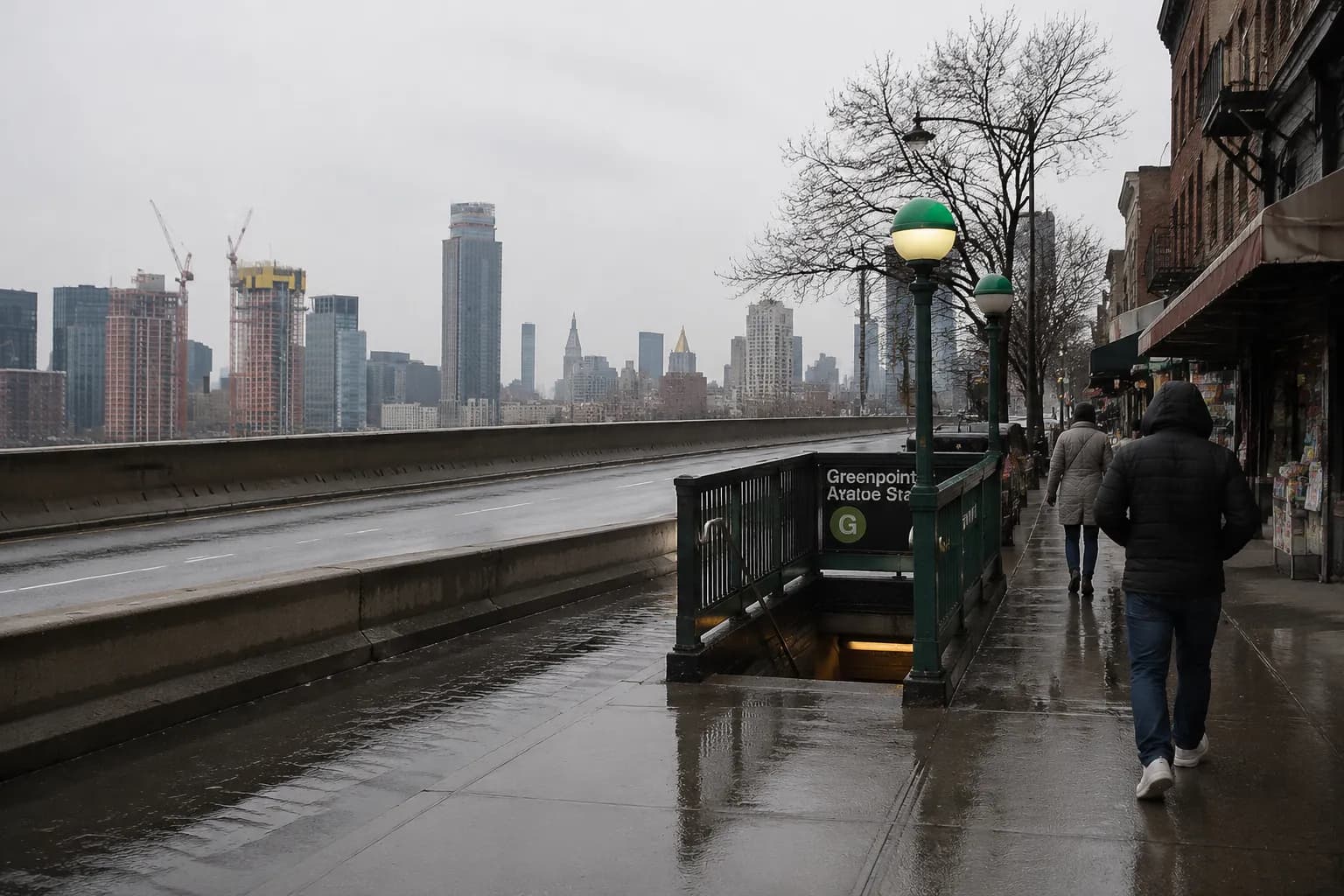
The subway can't absorb that surge cleanly. The L and the F already run close to capacity on summer weekends. Add eclipse tourists who don't know the system, and you're looking at platform holds, skipped stops, and twenty-minute waits at major hubs. If you pick a location without thinking through the exit, you'll spend an hour underground instead of ten minutes.
The Lower East Side offers a middle path: public space with sightlines, reasonable train access, and side streets that let you walk away from the scrum if your first station is packed. You're not chasing the single best vantage point in the city—you're picking a place you can actually leave.
Anchor at East River Park, Then Adjust

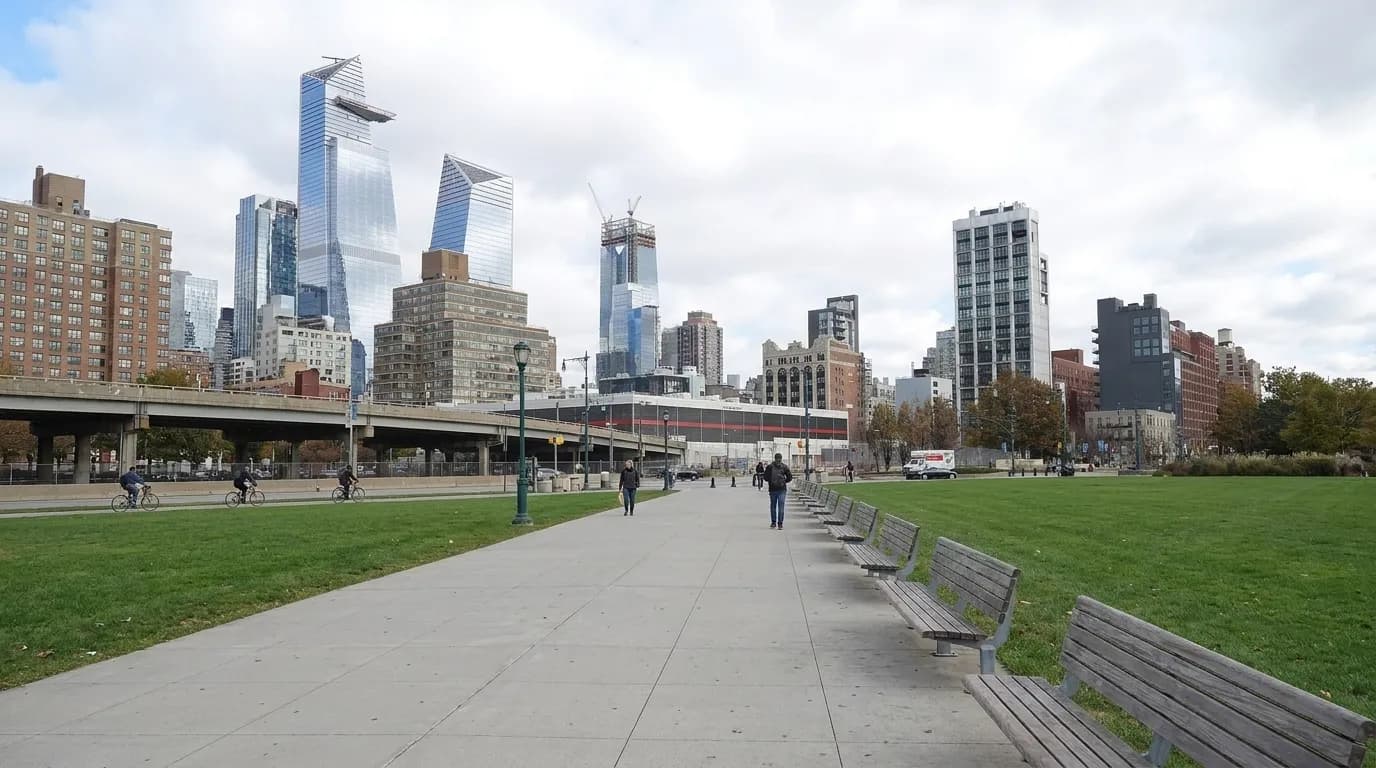
East River Park runs along the FDR from Montgomery Street up to 12th Street. The western edge is open, the eastern edge faces the water, and there's no ticketed entry. You want the southern half, closer to the Williamsburg Bridge, because the northern sections get narrow and the bike path funnels foot traffic into a single lane. Arrive by 1 p.m. if you want a bench; by 1:30 p.m. you're standing.
The park's advantage is geometry. You're looking south and slightly west during totality, so the river is behind you and the skyline is not blocking the sun. The disadvantage is that everyone else read the same eclipse map. If the park feels claustrophobic when you arrive, walk two blocks west to Columbia Street. The public school playgrounds between Rivington and Stanton are fenced but the sidewalks are wide, and you'll have the same sky.
Bring eclipse glasses. Do not assume someone will be handing them out. The American Astronomical Society maintains a list of safe vendors; check it before you order anything online. If you're planning to use your phone camera, test the solar filter attachment at home first. A cracked lens is expensive and a burnt sensor is worse.
The solar eclipse will draw street vendors selling last-minute glasses and filters. Some will be counterfeit. If the lenses don't have an ISO 12312-2 label and a manufacturer name, walk past. Your retina doesn't heal.
Have a Second Spot Within Walking Distance
If East River Park is overrun or the sightline gets blocked by a taller crowd, your fallback is Sara D. Roosevelt Park, ten blocks west. The park runs up the center of the neighborhood between Chrystie and Forsyth, and the southern end near Canal has open benches and fewer trees. You lose the water view but you gain space to move.
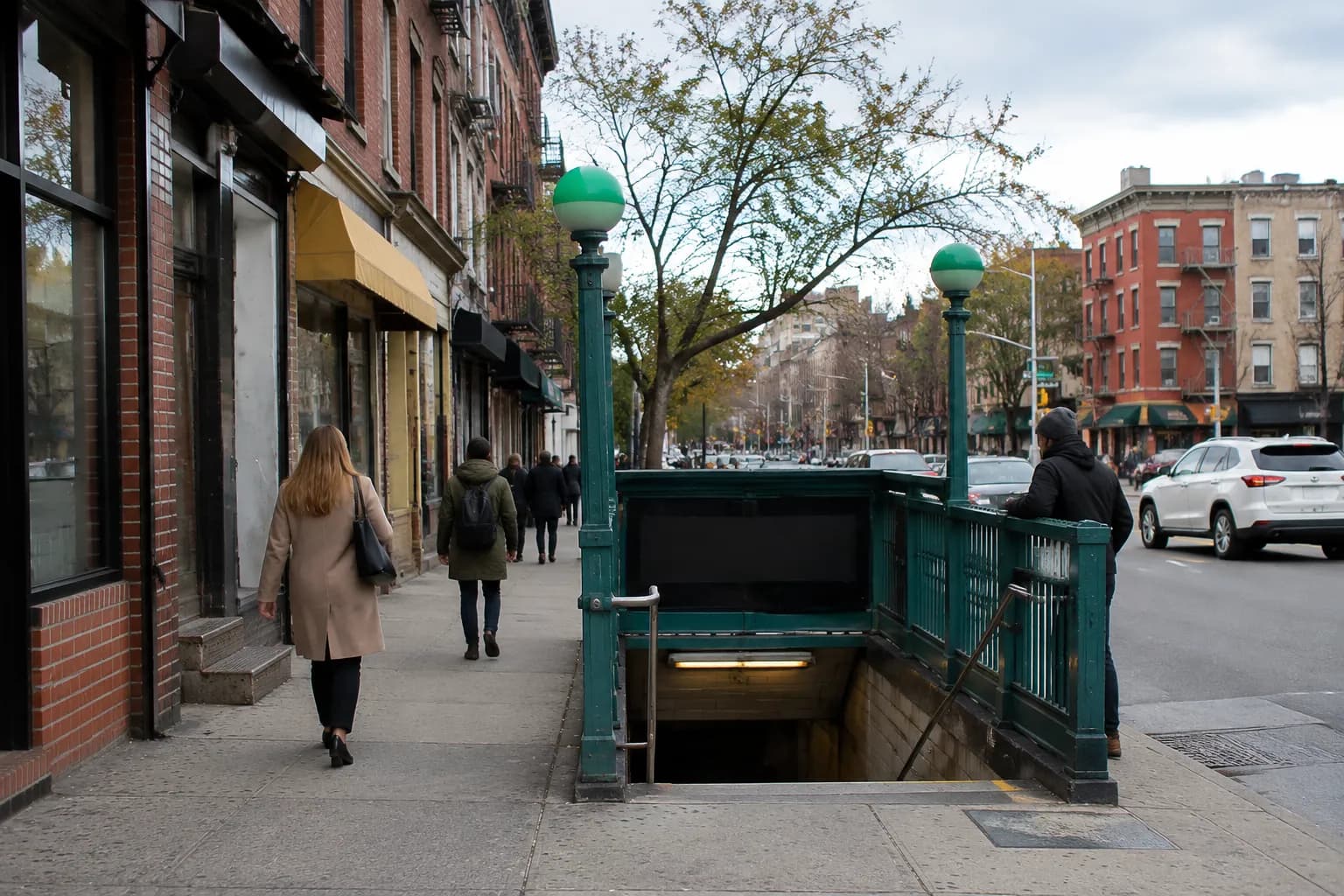
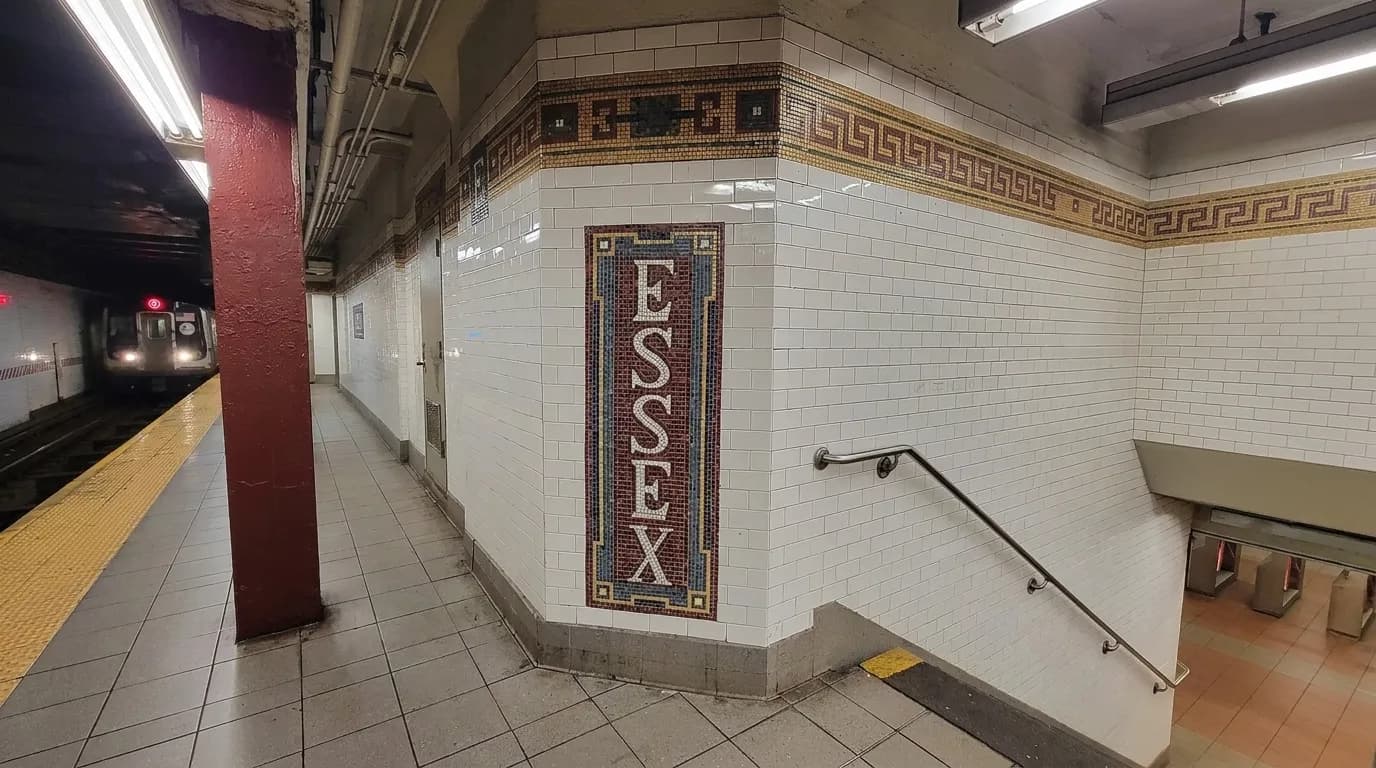
The other advantage is subway access. Sara D. Roosevelt sits between the F at East Broadway, the B/D at Grand, and the J/M/Z at Essex. That's three separate lines within a five-minute walk, so if one station is mobbed, you have options. East River Park funnels everyone to the F at Delancey or the J/M/Z at Essex, and both stations share the same entrance crush.
A third, quieter choice is the southern tip of Corlears Hook Park, near Cherry Street. It's smaller, the benches are concrete, and it doesn't show up on tourist eclipse maps. You're farther from the subway—closest is the F at East Broadway, eight blocks west—but if your priority is a clear view without negotiating shoulders, this is the trade. Verify that the park is open that day; the Parks Department sometimes closes sections for maintenance and posts a notice only on the gate.
Do not plan to watch from a building rooftop unless you already have legal access. The FDNY and NYPD will be checking for trespassing, and building supers will lock roof doors that are normally propped. Private rooftop bars will be booked solid or charging covers. If you're counting on a friend's apartment terrace, confirm it two days before, not the morning of.
Check Transit and Weather the Morning of August 12
The MTA will post service alerts by 10 a.m. if they're adding trains or holding express service. Read the alerts for the F, J, M, and Z. If the forecast shows afternoon clouds moving in from the west, you may need to shift your location east or wait until the cloud breaks. The National Weather Service posts hourly updates; check the area forecast discussion, not just the icon.
Clouds are the single largest risk to this plan. A total solar eclipse happens whether or not you can see it, but if the sky is overcast at 3:15 p.m., you'll get four minutes of eerie twilight and no corona. The forecast matters more than the spot you picked. If Saturday morning shows persistent cloud cover, some people will drive two hours north or west to find a gap. You probably won't. Accept that the sky decides, not you.
Plan your route home before you leave. If you're taking the F, know whether you're transferring at West Fourth or going straight to your stop. If you're taking the J or M, know that the Williamsburg Bridge can add ten minutes during weekend track work. Check the MTA's weekend service page the night before. If the M isn't running, the J will be standing-room from Essex to Myrtle.
Bring water, a hat, and something to sit on if the benches are full. August in New York means high eighties and humid. You'll be outside for two hours minimum, longer if the train home is delayed. A folding chair is optimistic unless you arrive at noon. A towel or a piece of cardboard works better and fits in a bag.
After totality ends, wait fifteen minutes before you move. Let the first wave hit the subway. Walk north toward Houston or south toward Canal and grab coffee or a slice. The eclipse is four minutes; the commute home doesn't have to be forty. If you're trying to catch a 4 p.m. train out of Penn Station or Grand Central, you've already lost. Build in buffer.
Practical notes
- Peak totality is approximately 3:15 p.m. Eastern on August 12, 2026; verify exact timing closer to the date.
- Arrive by 1 p.m. for a bench, 1:30 p.m. for standing room; later than that and you're negotiating crowds.
- Subway lines: F at Delancey or East Broadway, J/M/Z at Essex, B/D at Grand—check weekend service alerts that morning.
- Bring ISO 12312-2 certified eclipse glasses; do not buy from street vendors without checking the label.
- Weather is the wildcard—check the National Weather Service area forecast discussion by 10 a.m. for cloud movement.
- Plan to leave fifteen minutes after totality ends; waiting out the first subway surge saves you thirty minutes underground.
Tags: #karpo #solareclipse #nyc #newyorkcity #lowereastside #weekendplans #eclipse2026 #totaleclipse #eastriverpark #nycparks #mtanyc #nycweekend #thingstodonyc #nycoutdoors #august2026
Sources consulted: American Astronomical Society – Eclipse Safety · National Weather Service New York · MTA Weekend Service Changes · NYC Parks Department
All trademarks are the property of their respective owners.
Ask Karpo first
Text Karpo the morning of August 12 to confirm which parks have clear southern exposure, check real-time subway service changes, and get a timed route home that avoids the worst platform crowding. It'll also tell you if cloud cover is moving in and whether shifting east buys you a better view.