Searches for tiroteo masivo often spike when people are anxious and trying to translate fear into a plan. In New York City, the most useful plan is not a rumor thread or a heroic script. It is a short decision sequence you can remember in a school hallway, subway station, museum lobby, office tower, park, or arena concourse: avoid danger if you can, barricade if you cannot, confront only as a last resort, then follow official instructions. NYC Emergency Management currently frames civilian response as Avoid, Barricade, and Confront. Pair that with 911, Notify NYC, venue staff, and a final source check before you move.
Want a calmer safety check before a school trip, commute, museum visit, or crowded NYC event? Text Karpo with where you are going, and ask what to verify before you leave.

What to verify for NYC Public Spaces
NYC Emergency Management’s current public guidance uses Avoid, Barricade, and Confront, or ABC. The order is not a script; it depends on where the danger is and what exit or secure room is available. For a school, workplace, hotel, theater, house of worship, or entertainment venue, identify two exits, stairways, and lockable rooms before you settle in. That small scan is useful because crowded rooms, unfamiliar layouts, and limited exits raise the cost of hesitation.
The tradeoff is mental load. You do not want to turn every outing into a drill, but a thirty-second map check is reasonable, especially with children, older relatives, mobility devices, medication, or service animals in the group. The failure mode is assuming the main entrance is the only exit. A better rule is to note the closest staff desk, the nearest stair, and one place where a door can be locked or blocked if leaving is unsafe.
911 in NYC: Call When You Can, Text When You Cannot
NYC Emergency Management says to call 911 when you are in immediate danger, witness a crime in progress, face a serious injury, or need urgent attention. National 911 guidance still says voice calling is best when possible, because dispatchers can ask questions quickly. Once you are safe enough to communicate, give the exact location, what is happening, the suspect’s last known direction, descriptions, weapons seen, injuries, and anyone who may need access assistance.
Texting 911 is a backup when speaking would expose you or when voice service is not workable. Keep messages short: location first, then what you see, then whether you can safely answer questions. Do not assume delivery is instant; networks can be congested during major incidents. If a text fails, look for the bounce-back message and try another safe method, such as a voice call, a nearby staff radio, an intercom, or moving to a location with better signal.
Notify NYC: Use Alerts, but Do Not Wait for One
Notify NYC is the city’s official emergency communications program, and NYC says it can send emergency alerts, local mass transit disruptions, traffic disruptions, public health notices, public school notifications, ferry disruptions, and other service information. Current city pages say New Yorkers can sign up online, through the Notify NYC app, by calling 311, or by texting NOTIFYNYC to 692-692 for citywide SMS alerts, with ZIP-code prompts for local alerts.
The practical limit is important: alerts depend on wireless carriers, email systems, data networks, and outside platforms. In a fast-moving incident, you may need to act before an alert appears. Treat Notify NYC as confirmation and routing help, not permission to leave cover. After you are safe, check the alert timestamp, borough, cross streets, transit line, and agency source. If details conflict with what officers or venue security are directing on-site, follow identifiable emergency personnel.
MTA Subway and Bus Spaces: Report Suspicion Without Creating a Crowd
On transit, the first decision is whether the issue is an immediate threat. For immediate danger, use 911. For suspicious activity connected to the MTA, official See Something, Say Something messaging directs riders to tell a police officer or MTA employee, or use the 1-888-NYC-SAFE hotline. Useful details include train line, station, platform direction, car number if visible, bus route, cross street, description, unattended package location, and direction of travel.
The failure mode underground is bottleneck thinking: everyone rushes to the same stairs, pauses to film, or blocks responders. If you can safely leave, move away from the threat, keep hands visible, and avoid elevators when possible. If you cannot leave, use structural cover such as columns or heavy barriers, not just visual concealment. Accessibility matters here: elevators may be out, crowds may separate companions, and cell service can drop, so agree on a post-incident meeting point outside the station area before trips that matter.
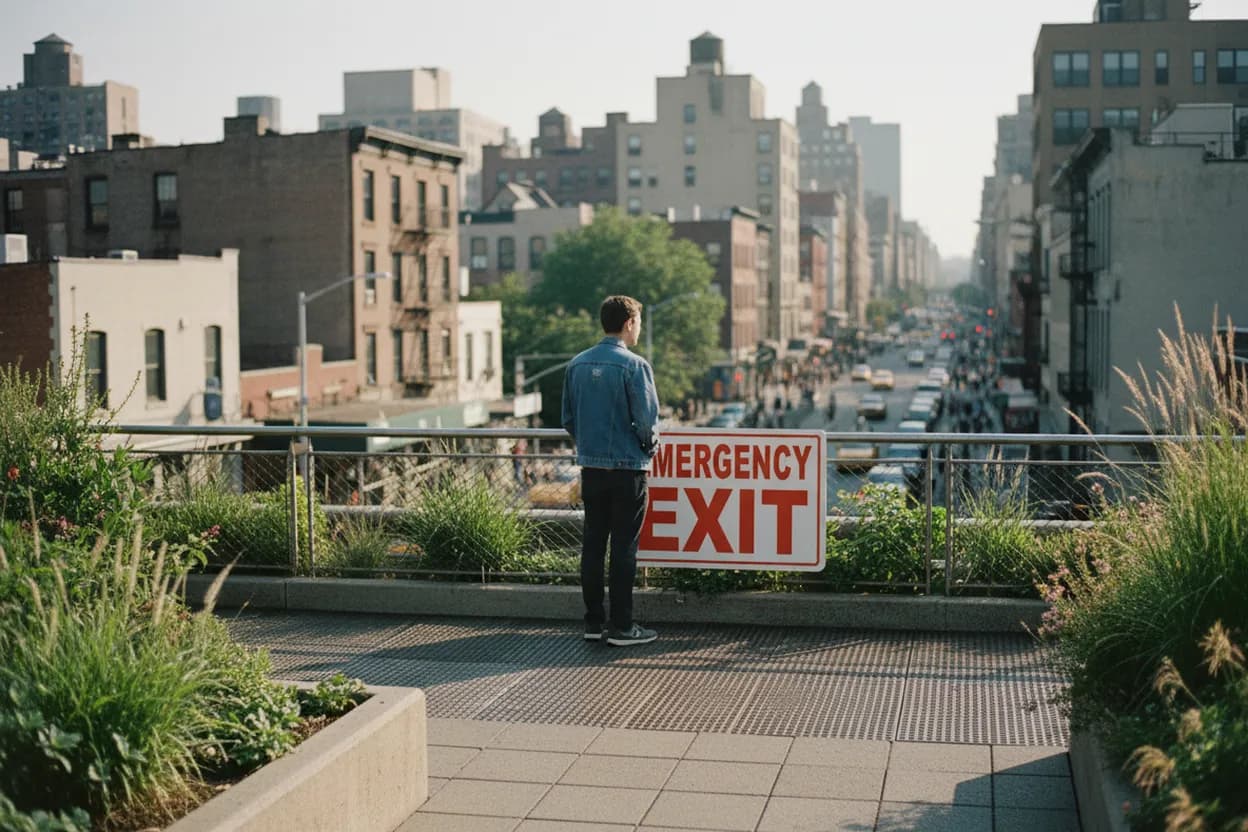
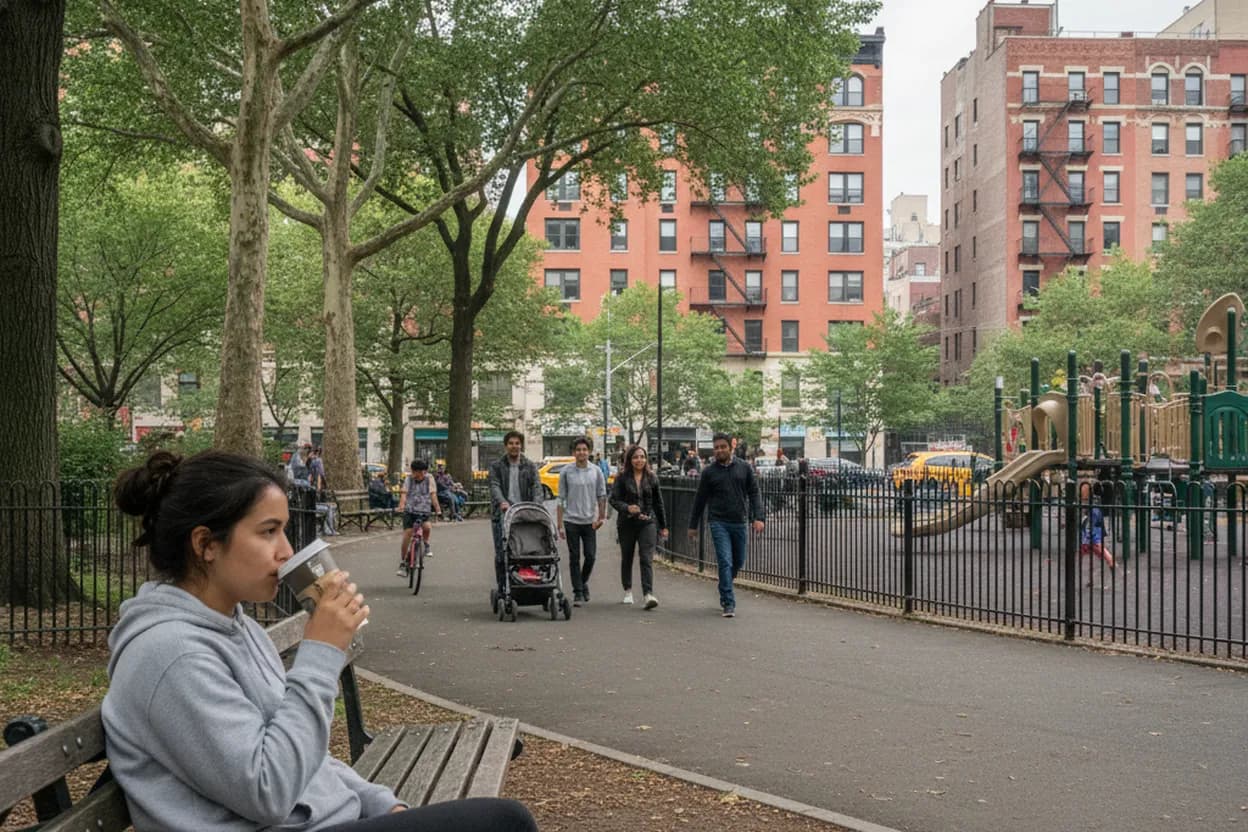
NYC Parks and Playgrounds: Choose Exits, Landmarks, and Staffed Edges
NYC Parks manages thousands of public spaces, and its safety pages point visitors to rules, notices, 311 reporting, and severe-weather or facility-closure updates. For a safety plan, the useful venue-specific move is simple: orient by named entrances, playground gates, recreation centers, comfort stations, ranger or staff locations, and wide paths. In open lawns, the nearest exit may not be the safest exit if it channels everyone through one gate.
Parks create different tradeoffs from buildings. You may have more directions to move, but less hard cover, fewer lockable rooms, and more confusion about exact location. Use visible landmarks when calling 911: park name, nearest street, field number, playground name, monument, bridge, or facility. If the situation is unclear, leave the area without stopping to investigate. Before planned gatherings, verify current park notices and permits because closures, event fencing, or construction can change normal escape routes.
The Met and Museums: Security Screening Changes the Bag Strategy
Museums are controlled environments, which helps in some ways and complicates others. The Met’s current visitor guidelines allow small backpacks if worn on the front or carried by hand, allow secure water bottles, welcome service dogs, and prohibit firearms, weapons, hazardous materials, large bags, luggage, scooters, skateboards, drones, and many oversize items. Screening and bag rules mean you should travel lighter when possible, especially with students or anyone who needs medication or assistive equipment.
The decision guide inside a museum is to know the public exits, stair locations, gallery attendants, and rooms that can be secured. Do not assume a quiet gallery means you are isolated; staff may have radios and instructions before public alerts arrive. If told to evacuate, leave belongings unless essential medical or mobility items are in hand. If told to shelter, silence devices, stay low, move away from glass doors or open sightlines, and wait for a clear all-clear from identifiable staff or law enforcement.
School Trips, Offices, and Events: Verify the Plan Before Leaving Home
For back-to-school routines, office returns, field trips, and ticketed events, the final safety step happens before departure. Check the venue’s official website for security rules, bag limits, accessibility entrances, prohibited items, service changes, and emergency language. Check Notify NYC for city alerts and the MTA for service status if transit is part of the route. For schools or organized trips, confirm who has the roster, medication plan, pickup protocol, and family contact chain.
Skip or delay the outing when verification fails in ways that matter: no official schedule confirmation, unclear entrance rules for mobility needs, a major transit disruption without a backup route, or active emergency instructions near the destination. The goal is not to predict every risk. It is to avoid preventable confusion. Right before leaving, re-check official venue, agency, and transit pages, then keep the plan short enough to remember: exits, contacts, alerts, and where to meet once safe.
Tags: #AskKarpo #BeforeYouGo #NYCSafety #NotifyNYC #NYPD #NYCEM #MTA #NYCParks #MuseumSafety #SchoolSafety #EmergencyPreparedness #PublicSafety #TransitSafety #BackToSchool
Sources consulted: Source 1: nyc.gov · Source 2: portal.311.nyc.gov · Source 3: a858-nycnotify.nyc.gov · Source 4: omny.info · Source 5: php1-84.nycgovparks.org · Source 6: metmuseum.org
All trademarks are the property of their respective owners.
Ask Karpo first
Tell Karpo your date, group size, budget, and starting neighborhood. We’ll check current access, timing, transit, and the cleanest plan for NYC Public Spaces before you head out.