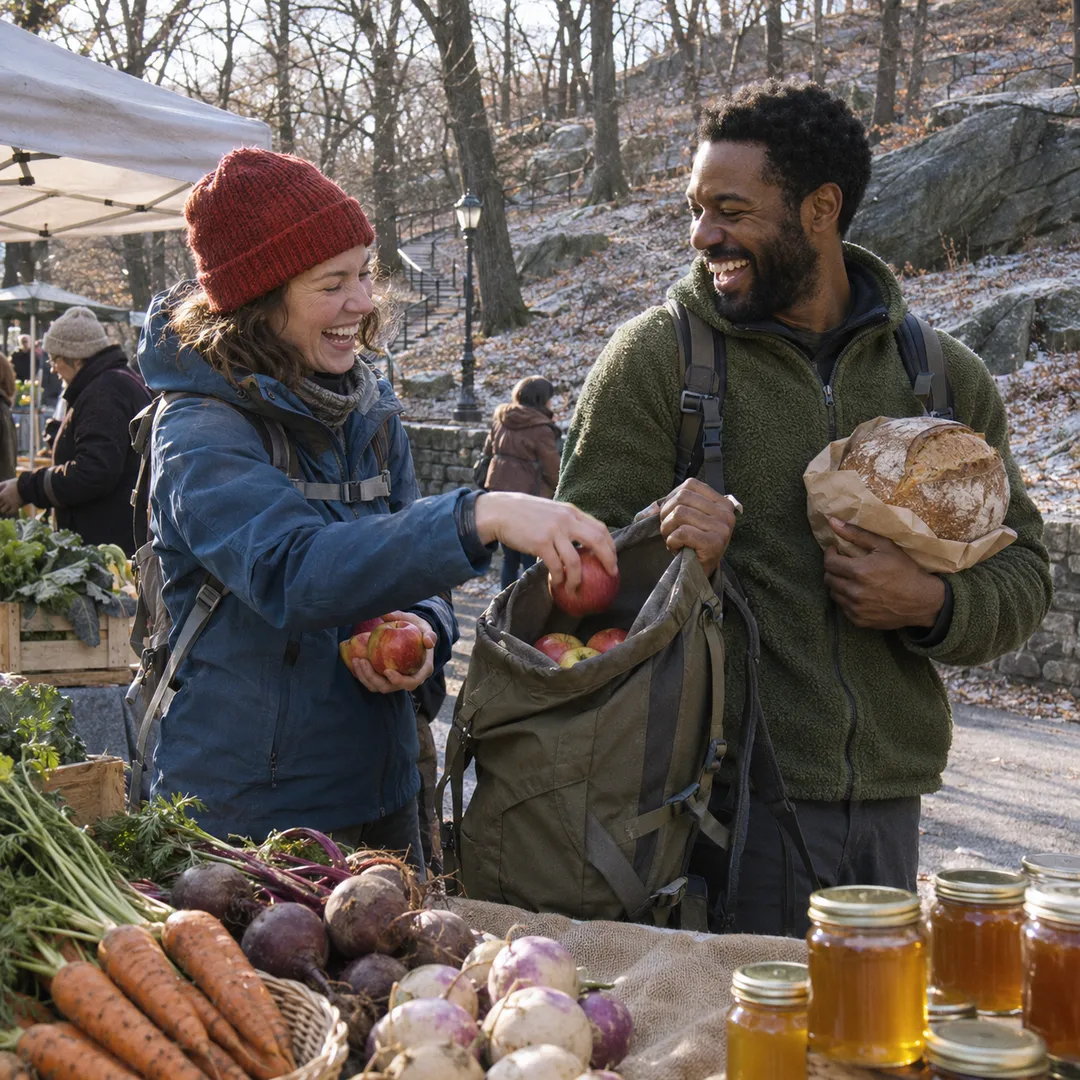
 Inwood Winter Greenmarket Picker for Hikers on Cold Mornings
Weekend Plans
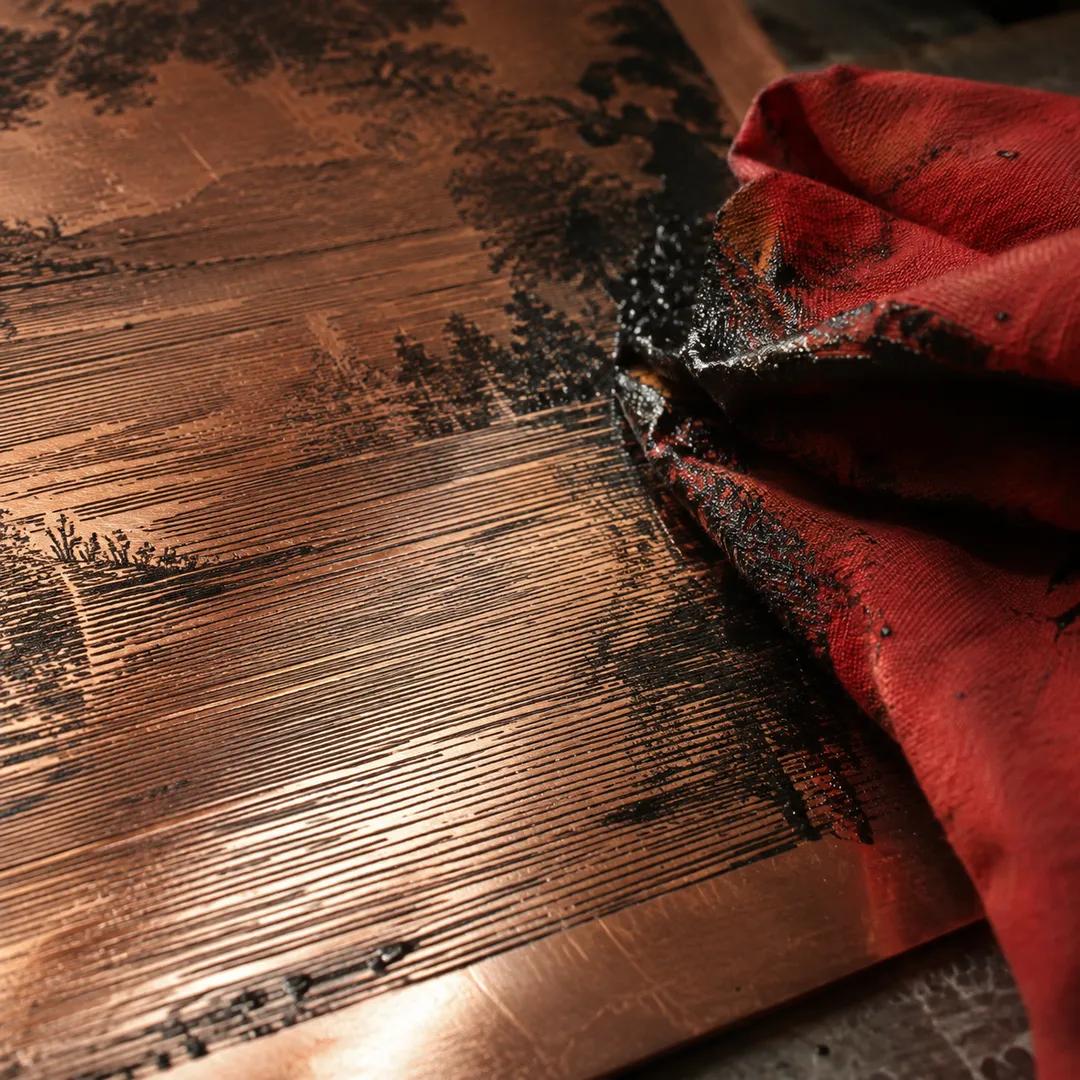
Midtown Printmaking Studio: Try Ceramic Screenprints at LESP
Book a $200 ceramics screenprinting workshop at Lower East Side Printshop in Midtown on November 8, with materials and six studio hours included.
Lower East Side Printshop offers a $200 screenprinting-on-ceramics workshop on November 8, 2026, at its Midtown printmaking studio. Lower East Side Printshop, at 306 West 37th Street, 6th Floor, runs the one-day session from 10am to 4pm with Nathan Catlin. Materials and six hours of studio time are included. For a first visit, this is a concrete route into a nonprofit founded in 1968, rather than a promise of unstructured drop-in access.
Pick a Workshop With a Defined Outcome
The November 8 listing is a collaboration with Scratch Ceramics, so it connects screenprinting to a ceramic surface rather than treating paper as the only destination. Choose this session if that transfer interests you. Someone hoping to learn a conventional paper edition should instead compare the printshop's other process courses. Matching the advertised medium to your actual goal matters more than choosing whichever date happens to be nearest on the calendar.
The November 21 Holiday Card Workshop with Evan Bellantone provides a different entry point. The official education page lists a one-day weekend session from 10am to 5pm for $175, including seven hours of studio time and a place at the annual holiday market. That market connection gives the card workshop a purpose beyond a single exercise: participants can think about a small body of work that will meet an audience.
A Working Nonprofit Since 1968
The organization describes its mission as helping contemporary artists create artwork and advance their careers. Its workspace programs combine time and space with technical assistance, public exposure, career development, and, in some programs, stipends. Classes are one part of that structure. A visitor encounters an organization that supports artists over a sustained period, which is a different proposition from an entertainment venue built around an identical project for every participant.
Its homepage supplies specific evidence of that ongoing activity. An Inka Essenhigh edition was made with master printer Nathan Catlin during a Publishing Residency in 2026, while the site also welcomes 2026–27 keyholders. Those two strands reveal how the same institution supports collaborative production and independent work. They also provide useful questions for an exhibition visit: which decisions came from the artist, and which emerged through working with the printer?
Two Studios With Northern Light
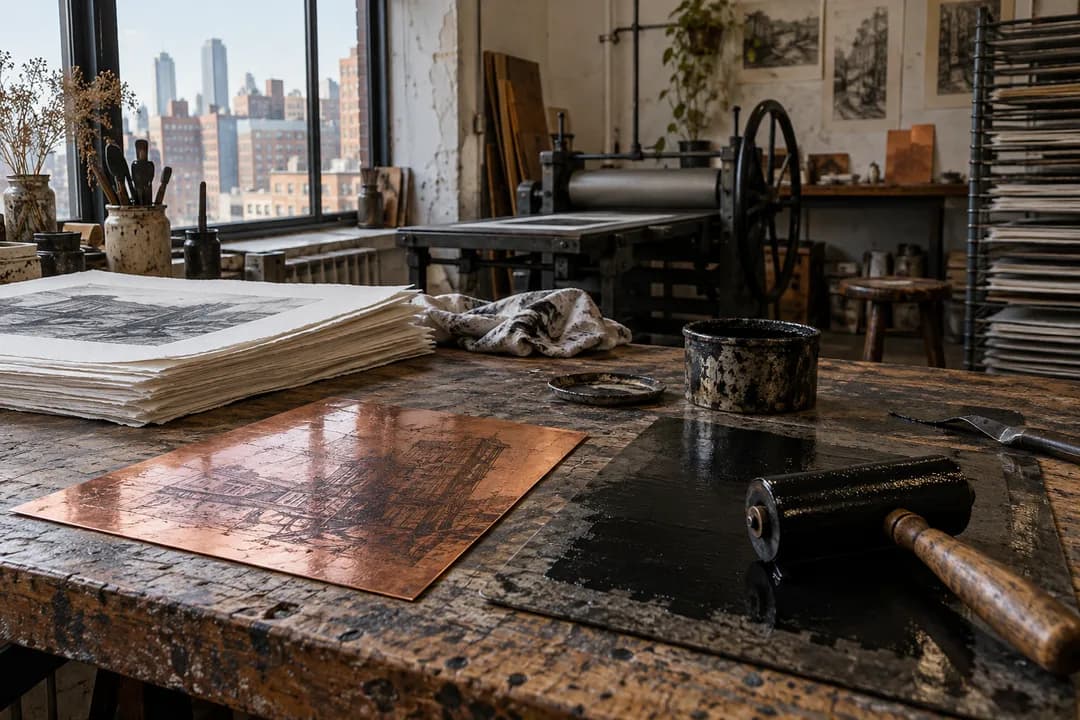
The facilities page describes 4,000 square feet across two studios and two workrooms, with northern light, concrete floors, and 11-foot ceilings. The Community Studio supports intaglio, relief, monoprint, water-based silkscreen, and photographic and digital processes. This is a useful description of the setting without inventing a scene: the equipment and rooms support different stages of a print, from preparing the surface to washing out a screen and drying the finished sheet.
The Community Studio equipment list names a Griffin intaglio press, several Charles Brand presses, a screenprinting vacuum press, a paper-soaking sink, and movable drying racks. These details help explain why a course is more than an instructor's demonstration. Paper preparation, controlled pressure, and drying all require infrastructure. For a beginner, the most productive ambition is to understand how those stages connect, rather than trying every machine in a single session.
Registration Opens the Right Door
The contact page distinguishes office and gallery access from evening and weekend studio access. The latter is available for registered participants and special events. A workshop booking therefore carries a specific access arrangement; it does not turn the whole building into a casual evening attraction. Keep the registration details with your route information, and make the booked session the anchor of the day instead of arriving with an assumed drop-in entitlement.
The site gives weekday office and gallery hours as Monday through Friday, 10am to 6pm. Its contact text also retains a summer-hours notice ending August 25, so that seasonal line should not be used as October's timetable. The footer's weekday schedule and the individual workshop schedule describe different things. A Sunday class beginning at 10am is a registered program, not evidence that general gallery access has become seven days a week.
Sold-Out Classes Suggest a Better Backup
Two autumn introductions are marked sold out: Jeremy Ruiz's screenprinting course running October 19 to November 9, and Julia Elsas's Intro to Printmaking I running October 20 to November 17. Do not build a visit around joining either halfway through. The November ceramics or holiday-card sessions are different published alternatives. If neither medium suits you, a gallery visit during office hours is a more sensible plan than waiting outside a full class.
The education page also lists Rachel Burgess's oil-based monotype workshop for January 8–9, 2027, and Kakyoung Lee's reductive linocut course from January 7 to February 4. These are useful comparisons even if you book neither. Monotype and a multi-week relief course ask for different kinds of commitment. Read the named technique as part of the purchase, and avoid assuming that any workshop with printing in its title teaches the same sequence.
Materials and Cleanup Deserve Attention
The studio lists shared brayers, rollers, squeegees, scoopcoaters, spatulas, rulers, and cleaning materials. It also separates etching and solvent work from the main studio, and says ferric chloride is the solution used for etching. Follow the instructor's directions for the equipment assigned to your course. As practical preparation, wear clothes you can work in, keep personal belongings away from the bench, and bring a folder if your program produces paper proofs.
For a first class, a modest design is often a more useful learning tool than a complicated image with several layers. That is a planning recommendation, not a published limitation on what this studio accepts. A simple project makes changes in pressure, ink coverage, or registration easier to identify. Ask questions about the process you are actually using, rather than expecting a ceramics session to provide an overview of every room and press.
Walk Midtown After the Session
The contact page places the building between Eighth and Ninth Avenues. A straightforward after-class route is to walk east toward Herald Square or south toward Penn Station. If you would prefer a longer walk, continue west toward the Hudson River. Keep any finished work protected and leave room for the workshop's full duration. None of those routes requires turning a nearby venue's address, phone, or opening hours into another set of logistical commitments.
Practical Notes
The printshop identifies itself as wheelchair accessible, with passenger elevators serving the sixth floor. Its directions list A, C, and E service at 34th Street and Eighth Avenue, and additional routes at Penn Station and Herald Square. Use the registration instructions for evening or weekend entry. Save the address and chosen workshop in the Karpo APP so the route stays attached to the specific session you booked.
Ask Karpo for more information.
Keep reading
- Inwood Winter Greenmarket Picker for Hikers on Cold Mornings
 Carroll Gardens Winter Greenmarket Picker for Holiday Bakers
 Jackson Heights Winter Greenmarket Picker for a Family Day