 Inwood Winter Greenmarket Picker for Hikers on Cold Mornings
Weekend Plans
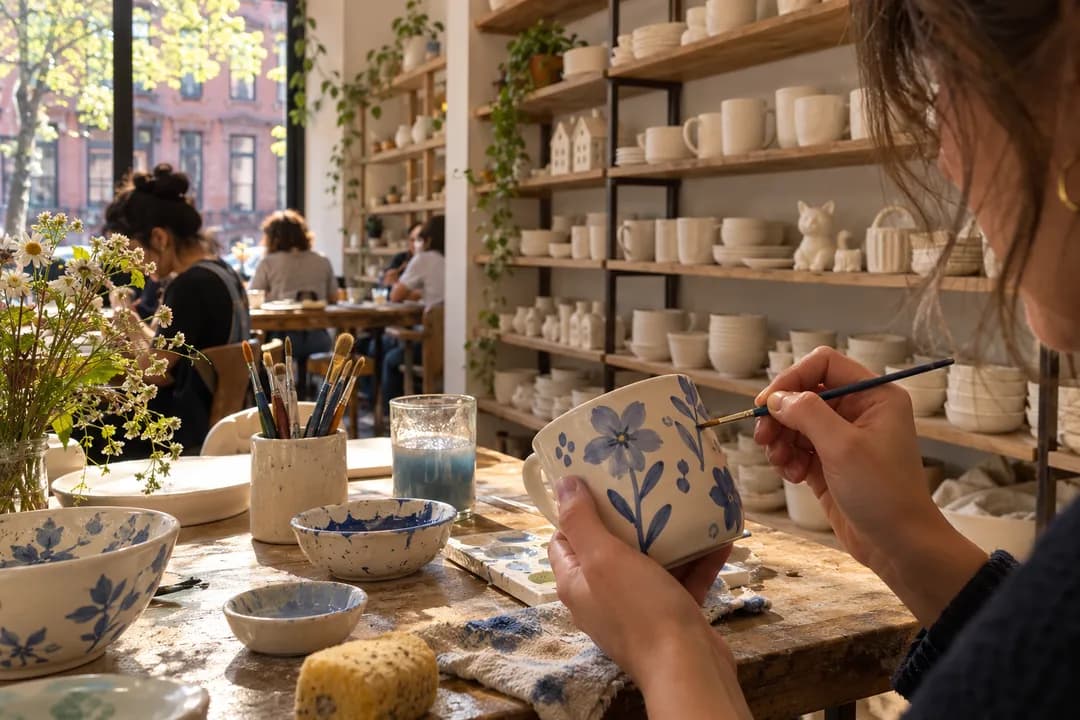
Painted Pot Pottery Painting in Park Slope: Reserve First
The Painted Pot at 188 5th Avenue requires reservations for Park Slope pottery painting, with hands-on projects and a Brooklyn walk after your table.
The Painted Pot is not the kind of pottery painting near me search result where you should stroll in and hope a table appears. The Park Slope page puts the operational detail first: reservations are required. That changes the shape of the afternoon. Pick the piece and time before walking over, then leave enough room for choosing colors, painting carefully, and asking what happens after the studio finishes the firing. The address is 188 5th Avenue, Brooklyn, NY 11217.
What the Studio Actually Offers
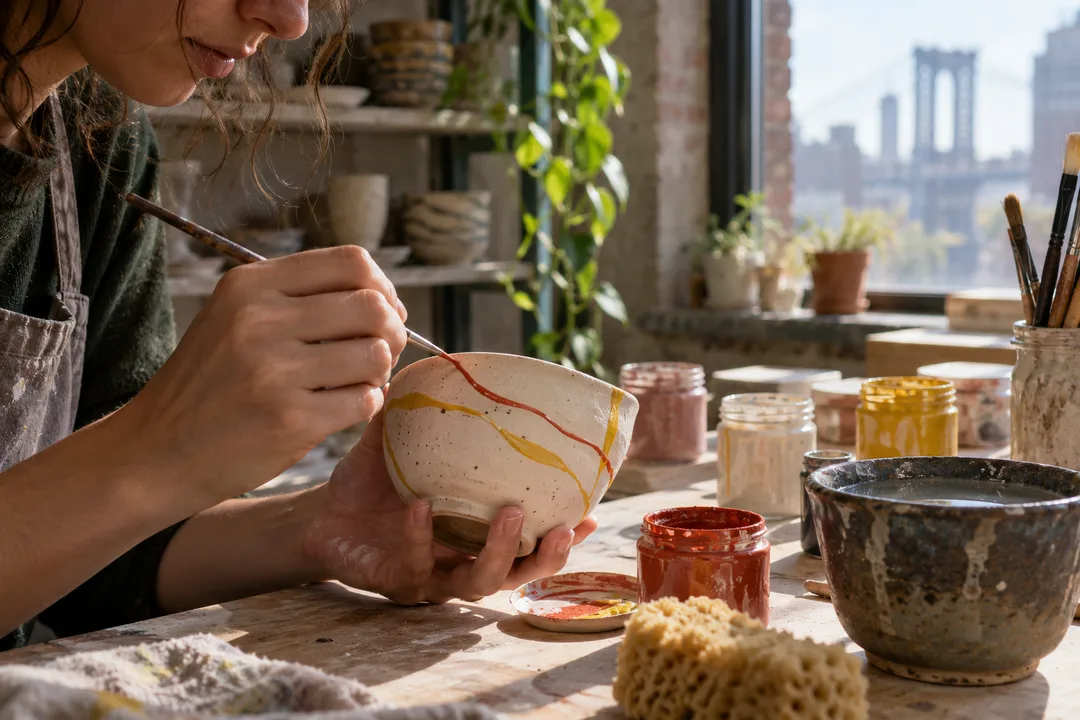
The attraction is broader than a shelf of mugs. The Painted Pot describes its in-studio experiences as an all-inclusive mix of pottery painting, clay, acrylics, and related making. That range matters if your group has different patience levels: one person can work slowly on a ceramic form while another wants a quicker painted surface. The best plan is to decide whether the goal is a practical cup, a decorative object, or a class-like experiment before you arrive. A clear brief keeps the table from becoming a pile of half-started ideas.
Choose a Piece Before Choosing a Palette
Start with shape, not color. A broad plate gives you room for bands, lettering, or a repeated border; a mug rewards a design that survives a curved surface; a small figure makes one strong color decision more useful than ten tiny details. Ask the staff what the finished glaze will do to pale colors and whether a line will soften after firing. Do not assume the wet paint looks like the final result. Take one test brushstroke seriously, then commit to a limited palette instead of covering the entire piece in competing experiments.
The Quiet Rules of a Good Table
Reservation-first studios run better when each party treats its table as a work zone. Keep brushes in the water cup rather than letting them dry, close paint pots between uses, and return tools to the center so the next person can find them. If children are involved, give them one defined area of the piece and one color decision at a time. Adults should resist repainting every line. The finished object should show the maker’s choices, not the anxious corrections of three people leaning over the same mug.
A Better Way to Avoid a Bottleneck
The line is not necessarily at the door; it is often the selection shelf. Make a short list before your reserved slot: one safe shape, one ambitious shape, and one fallback that can be finished without tiny brushwork. If your party arrives late, do not spend the first ten minutes browsing every option. Start with the reservation, ask about the firing timeline, and use the staff’s project guidance. The practical win is not painting faster. It is protecting enough uninterrupted time for the piece to feel deliberate.
The Park Slope Story Is the Walk
The Painted Pot works best as the anchor of a Park Slope afternoon rather than an isolated indoor errand. Meet on 5th Avenue, paint first, and let the neighborhood provide the decompression afterward. Browse the storefront rhythm along 5th Avenue, cut toward Prospect Park when the table is finished, and keep the route flexible if your group needs coffee or a bench. The walk also gives you a useful mental reset: after concentrating on a small brush, open space makes the colors and proportions easier to judge.
What to Bring From Home
Bring an image only as a reference, not as a demand for an exact copy. A simple color note, a favorite textile pattern, or a sketch of the shape you want can keep the first ten minutes productive. Wear something that can tolerate a stray drop of paint and avoid sleeves that drag across a wet surface. If the studio gives you aftercare or pickup instructions, save them immediately. Ceramic work becomes frustrating when the maker remembers the design but forgets the practical step that gets it home.
The Honest Skip
Skip an overcomplicated illustration unless you genuinely enjoy slow detail. Pottery painting rewards a strong silhouette, two or three colors, and enough negative space for the glaze to read. A crowded scene can look exciting at the table and muddy after firing. The better souvenir is usually the piece that has one clear idea: a border, a single motif, or a color relationship you will still like on an ordinary kitchen shelf. Park Slope gives you plenty to do after the studio, so the object does not need to carry the entire afternoon.
Practical Notes
The venue is The Painted Pot at 188 5th Avenue, Brooklyn, NY 11217. The Park Slope page says reservations are required, so book before travelling. The site describes pottery painting, clay, acrylics, classes, and events, but its landing page does not give a single daily schedule; use the reservation flow for the session you want. Ask how the studio will handle firing and collection before you leave your piece.
Make the Finished Piece Earn Its Place
The final test is not whether the object photographs well under the studio lights. It is whether you can picture using or displaying it in your own home. Look at the rim, the handle, and the underside before handing it over. If a line feels unfinished, simplify it rather than adding one more layer. Then take the Park Slope walk without turning the outing into a critique session. A good pottery painting day ends when the maker feels finished, not when every inch of ceramic has been covered.
Leave With a Design You Can Explain
Before you hand over the piece, say out loud what you were trying to do. If the answer is a color, a memory, a Brooklyn pattern, or simply a shape that felt good in your hand, the design is doing its job. Photograph the wet surface only as a reminder; the finished glaze will change the tone. Then follow the studio’s instructions for firing and collection rather than improvising. The reservation-first structure works because it gives the object a clear beginning and a clear handoff. Your part is choosing, painting and stopping at the right moment. The neighborhood walk is the reward for that restraint.
A Small Object, A Complete Afternoon
The most useful way to judge the visit is by the relationship between the object and the outing. The piece should carry a trace of Park Slope without becoming a souvenir cliché. Use a color you noticed on the walk, a shape borrowed from a shop window, or a pattern that reminds you of a favorite Brooklyn textile. Then stop. The studio gives you the setting, but the finished object gives you the memory. Leave enough time for the walk home, the practical handoff, and the quiet satisfaction of having made one thing carefully.
Ask Karpo for more information.
Keep reading
- Inwood Winter Greenmarket Picker for Hikers on Cold Mornings
 Carroll Gardens Winter Greenmarket Picker for Holiday Bakers
 Jackson Heights Winter Greenmarket Picker for a Family Day