 Inwood Winter Greenmarket Picker for Hikers on Cold Mornings
Weekend Plans
Planetarium Near Me on the Upper West Side: Hayden Planetarium
An Upper West Side guide to the Hayden Planetarium inside the AMNH Rose Center for Earth and Space, featuring space show tickets, dome architecture, and Central Park strolls.
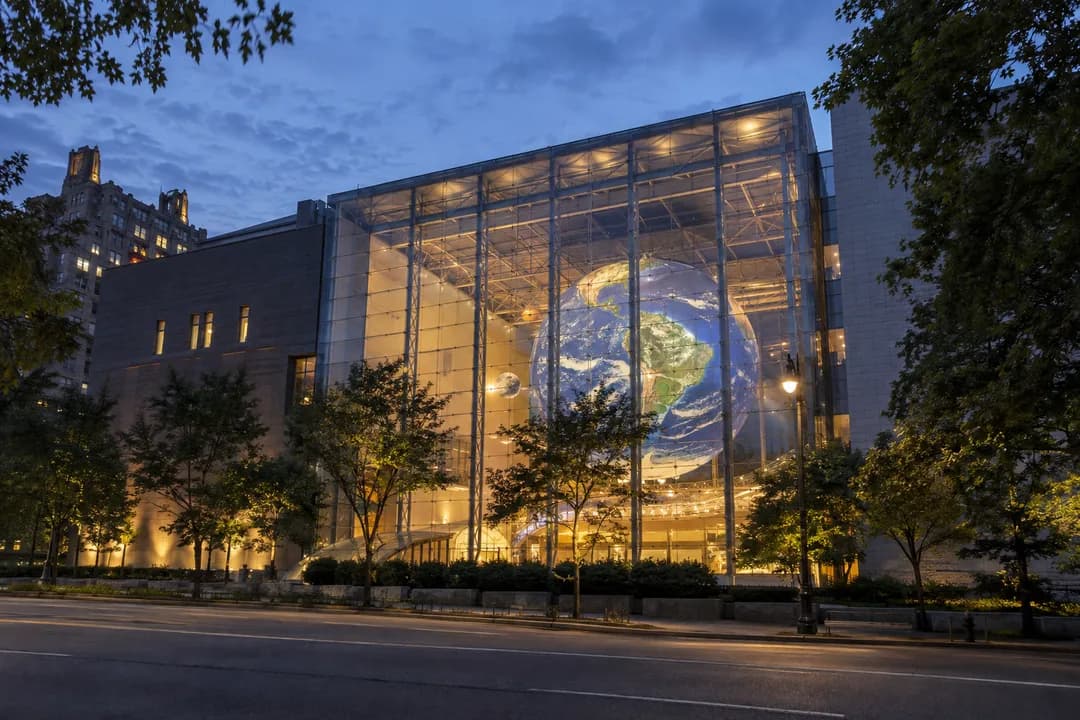
Searching for a world-class planetarium near me in Manhattan leads directly to the Upper West Side, where the iconic Hayden Planetarium anchors the American Museum of Natural History. Located at 200 Central Park West between West 77th Street and West 81st Street, with the dedicated Rose Center for Earth and Space planetarium entrance situated at 56 West 81st Street, this legendary institution has introduced generations of New Yorkers to the wonders of astrophysics. Originally opened in 1935 and dramatically reimagined in 2000 as the centerpiece of the glass-walled Frederick Phineas and Sandra Priest Rose Center for Earth and Space, the facility features an eighty-seven-foot sphere suspended inside a towering glass cube designed by architect James Stewart Polshek.
Reaching 56 West 81st Street is seamless using the New York City subway network. The 81st Street–Museum of Natural History station on the B and C train lines deposits riders directly into the museum lower concourse, allowing guests to bypass street-level weather entirely. Visitors coming across town can take the M79-SBS crosstown bus along 79th Street, while the 1 train stops just three blocks west at Broadway and West 79th Street. The surrounding Upper West Side avenues feature ample Citi Bike docks along Columbus Avenue and Central Park West. While street parking along residential side streets is notoriously tight, several paid parking garages operate along West 80th Street and West 83rd Street.
The architectural drama of the Rose Center begins the moment you enter the grand exhibition hall. The illuminated Hayden Sphere appears to float weightlessly in space above the Cullman Hall of the Universe, creating an arresting visual tribute to celestial geometry. Inside the top half of the sphere rests the state-of-the-art Space Theater, equipped with high-resolution digital projectors and customized star-field optics that render authentic astrophysical data sets collected by NASA spacecraft and terrestrial observatories with startling clarity.
Ticketing for the Hayden Planetarium requires careful selection between standard museum admission and combined theater access. A General Admission plus One ticket costs $30 for adults, $24 for seniors and students presenting valid identification, and $17 for children ages 3 to 12. This combination pass grants full access to all permanent natural history halls alongside one reserved seat for the signature Space Show inside the upper dome. General admission to the museum galleries alone costs $25, making the five-dollar upgrade to experience the planetarium theater an outstanding cultural value for weekend travelers.
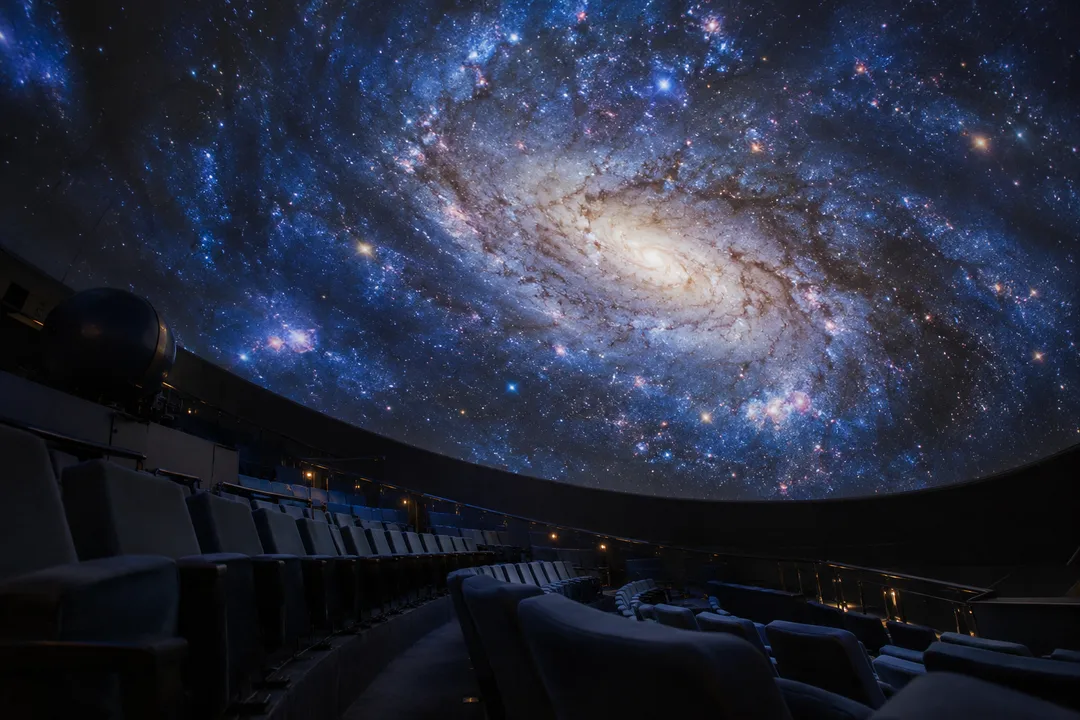
Inside the upper hemisphere, the Space Theater presents sweeping cosmic narratives that transform complex astrophysical phenomena into breathtaking visual spectacles. Signature productions such as Worlds Beyond Earth, narrated by Academy Award winner Lupita Nyong'o, guide audiences across the craters of Mercury, the subsurface oceans of Europa, and the volcanic plumes of Io. Viewers recline beneath the immersive dome as scientific visualizations derived from real orbital probe telemetry sweep across their peripheral vision in seamless panoramic detail.
After concluding the Space Show, guests exit onto the circular Harriet and Robert Heilbrunn Cosmic Pathway, a gently sloping ramp that spirals downward around the exterior curve of the Hayden Sphere. This dynamic walkway spans thirteen point eight billion years of cosmic history, with every step representing millions of years of universal expansion. Interactive bronze touchstones along the balustrade present ancient volcanic meteorites and lunar impact samples, allowing visitors to feel the tangible remnants of celestial history between their fingertips.
Managing your visit requires understanding weekend admission patterns. The museum operates daily from 10:00 am until 5:30 pm, with the heaviest visitor queues forming between 11:30 am and 2:30 pm on Saturdays and Sundays. Reserving timed-entry planetarium tickets in advance through digital ticketing channels prevents disappointment, as afternoon space shows frequently sell out several hours ahead of curtain time. Arriving at the museum entrance twenty minutes before your ticketed screening ensures smooth security clearance and unhurried access to the theater doors.
Entering the Space Theater follows a brisk, well-organized protocol. Usher staff check digital entry barcodes at the upper mezzanine boarding ramp approximately ten minutes prior to showtime. Seating inside the dome is unreserved, meaning guests who arrive early enjoy the pick of prime center-stadium rows that offer the most immersive, distortion-free sightlines across the dome apex. Strollers, open food containers, and tripod camera rigs must be parked in designated coat check areas near the entrance level.
The lower half of the Hayden Sphere houses the Big Bang Theater, where visitors look downward over a glass railing into a concave projection bowl. This brief presentation simulates the primordial seconds of cosmic creation, utilizing vibrating floor transducers and concussive sound design to recreate the explosive birth of space and matter. Below the sphere, the Cullman Hall of the Universe explores planetary zones with authentic iron meteorite fragments and touchable geologic specimens.
The historical legacy of the Hayden Planetarium is woven into the scientific fabric of New York. From its foundational opening during the Great Depression in 1935 under philanthropist Charles Hayden to its modern role as an international hub for astrophysics education under director Neil deGrasse Tyson, the institution has continuously bridged academic research and public curiosity. The surrounding galleries honor pioneering astronomers who charted stellar spectra, calculated galactic rotations, and made the cosmos accessible to everyday city dwellers.
A trip to the planetarium pairs naturally with a stroll through the Upper West Side and Central Park. Step outside the museum stone facade directly into Central Park through the 77th Street portal, wandering past the Arthur Ross Pinetum toward the tranquil waters of Belvedere Lake and Belvedere Castle. The wooded paths provide a peaceful natural retreat where visitors can digest cosmic scale amidst mature American elms, watching songbirds dart across the Ramble.
Alternatively, walk one block west toward Columbus Avenue to explore the rich dining corridor that defines Upper West Side neighborhood culture. Savor a warm artisanal chocolate babka or fresh roasted coffee from nearby neighborhood bakeries, or browse independent bookshops along Amsterdam Avenue. The picturesque brownstone side streets between 77th Street and 83rd Street showcase some of the finest late nineteenth-century Queen Anne and Romanesque Revival residential architecture in Manhattan.
Several practical guidelines ensure a comfortable and accessible visit. The Rose Center planetarium entrance is at 56 West 81st Street, New York, NY 10024, with the broader museum campus spanning 200 Central Park West. The American Museum of Natural History provides complete wheelchair accessibility throughout the Rose Center, featuring elevators that service all levels of the Hayden Sphere and designated companion seating areas in the Space Theater. Coat check facilities operate on the lower level, and museum dining courts offer family-friendly meals across the main concourse.
The Hayden Planetarium remains the gold standard for public celestial education in the United States. Its combination of historic institutional pedigree, cutting-edge astrophysical visualization, and majestic architecture provides an unforgettable urban escape into deep space. When planning your weekend itinerary or seeking nearby Upper West Side cafes and scenic Central Park viewpoints, let the Karpo APP guide your exploration. Secure your space show ticket, settle into the reclined theater seats, and embark on an extraordinary journey across the universe.
Planning Your Upper West Side Planetarium Outing
Ask Karpo for more information.
Keep reading
- Inwood Winter Greenmarket Picker for Hikers on Cold Mornings
 Carroll Gardens Winter Greenmarket Picker for Holiday Bakers
 Jackson Heights Winter Greenmarket Picker for a Family Day