The city doesn't go dark at night, but it does tilt its face upward when the moon thins to a sliver and the public telescopes come out. Late May 2026 brings a handful of pay-what-you-wish observatory programs and free amateur-astronomy events scattered across the five boroughs and just beyond—some perched on rooftops, others tucked into parks where the ambient glow softens just enough to resolve Jupiter's moons or Saturn's rings. These aren't polished planetarium experiences with surround sound; they're folding chairs, red-filtered flashlights, and volunteers who actually want to explain why Arcturus looks orange. If you've been curious about the mechanics of looking up, this spring's new-moon windows open the door.
Hudson River Park public telescope nights
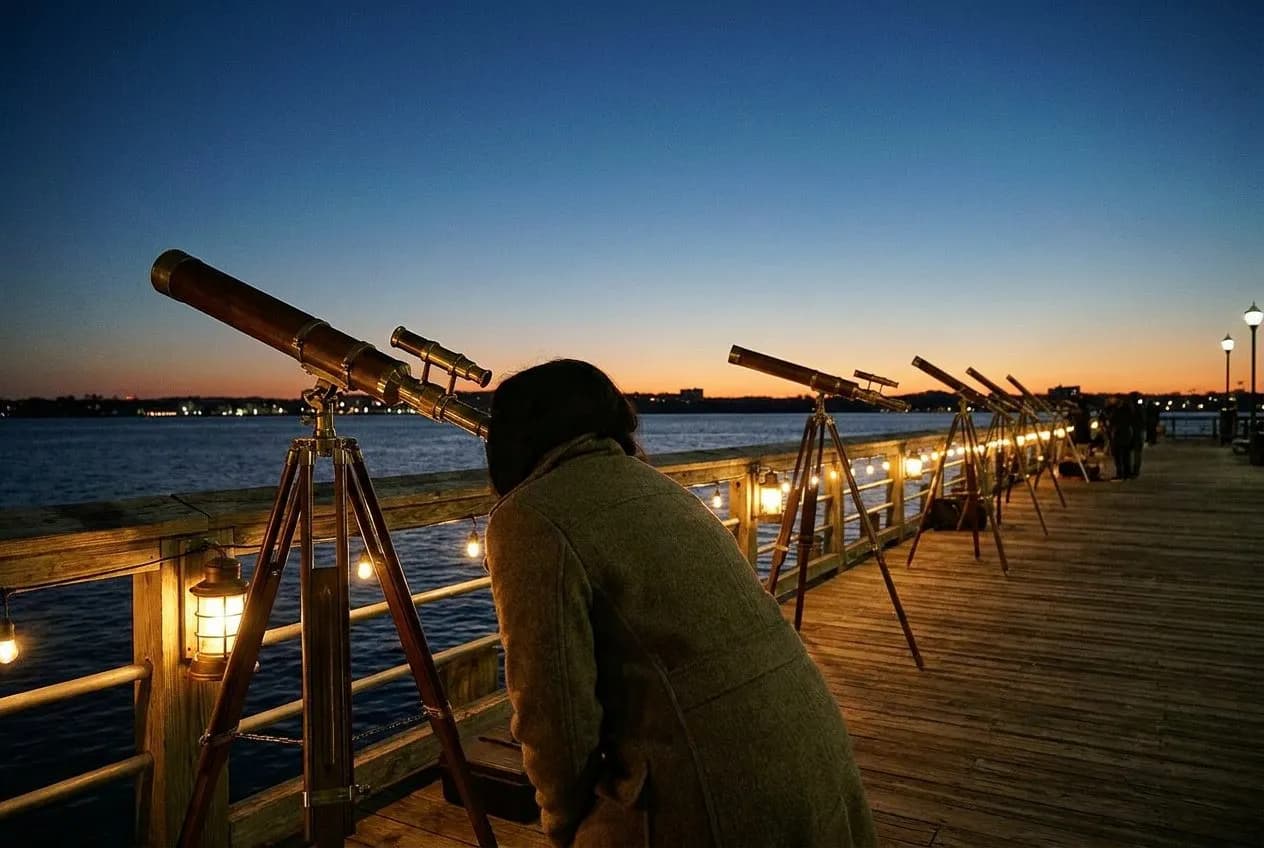
Hudson River Park has quietly hosted free telescope events for years, typically anchoring them to Pier 25 or Pier 84 when the weather cooperates. Volunteers from local astronomy clubs roll out Dobsonian reflectors and refractors on wheeled carts, the kind of portable rigs that look ungainly until you peer through the eyepiece and see the Orion Nebula rendered in soft grays and greens. Late May evenings mean the air is finally warm enough to linger without a heavy coat, and the river breeze carries that faint brackish scent of tidal Hudson mixing with sunscreen and hot pretzels from the nearby vendors.
The setups usually begin around dusk—8:30 PM in late May—and run until the volunteer astronomers pack up or the clouds roll in, whichever comes first. No reservation required; you simply queue politely behind whoever's already waiting for a turn at the eyepiece. Expect clusters of families, a few solo stargazers with their own binoculars, and the occasional skeptic who didn't realize Jupiter would be visible from Manhattan. The volunteers toggle between targets: the Moon if it's a thin crescent, Venus if it's climbing, and whatever deep-sky object happens to be cooperative that night.
Brooklyn astronomy clubs and Prospect Park viewings
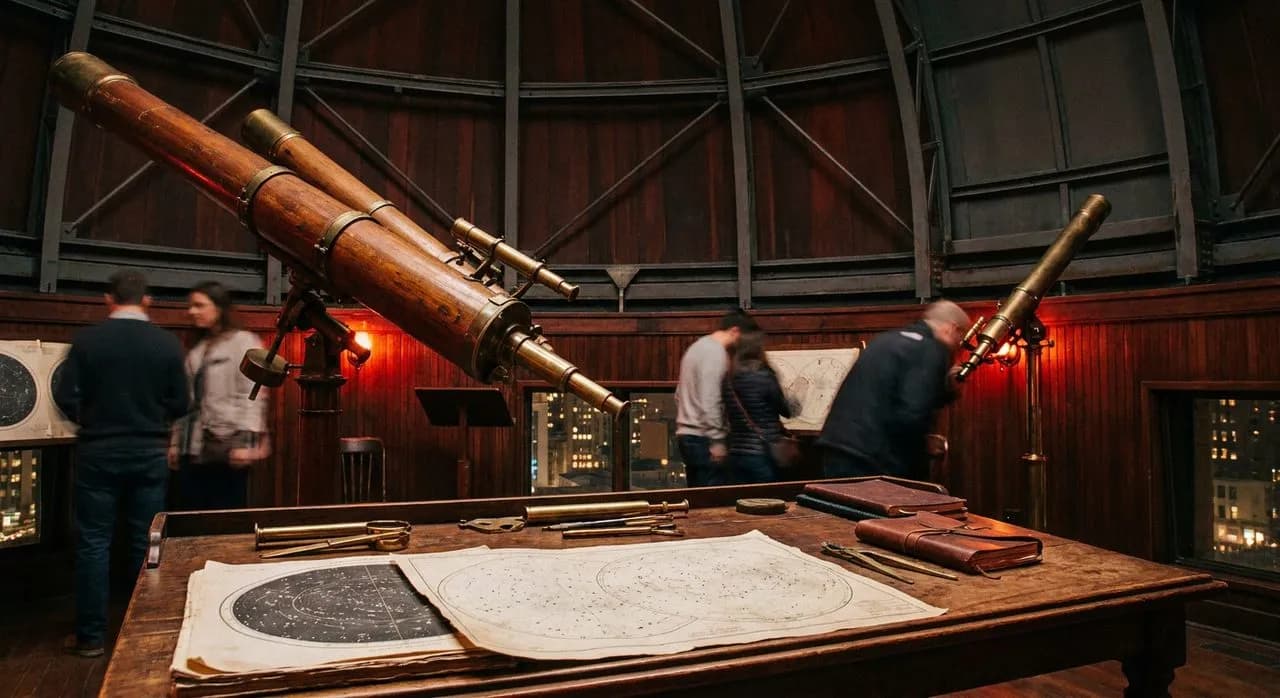
Brooklyn's amateur astronomy community convenes in Prospect Park on select Friday and Saturday nights, weather permitting, often near the Long Meadow or the park's quieter eastern edge. The Amateur Astronomers Association of New York has hosted public sessions here for decades, and the format remains reassuringly analog: folding tables stacked with star charts, thermoses of coffee, and a rotating cast of telescopes ranging from modest 4-inch refractors to hefty 12-inch reflectors that require two people to lift. The grass is still damp in late May if you arrive early; bring a blanket if you plan to sit.
These sessions are pay-what-you-wish in the most literal sense—there's often a donation jar, but no one checks, and the real currency is genuine curiosity. The volunteers are patient with first-timers and happy to let more experienced visitors adjust the finder scope themselves. You'll hear the soft click of eyepieces being swapped, the rustle of red cellophane wrapped around flashlights to preserve night vision, and the low murmur of someone explaining why the Summer Triangle is already visible in the east by 10 PM. Prospect Park's light pollution is real, but it's manageable enough for planetary viewing and the brighter Messier objects.
Rooftop observatory programs in the Bronx and Queens
The Bronx High School of Science has occasionally opened its rooftop observatory to the public on designated evenings, typically coordinated through community outreach programs or in partnership with local astronomy groups. It's not a weekly occurrence, but when it happens, the setup is surprisingly generous: a vintage refractor telescope, folding chairs, and a handful of students or alumni who volunteer their time. The rooftop offers a rare vantage point above much of the neighborhood's streetlight glare, though you're still hemmed in by the city's orange glow on all horizons.
Queens has its own scattered programs, often tied to public library systems or community centers in neighborhoods like Flushing or Bayside. These tend to be more modest—a single portable telescope wheeled onto a library plaza, a librarian who's taken a crash course in constellation identification—but the intimacy works. You might wait only five minutes for your turn, and the operator will often let you linger if the line is short. Late May means the evenings are long enough that programs can start before full dark and still offer two hours of productive viewing.
Columbia University's public astronomy nights
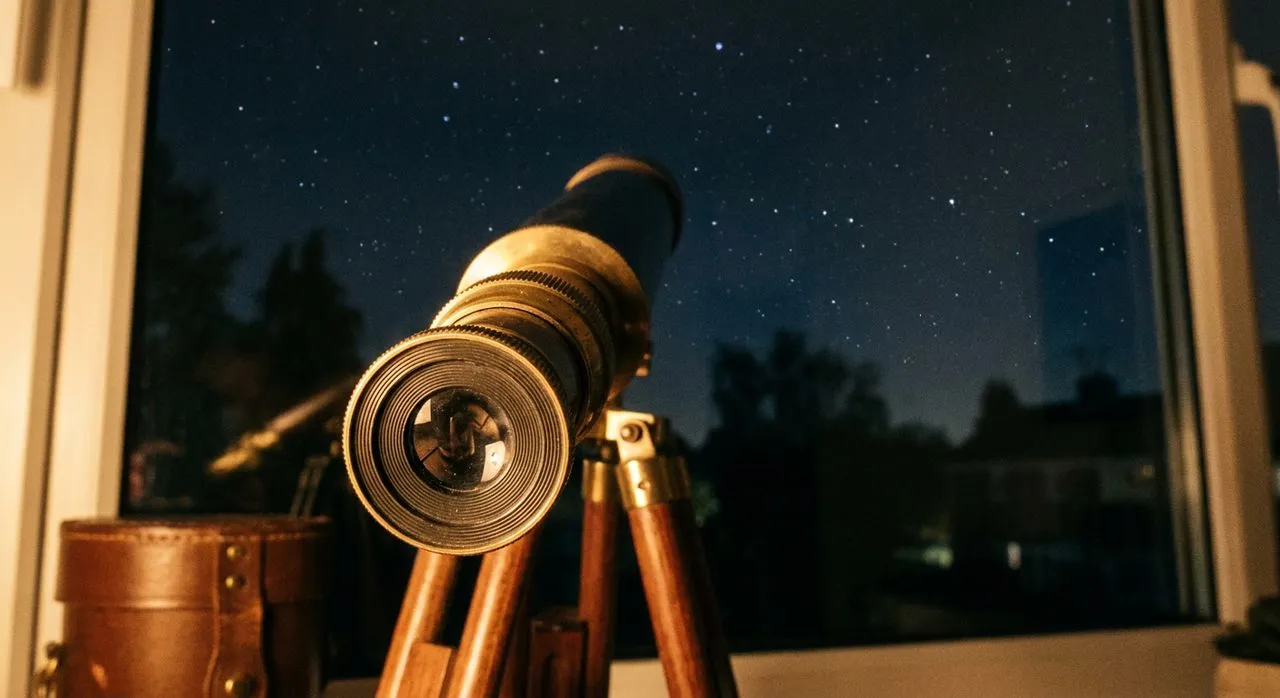
Columbia's Department of Astronomy has periodically hosted public observing sessions, typically on the Pupin Hall rooftop when the academic calendar allows. These events lean educational—expect a short talk or Q&A before the telescopes open—and the crowd skews toward Upper West Side families and undergraduates who've heard about the program through campus flyers. The rooftop itself is a utilitarian space: concrete underfoot, metal railings, the faint hum of HVAC equipment from the floors below.
The pay-what-you-wish model here is enforced gently; there's a suggested donation, but no one turns anyone away. The telescopes are well-maintained, often computerized mounts that can slew to targets with a few button presses, which means more time looking and less time hunting. Columbia's location means you're contending with Morningside Heights' streetlights and the glow from the rest of Manhattan, but Saturn and Jupiter still resolve beautifully, and the Moon's craters are sharp enough to sketch. Verify event dates directly with the department; the schedule shifts semester to semester.
Staten Island's Greenbelt programs
Staten Island offers darker skies than the other boroughs, and the Greenbelt—particularly near High Rock Park—has been a quiet hub for local amateur astronomers who prefer their horizons a bit less cluttered. Public viewings here are typically organized by smaller clubs or informal collectives, and the atmosphere is more picnic than lecture. Bring a folding chair and a thermos; the ground is uneven, and there's no seating infrastructure to speak of.
The telescopes here tend to be personally owned rigs, lovingly maintained and sometimes custom-built. You'll see Dobsonians on wheeled platforms, apochromatic refractors on tripods that cost more than a used car, and the occasional binocular mount for wide-field sweeps of the Milky Way. Late May is early in the season for deep-sky objects like the Lagoon Nebula, but it's prime time for planetary detail. The volunteers are generous with their time and will often walk you through what you're seeing—that faint smudge is a globular cluster, those pinpricks are Jupiter's Galilean moons. Check online forums or community boards for dates; these events aren't always formally advertised.
Upstate day trip: one observatory worth the drive
If you're willing to commit to a day trip, the dark skies north of the city reward the effort. Observatories in the Hudson Valley and Catskills occasionally open their doors for public nights, and the difference in sky quality is immediate—stars resolve down to fifth and sixth magnitude, the Milky Way becomes visible as a faint band rather than an abstract concept. These programs often charge a nominal fee or operate on a pay-what-you-wish basis, and the facilities range from rustic (gravel parking, porta-potties) to surprisingly polished (heated viewing rooms, digital planetarium projectors).
Late May means you're likely to catch warming evenings without the summer mosquito swarms, and the drive itself—north on the Taconic or west along Route 17—offers a pleasant prelude to the main event. Pack layers; even a mild day can turn chilly once the sun drops and you're standing in an open field at elevation. Many of these observatories also host daytime solar viewing, which is worth considering if clouds threaten the evening program. Confirm hours and reservation requirements before you go; some require advance booking, especially around new-moon weekends when demand spikes.
Practical notes
Hudson River Park's Pier 25 and Pier 84 are accessible via the 1 train (Christopher Street or 50th Street, respectively) or the M11 bus along the West Side. Brooklyn's Prospect Park viewings typically meet near the park's eastern edge; verify exact locations with the Amateur Astronomers Association of New York closer to your planned visit. Columbia's Pupin Hall is at 116th Street and Broadway (1 train to 116th). Staten Island Greenbelt programs meet near High Rock Park; driving is easiest, though the S54 bus runs nearby. Bring a small red flashlight if you have one, and dress warmer than the forecast suggests—standing still under open sky chills quickly. Most programs are wheelchair-accessible at ground level; rooftop observatories vary. New-moon dates in late May 2026 fall around the 20th through 24th; plan accordingly for the darkest skies.
Tags: #NYCAstronomy #PayWhatYouWish #FreeAndFine #PublicTelescopes #HudsonRiverPark #ProspectPark #AmateurAstronomy #StargazingNYC #BrooklynNights #UpperWestSide #StatenIslandGreenbelt #May2026 #NewMoonViewing #CityStargazing #NYCOutdoors
Sources consulted: Amateur Astronomy · NYC Parks · Hudson River Park · Time Out New York · Observatory
All trademarks are the property of their respective owners.