 Inwood Winter Greenmarket Picker for Hikers on Cold Mornings
Weekend Plans
Parkour Gym in NYC Parks: The Movement Creative's Classes
The Movement Creative teaches parkour in New York parks instead of a warehouse, with classes for adults and kids. See where each class meets.
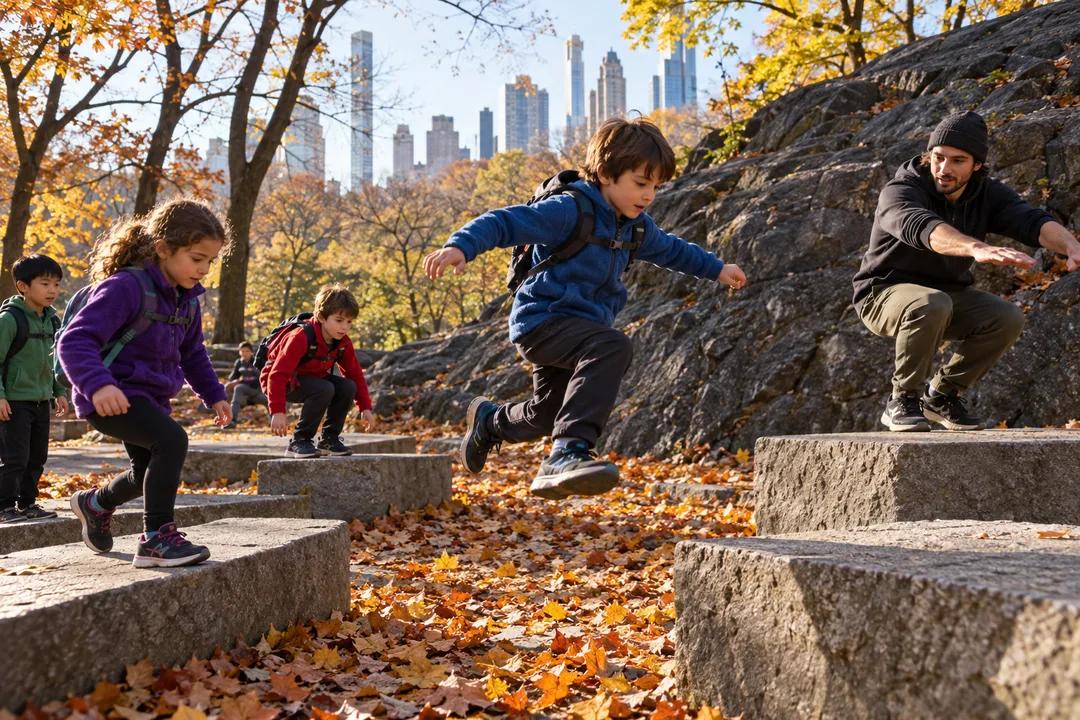
The Movement Creative is the answer to parkour gym near me in New York that comes without a gym: its coaches meet students under the Washington Square Park arch, at Umpire Rock in Central Park, beside the tennis courts in Travers Park in Jackson Heights and near Grand Army Plaza in Prospect Park. An adult's first class is $20, a drop-in is $30, and when the weather turns, teens move indoors to Cocoon at 316 Greenwich St in Tribeca.
Why This Parkour School Chose Parks Over a Warehouse
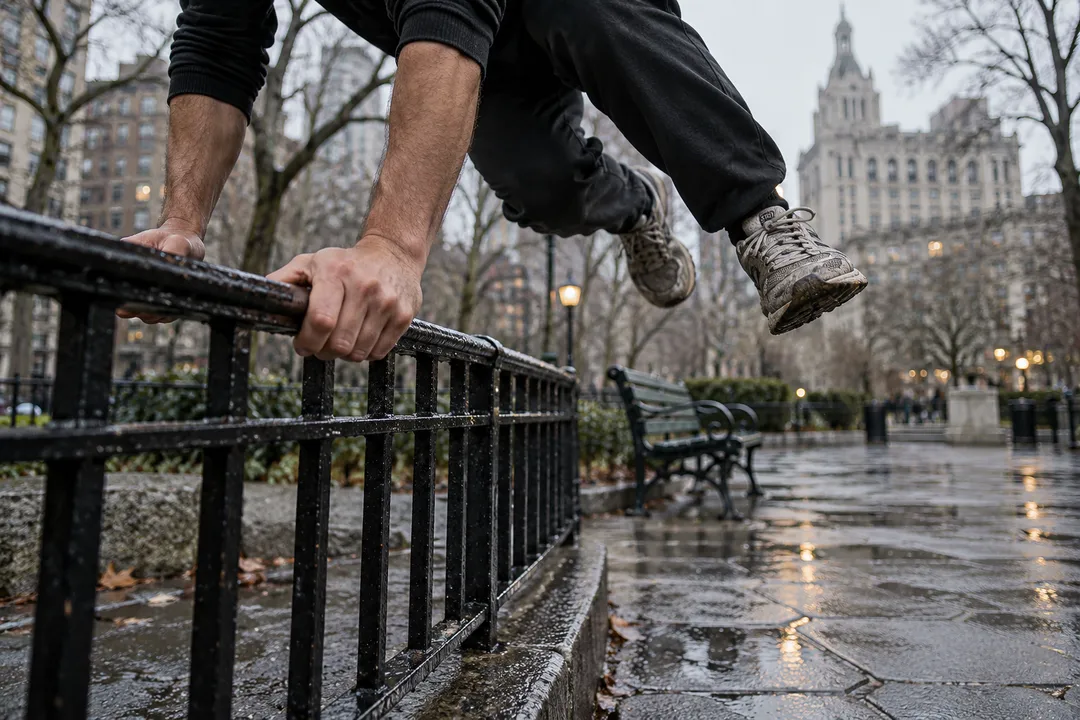
The company describes itself as founded by the first generation of parkour practitioners in New York, and its press archive lists co-founder Caitlin Pontrella giving a talk at The Feast in 2013 while the crew ran a live demonstration. The philosophy has not changed since: the mission page literally says ditch the gym and get outdoors, and the locations page says coaches move inside only when absolutely necessary. Railings, benches, granite ledges and playground bars are the equipment.
That approach depends on staying on good terms with the city. The Movement Creative says it is the only company in New York insured to coach parkour outdoors, and it works with the NYC Parks Department so traceurs keep access to public space. Students are taught to report damaged equipment, stay out of planted beds and never swing from tree branches. If you want foam pits and spring floors, this is the wrong place; if you want to learn to move through the city you live in, it is the right one.
Where Each Class Actually Meets
Every program has a specific meeting point, and they are worth memorizing before your first session. Uptown classes start at the northeast entrance of the Time Warner Center at Columbus Circle and walk into Central Park to Umpire Rock, the giant schist outcrop near the southwest corner. Downtown, groups gather near the Washington Square Park arch. In Queens it is the tennis courts in Travers Park, and in Brooklyn the after-school crew meets near Grand Army Plaza at Prospect Park.
The Tribeca programs use two spots. Kids in the Monday after-school group are dropped at the Greenwich Street entrance of Washington Market Park. The Thursday teen class is a hybrid: drop-off is at Bogardus Plaza at 4:30pm, the group trains outdoors, then finishes inside Cocoon at 316 Greenwich St for a 6:30pm pickup. Cocoon is near the Chambers Street stop on the 1, 2 and 3 trains, which makes it the easiest pickup point in the program for commuting parents.
Adult Classes and What They Cost
Adults train in a format the company calls Parkour Plus. Each session is an hour of instruction built around one fundamental movement, taught as a progression so every student can choose the version that matches their strength and fear level, followed by 30 minutes of open exploration when coaches stay to train alongside you and give one-on-one notes. Pricing on the official adult page is $20 for a first-time class, $30 for a drop-in and $200 for an eight-pack.
New to it and nervous? The adult page invites first-timers to show up during the last half hour of a class with no payment, meet the coach and the regulars, ask questions and watch a quick demo. That free preview is the best way to judge whether outdoor training on cold stone suits you before you buy the pack. Private instruction and a personal training track exist for adults who want a coach to build a plan around a specific goal.
After-School Parkour Adventure for Kids
Most of the company's weekly traffic is children in Parkour Adventure, a fall and spring after-school program that follows the Department of Education calendar. Groups run from 3:30pm drop-off to 5:30pm pickup: Mondays at Washington Market Park and Travers Park, Wednesdays at Prospect Park and Fridays under the Washington Square arch. Coaches build the session like a community jam, letting kids invent movement games while learning climbing, swinging, balancing and safe landings.
A Standard membership costs $280 a month with first pick of program and location plus free Saturday parkour classes during the semester. All-Access is $330 and adds every holiday camp; the company has planned 24 holiday camp days for the 2026 to 2027 school year, and a single camp day costs $180, which is why families with kids who hate school breaks lean toward the higher tier. Memberships carry a five-month minimum, and sliding-scale codes are available to anyone without questions.
Rules, Gear and What to Pack
Kids bring a reusable water bottle and a nut-free snack in a backpack worn on two shoulders; tote bags, messenger bags and rolling bags are not allowed because students carry them while moving between spots. Electronics stay home. Coaches carry a first aid kit, hand sanitizer and a water cooler, and at least one coach walks students to the park bathroom or fountain.
Weather is part of the curriculum. The company tries to train in rain and cold and publishes a cold-weather guide for layering, but it cancels for real safety threats such as severe thunderstorms, flash flood warnings or snow advisories that could strand coaches commuting by subway or bike. When that happens, after-school classes switch to online and families are notified by 8am that day. Parents of kids who hate getting muddy should take that seriously.
Who Trains Here and an Honest Caveat
The parent testimonials on the site describe the typical member well: a ten-year-old who has done three straight years of after-school sessions, a shy kid whose coach treated him with respect, families who stay enrolled across semesters. Adult sessions are pitched at grown-ups who would rather vault a park bench properly than lift in a basement gym, and the free last-half-hour preview exists for exactly that crowd. The coaching culture leans social, with circle discussions and reflections at the end of sessions, and the mantra start together, finish together.
The caveat is the flip side of the outdoor model. You will not learn big flips here the way you would on a trampoline and foam pit, and a January class at Umpire Rock is cold no matter how good the coaching is. If you want an indoor parkour gym with mats and open hours, Brooklyn Zoo at 230 Bogart St in East Williamsburg runs a $30 drop-in class and evening open gym, and it is a sensible backup on icy weeks.
Pairing a Class With a Walk
The Tribeca programs put you a block from the Hudson River Park waterfront, so after an evening session at Cocoon, walk west on Chambers Street to the river esplanade and Rockefeller Park, where the lawn and playground give younger siblings room to run while older kids cool down. The Central Park classes end close to the Columbus Circle entrance, and the Heckscher Playground area is right there if smaller children came along to watch.
In Queens, Travers Park sits on 34th Avenue in Jackson Heights, which means a post-class dinner on 37th Avenue or Roosevelt Avenue is a short walk away. Brooklyn families finishing at Grand Army Plaza can drop into the Brooklyn Public Library's Central Library across the plaza, whose huge gilded entrance makes a good meeting point if a parent is running a few minutes late for the 5:30pm pickup.
Practical Notes
No fixed gym. Indoor partner: Cocoon, 316 Greenwich St, New York, NY 10013 (1, 2, 3 to Chambers St). Outdoor meeting points: Washington Square Park arch, Umpire Rock in Central Park via the Time Warner Center northeast entrance, Travers Park tennis courts, Prospect Park near Grand Army Plaza. Adults: $20 first class, $30 drop-in, $200 for eight. Kids memberships $280 or $330 a month.
Ask Karpo for more information.
Keep reading
- Inwood Winter Greenmarket Picker for Hikers on Cold Mornings
 Carroll Gardens Winter Greenmarket Picker for Holiday Bakers
 Jackson Heights Winter Greenmarket Picker for a Family Day