 Inwood Winter Greenmarket Picker for Hikers on Cold Mornings
Weekend Plans
Paranormal Museum Near Me: Historic Richmond Town Ghost Lore on Staten Island
Discover centuries of documented spectral folklore across thirty preserved colonial structures at Historic Richmond Town on Staten Island, featuring courthouse archives and after-dark lantern tours.
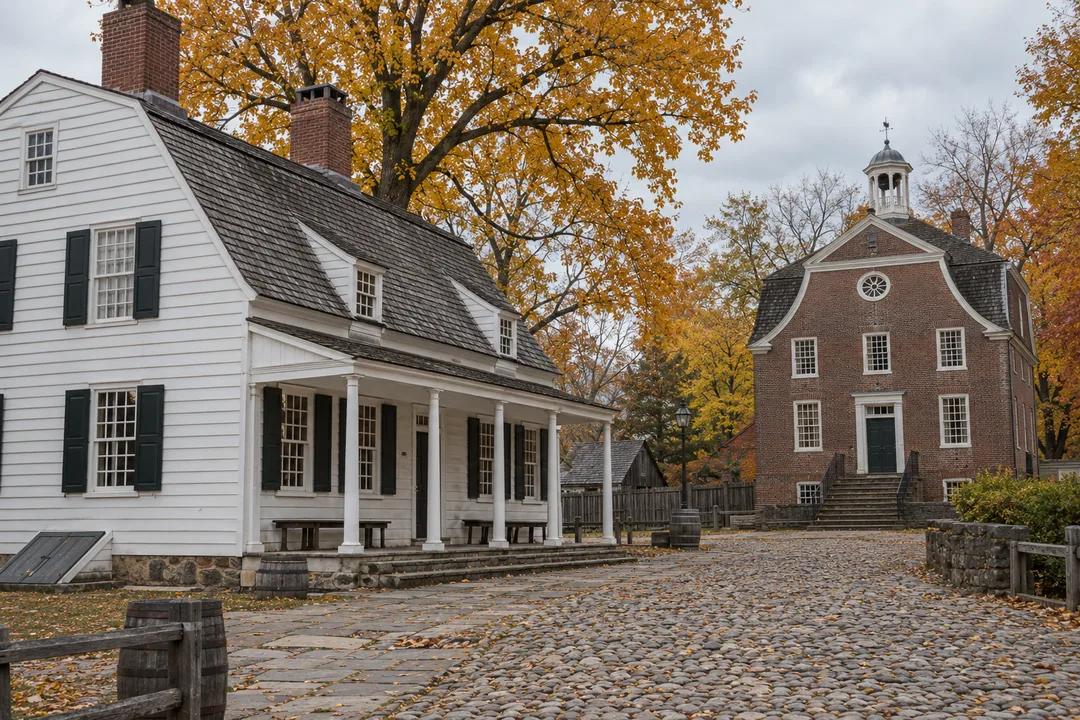
Historic Richmond Town at 441 Clarke Ave is New York City's only living history village complex, spanning more than one hundred acres in central Staten Island. For travelers typing 'paranormal museum near me' in search of tangible colonial records rather than commercial sideshows, this historic settlement contains over thirty authentic structures dating from the late seventeenth century through the early twentieth century. Here, historical society curators maintain original courtroom dockets, death records, and documented eyewitness testimonies of spectral disturbances tied directly to the Revolutionary War and early American frontier trials.
The 1837 Third County Courthouse and Frontier Justice
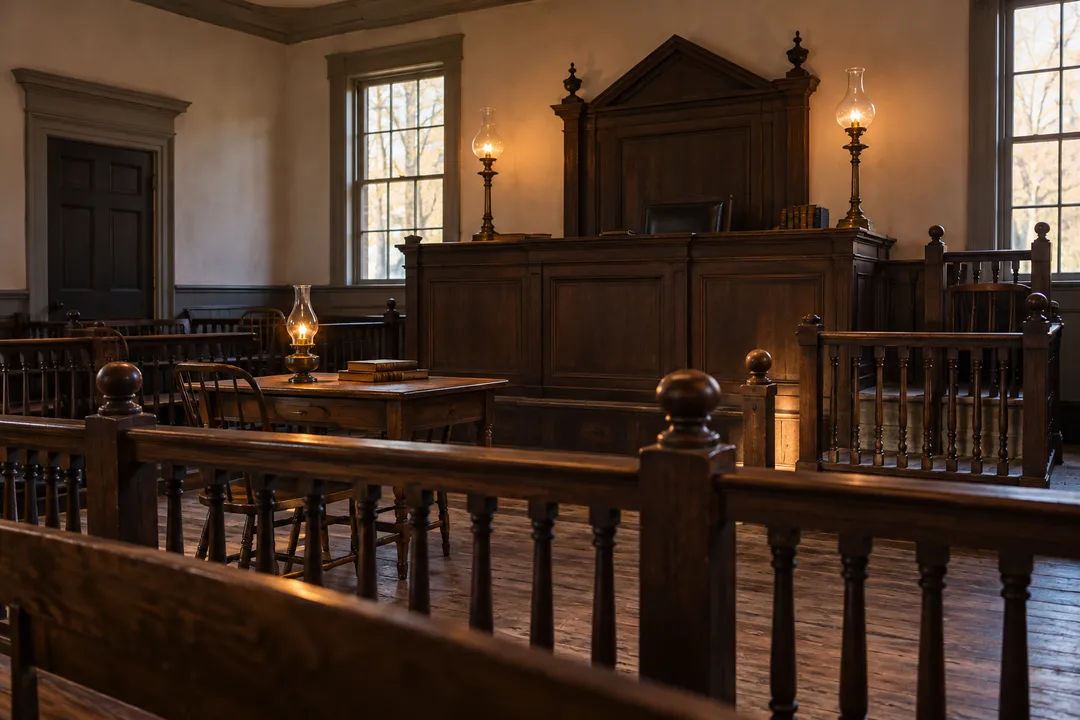
At the architectural heart of the complex stands the Third County Courthouse, completed in 1837 in the Greek Revival style to handle civil disputes, criminal trials, and capital sentencings for Richmond County. The courtroom preserves its elevated mahogany judge's bench, unvarnished wooden juror pews, and the original iron holding cells in the basement level where accused prisoners awaited trial. Court records preserved in the historical archives document dramatic nineteenth-century murder trials, including the 1843 Christian Smith murder case, which took place within sight of the public gallows that once stood in the adjacent courthouse yard.
Museum docents and local historical society staff have documented persistent anomalous phenomena throughout the courthouse building for decades. Unexplained temperature plunges frequently register around the defense table in the main courtroom, while nighttime security personnel have repeatedly heard heavy wooden doors latching shut and disembodied gavel strikes echoing through empty chambers. Rather than treating these tales as fiction, the village exhibits historic coroner inquest files and nineteenth-century court transcripts that anchor each haunting in verifiable municipal records.
The 1695 Voorlezer's House and Guyon-Morrison Lore
Across the village green sits the Voorlezer's House, constructed in 1695 by the local Dutch congregation to serve as a church, community schoolhouse, and residence for the village teacher. Recognized as the oldest known standing elementary school building in the United States, its low-beamed timber ceilings and fieldstone foundation evoke the harsh living conditions of late seventeenth-century New Netherland. Visitors regularly report hearing faint children's whispers and the gentle scraping of antique slate pencils across wooden desks in the second-floor classroom when the building stands completely empty.
A short walk down Arthur Kill Road leads to the Guyon-Morrison House, an 1740 stone-and-timber farmhouse expanded during the Revolutionary War when British troops occupied Staten Island. During the long winter of 1777, British and Hessian regiments were quartered throughout the village, prompting fierce local skirmishes along the wooded hillsides of Richmond Creek. Curatorial staff display authentic eighteenth-century musket balls, military buttons, and surgical bone saws recovered during archaeological excavations, connecting visitor experiences to the genuine hardships of wartime occupation.
Daytime Museum Admission and Village Walking Logistics
Historic Richmond Town is open to the public Wednesday through Sunday from 11:00 am to 4:00 pm, offering self-guided access across the grounds and historic interiors. General museum admission is priced at $11.00 for adults, while youth tickets for children ages six to eleven cost $6.00, and children five and under enter completely free. Tickets can be purchased at the modern visitor center located inside the Third County Courthouse entrance at 441 Clarke Avenue upon arrival. On Friday and Saturday evenings throughout the autumn season, costumed historians guide ninety-minute lantern-lit Village Ghost Tours at 7:00 pm and 8:30 pm for $25.00 per person.
The open-air historic complex covers uneven dirt paths, stone thresholds, and grassy meadows, so sturdy closed-toe walking shoes are essential for exploring the full site. Historic interiors lack modern central heating, which means dressing in warm layers during chilly October and November afternoons ensures a comfortable visit. Restrooms and a curated gift shop featuring regional history books and locally poured beeswax candles are located adjacent to the courthouse admissions hall.
Honest Advice on Seasonal Timing and Village Pacing
A comprehensive visit to Historic Richmond Town requires at least two to two and a half hours to walk between the various trade shops, including the operating tinsmith, print shop, and general store. Arriving around 11:30 am on a Thursday or Friday allows you to tour the historic homes with minimal crowds, leaving ample daylight to explore the surrounding nature paths before the afternoon shadows lengthen. Families with young children will find the open grassy lawns ideal for a quiet afternoon stroll, though parents should note that historic staircases inside the houses are steep and narrow.
Visitors should avoid treating the village as a rapid checklist stop, as the true charm lies in listening to skilled craftspeople demonstrate colonial ironworking and barrel making using period tools. If severe rain closes the exterior lawns, the main indoor museum gallery inside the 1848 County Clerk's and Surrogate's Office remains open, featuring extensive displays of nineteenth-century regional artifacts, fire engines, and folk art. Photography of the exterior colonial architecture is encouraged, though flash photography inside the dimly lit period rooms is restricted to preserve delicate vintage dyes.
Greenbelt Hiking Trails and Historic Richmond County Detours
Directly bordering the village is the southern edge of the Staten Island Greenbelt, a three-thousand-acre network of protected woodlands, freshwater wetlands, and quiet hiking trails. Following the yellow-blazed Richmond Hill Trail eastward takes hikers past the ruins of early colonial stone mills and forested ravines where Revolutionary outposts once stood watch over the Arthur Kill waterway. A short ten-minute walk up Arthur Kill Road brings visitors to the historic St. Andrew's Church, founded in 1708 by Queen Anne's royal charter, surrounded by a peaceful eighteenth-century churchyard.
For dinner or a relaxed beverage after your tour, head two miles north along Richmond Road to explore the historic neighborhood around New Dorp Lane. The district offers authentic Italian bakeries, family-run pizzerias, and historic colonial taverns that have served island residents for generations. Combining an afternoon of historic courthouse exploration with an early evening walk along the nearby salt marshes gives travelers a rare rural perspective hidden inside the five boroughs.
Essential Practical Notes for Travelers
Historic Richmond Town is located at 441 Clarke Ave, Staten Island, NY 10306, situated at the intersection of Richmond Hill Road and Arthur Kill Road. Travelers utilizing public transit can take the free Staten Island Ferry from Whitehall Terminal in Lower Manhattan to St. George, then board the S74 or S84 bus directly to the Richmond Road and Arthur Kill Road stop, a thirty-five-minute bus ride.
For drivers, the village provides expansive free on-site vehicular parking in the main lot located off Clarke Avenue, easily reachable via the Staten Island Expressway and Richmond Road. Because mobile phone signal remains reliable across the grounds, visitors can readily navigate between village wayfinding markers and regional trailheads. With its authentic colonial architecture, documented archives, and deep historical resonance, Historic Richmond Town delivers one of the most compelling paranormal museum outings in the greater New York metropolitan area.
Ask Karpo for more information.
Keep reading
- Inwood Winter Greenmarket Picker for Hikers on Cold Mornings
 Carroll Gardens Winter Greenmarket Picker for Holiday Bakers
 Jackson Heights Winter Greenmarket Picker for a Family Day