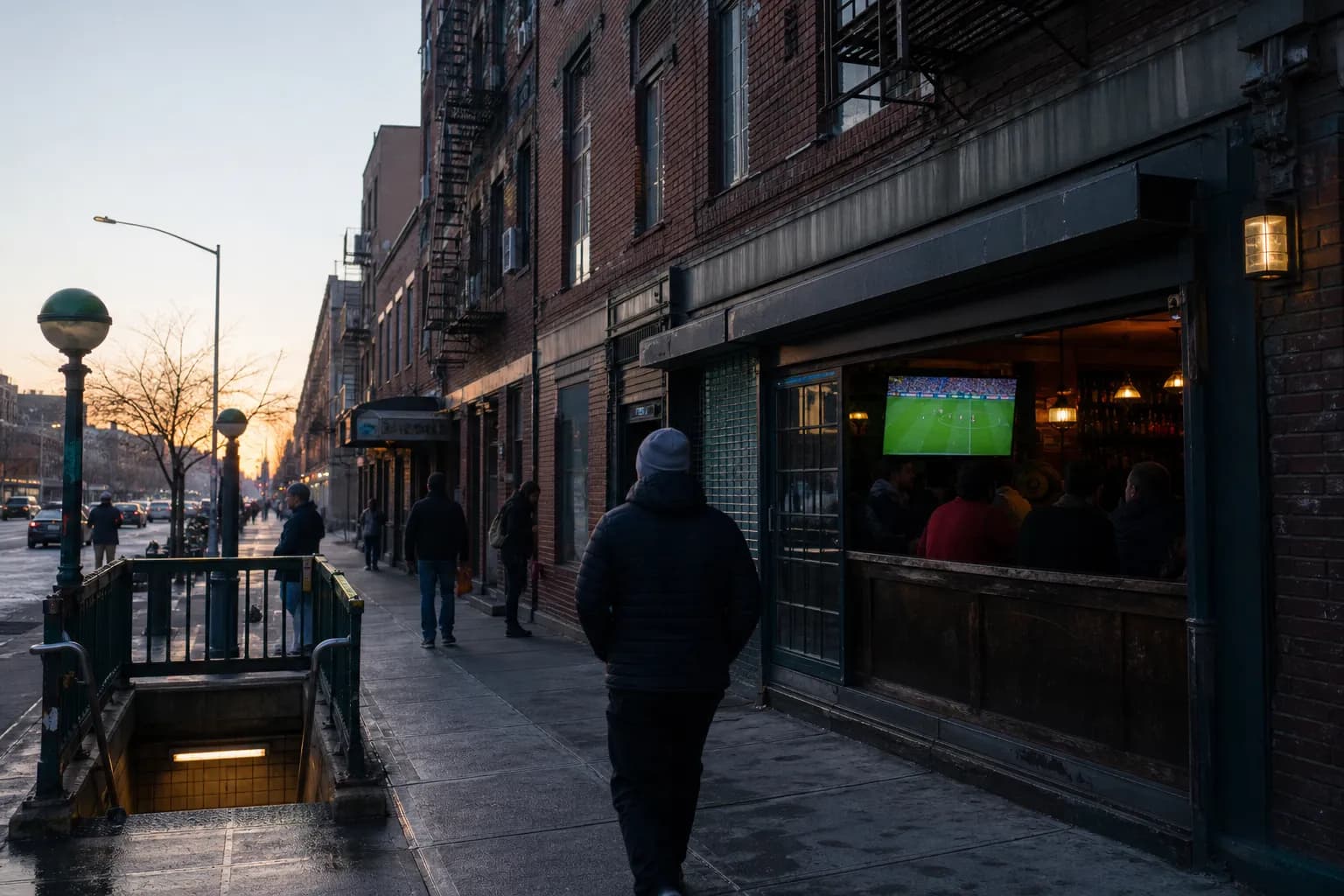
The fastest way to waste a night is to search for a nightclub near me and then treat all of NYC like one simple zone. It is not. Start by thinking in travel time, not borough names. If you are in Midtown, Lower Manhattan, or Downtown Brooklyn, a place that is 20 minutes away on paper can become 45 minutes once you factor in transfers, street-level walking, and the possibility that your train is running differently than expected. A club that is geographically close but poorly connected can be a worse choice than a slightly farther one on a straightforward route.
Map your night in 5 minutes before you head out.

Use your current location as the center of the decision. If you are already in Manhattan, you may want a neighborhood where the evening can flex between dinner, a warm-up drink, and the club without long gaps. If you are in Brooklyn or Queens, the better move may be to stay local unless you know the subway back is reliable for your return time. In NYC, convenience is part of the nightlife experience, not a bonus. A good plan is the one that still feels easy when you are leaving after midnight, not just when you are leaving your apartment.
Read neighborhood patterns before you commit
Different NYC neighborhoods create different kinds of nights. Some areas are more about dense foot traffic, last-minute decisions, and easy hopping between spots. Others are better for a single destination where you arrive, stay put, and leave without overthinking it. Manhattan tends to offer the easiest choice density, but that can also mean more line variability and more temptation to keep wandering instead of committing. Parts of Brooklyn often feel more local and spread out, which can be ideal if you want a more deliberate night and fewer impulse detours. Queens can be a smart option if you are optimizing for proximity and transit simplicity rather than a classic downtown feel.
Think about the mood you want before you search. If you want a high-energy, crowded, late-starting scene, some downtown corridors may fit better than quieter residential stretches. If you want a place where your arrival and exit are easier to manage, look for neighborhoods that are well served by multiple train lines or straightforward rideshare access. Also think about what else is around the club. A block with late-night food, open corner stores, and regular street activity can make the night smoother. A block that feels empty after a certain hour can make the same club feel harder to reach and harder to leave.
Check live signals instead of trusting a stale listing
A nightclub search only helps if you verify the details that change during the day. Before you head out, check the most recent public information you can find: the venue's current listing, its social updates if available, transit alerts, weather, and the general look of recent comments or photos. You are not looking for hype. You are looking for signs that the place is active, accessible, and running in a way that matches your plan. If the listing looks outdated, if recent mentions suggest a very different crowd than you want, or if there is no clear information about the door situation, keep looking.
Live context matters more in NYC than in many cities because your trip can be affected by almost anything: a delayed train, a storm, a parade, a bridge closure, or a neighborhood that is busier than expected. Weather is a big one. Rain, snow, strong wind, or extreme heat changes how pleasant it is to wait outside, how easy it is to get from transit to the entrance, and whether you will want a backup route home. Also check accessibility needs in real time. If you need step-free entry, elevator access, or a smoother path from the curb, verify that before you leave rather than hoping it will work out when you arrive.
Plan your arrival, exit, and backup now
The practical way to go out in NYC is to build the night around three movements: getting there, leaving, and switching plans if the first option does not fit. Arrival is not just transportation. It is the walk from the subway or car to the door, the likelihood of waiting outside, and whether you are comfortable doing that in the weather that night. If the area tends to be crowded, give yourself extra time so you are not rushed. If the area is more spread out, make sure you know exactly how you will get from the train stop to the block without wandering around in the dark.
Your exit plan should be decided before the first stop you order. Late-night subway service can be different from daytime service, and some routes are simply more predictable than others at certain hours. If you know you will want to leave with a clear head, check how easy it is to switch from the club to a train, a bus, a rideshare, or a walk to a safer transfer point. Have one backup if the first spot feels too packed, too far, or too slow to get into. In NYC, the best night is often the one that survives a change without turning into a scavenger hunt.
Choose the right backup logic for the kind of night you want
A strong backup plan is not about settling. It is about protecting the night you actually want. If the first club is too far from transit, too exposed to bad weather, or too uncertain at the door, your backup should be in the same general area or on the same return path. That way, you do not lose the evening to another long trip across the city. If you are meeting friends, agree on a simple rule: one neighborhood, one fallback, one final check-in time. That keeps people from splitting up and making separate bad choices.
This is especially useful in NYC because the city rewards a narrow plan. A compact route gives you options without giving you too many. You can start near a train hub, test the vibe of the block, and decide whether to stay or pivot before you commit too much time. If the club area is lively but not quite right, you may still salvage the night with a nearby bar, late food, or a different room on the same transit line. The goal is not to force one perfect venue. The goal is to make sure the trip itself is worth it, even if the first door is not the final answer.
A simple plan before you go
- Check transit status before you leave, especially if you will return after midnight.
- Build the night around one neighborhood so the backup stays simple.
- Use weather and walking distance as part of the decision, not an afterthought.
- Verify accessibility and entry details live if you need step-free access.

Tags: #sports_social #nyc
Sources consulted: Official city information · Google Maps · Karpo local search
All trademarks are the property of their respective owners.