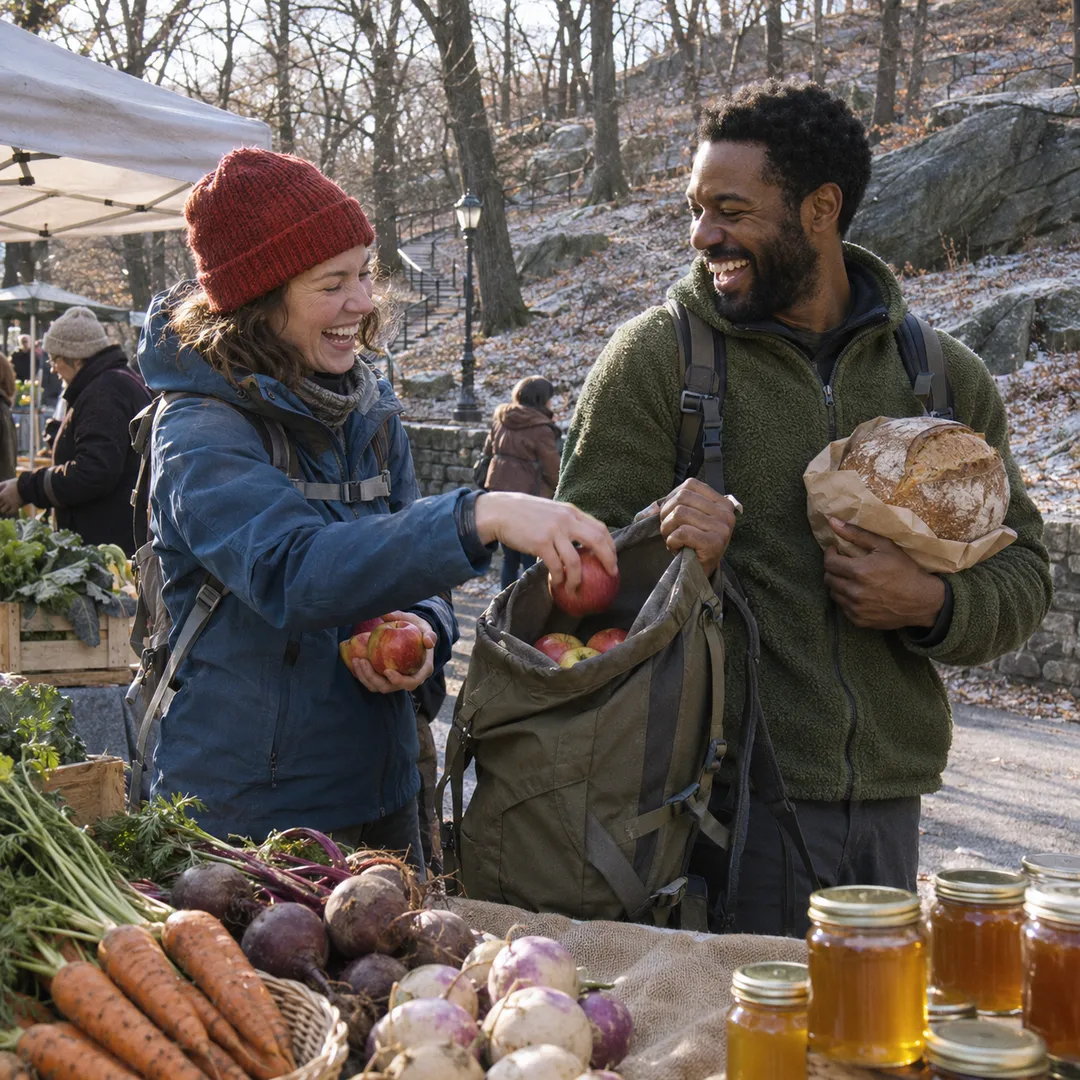
 Inwood Winter Greenmarket Picker for Hikers on Cold Mornings
Weekend Plans
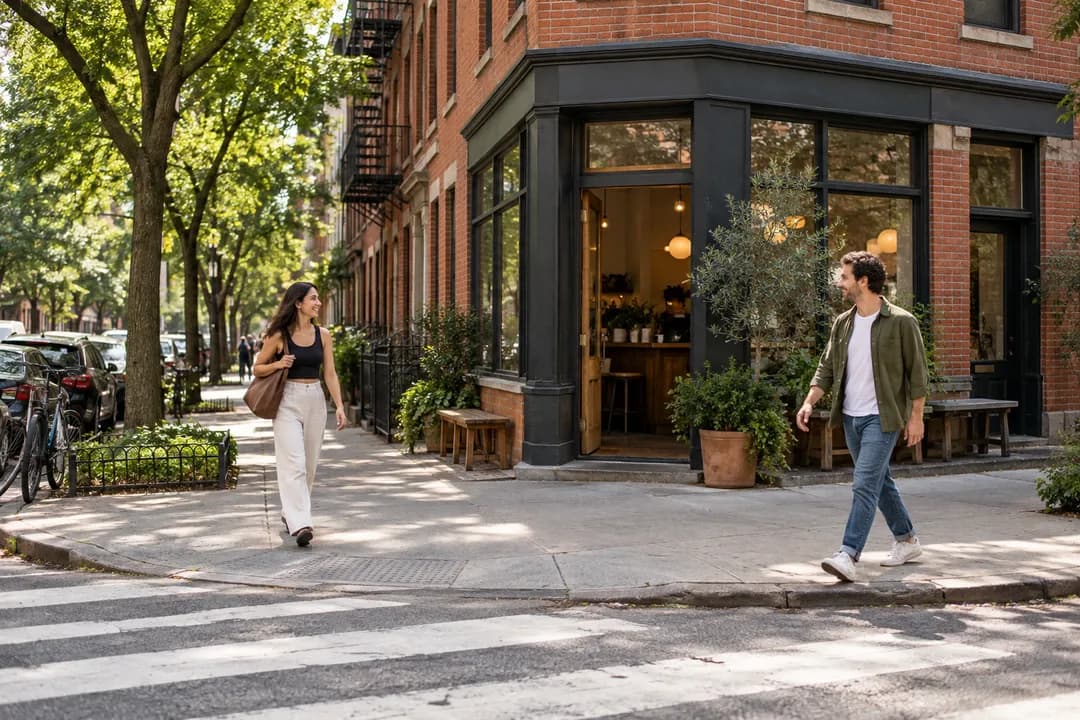
NYC Midpoint Meetup Planner: Two Trains, One Easy Catch-Up
For Bushwick and Greenpoint friends, compare the whole journey before choosing a meetup. Turn two starting stations into a short, shared decision.
A midpoint meetup planner is useful when one friend starts in Bushwick and another leaves from Greenpoint, but a pin halfway between the homes rarely settles the question. The useful midpoint is a place both people can reach without turning a casual catch-up into an expedition. Build the plan around your actual starting stops, the kind of evening you want, and the trip home. Then use Karpo APP to ask for ideas that fit that brief.

Begin with two starting stops
Write down a nearby station for each person rather than sharing a home address. Add the day you want to meet, the earliest departure each person can manage, and any walking limit. Someone leaving work in a different neighborhood should use that workplace as the origin. Planning from the wrong origin creates an apparently fair choice that one person cannot reasonably reach when the meetup actually begins.
Keep the information compact enough to copy into one conversation. For example, say that one person will begin near a Bushwick L stop and the other near a Greenpoint G stop, then name those stops. Ask for a casual meal or a drink afterward, whichever matters more. These are inputs to a discovery request, rather than evidence that any particular train is running or any restaurant has room.
Compare the connection before choosing dinner
The MTA subway map shows the G and L connecting at Metropolitan Avenue and Lorimer Street. That makes the surrounding area a sensible candidate to investigate for this particular pairing. It does not make it the automatic winner. A friend who lives far from the station entrance, or someone facing a long walk after dinner, can still have the less comfortable journey despite the convenient connection on the map.
Use that connection as one candidate and compare it with a second area suggested by the group. Look up each complete journey in a transit planner using the intended departure time. Include walking at both ends, transfers, and the return. Record the result as a rough comparison for your decision, not a promise of arrival. A shorter ride with a difficult transfer may be a worse social compromise than a slightly longer direct journey.
Say what a casual evening means
A coffee, an early dinner, and two drinks create different requirements. Coffee allows a short visit and makes separate ordering easier. Dinner needs everyone to be comfortable with the menu and the likely spend. Drinks can exclude someone who does not drink alcohol if the shortlist treats the bar itself as the whole activity. Name the shared activity before asking for places, so the suggestions have a clear job.
Translate vague preferences into things you can discuss. Instead of saying somewhere cool, describe a seated catch-up where both people can talk, order independently, and leave after an hour if they need to. State whether outdoor seating is an optional bonus or unsuitable. If one friend has dietary restrictions, include them now. A location is not a useful midpoint when the only appealing item is something the other friend cannot eat.
Give Karpo a focused discovery request
Open Karpo APP and explain the two origins and the desired mood. A workable request is: “We are coming from these two stations, want a relaxed meal followed by an optional drink, and prefer a short walk after the train. Suggest a few places around the Lorimer and Metropolitan connection, with reasons each might suit us.” Add your own budget ceiling and dietary needs rather than borrowing someone else's idea of affordable.
Karpo's public website describes a conversational way to explore the city around your mood and schedule. Use that discovery role to shape a shortlist. Do not interpret a suggestion as a live seat count, a noise measurement, or a transport calculation. If an answer gives a specific venue detail, distinguish what is supported by a linked listing from what is simply a possible fit. Keep uncertain details out of the final invitation.
Reduce the shortlist to two real choices
Ask each friend to choose one priority and one dealbreaker. One may value a direct trip while the other needs somewhere to sit. Use those answers to remove poor matches before discussing decor or popularity. Limit the final vote to two candidates. Sending a dozen links sends the work back to the group and often recreates the same stalled conversation that prompted the search in the first place.
For each finalist, write a short reason tied to the actual evening. One might offer a simpler arrival, while the other looks more suitable for a full meal. Consult the venue's own information for any service or access detail you intend to rely on. A photograph of a large room does not prove that a table will be available. If seated dining is essential, establish the arrangement directly through the venue's booking or contact channel.
Make the arrival easy to understand
A station name alone can leave friends standing at different corners. Once the venue is chosen, send its exact map pin and a recognizable meeting point that does not block an entrance. Agree whether to meet outside or head inside separately. A brief message such as “meet at the venue entrance, and message the group if you enter first” removes the need for an improvised search after someone has already arrived.
Keep an alternative close to the selected venue rather than across the neighborhood. The alternative should preserve the same essential activity: another place to sit if conversation matters, rather than a loud standing stop. Decide a cutoff for switching together. If the first location cannot accommodate you, make one shared change instead of sending the early arrival scouting while the other person continues toward an outdated destination.
Practical Notes for the return journey
Before committing, each person should inspect the journey home using the transit information relevant to that date. MTA maps establish the normal network, while service notices and journey tools help with a specific trip. This matters especially when a quick catch-up becomes a longer evening. Set an approximate finish together and leave room for the walk back, rather than counting only the minutes spent at the table.
The finished plan can be only a few lines: two origins, one venue, an arrival point, an agreed spending limit, and a nearby fallback. Save the longer comparison for yourselves. A fair meetup is one both friends understand and willingly accept. Use the conversation in Karpo APP to discover options, then make the final choice with the person making the other half of the journey.
Ask Karpo for more information.
Keep reading
- Inwood Winter Greenmarket Picker for Hikers on Cold Mornings
 Carroll Gardens Winter Greenmarket Picker for Holiday Bakers
 Jackson Heights Winter Greenmarket Picker for a Family Day