Mediterranean is the least informative word on a New York menu. It is applied to Levantine, Turkish, Greek, Israeli, Palestinian, North African and occasionally southern Italian cooking, on the basis that all of them use olive oil, lemon and chickpeas. Those cuisines are related the way French and Romanian are related — genuinely, distantly, and not in a way that helps you order. Searching mediterranean food in this city returns everything and distinguishes nothing, so the useful skill is reading which tradition a kitchen is actually cooking in.
Mediterranean covers five cuisines that want different orders from you. Ask Karpo what is near you right now and which tradition each kitchen is actually cooking in.
Hummus is the tell
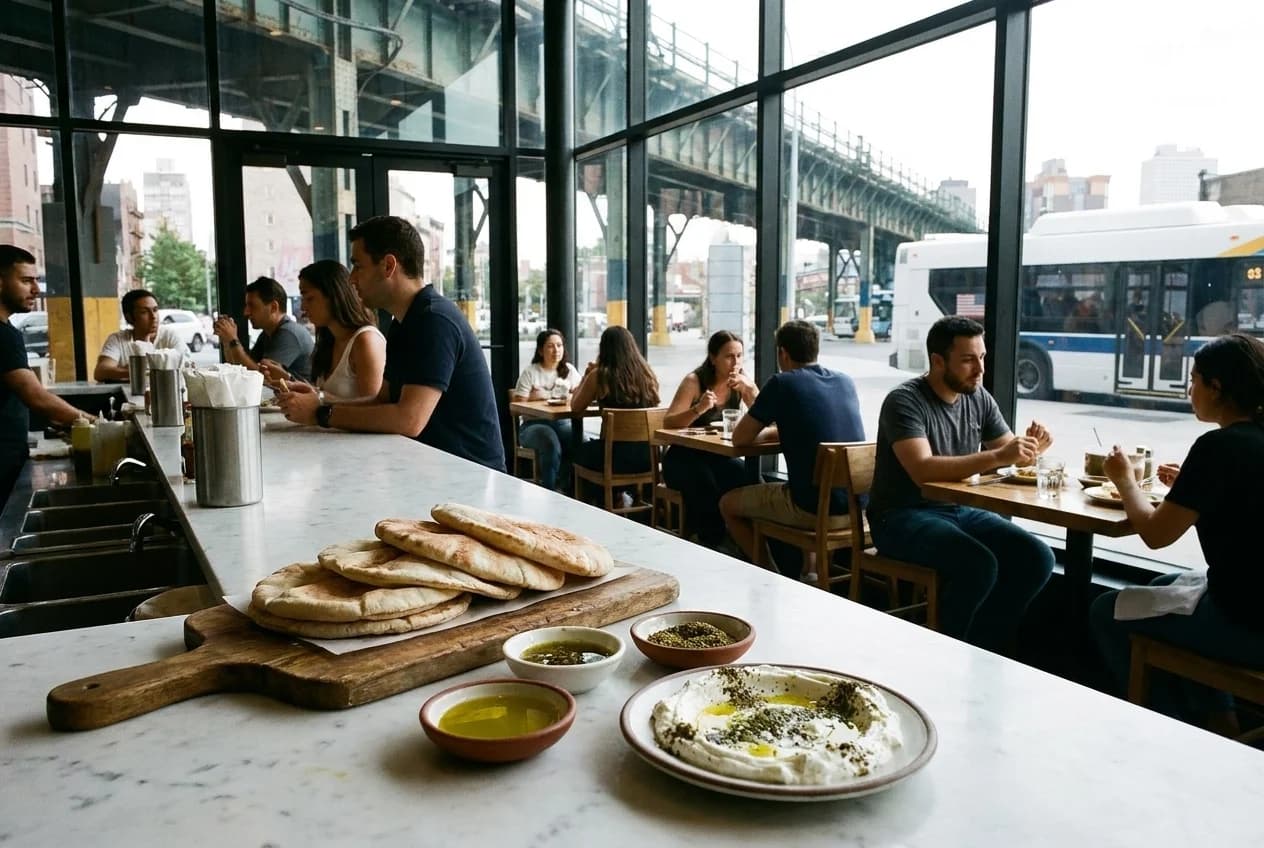
You can identify a kitchen's tradition from a single plate of hummus, and it is the first thing worth ordering anywhere. The Levantine version — Lebanese, Palestinian, Syrian — is smooth, pale, heavy on tahini, slightly bitter, served in a shallow well with olive oil and little else. The Israeli version is looser and warmer, frequently served with a topping that is the point of the dish: whole chickpeas, mushrooms, ground lamb. The Greek and Turkish tables do not really centre hummus at all, which is itself informative — if hummus is buried at the bottom of the appetiser list, you are not in a hummus restaurant and should order accordingly.
The temperature is the giveaway most people miss. Hummus in the Levant is a warm dish eaten at lunch, not a cold dip. If it arrives cold from a refrigerator, the kitchen is treating it as a side rather than a plate, and the rest of the menu will follow that logic. If it arrives warm, order a second one and skip a main.
Bread is not an accompaniment
The thing that separates a serious kitchen in this category from a competent one is whether it bakes its own bread. Bustan, on the Upper West Side, runs a taboon oven and sends out its own flatbreads — whole-wheat pita, Moroccan frena with toasted garlic and oregano, grilled flatbread — and those breads are the reason to eat there rather than a courtesy before the meal. Miznon built an entire format around the pita as the vessel, which is a different but equally deliberate answer.
The corollary: if the bread is a stack of cold supermarket pita in a basket, adjust your expectations and order grilled things instead of spreads. Spreads without good bread are a texture with nowhere to go. Labneh, the strained yoghurt that sits alongside hummus on most mezze lists, is even more dependent on it, and is the single most underordered thing on these menus.
Kebab is a technique, not a dish
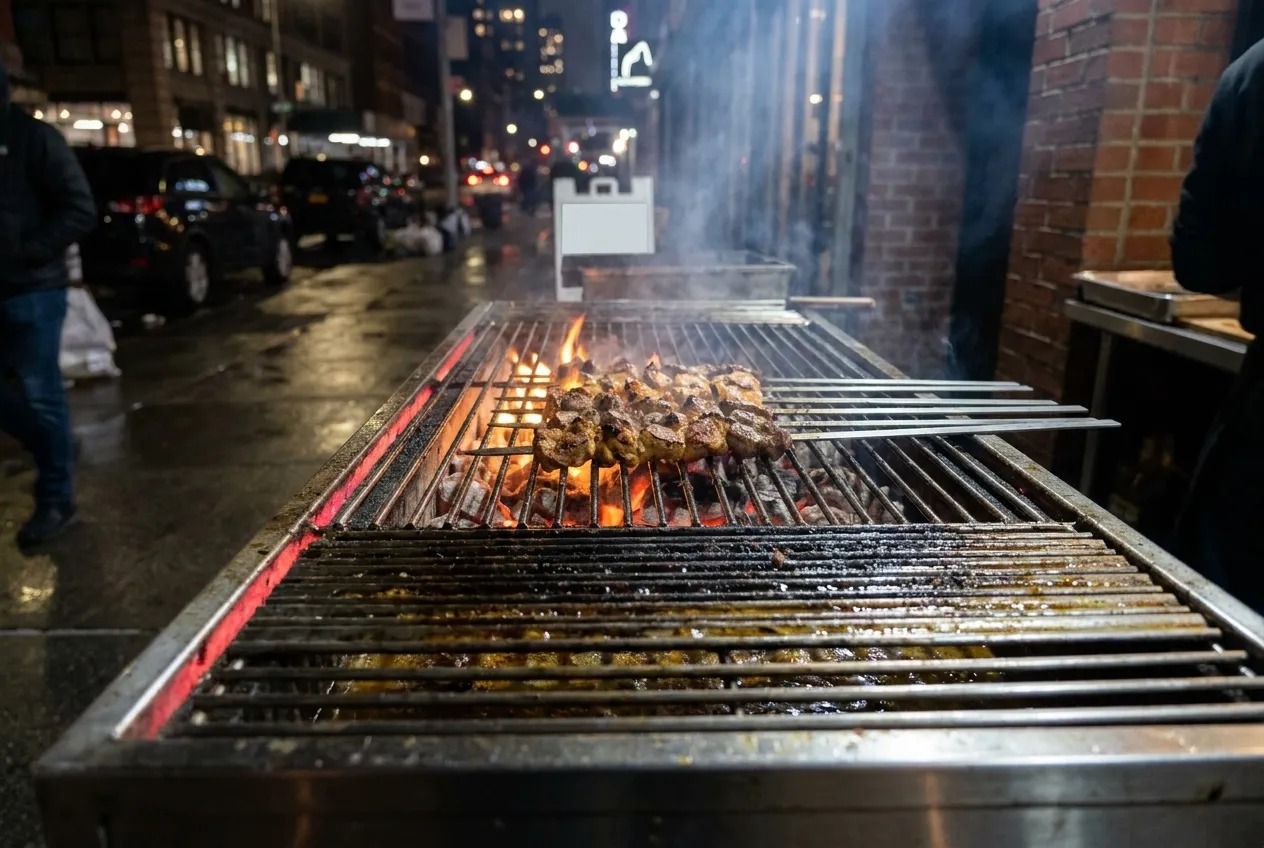
The word covers at least three different things in New York. Shish is chunks of meat on a skewer over charcoal. Kofta or kebab halabi is minced and spiced meat formed onto the skewer — the Aleppan version, which turns up on Levantine menus like Bustan's, is the benchmark. Döner and shawarma are neither: they are a vertical spit, shaved to order, and a completely different piece of equipment.
This matters when you order, because the failure modes differ. Minced kebab goes wrong by being dry, which happens when the fat ratio is too low or it has been held. Shish goes wrong by being overcooked, because the pieces are small and the margin is thirty seconds. Shawarma goes wrong by being cut from a spit that has been turning too long. A kitchen with charcoal visibly going is worth ordering skewers from; a kitchen without one is worth ordering spreads and stews from instead. Roast chicken is the other reliable order — a well-made musakhan, the Palestinian dish of chicken with sumac and onions over bread, tells you more about a kitchen than any kebab.
Where each tradition actually lives
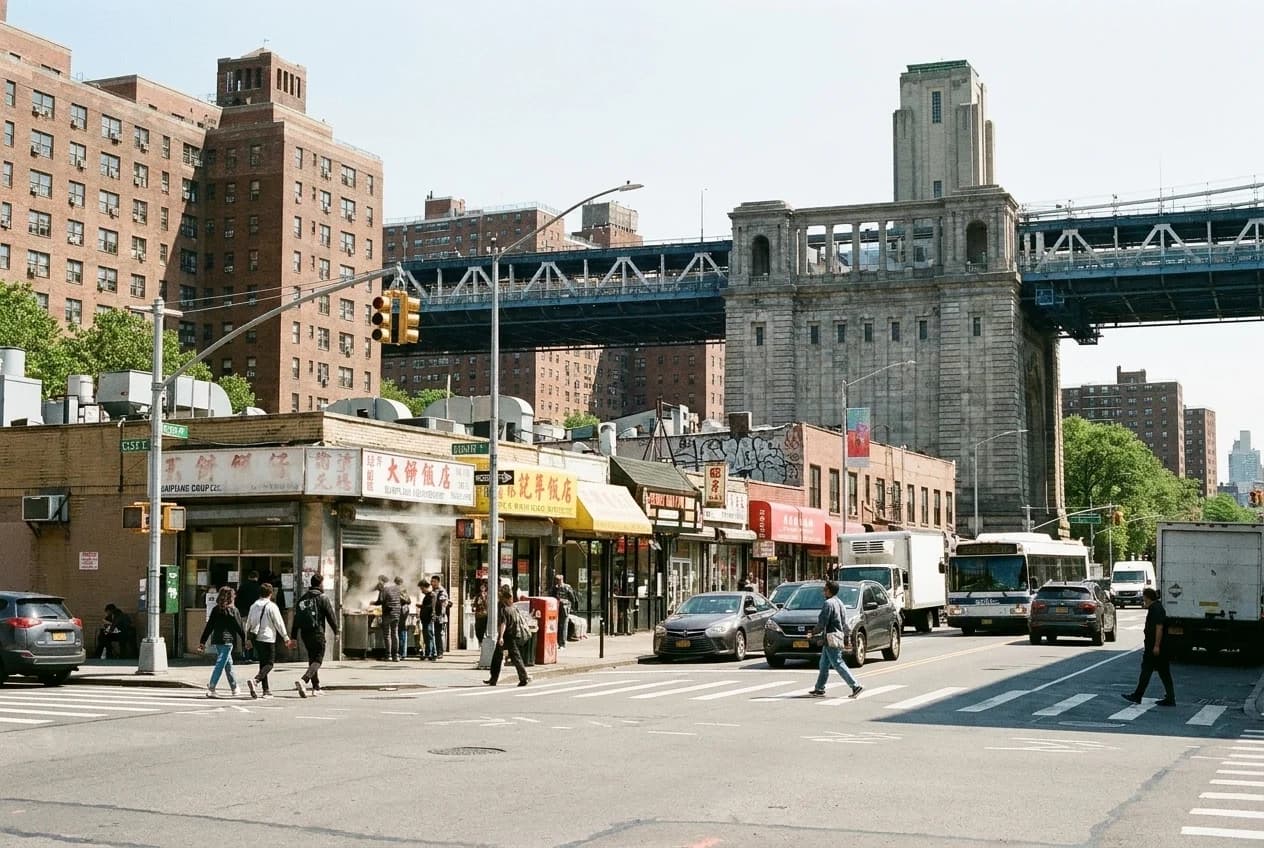
The geography is worth knowing because Manhattan is not the answer for most of these. Bay Ridge in Brooklyn is the city's Palestinian and Lebanese centre and has been for generations. Atlantic Avenue is the older Levantine corridor and still holds the grocers and bakeries that supply half the city. Astoria is the Greek anchor. The Turkish and Georgian cooking clusters out towards Sheepshead Bay and Brighton Beach.
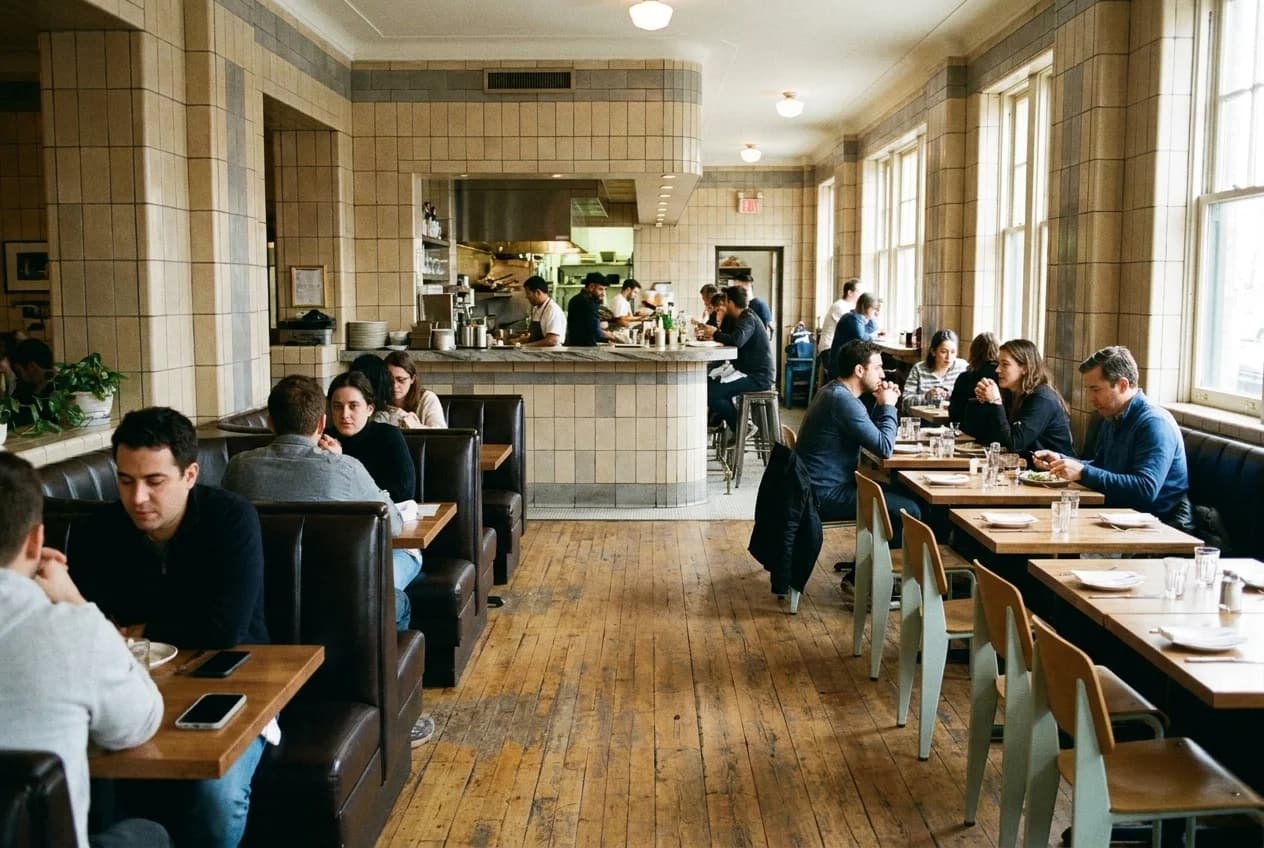
Manhattan's contribution is the restaurant-scale version — rooms like Bustan that take the tradition seriously with a proper oven and a wine list, and formats like Miznon that translate it into something fast. Both are legitimate. But if you want the food at its cheapest and most exact, the answer is a train ride, and the difference in price is roughly half.
The other thing worth reordering across all of these traditions is the vegetables. Salads in this part of the world are not a side dish — a proper fattoush or a chopped salad with sumac and enough lemon is a main event, and the roasted aubergine and cauliflower dishes on most of these menus are usually the kitchen's best work. Ordering a table of vegetables and bread with a single piece of grilled meat is both the cheaper and the more authentic construction, and almost nobody does it.
Practical notes
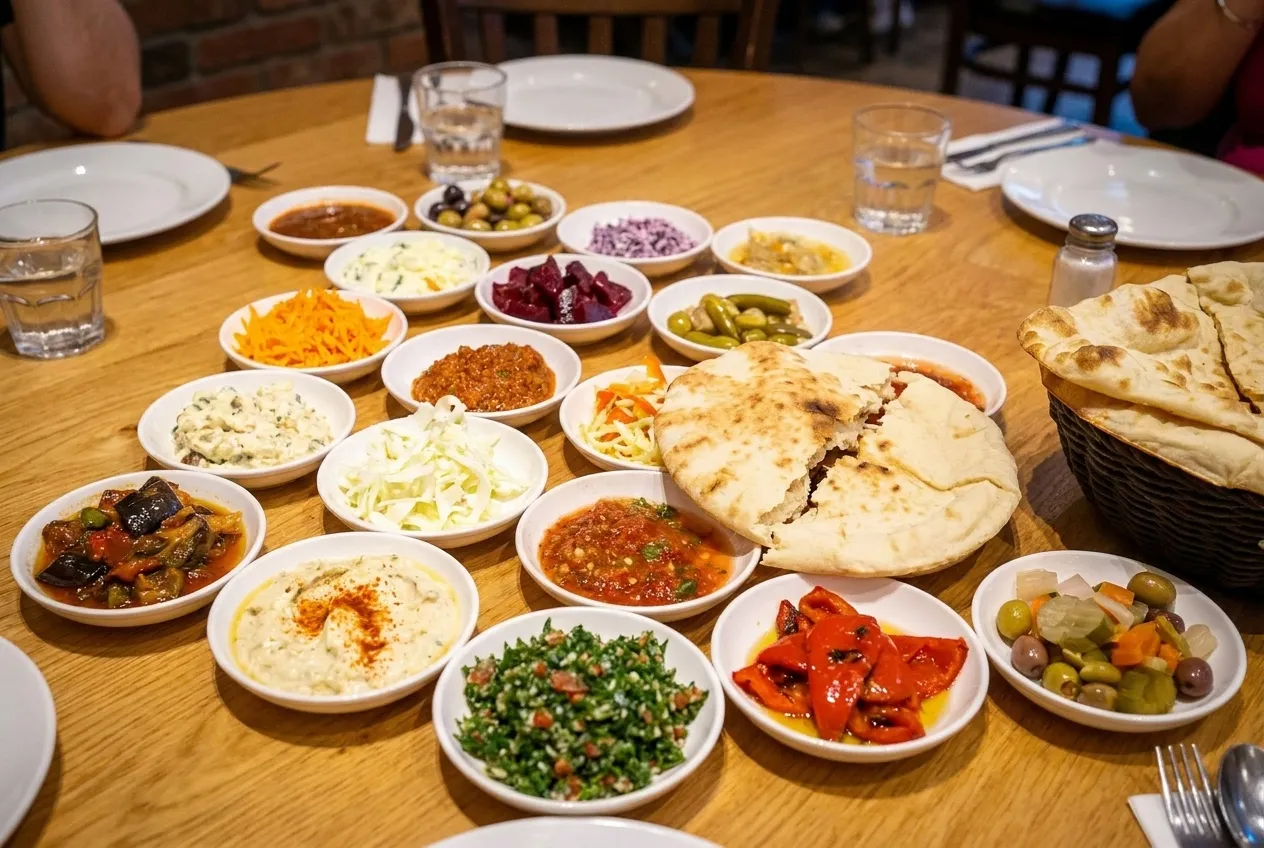
Order fewer mains than you think and more mezze; the mezze is where these kitchens concentrate their skill, and a table of eight small plates and one grilled thing is the correct ratio. Ask what came out of the oven most recently. Many of the best rooms in this category are family-run and close for religious holidays, which move each year, so check before travelling out to Bay Ridge. And a substantial share are alcohol-free or bring-your-own, which is worth knowing before you plan the evening around a bottle.
Tags: #MediterraneanFood #NYCRestaurants #Hummus #Kebab #Mezze #NewYorkCity #MiddleEasternFood #BayRidge #AtlanticAvenue #Astoria #Brooklyn #WhereToEatNYC #NYCEats #Levantine
All trademarks are the property of their respective owners.
Ask Karpo first
Want to know whether the Mediterranean place near you is a hummus kitchen, a charcoal kitchen or neither? Ask Karpo what is open around you now, which ones bake their own bread, and whether the better version is worth the ride out to Brooklyn tonight.