 Ghost Walk Near Me in Greenwich Village: Edgar Allan Poe's Haunts
Weekend Plans
Glassblowing Studio Near Me in Red Hook: Shiny Sparkle Labs Fused Glass
Create custom fused glass art at Shiny Sparkle Labs inside Pier 40 in Red Hook, designing colorful coasters, jewelry dishes, and kiln-fired suncatchers beside the harbor.
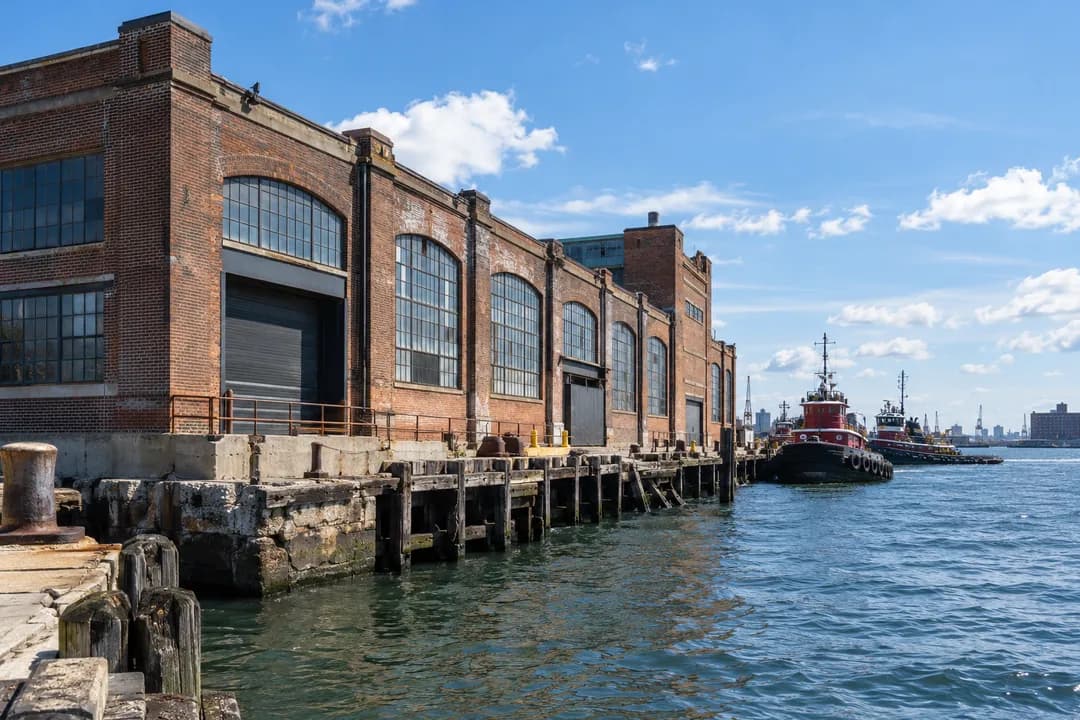
Shiny Sparkle Labs operates out of Suite 225 at 185 Van Dyke St, Brooklyn, NY 11231, positioned on the historic Pier 40 waterfront in Red Hook. Those looking for a welcoming glassblowing studio near me will discover an inspiring warm glass facility focused on kiln fusing, glass slumping, and creative stained glass assembly. The studio was established in 2021 by artist Julie Tesser and charges $55 for its popular two-hour Pop-In workshop where guests make three custom fused glass items.
A Light-Filled Harbor Studio At Pier Forty
Perched on the second floor of a Civil War era shipping warehouse, the studio benefits from soaring timber ceilings, exposed brick walls, and oversized casement windows looking directly across New York Harbor. Working artists and curious first-timers craft side by side while commercial tugboats and Staten Island ferries glide across the water outside. Natural marine light illuminates the workbenches, allowing makers to observe subtle shifts in glass translucency, iridescence, and density as they arrange raw components.
The layout is thoughtfully organized into clean prep benches, a dedicated cutting area with whetstones, and a central kiln room housing digital Evenheat and Skutt programmable firing ovens. Long wooden tables are outfitted with anti-fatigue floor mats, personal storage bins, and individual tool sets containing glass nippers, safety glasses, running pliers, and precision tweezers. Shelving units holding dozens of jars filled with crushed glass frit and fine stringers invite boundless tactile experimentation.
The Warm Glass Fusing Discipline At Fourteen Hundred Degrees
Unlike hot shop furnace glassblowing that involves liquid glass on a spinning iron pipe, kiln glass fusing is a precision cold-assembly art that is subsequently baked in high-temperature ovens. Participants begin by scoring sheets of Bullseye COE 90 compatible art glass, cutting custom base shapes like four-inch squares for coasters, circular disks for dishes, or rectangular panels for suncatchers. The base provides a stable structural canvas for decorative top layers.
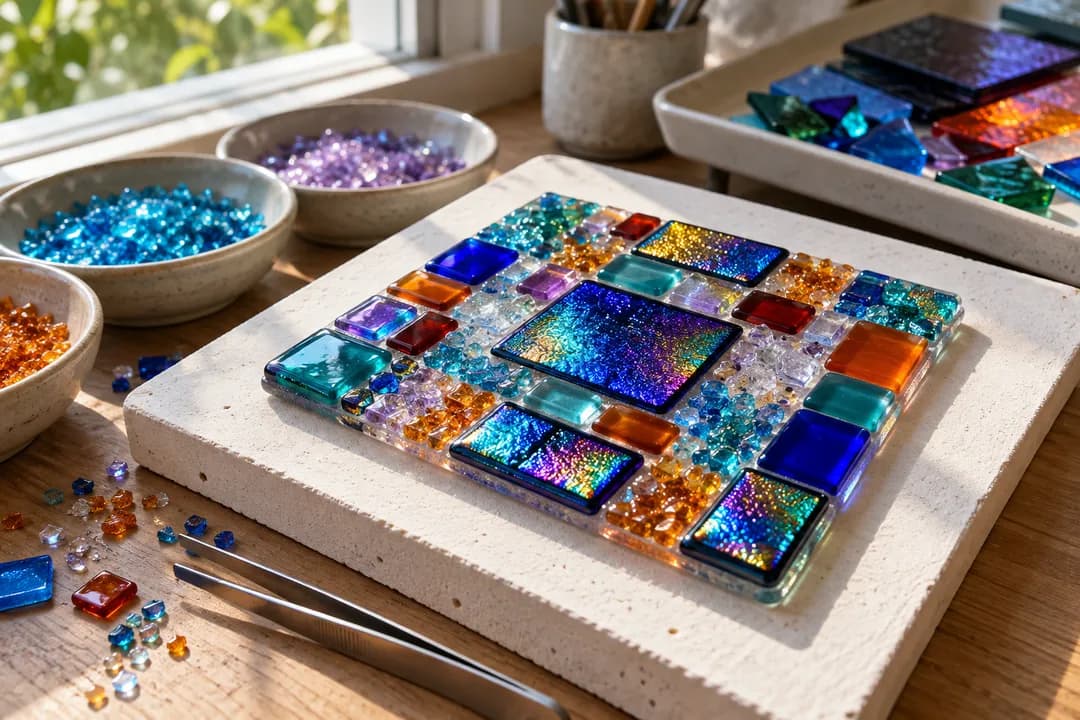
Designers then layer smaller chips, colorful glass noodles, and jewel-toned rods atop the base glass, affixing them temporarily with tiny drops of organic adhesive that burn away cleanly during firing. When heated inside the kiln to 1490 degrees Fahrenheit, the individual glass layers melt together into a single solid, smooth-surfaced plate with softly rounded edges. For slumped bowls and trays, a second firing over a ceramic mold gently bends the flat piece into three-dimensional tableware.
Exploring Dichroic Accents And Multi-Layer Frit Textures
One of the signature techniques taught during weekend workshops is the creative integration of dichroic glass. Developed originally for aerospace optical coatings, dichroic glass features micro-thin quartz crystal and metal oxide layers that transmit one color while reflecting another. When layered beneath transparent colored cap glass, the dichroic elements produce metallic shimmer and dynamic color shifts that transform under varying ambient lighting.
Students also experiment with graduated frit casting to build organic painterly effects. Coarse glass frit resembles sea glass gravel, medium frit looks like rock salt, and fine frit behaves like colored sand. By sifting powdered frit through stencils or trailing thin glass stringers across a clear base, participants achieve impressionistic landscapes, geometric mandalas, and vibrant abstract patterns that fuse into permanent vitrified artwork.
Session Pricing Tiers From Pop-In Workshops To Artisan Courses
The studio maintains competitive, transparent pricing designed to keep the glass arts approachable for everyone in the neighborhood. The entry-level Pop-In session costs $55 per person for two hours of studio time and covers all materials needed to create three finished pieces such as coasters, holiday ornaments, or mini decorative tiles. An optional nightlight electrical kit with a plug and toggle switch can be added for just $7.50.
For guests seeking more focused guided instruction, the studio hosts structured two-and-a-half-hour classes such as the Fused Glass Charcuterie Board Workshop priced at $124 per person, where students craft an elegant cheese board with matching serving spreaders. The Wine Bottle Upcycling and Slumping Class costs $110 per participant. Advanced students can enroll in multi-week Tiffany table lamp courses, where course instruction is supplemented by $150 to $275 in specialty glass materials based on personal design ambition.
Kiln Schedules And Automated Twenty-Four Hour Descent
Because fused glass must undergo an exacting thermal annealing process to relieve internal molecular tension, pieces cannot be taken home at the end of class. Once a workshop concludes, the studio staff loads all projects onto kiln shelves coated with fresh kiln wash or ceramic separator paper. The ovens heat gradually to avoid thermal shock, hold at peak fusing temperature for fifteen to twenty minutes, and then enter an automated twenty-four-hour cooling cycle that drops slowly past the annealing soak zone.
This patient cooling curve guarantees that finished pieces are structurally sound, resistant to thermal cracking, and durable for everyday tabletop use. Studio staff inspect each item, grind any minor shelf spurs along the edges, and notify makers when their completed glass art is ready for pickup, typically five to seven days after the session. Safe shipping options are also available for visitors traveling from outside the city.
Founder Julie Tesser And The Red Hook Creative Community Since Twenty Twenty-One
Studio director Julie Tesser, affectionately known to students and neighbors as Sparkle, opened the facility in 2021 with the mission of making glass craft joyous, inclusive, and unpretentious. With a background in fine arts and community arts facilitation, Tesser created an open studio model where novices feel completely comfortable experimenting without fear of making mistakes. Her hands-on encouragement and infectious enthusiasm have made the waterfront space a beloved local sanctuary.
The studio actively participates in the vibrant Red Hook arts scene, collaborating with neighboring maritime artisans, independent jewelry designers, and community non-profits. The creative energy along Pier 40 reflects the authentic industrial heritage of Brooklyn, where hardworking dockside spaces have transformed into dynamic studios producing handmade textiles, ceramic pottery, craft spirits, and contemporary glass art that celebrate the vitality of human craftsmanship.
Ferry Commutes And Neighborhood Waterfront Exploring
Reaching the Pier 40 warehouse is an enjoyable outing that showcases New York City's historic working harbor. Many students arrive via the NYC Ferry South Brooklyn route, debarking at the Atlantic Basin landing just a short five-minute walk from the studio building. Alternatively, riders can board the B61 bus along Van Brunt Street down to Beard Street, or take the B57 bus connecting from Downtown Brooklyn.
The surrounding cobblestone streets of Red Hook offer plenty of enticing neighborhood stops before or after your workshop. You can sample estate-bottled vintages right next door at The Red Hook Winery at Pier 41, or take a scenic stroll through Louis Valentino Jr. Park and Pier to enjoy panoramic harbor views of the Statue of Liberty. For dinner, head up to Fort Defiance on Van Brunt Street for seasonal cocktails and farm-to-table cuisine, or stop into Sunny's Bar for live folk music.
Ask Karpo for more information.
Keep reading
- Ghost Walk Near Me in Greenwich Village: Edgar Allan Poe's Haunts
 Ghost Walk Near Me in Lower Manhattan: Phantoms of City Hall Park
 Ghost Walk Near Me in the West Village: Phantoms by Commerce Street