 Ghost Walk Near Me in Greenwich Village: Edgar Allan Poe's Haunts
Weekend Plans
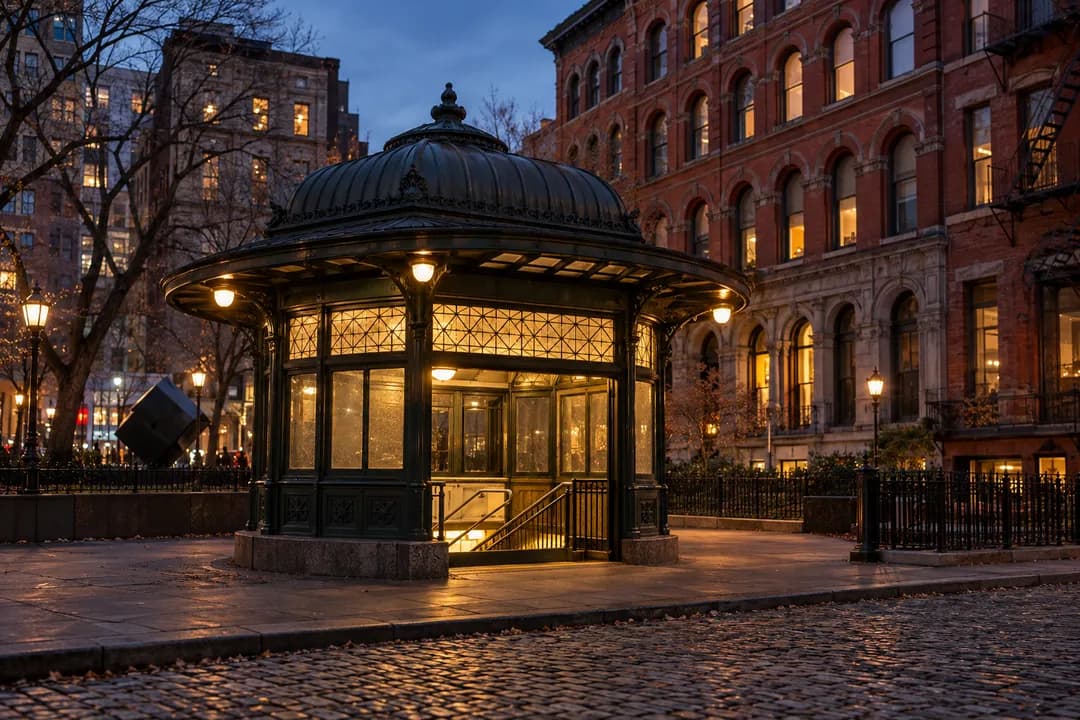
Ghost Walk Near Me in the East Village: Phantoms Along Astor Place
Haunted Manhattan's East Village ghost walk meets at the Astor Place subway island, exploring St. Mark's Church vault, McSorley's Ale House, and Merchant's House for $30.
The Haunted Manhattan East Village Tour departs promptly at 8:00 PM from the Astor Place Subway Island at the intersection of Lafayette Street, 4th Avenue, and East 8th Street, New York, NY 10003. Built around the fictional narrative persona of 'The Bartender'—a knowledgeable neighborhood raconteur who interweaves century-old tavern lore with colonial records—this 90-minute walking excursion traces 1.5 miles of cobblestone and asphalt. Standard adult admission costs $30, while youth ages sixteen and under pay $25, offering anyone searching for a ghost walk near me an immersive encounter with Manhattan's radical, rebellious, and spectral underbelly.
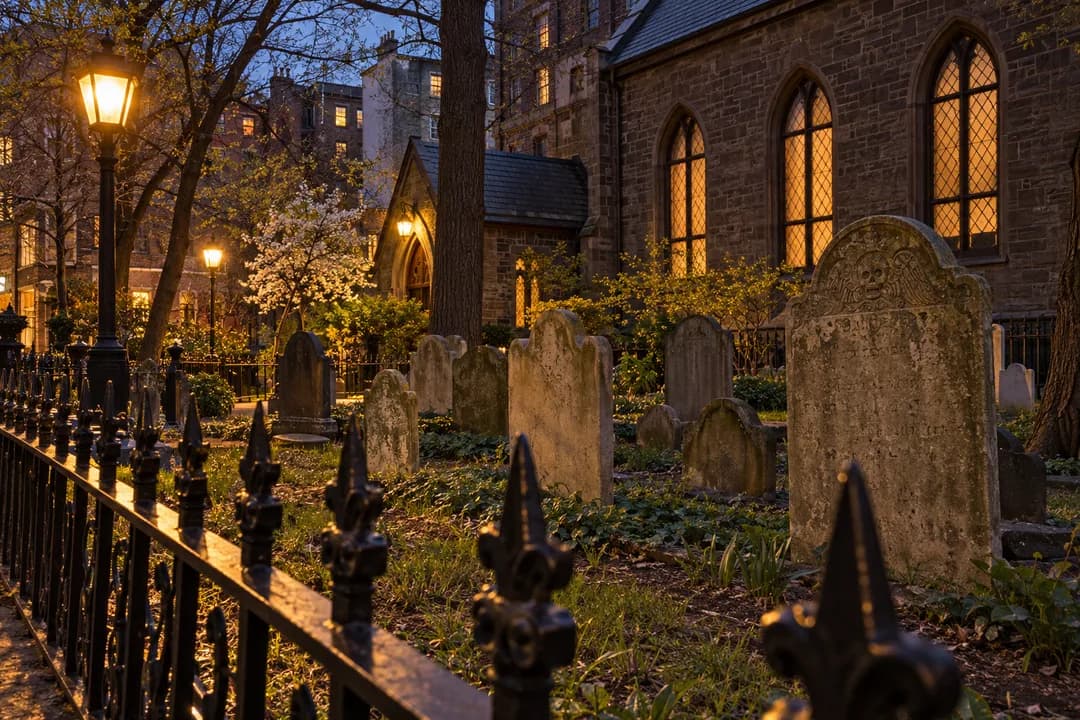
Astor Place Riot Ground and the Ghostly Vault of St. Mark's
Walkers assemble around the small triangular plaza near the replica IRT subway kiosk and Tony Rosenthal's Alamo cube sculpture. The guide begins by detailing the bloody Astor Place Opera House Riot of May 10, 1849, where rivalries between British Shakespearean actor William Charles Macready and American tragedian Edwin Forrest escalated into a class war that left twenty-five working-class citizens dead under militia musket fire. The opera house was quickly demolished and replaced by the Mercantile Library, yet late-night MTA track workers at Astor Place station still report hearing distant shouted commands and bayonet rattles through the tiled tunnels.
From Astor Place, the walk heads east along Stuyvesant Street to St. Mark's Church in-the-Bowery at 131 East 10th Street. Constructed in 1799 atop the site of Dutch colonial Director-General Peter Stuyvesant's private family chapel, this Episcopal churchyard holds Stuyvesant's remains inside an underground vault sealed beneath the eastern wall. Over the past two centuries, sextons, rectors, and neighborhood residents have reported the distinct clatter of a wooden peg leg pacing the brick walkways, church bells ringing spontaneously in locked bell towers, and shadowy figures crossing the iron gates late at night.
McSorley's Wishbones and Merchant's House Mysteries
Continuing southward into East 7th Street, the group halts outside McSorley's Old Ale House at 15 East 7th Street, the city's oldest continuously operating Irish saloon, welcoming drinkers since 1854. Suspended from the gas lamp chandeliers above the sawdust-covered bar hangs a collection of turkey wishbones, placed there by neighborhood young men departing for the battlefields of the First World War; the bones belonging to soldiers who never returned remain untouched as sacred memorials. Tavern staff report cold draughts brushing past the back room taps and fleeting glimpses of founder John McSorley sitting by the potbelly stove after closing time.
A few blocks west at 29 East 4th Street stands the Merchant's House Museum, universally recognized by municipal historians as Manhattan's most completely preserved nineteenth-century family residence. Built in 1832 for wealthy importer Seabury Tredwell, the red-brick Greek Revival townhouse was occupied by the family for nearly a century until youngest daughter Gertrude died in an upstairs bedroom in 1933 at age ninety-three. Visitors, docents, and sound engineers have recorded unprompted piano notes, rustling silk skirts on the central mahogany staircase, and the apparition of Gertrude watching over the parlor furnishings.
Colonnade Row and The Public Theater's Secret Chambers
Crossing Lafayette Street brings the group before the marble columns of Colonnade Row at 434 Lafayette Street. Originally constructed in 1833 as LaGrange Terrace, this grand neoclassical row once housed John Jacob Astor, Cornelius Vanderbilt, and author Washington Irving. Across the street stands The Public Theater at 425 Lafayette Street, housed within the landmark Astor Library building constructed in 1854. Staff members and stagehands frequently speak of spectral cold spots in the subterranean prop rooms and shadowy figures lingering in the balcony of the LuEsther Hall during quiet rehearsal hours.
The tour weaves together the architectural ambition of the early Republic with the grim realities of industrial disease and sudden death. The guide recounts how yellow fever, cholera outbreaks, and sudden carriage collisions claimed dozens of prominent residents along Lafayette Street, leaving a heavy energetic footprint that neighborhood artists and theatre professionals have acknowledged across successive generations.
Tour Mechanics, Walking Terrain, and Reservations
Haunted Manhattan designs this tour to cover approximately 1.5 miles at a relaxed, steady pace over ninety minutes, concluding near 4th Avenue and East 9th Street. Because the East Village features active nightlife, outdoor dining sheds, and uneven sidewalk curbs, comfortable flat footwear is strongly advised. Guides speak clearly and project well, maintaining group cohesion even amid weekend street noise along Second Avenue.
Advance online booking is mandatory through hauntedmanhattan.com or by calling their central ticketing line at (855) 692-4678. Cash payments on the sidewalk are not accepted. The tour departs rain or shine, and confirmation emails contain specific details and a photograph of the evening's designated guide. Group sizes are kept modest to allow easy movement through bustling downtown intersections.
What to Skip and What to Watch For
Skip any expectations of interior tavern drinking during the tour itself. While the guide details the paranormal history of historic drinking establishments like McSorley's, the tour remains entirely outdoors on public sidewalks to keep schedules on track and accommodate younger guests. Save your beer orders for after the walk concludes.
Keep your eyes on the upper-story windows of the Merchant's House Museum and St. Mark's rectory while the guide speaks. The contrast between modern East Village storefronts and centuries-old brickwork becomes especially striking after twilight, and guests regularly capture curious light refractions and reflections in photographs taken along the darkened perimeter of Stuyvesant Street.
Practical Tips, Transit, and Nearby Plan B
Arrive at Astor Place at least ten minutes before departure to account for evening foot traffic. The meeting location sits directly above the Astor Place subway station on the 6 line and two blocks east of the 8th Street–NYU station on the R and W lines. Public restrooms are not available at the subway island, so visit nearby cafes or restaurants along Broadway before checking in.
In the event of severe weather warnings, Haunted Manhattan communicates schedule adjustments by email and offers seamless ticket rescheduling. If your tour finishes and you want to continue exploring the East Village's dark heritage independently, walk two blocks east to KGB Bar at 85 East 4th Street, a former Ukrainian speakeasy and literary salon housed on the second floor of a landmark tenement, or step into McSorley's Old Ale House for two house dark ales.
Ask Karpo for more information.
Keep reading
- Ghost Walk Near Me in Greenwich Village: Edgar Allan Poe's Haunts
 Ghost Walk Near Me in Lower Manhattan: Phantoms of City Hall Park
 Ghost Walk Near Me in the West Village: Phantoms by Commerce Street