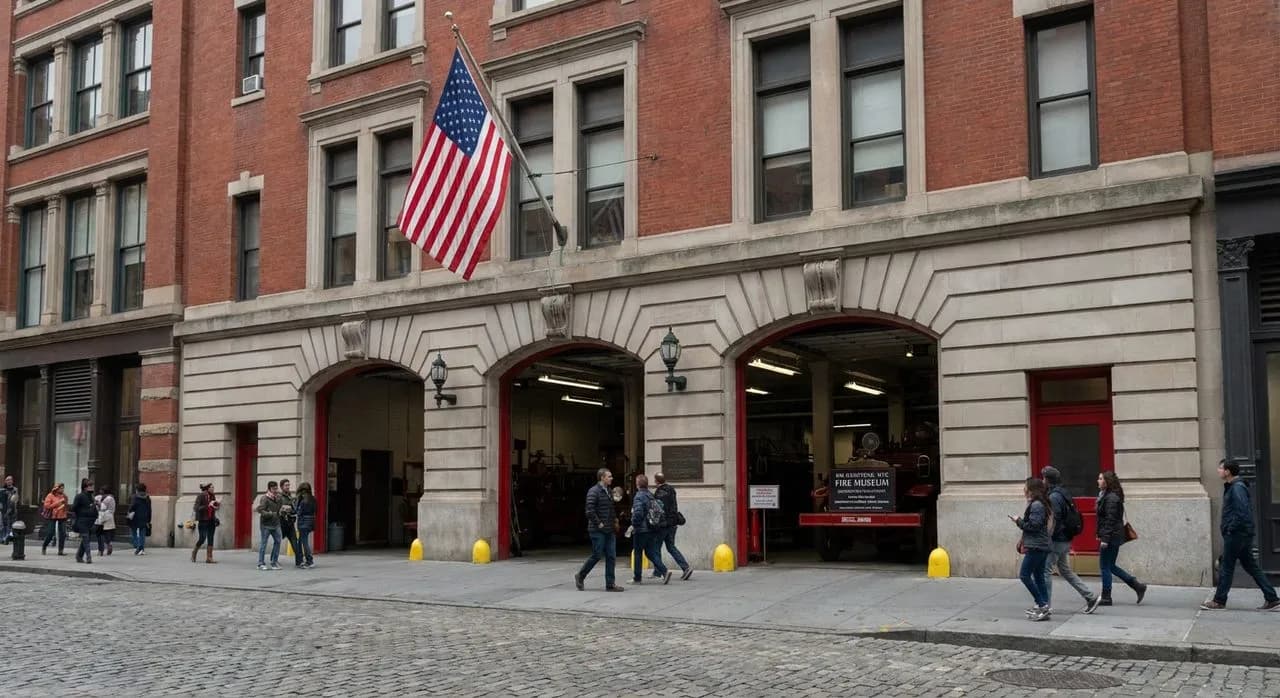
SoHo has trained us to expect boutiques with velvet ropes and cafés where iced lattes cost more than museum admission. Which makes the sight of 278 Spring Street—a stolid, Beaux-Arts firehouse built in 1904—all the more disorienting. No branding. No queue. Just a red door under a limestone cornice and, inside, three floors of hand-pulled engines, leather fire buckets, and brass fixtures so lovingly preserved they catch the morning light like jewelry. The New York City Fire Museum occupies the former Engine Company 30, a working firehouse until 1959, and it remains one of the neighborhood's least-visited treasures despite sitting two blocks from the perpetual scrum of West Broadway.
The building itself is the draw
Start by looking up. Original tin ceilings stretch across the apparatus floor, stamped with geometric patterns that haven't been replicated since the Taft administration. The tall arched windows—scaled for horse-drawn apparatus—flood the ground floor with a quality of light that gallery owners spend fortunes trying to fake. This is civic architecture at its most confident: utilitarian bones dressed in just enough ornament to signal that firefighting, in 1904, was a matter of municipal pride.
The building's proportions feel generous in a way modern construction rarely allows. Ceilings soar. Doorways accommodate not just people but the oversized machinery of another century. Even the stairwell, worn smooth by a hundred years of boots, has a sculptural quality that no amount of exposed brick can replicate. You're inside a working piece of infrastructure that outlasted its original purpose and, by accident or design, became a monument.
When to visit (and what you'll pay)
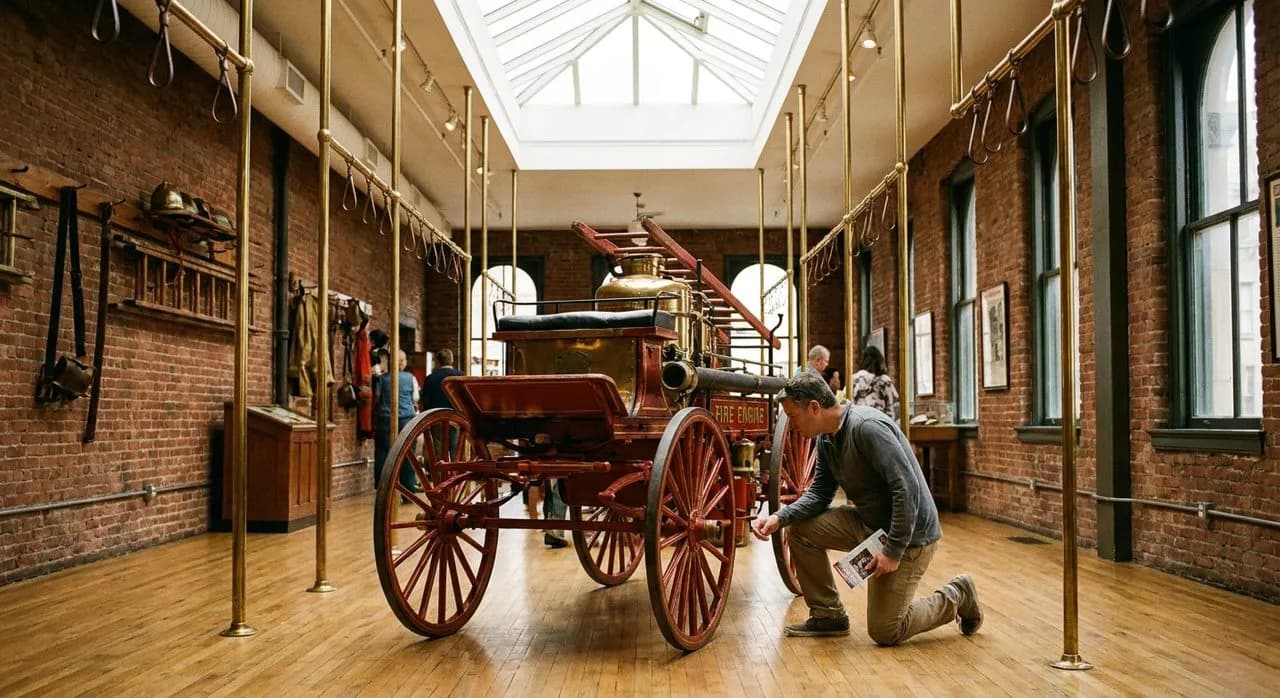
Admission details should be verified directly before visiting; the museum's current status is closed until further notice. without the guilt-trip eyebrow raise you sometimes get at bigger institutions. If you want the place nearly to yourself, aim for Tuesday or Thursday mornings before 11 a.m. On a recent late-summer Thursday at 10:15, the ground floor held exactly four visitors and a docent polishing a 1912 pumper's brass fittings. Museum off-hours in SoHo mean you can linger in front of the hand-painted parade shields without someone's shoulder in your peripheral vision.
Weekends draw school groups and the occasional tour bus, which isn't unpleasant but does change the acoustic character of the space. Mornings preserve the firehouse's original quiet—the kind of stillness that makes you notice the creak of floorboards and the faint petroleum smell that clings to century-old leather hoses.
The apparatus floor and that 1904 brass pole
Most visitors spend the bulk of their time on the ground floor, and it's easy to understand why. Horse-drawn steam engines, hand-pulled hose carts, and a 1901 ladder truck sit polished and roped off but close enough to see the wear patterns on wooden wheels and the soot scars on brass boilers. Interpretive labels are thorough without being pedantic; you'll learn the difference between a chemical engine and a combination rig without feeling quizzed.
But don't miss the brass sliding pole, still intact between floors since the firehouse opened in 1904. It's cordoned now—insurance and gravity being what they are—but you can trace its path from the third floor straight down to the apparatus bay. If you catch one of the volunteer docents in a talkative mood, ask about the horse stall layout in the basement. The museum doesn't always open that level to casual visitors, but the docents keep floor plans and photographs behind the desk, and they're enthusiasts in the best sense of the word: happy to talk through the logistics of how three horses, six firefighters, and a steam pumper got out the door in under a minute.
The third floor and the weight of September 11
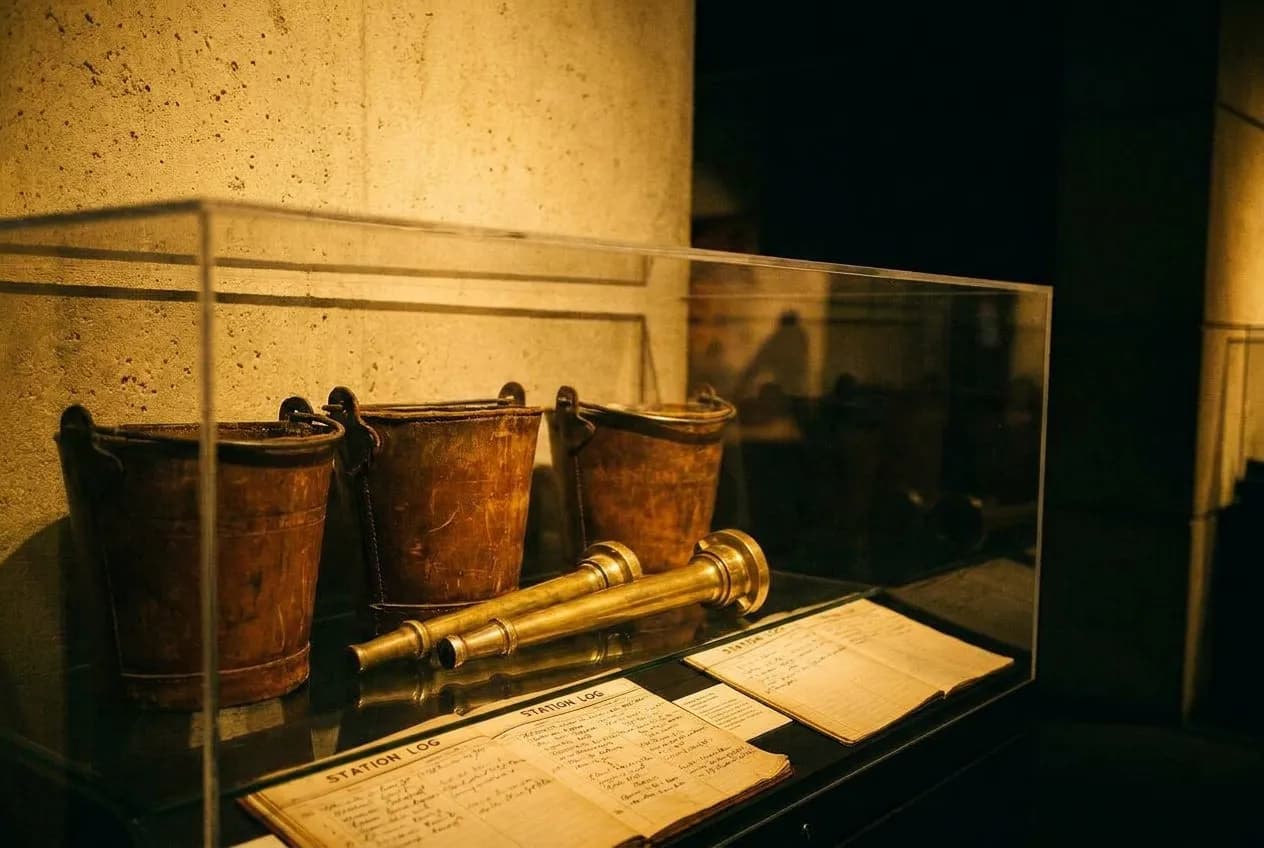
The 9/11 Memorial Room occupies the museum's top floor, and the tonal shift is immediate. The apparatus floors trade in nostalgia and craftsmanship; up here, the exhibits are rawer. Photographs, turnout gear, and personal effects from firefighters lost on September 11, 2001, fill display cases alongside children's letters and faded department memos. The unrestored gear from Engine 24 sits behind glass, still caked in dust and ash, a deliberate choice to preserve rather than sanitize.
It's a small room—maybe 400 square feet—but it demands time. The museum closes this floor thirty minutes before the 5 p.m. building-wide closure, so plan accordingly if you're arriving late in the afternoon. On summer evenings, the western light through the arched windows is almost too beautiful for the subject matter, casting long shadows across the memorials in a way that feels both reverent and accidental.
What you won't find
There's no café, no gift shop worth the name (a small rack of FDNY T-shirts and postcards by the entrance), and no multimedia installations. The museum's charm lies partly in what it resists: the urge to gamify history or sand down its rough edges for broader appeal. Labels are typed, not touchscreen. The only interactivity comes from the docents, who range from retired firefighters to neighborhood volunteers with an unexplained fluency in 19th-century pump mechanics.
This is not a criticism. In a city that increasingly feels like a curated experience, the Fire Museum's lack of polish registers as honesty. You're visiting a firehouse that happens to hold a collection, not a collection that happens to occupy a firehouse.
Practical notes
The New York City Fire Museum is listed at 278 Spring Street in SoHo, but verify the current status before visiting. Nearest subway: 1 to Houston Street (four-block walk) or C/E to Spring Street (six blocks). Street parking is possible but optimistic; the Hudson Street garage two blocks west is the safer bet. The museum is currently closed until further notice., but verify hours directly before planning your visit—schedules can shift around FDNY events and holidays. The building is wheelchair accessible via a side entrance on Hudson; ring the bell if the ramp gate is closed. Bring cash if you plan to donate or purchase from the small gift selection, though cards are accepted.
Tags: #NYCFireMuseum #SoHoNYC #FreeAndFine #HiddenNYC #MuseumOffHours #CivicArchitecture #BeauxArts #FirehouseHistory #SoHoSecrets #NYCHistory #QuietNYC #MuseumMonday #Summer2026 #KarposFinds #PayWhatYouWish
Sources consulted: NYC Fire Museum - Wikipedia · NYC Fire Museum Official Site · SoHo, Manhattan - Wikipedia · Time Out New York Museums
All trademarks are the property of their respective owners.