 Astoria Chess Cafe Night Planner: How to Become a Regular
Sports Social
Fencing Club Near Me in Midtown: Manhattan Fencing Center
A Garment District guide to Manhattan Fencing Center at 15 West 37th Street, covering Maestro Yury Gelman's Olympic sabre pipeline, foil programs, $150 beginner packages, and Bryant Park dining.
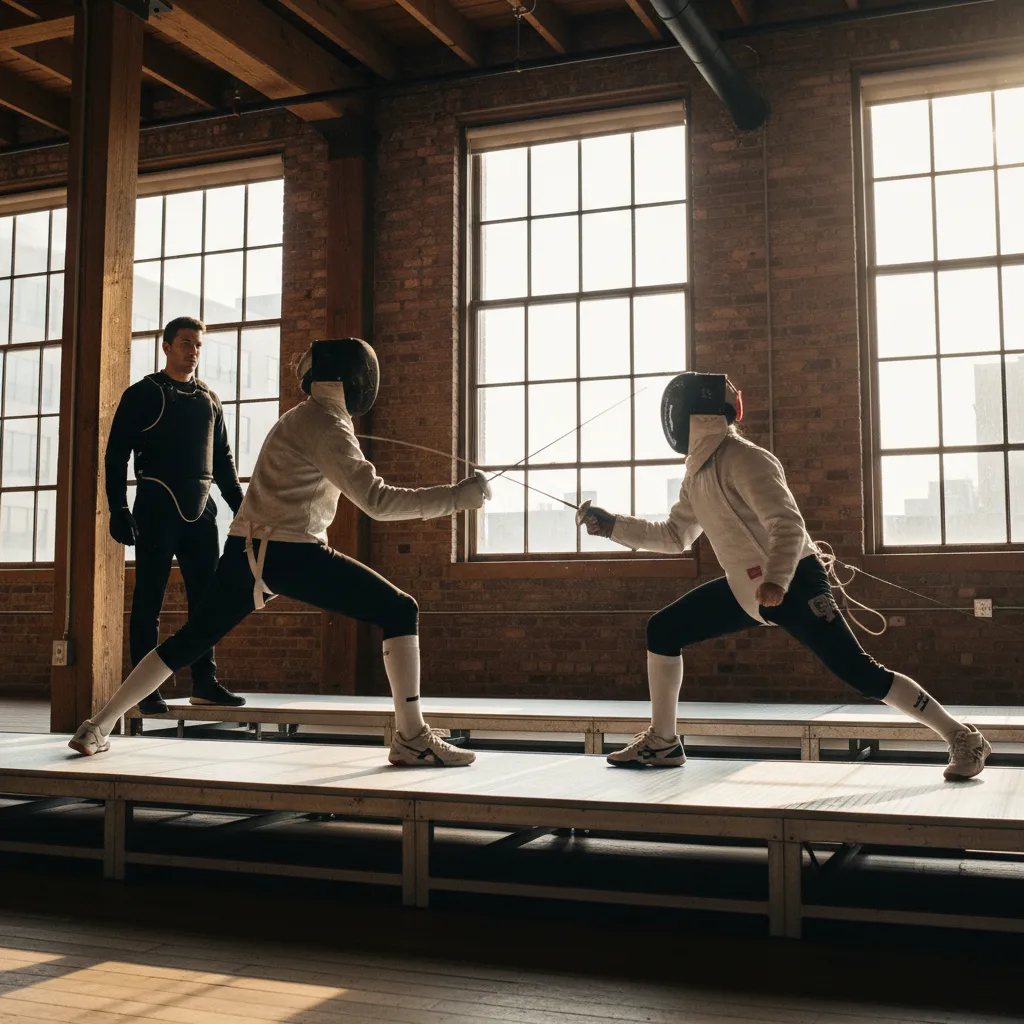
Step off Fifth Avenue onto West 37th Street in the middle of the afternoon and you are surrounded by the classic hustle of Manhattan's Garment District—fabric wholesalers pushing rolling racks of wool, trim shops stacked with buttons, and delivery vans idling near the curb. Ride the elevator to the second floor of 15 West 37th Street, however, and the industrial loft opens into one of the most decorated sabre and foil training halls in North America. Founded in 2007 by six-time United States Olympic coach Maestro Yury Gelman, Manhattan Fencing Center has turned a former Midtown showroom into an international medal factory. Anyone typing fencing club near me into a search bar while working near Bryant Park or Herald Square will find a high-tempo room where four-year-old beginners share floor space with World Cup contenders.
To understand the energy inside this second-floor salle, you have to know the biography of the man calling drills at the center strip. Yury Gelman arrived in New York from Ukraine in the early 1990s, took the helm of the St. John's University varsity program in 1995, and served as the United States National Men's Sabre Coach across five consecutive Olympic cycles from Sydney 2000 through Rio 2016. Inducted into the USA Fencing Hall of Fame, Gelman built Manhattan Fencing Center—and its companion non-profit, the Fencing Foundation of America—so urban athletes could train under a unified Eastern European pedagogical system without leaving the five boroughs.
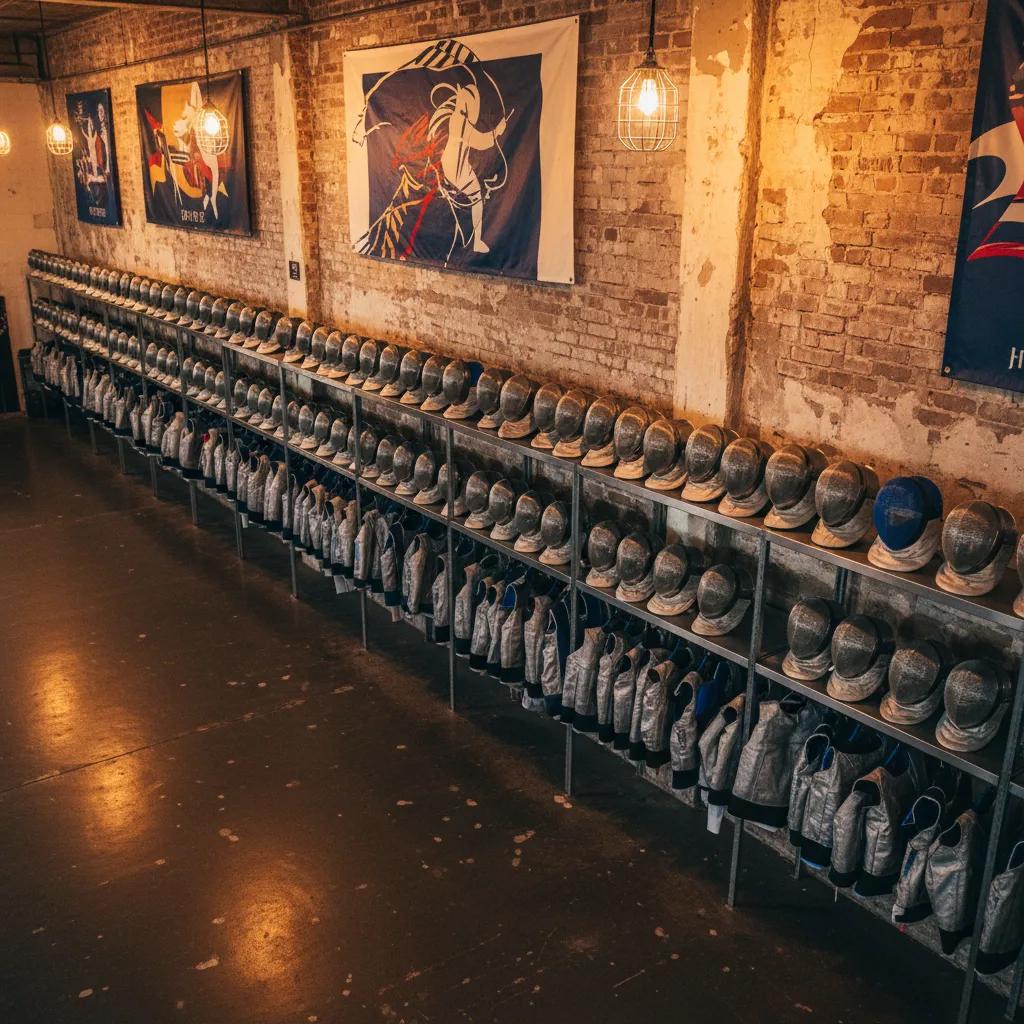
The championship banners hanging along the brick and plaster walls read like a modern history of American sabre. Individual Olympic silver medalist Daryl Homer honed his explosive, acrobatic attacks on these strips, alongside 2008 Beijing Olympic team silver medalist Keeth Smart and 2016 Rio Olympic team bronze medalists Dagmara Wozniak and Monica Aksamit. Yet the room never feels like a museum frozen in past glory; on any given weekday afternoon, coaches such as former World Champion Vladymyr Lukashenko, Andrew Lamianski, Alex Sourimto, and foil specialist Nellya Sevostyanova are actively feeding blade actions in leather plastrons.
While some New York salles divide their floor equally across all three weapons, 15 West 37th Street is unapologetically built around the speed of sabre and the point-control geometry of foil. Sabre at Manhattan Fencing Center is an athletic chess game played at sprint velocity: valid touches register with the edge or point of the blade anywhere above the hips, including the arms and mask, which means bouts hinge on split-second footwork accelerations in the four-meter box at the middle of the strip. The foil program offers a deliberate counterpoint, emphasizing deceptive disengaged point attacks, tight counter-parries, and patient preparation against the conductive torso target.
If you have never held a weapon, the easiest entry point is the Beginner Package priced at $150, which includes three 30-minute private one-on-one lessons with a staff coach and full loaner equipment for the duration of those introductory sessions. Instead of throwing uncoordinated novices into a crowded twenty-person group where bad habits multiply, the club insists on teaching the en garde stance, advance-retreat balance, and basic parries individually first. Once a coach signs off on your foundational mechanics, you transition into structured age-group cohorts.
Youth and teen development is segmented by developmental milestones rather than arbitrary calendar birthdays. The Mini Musketeers track welcomes children aged four to six with lighter plastic and size-0 blades that build hand-eye coordination and directional agility without straining young wrists. At age seven, students enter the Youth Beginner, Intermediate, and Competitive pipeline, where ninety-minute sessions blend thirty minutes of intensive footwork conditioning—rapid-fire lunges, flèches, and check-steps—with tactical partner drills and supervised electric bouting. Adult beginners and returning recreational fencers have their own evening sessions where office stress is burned off through structured blade work.
For experienced fencers and families weighing long-term training costs, Manhattan Fencing Center publishes transparent tuition tiers. An unlimited monthly class package runs $750 per month, while an annual club membership is $950 per year. Individual 20-minute private lessons—the cornerstone of competitive progress—range from $56 to $65 depending on the coach's seniority and whether you hold an active membership. Out-of-town fencers in New York for business or regional NAC preparation can pay a $50 daily bouting fee to join open electric sessions, provided they bring a valid USA Fencing competitive membership card and FIE-compliant protective gear.
Timing your visit around the club's seven-day operating calendar ensures you catch the right training crowd. Manhattan Fencing Center opens Monday through Friday from 12:00 PM to 9:00 PM, and Saturdays and Sundays from 9:00 AM to 5:00 PM. Midday weekday hours between noon and 3:30 PM are prized by adult professionals, collegiate athletes on break, and homeschool competitors booking quiet private lessons. By 4:00 PM, the elevator doors open every ninety seconds as middle- and high-school fencers arrive for youth classes and competitive squad bouting that stretches past 8:00 PM.
Stepping onto a sabre strip here requires respecting a few unwritten house rules. Because sabre involves rapid forward lunges and overlapping blade actions, inspect your mask bib conductivity, cuff velcro, and three-prong body cord before plugging into the reel—nothing slows down a rotation of five-touch bouts faster than a flickering white grounding light. Keep your equipment bag zipped and tucked tightly underneath the perimeter benches rather than sprawled in the aisle, as coaches constantly move up and down the sidelines giving live tactical adjustments during bouts.
The club's location between Fifth and Sixth Avenues places you within a five-minute walk of two distinct Midtown neighborhoods: the leafy lawn of Bryant Park to the north and the bustling food corridors of 35th and 36th Streets to the south. If you arrive thirty minutes before an evening session, grab a quick cortado and a warm almond croissant at Culture Espresso on West 38th Street—famous among Garment District regulars for its fresh chocolate-chip cookies—or pick up a light Japanese onigiri at Katagiri near 41st Street so you are fueled without feeling weighed down on the strip.
After ninety minutes of high-cardio sabre footwork, your legs and shoulders will demand a proper meal. Walk two blocks north to Whole Foods Market opposite Bryant Park for a fast custom protein bowl, or head around the corner to Tonchin New York on West 36th Street for a rich, slow-simmered Tokyo tonkotsu ramen and smoked dashi egg. If you are celebrating a tournament medal or wrapping up a Friday night bouting block with teammates, Keens Steakhouse right down on West 36th Street serves its legendary mutton chop and prime sirloin inside a historic 1885 dining room lined with thousands of clay churchwarden pipes.
Getting to 15 West 37th Street with a long fencing bag is effortless on public transit. The 34th Street–Herald Square subway hub (B, D, F, M, N, Q, R, W) and the 42nd Street–Bryant Park station (B, D, F, M, 7) are both three blocks away, while the Times Square–42nd Street express lines (1, 2, 3, A, C, E) sit just to the west. Commuters coming in from New Jersey or Long Island can walk straight from Penn Station, the PATH terminal at 33rd Street, or Grand Central Terminal in under ten minutes.
Practical Notes: Manhattan Fencing Center is located at 15 West 37th Street, Floor 2, New York, NY 10018. Hours are Monday through Friday 12:00 PM to 9:00 PM and Saturday through Sunday 9:00 AM to 5:00 PM. First-timers should call or register online for the $150 three-lesson Beginner Package, wear long athletic pants (no shorts are permitted during blade work), bring non-marking court shoes with good lateral ankle support, and pack a full water bottle and small sweat towel.
Whether you are looking to enroll a six-year-old in Mini Musketeers, chase an NCAA recruitment slot in sabre, or pick up foil as an adult after work, Manhattan Fencing Center pairs world-stage coaching with unmatched Midtown convenience. Open the Karpo APP to coordinate your lesson times with nearby Bryant Park coffee stops and post-practice dinner reservations.
Ask Karpo for more information.
Keep reading
- Astoria Chess Cafe Night Planner: How to Become a Regular
 Upper West Side Billiards Bar Night Planner for Old Friends
 Park Slope Chess Cafe Night Planner: A Date With Odds