 Astoria Chess Cafe Night Planner: How to Become a Regular
Sports Social
Upper West Side Billiards Bar Night Planner for Old Friends
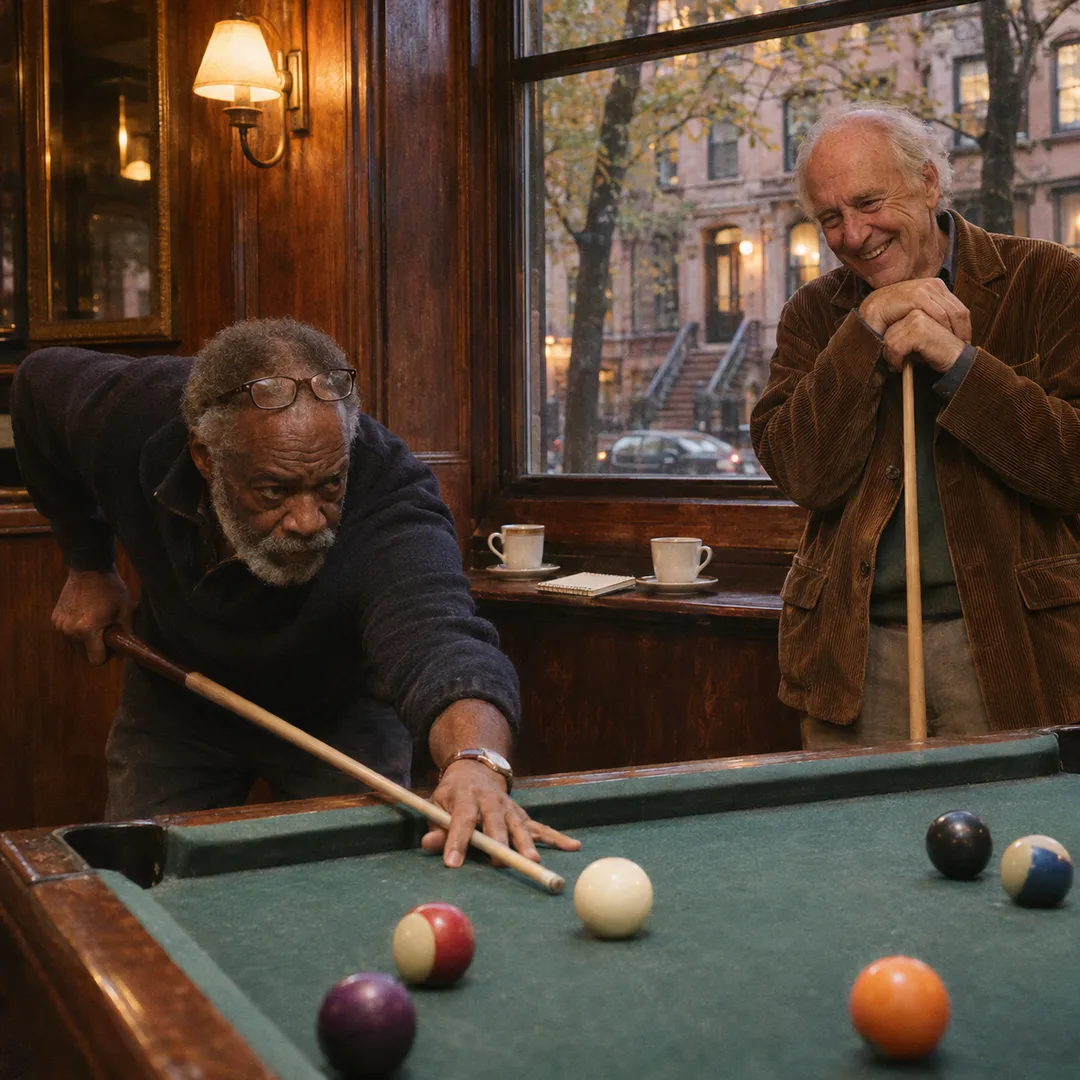
Upper West Side billiards bar night planner for retirees and old friends: play an early-evening rematch, keep a season ledger, then catch the Hudson sunset.
Walt and Desmond have been arguing about bank shots since their dorm days, and retirement only made the rivalry better. Every week, once the school run traffic on Broadway has thinned and before the dinner crowd arrives, they meet at a pool table on the Upper West Side for a first-to-four match they call the season. It is a modest ritual, and it might be the most reliable social plan either of them has. This billiards bar night planner is for anyone who wants a ritual like that.
Early Evening Is the Secret Hour
The Upper West Side keeps a gentler rhythm than downtown. Its bars and billiard rooms tend to be calm in the early evening, when the after-work crowd is still on the subway and the families are busy with homework. For players who would rather be home before late night, that window is perfect. Tables are free, the music is low enough to talk and the staff have time to remember your names and your usual order.
Choosing a regular slot matters more than choosing a perfect room. Pick one day, ideally a weekday, and protect it the way you would protect a doctor's appointment. Habits form around consistency, and the bartender who sees you every week soon starts setting the balls out when you walk through the door. After a few months, regulars at the bar will ask about the season standings as if it were a local sports league.
Keeping a Season Ledger
Walt keeps a small notebook in his jacket pocket with every result since they started, written in pencil with notes in the margin: 'Desmond scratched on the eight, again'. A ledger turns casual games into a story with chapters. Agree on a format, such as first to four wins each week and a season that ends at the solstice, with the loser buying dinner on the final night. It sounds silly, and that is exactly the charm.
Rotate the game to keep things fresh. One week play eight ball, the next nine ball, then a slow game of straight pool where each player calls every shot and the first to an agreed score wins. Straight pool, the old championship game that legends played for decades in Manhattan's grand billiard halls, rewards careful thinking over strength, and it is wonderfully suited to two experienced friends with time on their hands.

Looking After the Body
Pool looks gentle, but bending over a table for two hours can tug at the lower back. Warm up with a few slow stretches before the first break and stand up fully between shots instead of hovering over the rail. Shoes with good support help more than people expect, since you are on your feet most of the evening. If knees or hips complain, a mechanical bridge, the rest stick, is perfectly respectable.
Eyesight is the other quiet challenge. Ask for a table directly under good lighting, away from glare from the street windows. Many older players keep a pair of single-vision distance glasses just for the game, since varifocal lenses can blur the cue ball when you look down the cue. Pace the drinks too: coffee or a single beer goes well with a long game, and the steady hand lasts longer into the evening.
Equipment can help as well. A lighter house cue is easier on tired wrists, and a glove for the bridge hand lets the cue slide smoothly when skin gets dry in winter. Desmond swears by a quick hand rinse with warm water halfway through the evening, which keeps the cue from sticking. None of this requires special gear or expense; it is simply a matter of noticing what makes the game comfortable and building it into the weekly routine.
A Neighbourhood Built for Lingering
The Upper West Side grew as a residential neighbourhood of brownstones and grand apartment houses, and it has always attracted musicians, writers and teachers who like a long conversation. Broadway is its spine, lined with delis, bakeries and old movie houses, while the side streets keep their stoops and tree-lined calm. Before a game, a slow walk past the brownstones of the West Eighties or along the edge of Central Park is a fine warm-up.
For a dose of grandeur, stop by the Soldiers' and Sailors' Monument in Riverside Park, a round marble temple overlooking the Hudson, or walk to Straus Park, a small triangle on Broadway with a reclining bronze figure dedicated to a couple who died together on the Titanic. These quiet corners give old friends something new to talk about each week, and a reason to stay on their feet a bit longer.
What to Order and When to Skip Dinner Out
Keep the snacks simple at the table: a bowl of popcorn, a grilled cheese or fries shared between games. Skip a heavy meal right before playing; it makes bending uncomfortable and slows the game. Instead, plan dinner as a reward after the season decider. The neighbourhood has a deep bench of diners, old-school Italian rooms and Jewish delis, any of which will happily seat two pool players who want to argue about the last rack.
If one of you has a quieter evening in mind, swap the restaurant for a picnic of deli sandwiches on a Riverside Park bench, weather permitting. The aim is to keep the routine pleasant and affordable, so it survives the months when energy is low. Rituals that cost too much or run too late tend to fade, while simple ones become part of the calendar for years.
Sunset on the Hudson After the Final Rack
Riverside Park, designed by Frederick Law Olmsted, runs along the Hudson for miles, with terraces, stone stairways and promenades above the river. After the last game, walk west and catch the sunset over the New Jersey Palisades. In autumn the trees along the promenade glow orange, and the water picks up the colours of the sky. It is a calm, generous way to close a competitive evening.
On colder nights, choose a shorter route and turn back toward Broadway, where the subway and buses are only a short stroll away. If anyone in the group uses a cane, the upper promenade is flatter and easier than the riverside path below. Either way, the walk is when the conversation shifts from trash talk about pool to news of children, grandchildren and old friends, which is really why the ritual matters.
Bringing Others Into the Ritual
Once the routine is steady, invite a third or fourth player now and then. A neighbour who recently retired, a widowed friend or a grown child visiting town can all slot into a doubles game. Use the Karpo APP to find a nearby room with an extra table if the usual spot is full, and keep the ledger open to guest results. A small weekly game has a way of becoming a community without anyone planning it.
Ask Karpo for more information.
Keep reading
- Astoria Chess Cafe Night Planner: How to Become a Regular
 Park Slope Chess Cafe Night Planner: A Date With Odds
 Astoria Billiards Bar Night Planner: Carom Meets Eight Ball