 Astoria Chess Cafe Night Planner: How to Become a Regular
Sports Social
Fencing Club Near Me in Midtown: Fencers Club on 33rd
A Midtown Manhattan guide to Fencers Club at 20 West 33rd Street, covering its 1883 lineage, 22 grounded metal strips, $150 beginner packages, and Koreatown post-bout dining.
Walk down West 33rd Street between Fifth Avenue and Broadway on a Tuesday evening, directly across from the limestone base of the Empire State Building, and you will spot athletes carrying tall, teardrop-shaped canvas bags into number 20. Take the elevator up to the second floor and the noise of Herald Square taxi horns gives way to the sharp metallic ring of parries and the steady beep of electronic scoring boxes. Founded in 1883 by writer and art critic Charles de Kay, Fencers Club is the oldest continuously operating institution in the Western Hemisphere dedicated solely to the study of swordplay. For anyone searching for a fencing club near me in New York City, this 501(c)(3) non-profit salle offers a rare intersection of Gilded Age history and modern Olympic training.
In its nineteenth-century infancy, the club operated as a private society salon where entry often depended on a listing in the New York Social Register, and early maîtres d'armes like Captain Hippolyte Nicolas drilled Uptown patricians in classical French foil. Over the twentieth century, under legendary masters such as Belgian World War I veteran René Pinchart and French Olympian Michel Alaux, that exclusive drawing-room culture gave way to a meritocratic competitive floor. In 1991, six-time Olympian and 1984 Los Angeles bronze medalist Peter Westbrook launched the Peter Westbrook Foundation right on these strips, turning Saturday mornings into a launchpad for underserved youth across the five boroughs who have gone on to win NCAA titles and Olympic medals.
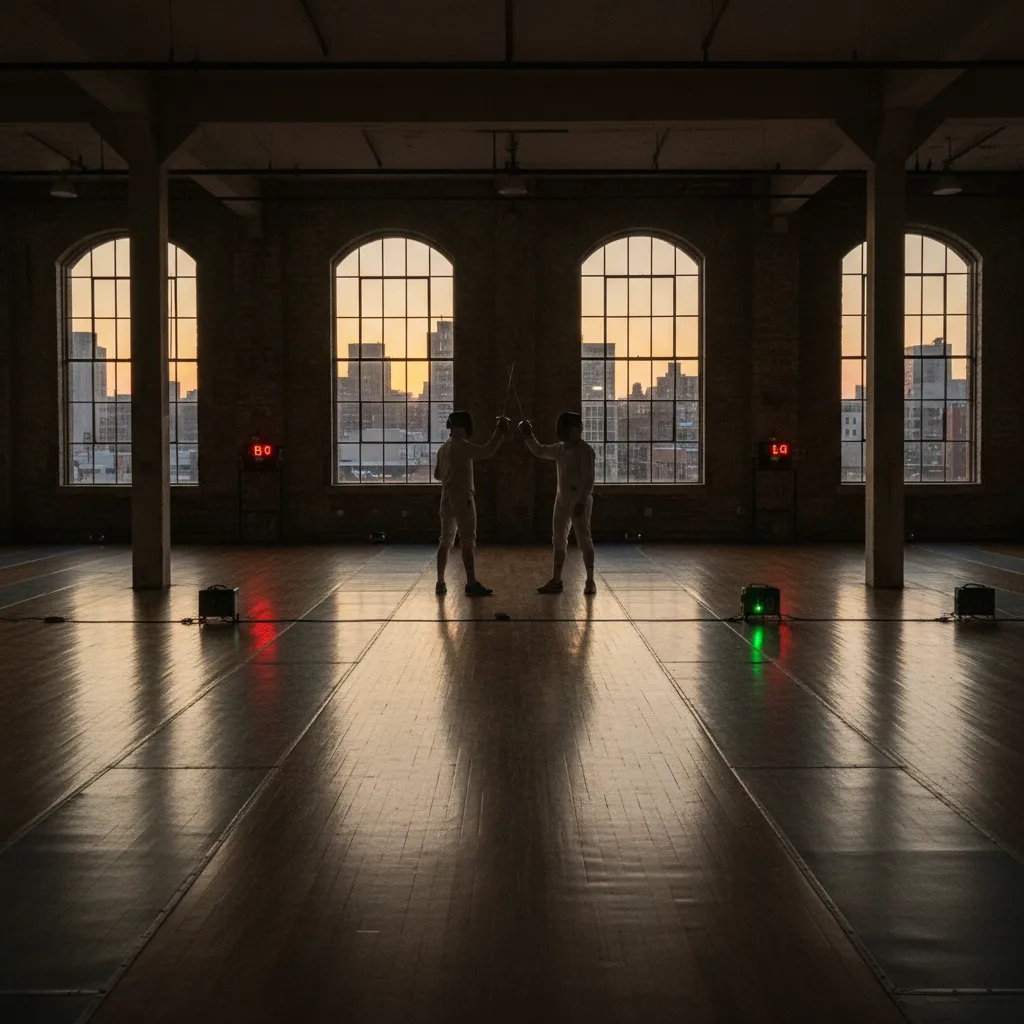
Step onto the main floor today and the physical layout immediately signals why the United States Olympic Committee designated the venue a Community Olympic Development Program. Twenty-two full-length grounded metal pistes run across the room, each wired to overhead reels and digital scoring machines that register touches to the millisecond. Unlike multipurpose community gyms where rubber mats are unrolled for two hours and stuffed back into a closet, every square foot at 20 West 33rd Street is built around blade work, complete with an on-site armory bench and a dedicated pro shop that operates Monday through Friday from 11:00 AM to 7:00 PM.
Because Fencers Club trains all three Olympic weapons under one roof, your first decision is choosing a blade discipline that fits your temperament. Foil is the technical precision instrument: a light thrusting weapon where valid touches count only on the metallic lamé vest covering the torso, governed by strict right-of-way conventions watched over by veteran coaches like Simon and Irene Gershon. Épée, led on the floor by international tacticians including Alexey Cheremsky and Guillermo Madrigal, uses a stiffer triangular blade where the entire body from mask to toe is valid target and there is no right-of-way—whoever hits first scores, and simultaneous hits within forty milliseconds award a point to both athletes. Sabre is the fast, explosive cutting and thrusting game targeting everything above the waist, demanding sprint-speed footwork from the moment the referee calls allez.
Newcomers do not need to invest hundreds of dollars in whites and electric weapons before testing the waters. The club offers a Non-Member Introduction Package for $150, reserved for first-time students, which bundles either two 20-minute private lessons with a master coach or two 90-minute scheduled group classes, with mask, jacket, glove, and practice weapon provided by the house. Before stepping onto a strip, however, every participant—including introductory students and one-day visitors—must hold an active membership with USA Fencing, which provides mandatory sport liability coverage and can be registered online in five minutes prior to arrival.
If you already fence and are visiting Manhattan with your rolling bag or looking for a permanent home strip, the fee structure separates floor access from coaching. A non-member daily open-bouting floor pass costs $50, while a daily pass paired with a group class starts at $95. Individual 20-minute private lessons—the concentrated one-on-one plastron sessions where a maître feeds rapid-fire blade cues to groove your parry-riposte—start around $100 for non-members and $50 for active members. Full annual memberships run $2,000 for adults aged twenty and older, $1,600 for juniors aged five to twenty, $1,200 for seniors sixty-five and up, and $800 for a three-month short-term stint.
Knowing the rhythm of the weekday schedule saves you from showing up to an empty room or a gridlocked locker area. Administrative office hours run Monday through Friday from 11:00 AM to 8:00 PM, while active fencing hours run weekdays from 4:00 PM to 10:00 PM; the facility is closed on Saturdays and Sundays except for special foundation programs or scheduled tournaments. Between 4:00 PM and 6:15 PM, the strips fill with after-school youth and teen cohorts drilling footwork lunges and taking twenty-minute private lessons. Open bouting for teens and adults kicks into high gear at 6:30 PM on weeknights, when collegiate fencers, Wall Street veterans, and visiting national team contenders plug into the reels until closing.
Floor etiquette at Fencers Club is traditional and strictly enforced for safety. Always wear clean, non-marking indoor court shoes—running shoes with thick, elevated heels roll ankles during a hard lunge, and street soles track grit onto the conductive metal strips. Never walk across an active piste while a bout is in progress; wait at the end of the strip until the referee or fencers call halt before crossing the walkways. Before hooking up your body cord for an open five-touch or fifteen-touch bout, salute your opponent, your referee, and the room with your blade, and finish every match with a mask-off salute and a shake of the non-weapon hand.
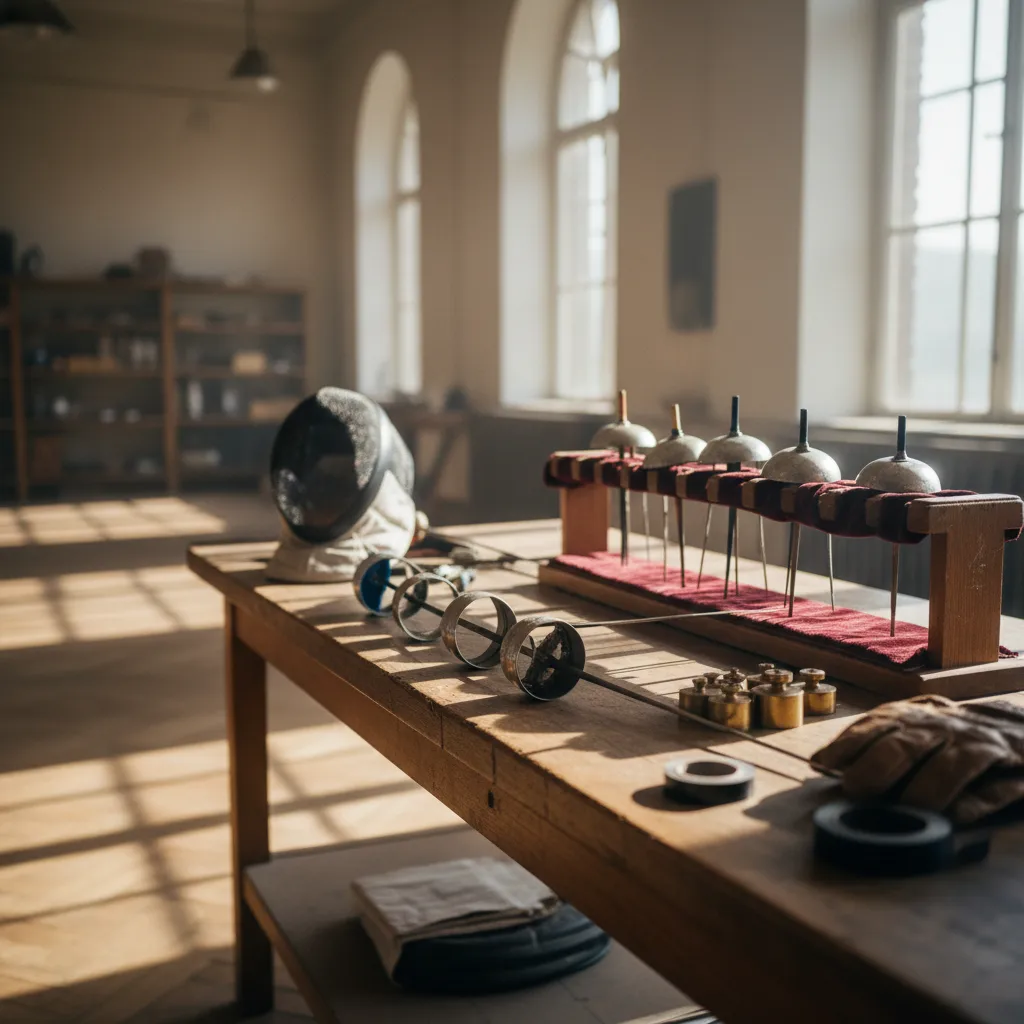
One of the hidden advantages of training at 20 West 33rd Street is the in-house pro shop and armory window, which closes at 7:00 PM sharp on weekdays. Anyone who has fenced electric foil or épée knows the frustration of a dead tip spring, a missing barrel screw, or a frayed two-prong body wire five minutes before bouting starts. Rather than waiting a week for mail-order parts, you can pick up replacement German point screws, FIE maraging blades, 350N or 800N washable whites, and fresh leather gloves right across from the locker rooms before evening open bouting peaks.
Because the club sits on the border of Koreatown and Herald Square, the surrounding blocks turn a weeknight training session into an effortless Midtown evening. Step out of the lobby at 8:30 PM after two hours of five-touch pools and you are ninety seconds from West 32nd Street, where neon signs glow above barbecue vents and late-night broth houses. Instead of settling for a sad desk salad before practice, local fencers grab a light pre-training espresso or rice roll on Fifth Avenue at 5:30 PM, then save the heavy protein recovery meal for after the masks come off.
For a restorative post-bout dinner two minutes south, walk over to Baekjeong NYC on West 32nd Street for table-grilled prime brisket and steamed egg banks, or duck into BCD Tofu House at 5 West 32nd Street for a bubbling stone pot of spicy soft tofu soup that replaces every ounce of salt lost inside a heavy canvas jacket. If you want something quicker before catching a train, Food Gallery 32 offers downstairs stalls serving hot fish-cake skewers, handmade dumplings, and black-sesame buns, while Grace Street Coffee & Desserts right on 32nd serves shaved ice and hojicha lattes until late.
Transit logistics make this the single easiest salle to reach from anywhere in the tri-state region. The 34th Street–Herald Square station sits one block west, connecting the B, D, F, M, N, Q, R, and W subway lines alongside the PATH train from Hoboken and Jersey City. The 33rd Street 6 train stop on Park Avenue South is a five-minute walk east, and Penn Station—serving Long Island Rail Road, NJ Transit, and Amtrak—is just two avenues west down 33rd Street, meaning commuters can squeeze in ten bouts before catching the 9:15 PM train home.
Practical Notes: Fencers Club is located at 20 West 33rd Street, Level 2, New York, NY 10001. Facility fencing hours run Monday through Friday from 4:00 PM to 10:00 PM, with open bouting starting at 6:30 PM; the pro shop is open weekdays 11:00 AM to 7:00 PM, and the club is closed Saturdays and Sundays. Beginners should book the $150 Non-Member Introduction Package in advance by phone or email, register for an active USA Fencing membership beforehand, and pack long athletic sweatpants, a spare T-shirt, a water bottle, and low-profile indoor court sneakers.
Whether you are an absolute novice curious about the tactical chess match of épée or a former collegiate sabreur itching to hear the buzz of the scoring box again, Fencers Club delivers authentic strip culture without pretension. You can map out your weeknight training schedule, compare nearby K-Town dinner tables, and check real-time transit connections directly in the Karpo APP before heading up to the second floor.
Ask Karpo for more information.
Keep reading
- Astoria Chess Cafe Night Planner: How to Become a Regular
 Upper West Side Billiards Bar Night Planner for Old Friends
 Park Slope Chess Cafe Night Planner: A Date With Odds