 Astoria Chess Cafe Night Planner: How to Become a Regular
Sports Social
Fencing Club Near Me in Brooklyn: Brooklyn Bridge Fencing Club
A DUMBO and Vinegar Hill guide to Brooklyn Bridge Fencing Club at 295 Front Street, covering Olympian Dan Kellner's foil and sabre program, $49 intro lessons, and waterfront dining.
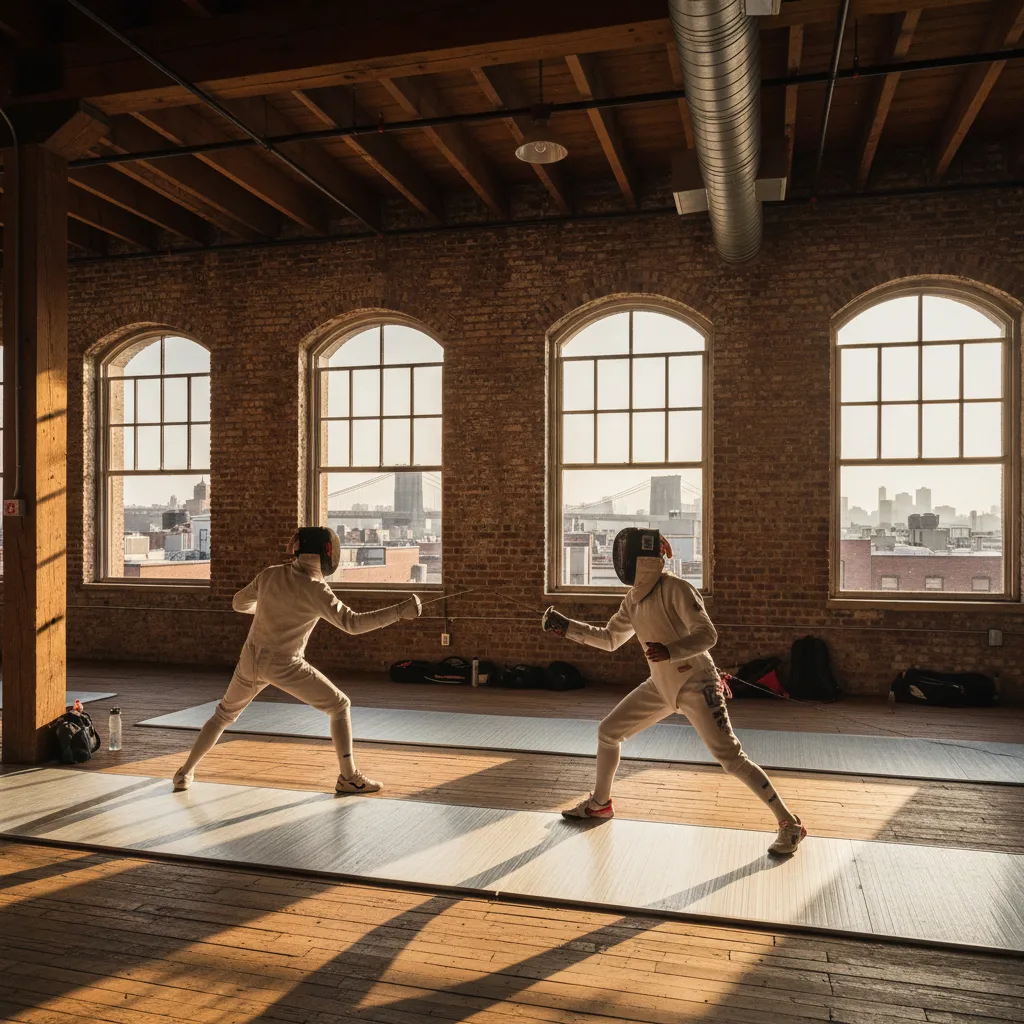
Walk past the cobblestone corners of DUMBO toward the quiet historic blocks of Vinegar Hill, step into the brick warehouse at 295 Front Street, and ride the elevator to the sixth floor. When the doors slide open, sunlit factory windows frame the East River bridges while the unmistakable clatter of steel blades echoes across a wide timber loft. This is Brooklyn Bridge Fencing Club, founded in 2010 by 2004 Athens Olympian and USA Fencing Hall of Famer Dan Kellner. For Brooklynites who used to haul heavy equipment bags across the river into Manhattan every afternoon, searching for a fencing club near me now leads straight to this sixth-floor powerhouse.
Before opening the doors on Front Street, Dan Kellner built one of the most respected competitive resumes in American foil. A four-time NCAA All-American and team captain at Columbia University, Kellner captured the United States National Foil Championship, ranked number one in the country, and anchored the U.S. Men's Foil Team to a fourth-place finish at the 2004 Athens Olympic Games. Transitioning to the coaching strip, he earned the United States Olympic Committee's Order of Ikkos medal for coaching the 2016 Rio Olympic bronze-winning men's foil squad. He launched Brooklyn Bridge Fencing Club with a clear mission: give Brooklyn youth and adults an Olympic-caliber salle in their own borough.
The sixth-floor space at 295 Front Street balances industrial Brooklyn character with serious athletic infrastructure. Exposed brick walls and high loft ceilings keep the room airy even when every grounded strip is occupied, and natural light pours across the scoring boxes during late-afternoon footwork sessions. Unlike cramped basement gyms, the floor layout gives fencers generous run-off space behind the two-meter warning lines, alongside dedicated stretching zones, equipment racks, and seating where parents can watch bouts unfold against the backdrop of the Manhattan skyline.
Instruction at Brooklyn Bridge Fencing Club centers primarily on foil, complemented by an active sabre program and open bouting across weapons. Foil is taught here with the analytical rigor you would expect from a former Columbia captain: students learn to control distance down to the half-inch, use beat-attacks and compound disengages to break an opponent's guard, and understand the nuances of right-of-way refereeing. Sabre training channels that same tactical discipline into high-velocity cutting and thrusting combinations, teaching fencers how to vary tempo in the center of the strip.
For newcomers curious to try the sport without committing to a full semester, the club offers a 20-minute Introductory Private Lesson for $49. Designed for children as young as four as well as teens and adults, that one-on-one session pairs you with a professional coach who outfits you in a club mask, jacket, glove, and foil before walking you through the en garde stance, advance-retreat footwork, the lunge, and live target hits on the coach's leather plastron. It is a brisk, high-feedback introduction that tells you immediately how the sport feels in your legs and hand.
Once a student completes the introductory lesson, structured youth classes, after-school cohorts, and competitive training tracks take over. Beginners learn safety rules, blade work fundamentals, and electric scoring etiquette in small peer groups where all protective gear is provided by the club. As fencers advance into the competitive squad, they combine weekly group footwork and tactical bouting classes with individual twenty-minute private lessons, preparing for regional youth circuits, North American Cups, and the NCAA recruiting pipeline that has sent club alumni to Columbia, Princeton, Penn, Duke, and Notre Dame.
Experienced fencers who hold a current USA Fencing competitive membership and own full electric equipment can also drop in for evening open bouting. Open bouting sessions typically run on weekday evenings starting around 6:30 PM or 7:00 PM after youth developmental classes wrap up, drawing a sharp mix of high-school national point-holders, collegiate athletes home on break, and adult veterans. Floor fees and multi-visit bouting packs are handled through the front desk, and visitors are always advised to email or call ahead to confirm the week's open-strip schedule during tournament travel weekends.
Operating hours at 295 Front Street follow the rhythm of the Brooklyn school and workday: weekday sessions run Monday through Friday from 1:00 PM to 9:00 PM, and Saturday classes and bouting blocks run from 9:00 AM to 4:00 PM (with Sundays reserved for special clinics, camps, or tournament travel). If you are coming for an afternoon youth class, arrive fifteen minutes before the hour so your fencer has time to change into long athletic pants, lace up indoor court shoes, and warm up their knees and shoulders before the coach calls the line.
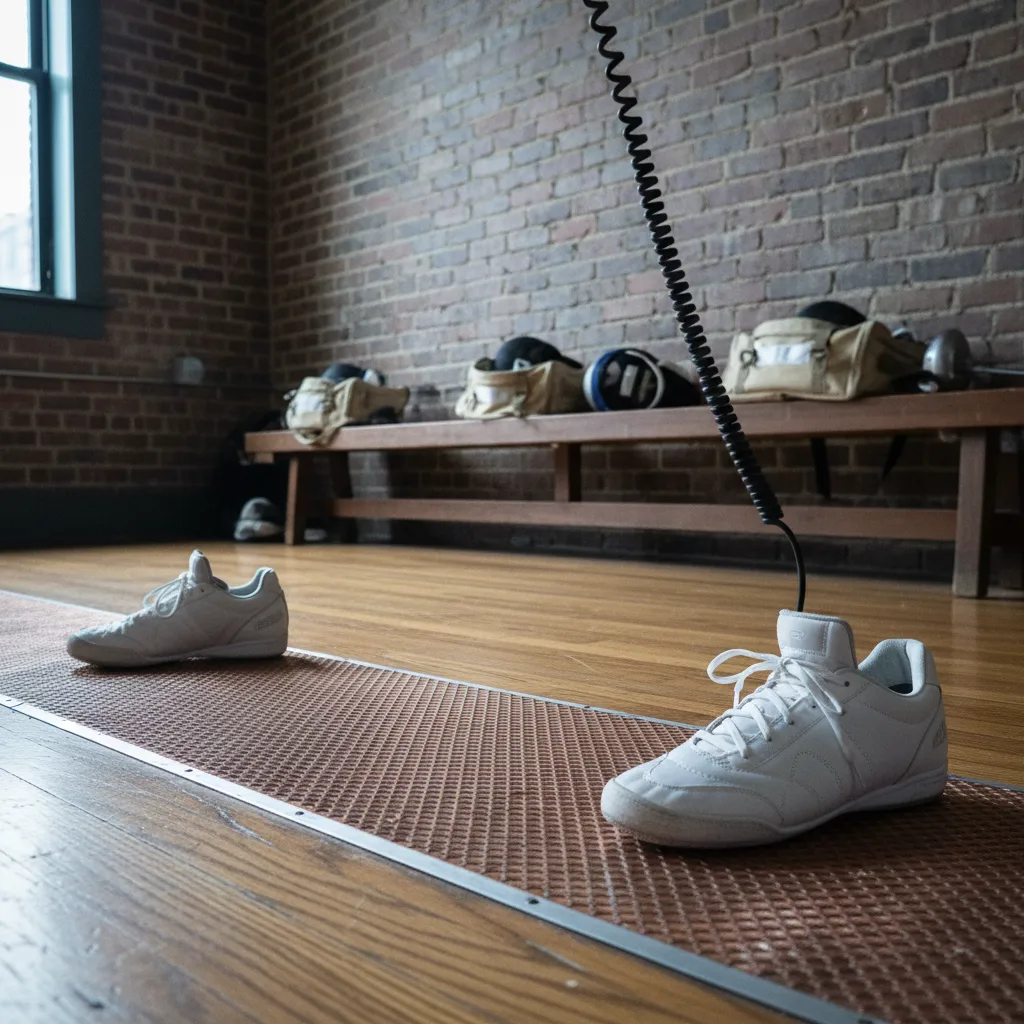
Floor etiquette inside Kellner's salle reflects his emphasis on sportsmanship and mental composure. Throwing masks, slapping blades in frustration, or arguing with student referees during practice bouts is strictly off-limits; fencers are taught to analyze why a touch was lost, salute respectfully after every five-touch or fifteen-touch match, and shake hands before stepping off the metal strip. Keep street shoes and wet umbrellas near the entrance mat so moisture never reaches the conductive pistes or overhead reel cords.
Because 295 Front Street sits right where DUMBO meets Vinegar Hill, the neighborhood outside the warehouse is one of the most scenic post-practice walks in New York. Before an afternoon lesson, parents and adult fencers regularly duck into Vinegar Hill House's quiet cobblestone block or walk three minutes west to Butler Bakeshop & Espresso Bar on Water Street for a flat white and a flaky cardamom bun. Across the street toward the waterfront, Empire Stores houses Time Out Market New York, where a rooftop terrace looks straight at the Brooklyn Bridge.
When evening bouting wraps up and you need a real meal, DUMBO delivers classic Brooklyn institutions within a ten-minute stroll. Walk down to Juliana's Pizza or Grimaldi's under the bridge on Old Fulton Street for coal-fired margherita pies, or grab a sesame-crusted roast pork bun and hand-pulled noodles inside Time Out Market. On mild autumn and spring evenings, carry a sandwich out to Pebble Beach in Brooklyn Bridge Park and watch the East River ferries glide past the illuminated towers of Lower Manhattan while your legs cool down from two hours of lunges.
Getting to the club by subway, bus, or bike is straightforward. The York Street station on the F train is the closest stop—roughly a five-minute walk east along Jay and Front Streets—while the High Street–Brooklyn Bridge station (A and C trains) and Clark Street station (2 and 3 trains) sit just across Cadman Plaza. Citi Bike docks line Gold and Front Streets right outside the building, and drivers can find metered street parking or commercial garages along Water and Jay Streets.
Practical Notes: Brooklyn Bridge Fencing Club is located at 295 Front Street, 6th Floor, Brooklyn, NY 11201. Regular hours are Monday through Friday 1:00 PM to 9:00 PM and Saturday 9:00 AM to 4:00 PM. First-time students must book the $49 20-minute Introductory Private Lesson in advance; bring clean non-marking athletic sneakers, full-length sweatpants, a spare T-shirt, and a water bottle, and ensure competitive drop-in fencers carry proof of active USA Fencing membership.
Whether you are raising a future collegiate foilist in Brooklyn or looking for an analytical, high-cardio sport with waterfront views, Brooklyn Bridge Fencing Club turns a historic Vinegar Hill loft into a premier training ground. Check the Karpo APP to pair your Front Street lesson with DUMBO coffee stops, ferry schedules, and Brooklyn Bridge Park dinner spots.
Ask Karpo for more information.
Keep reading
- Astoria Chess Cafe Night Planner: How to Become a Regular
 Upper West Side Billiards Bar Night Planner for Old Friends
 Park Slope Chess Cafe Night Planner: A Date With Odds