By late May 2026, the dollar slice has joined bodega cats and analog subway tokens in the city's mythology—a relic everyone remembers but fewer can actually locate. Rents climbed, flour costs doubled, and the old Lexington Avenue stalwarts that once fed midnight commuters have either shuttered or tacked an extra fifty cents onto the counter sign. Yet the species endures. Across a narrow corridor from Penn Station to Tompkins Square Park, eleven shops still sling cheese slices for a dollar or a dollar-fifty, their ovens glowing through spring twilight like votive candles to an older, greasier New York.
The true believers
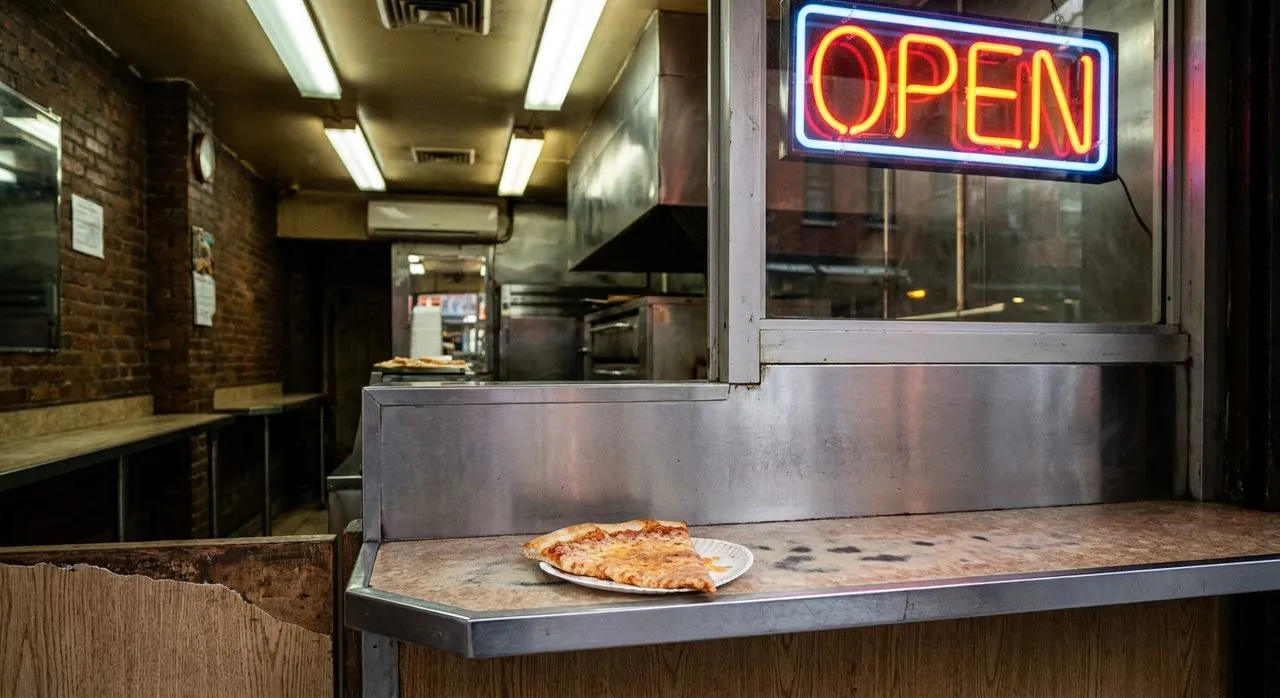
A few Midtown counters have kept very low slice prices, though prices can change quickly. The logic is devotional more than economic: thin crust, low overhead, high volume, no seats. Walk in on a Thursday afternoon and the rhythm is hypnotic—dough stretched, sauce ladled, cheese scattered, oven door clanging. The slices emerge bubbling and bent, folded lengthwise so the oil runs toward your wrist. You eat standing against a tiled wall or on the sidewalk, pigeons circling your ankles.
These places don't advertise. Their awnings are sun-faded, their menus scrawled on posterboard in Sharpie. What they do offer is consistency: the same blistered crust, the same faint sweetness in the sauce, the same gruff nod from the guy working the peel. In a city that rebuilds itself every eighteen months, that constancy feels like a minor miracle.
The dollar-fifty tier
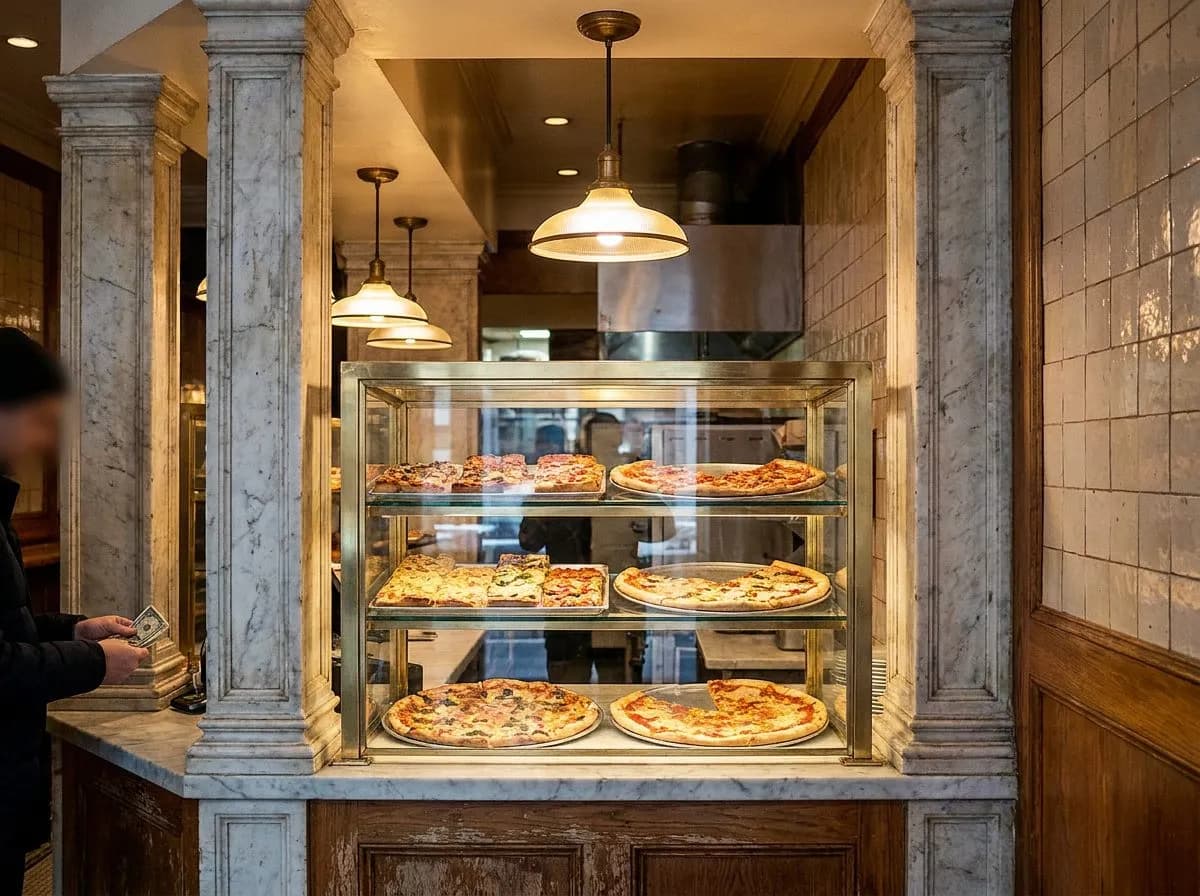
Four East Village shops raised their prices in late 2025 but kept their dignity. A dollar-fifty buys you a larger triangle, better mozzarella, sometimes a whisper of fresh basil. The ovens here are older, the floor tiles cracked in a way that suggests decades rather than years. One spot near First Avenue still uses a wooden peel worn smooth as driftwood; another, closer to Avenue A, hangs Christmas lights year-round and plays salsa through a dust-caked speaker.
The quality jump is real. The crust has tooth, the cheese pulls in long strings, and the sauce tastes like someone's nonna actually calibrated the oregano. You're still eating fast, still folding the slice, still licking your thumb when you're done—but the experience lands somewhere between sustenance and actual pizza, a category that matters more than purists admit.
The new guard
Two recent openings have drawn attention by pricing plain slices very low again. Both are small, both owner-operated, both unapologetically nostalgic. The Herald Square counter occupies a former cell-phone-repair shop and serves nothing but cheese, pepperoni, and fountain soda. The East Village spot, tucked into a former dry cleaner near Seventh Street, opens at eleven and sells out by nine.
The crowds have been respectful and steady. There's no viral TikTok frenzy, no line down the block—just a quiet procession of regulars who've missed this price point and this simplicity. The slices are thin, honest, hot. The décor is nonexistent. The value is undeniable. Whether either shop survives past summer depends on factors no one wants to discuss: lease terms, ingredient futures, the landlord's patience. For now, they're open.
What the survivors have in common
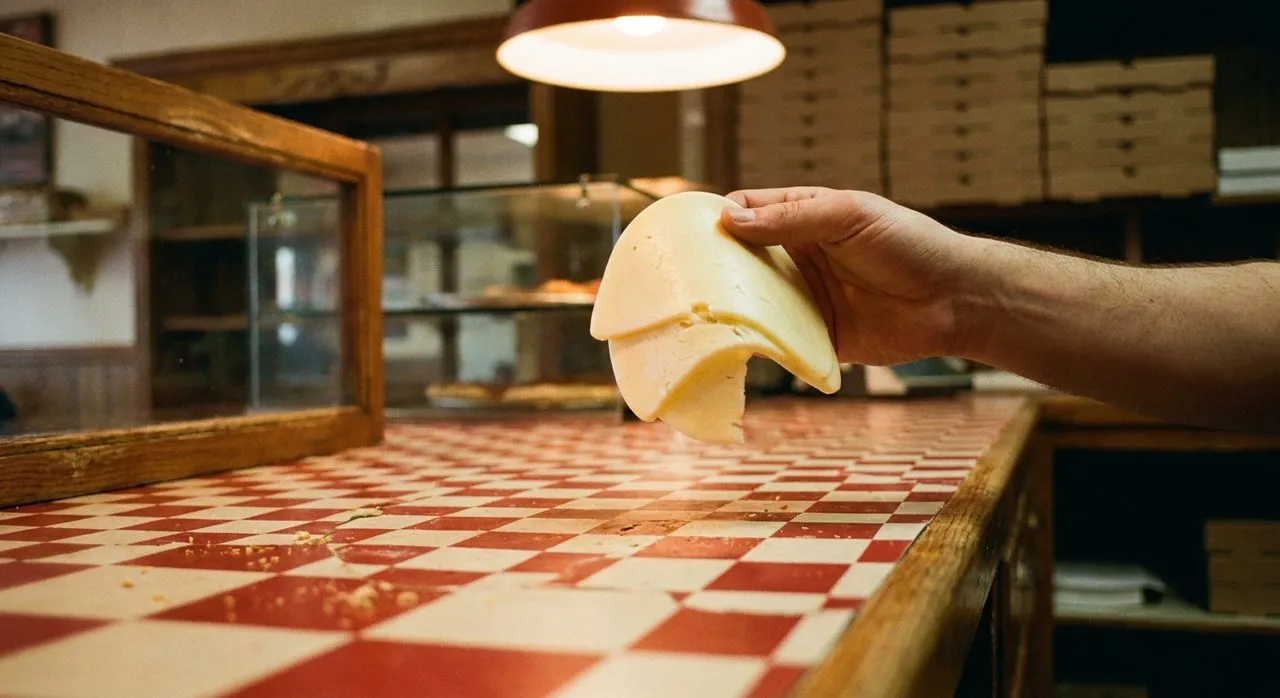
Every shop on this list shares a few traits. No delivery apps. No table service. Minimal menu—usually just plain, pepperoni, and maybe a Sicilian square. Ovens running all day, dough mixed on-site or delivered before dawn, and a turnover model that depends on speed and volume rather than markup. The margins are thin as the crust.
They also share a certain aesthetic: fluorescent light, laminate counters, paper plates, napkin dispensers chained to the wall. There's no Edison bulb, no exposed brick, no chalkboard listing the provenance of the tomatoes. The honesty is structural. You're buying cheap food made competently, and nobody pretends otherwise. That clarity, in a city thick with concept and branding, feels like oxygen.
Why it matters
The dollar slice isn't about culinary excellence. It's about accessibility—proof that you can still eat in Manhattan for the price of a subway swipe, that the city hasn't entirely priced out spontaneity. It's the meal you grab between shifts, after a late movie, when your wallet is light and your options are few. Lose that, and you lose a little of the city's elasticity, its ability to absorb people at every income level and hour of the day.
By late May, with the humidity climbing and the evening light stretching past eight, these counters feel especially vital. You duck in after work, after a walk through Union Square or a meeting that ran long in Midtown, and for a dollar or a dollar-fifty you get something immediate and warm. The transaction is fast, the pleasure modest, the logic ancient: hot bread, melted cheese, a few minutes standing still. That's enough.
Practical notes
The eleven spots span from Penn Station east to Avenue B, clustered most densely along lower Third Avenue and in the blocks south of Fourteenth Street. Nearest subways include the N/Q/R/W at Herald Square, the 6 at Astor Place and Union Square, and the L at First Avenue. Street parking is fantasy; plan on walking from a train. Most counters open between 10 a.m. and noon and stay lit until eleven or midnight, though the two newest spots close earlier—verify hours directly if you're making a special trip. All are small, none have restrooms, and only two offer wheelchair-accessible entrances. Bring cash; most take cards now, but a few still don't, and the dollar slice is no place to test your luck.
Tags: #NYCDollarSlice #MidtownEats #EastVillageFood #BudgetNYC #FreeAndFine #CheapEatsNYC #NYCPizza #SliceLife #ManhattanFood #UrbanEats #May2026 #AffordableNYC #LateSpring #PizzaCulture #CityLife
Sources consulted: Pizza in New York City · Dollar slice · Time Out New York Pizza Guide · NY Times New York Section · NYC.gov
All trademarks are the property of their respective owners.