Inflation has touched nearly every corner of the city's dining landscape, but a handful of dumpling counters in Flushing and Sunset Park are holding the line. This late May, as the sidewalks bloom with discarded hand-carts and the scent of sizzling pork fat drifts through open storefronts, ten spots across these two neighborhoods are still serving dumplings that start below two dollars. We're talking fried pork at a dollar twenty-five, soup dumplings at four for five, and one Brooklyn counter doing eight lamb dumplings for three bucks. No gimmicks, no apologies—just flour, filling, and the stubborn arithmetic of family-run operations that opened when the rent was different.
The Flushing dumpling corridor
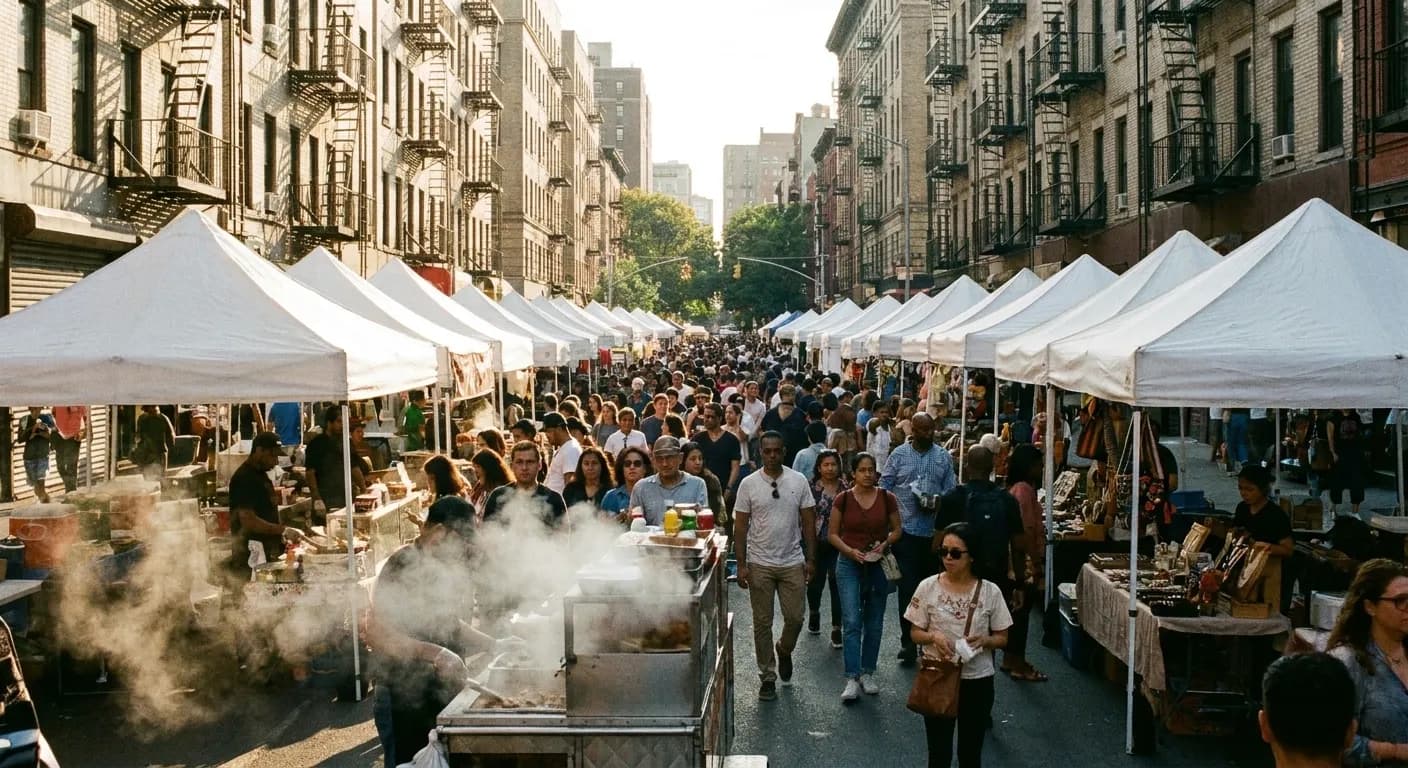
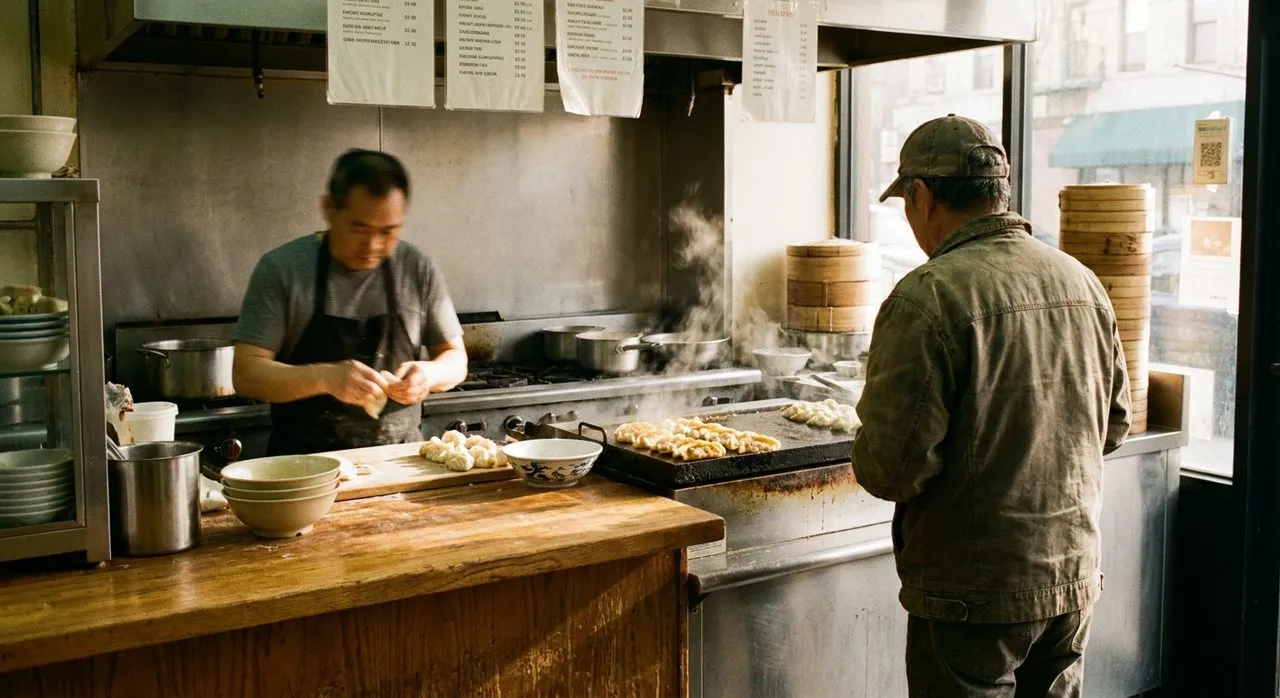
Flushing's Main Street and the blocks radiating from the intersection near Roosevelt Avenue remain the densest concentration of sub-two-dollar dumpling math in the city. The storefronts here are narrow and bright, fluorescent tubes humming over laminate counters, steam billowing from pots the size of truck tires. Late May means the front doors prop open by mid-morning, and the cross-breeze carries the smell of black vinegar and chili oil halfway down the block.
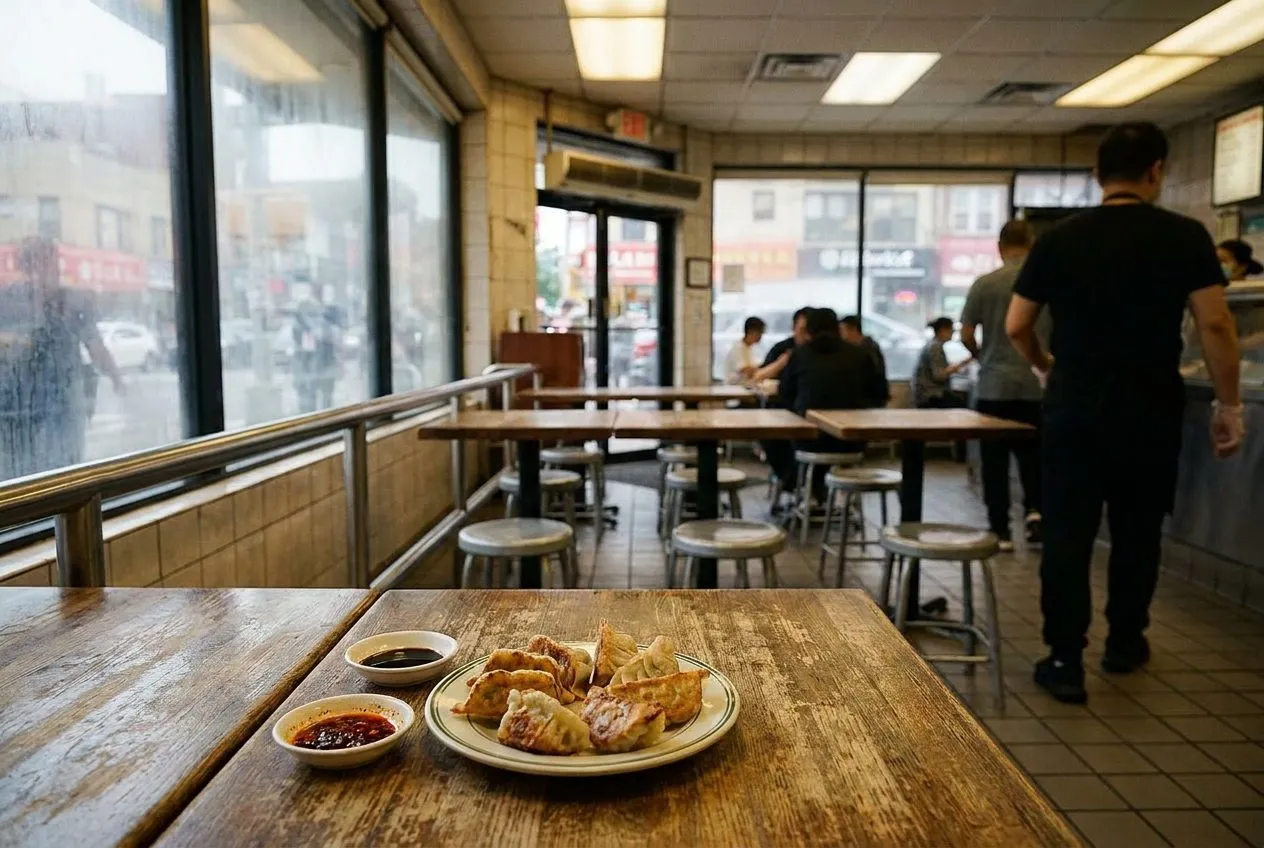
Several counters along this stretch offer fried pork dumplings at a dollar twenty-five for four, boiled vegetable for a dollar even. The rhythm is fast: you order at a register plastered with faded photos, pay in cash, take a number printed on receipt paper thin as tissue. Seating is communal, Formica tables wiped between waves, and the dumpling skins arrive with that perfect char on the bottom—crisp enough to shatter, tender enough to yield. The filling is generous, more cabbage than some purists prefer, but the pork is savory and the ginger cuts through cleanly.
One shop near the public library has held its boiled pork dumplings at a dollar fifty for eight since before the pandemic. The old tile floor is cracked in places, the walls painted a soft cantaloupe that has faded to cream under years of steam. They make the wrappers in a back room visible through a plastic curtain, and if you time it right, you can watch the rhythm of rolling, filling, pleating—no pause, no wasted motion.
Soup dumpling holdouts
Soup dumplings are harder to keep cheap. The engineering is finicky, the margin for error thin, and the ingredients—good pork, quality gelatin, the right wheat flour—have all climbed in price. Still, three Flushing spots are selling them at four for five dollars, which in the current economy feels almost defiant. One long-running operation near Thirty-Ninth Avenue offers them with crab roe for an extra two dollars, the broth inside sweet and faintly marine, the wrapper so delicate you need to cradle it on the spoon like an egg.
The ritual here matters. You crack the skin with your teeth, sip the broth, then eat the dumpling whole with a slick of black vinegar and slivered ginger. The tables are small and the turnover brisk, but nobody rushes you if you're methodical. Late May light slants through the front windows in the early evening, catching the steam as it rises, turning the whole room amber and soft. These are not dumplings designed to photograph well. They are dumplings designed to be eaten.
Sunset Park's Eighth Avenue bargain
Brooklyn's Sunset Park offers a different density—fewer shops, longer blocks, a quieter hum. Eighth Avenue between Forty-Fifth and Sixtieth Streets holds the neighborhood's dumpling anchors, and one counter near Fiftieth is offering affordable lamb dumplings. The lamb is coarse-ground and heavily spiced, cumin and white pepper forward, the wrappers thick enough to hold the filling without tearing but thin enough to steam through. They arrive in a bamboo basket, the cloth beneath soaked dark with drippings.
The shop itself is plain—white tile, a handful of tables, a single ceiling fan that turns slowly overhead. The menu is written in Chinese and English on a backlit board, prices hand-updated with black marker. They also offer pork and chive at a dollar seventy-five for eight, and a vegetarian mix—carrot, glass noodle, wood ear—for a dollar fifty. You order, you sit, you eat. There's no ceremony to it, which is part of the appeal. The lambs dumplings are worth the trip alone, especially if you like your food to announce itself.
Pan-fried versus boiled economics
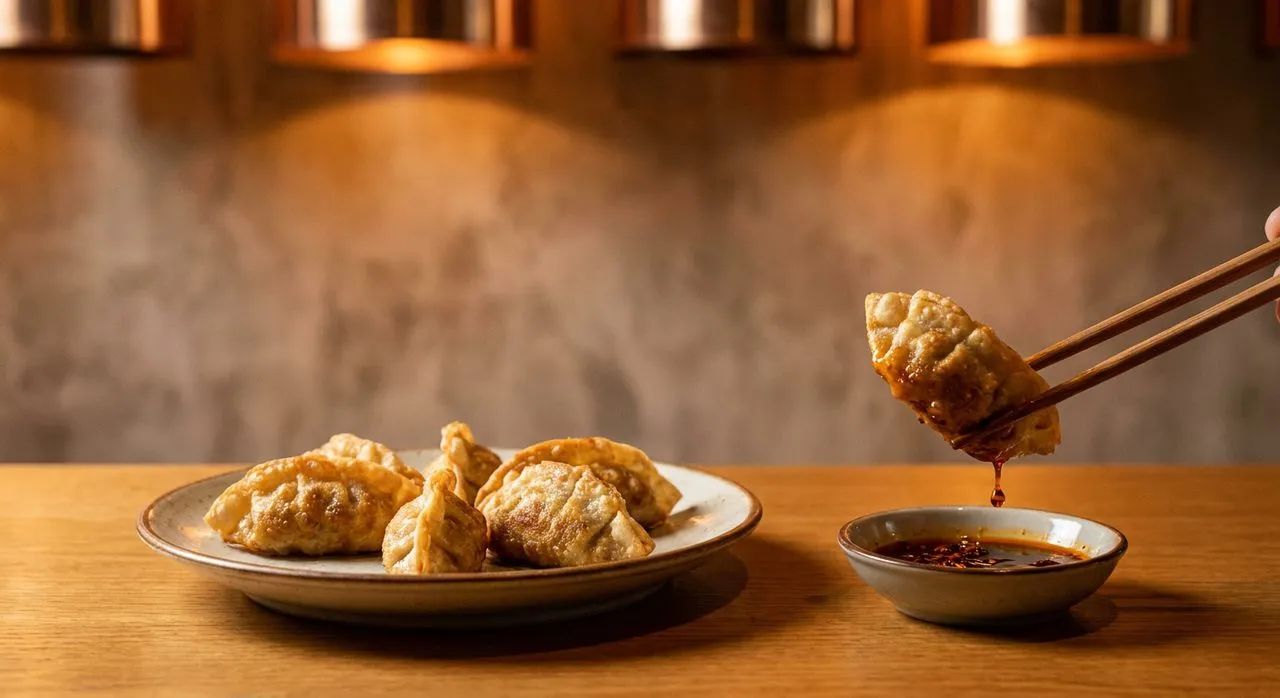
Pan-fried dumplings cost more to make—more labor, more oil, more attention—but a few spots are still pricing them at a dollar twenty-five to a dollar fifty for four. The technique varies: some fry bottom-first then add water and cover to steam, others shallow-fry throughout. The best arrive with a lacy skirt of caramelized starch, crisp as phyllo, connecting the dumplings in a golden raft that you crack apart with chopsticks.
Boiled dumplings, by contrast, are pure efficiency. Drop them in boiling water, scoop them out when they float. Less drama, lower cost, easier to scale. Several Flushing counters are selling boiled pork-and-cabbage at a dollar for five, a price that seems borrowed from another decade. The wrappers are thicker here, more toothsome, the kind that hold up to reheating if you buy extra to take home. Pair them with the house chili oil—most shops keep a jar on every table—and you have a meal for less than a subway ride.
Why these prices still exist
The arithmetic is straightforward: family labor, bulk purchasing, recipes unchanged since the shop opened, and rent locked in under old leases. These are not restaurants positioning for Michelin attention or Instagram virality. They are operations that learned long ago to keep overhead low and volume high. The dumplings are good because they have been made the same way, thousands of times, until the process is muscle memory.
Late May 2026 finds these shops busier than ever, not because of any food-media buzz but because the city's cost-of-living squeeze has sent more people hunting for value. The lines at lunch can stretch out the door. The afternoon lull is brief. By dinner the tables are full again, a mix of neighborhood regulars and outer-borough pilgrims clutching subway maps. It's a strange kind of luxury—affordable abundance in a city that rations it everywhere else.
Practical notes
Flushing's dumpling spots cluster around Main Street near Roosevelt Avenue; take the 7 train to Main Street–Flushing. Sunset Park's dumpling row is Eighth Avenue between Forty-Fifth and Sixtieth Streets; take the R train to Eighth Avenue or the D/N to Fort Hamilton Parkway. Most shops are cash-only or cash-preferred; bring small bills. Hours vary but many open by ten a.m. and close by eight or nine p.m.; verify directly if you're making a special trip. Seating is limited and often communal. Street parking in both neighborhoods is challenging; public transit is faster. Accessibility varies—many storefronts have a single step, narrow aisles, and no dedicated restroom. Plan to eat quickly and leave room for seconds. These are working kitchens, not destinations engineered for comfort, and that is precisely the point.
Tags: #FreeAndFine #NYCDumplings #FlushingEats #SunsetParkFood #CheapEatsNYC #QueensFood #BrooklynEats #DumplingCrawl #AffordableNYC #May2026 #MainStreetFlushing #EighthAvenue #NYCFoodie #BudgetDining #CityFinds
Sources consulted: Jiaozi (Chinese Dumplings) · Flushing, Queens · Sunset Park, Brooklyn · MTA Trip Planning · Time Out New York Restaurants
All trademarks are the property of their respective owners.