 Bay Ridge Halal Cart Late Night Finder for a School Reunion
Restaurants

NYC Dinner Shortlist Builder: Get Six Friends to Agree
Six friends can choose NYC dinner with one shared brief. Collect real constraints, compare three options and agree on a decision rule before another vote.
The group has produced twelve restaurant links and no dinner plan. One friend wants to explore a new neighborhood, another needs to leave early, two have stopped replying, and somebody has added “anything is fine.” A NYC dinner shortlist builder needs a better starting point than a longer list. Collect a few useful answers, take one clear brief into Karpo APP, and ask for a small set of dinner ideas. Your job as organizer is to make choosing easier, with a decision process that gives everyone a fair chance to speak.
Collect answers people can actually give
Begin with a compact request that your friends can answer without researching restaurants. Ask when they can arrive, the area they can reach, any food requirements and the spending level they are comfortable with. Give a time by which you need those answers. The deadline is an organizer's choice for this outing, not a restaurant rule. It helps separate people who are attending from people who are still considering it, so you do not design an evening around a hypothetical party of six.
Invite private replies for sensitive details. Someone might want to state a spending boundary without announcing it to the whole group. Another person might need a particular seating arrangement or an easier journey. Preserve the constraint in the dining brief without publishing the reason behind it. You can say that the group needs seated dining and a manageable route without naming whose circumstances made that important. This keeps the planning useful and lets friends participate without having to explain more than they want to share.
“Anything is fine” can remain a valid answer, but translate it into a clear role. Ask that person whether they are happy with any option meeting the agreed requirements. If they say yes, they do not need to rank every restaurant. The friend who cares deeply about a specific cuisine can contribute that preference without turning it into a condition everybody must satisfy. The distinction helps you collect meaningful input rather than six lists of favorites that never intersect.
Separate a veto from a preference
Put essential constraints at the top of the brief. A participant's food requirement, firm spending ceiling or latest departure can remove an option from consideration. A preference for a particular neighborhood or cuisine can help rank the options that remain. Explain this distinction to the group before presenting candidates. Without it, a mild dislike can acquire the same weight as a genuine barrier, and every proposed restaurant becomes vulnerable to a fresh objection that nobody mentioned earlier.
Do not ask for a majority vote on whether somebody's essential need matters. If one diner cannot eat a suitable meal at a candidate, that place is a poor group choice regardless of how many others like its photographs. At the same time, invite specific explanations for objections. “I cannot get there before I need to leave” gives the organizer something concrete to fix. “The vibe is wrong” might need a follow-up about noise, formality or the kind of evening the person hoped to have.
Here is an illustrative brief: “Six friends want dinner in NYC. We can meet in one agreed area, need individual orders and want a conversation-friendly setting. Here are our arrival window, food requirements, spending limits and latest departure. Suggest three different possibilities and explain the compromise behind each.” Replace every placeholder with the group's own answers. Use the conversation in Karpo APP to narrow discovery, then assess the returned ideas as candidates. You are not claiming that a reservation or suitable table already exists.
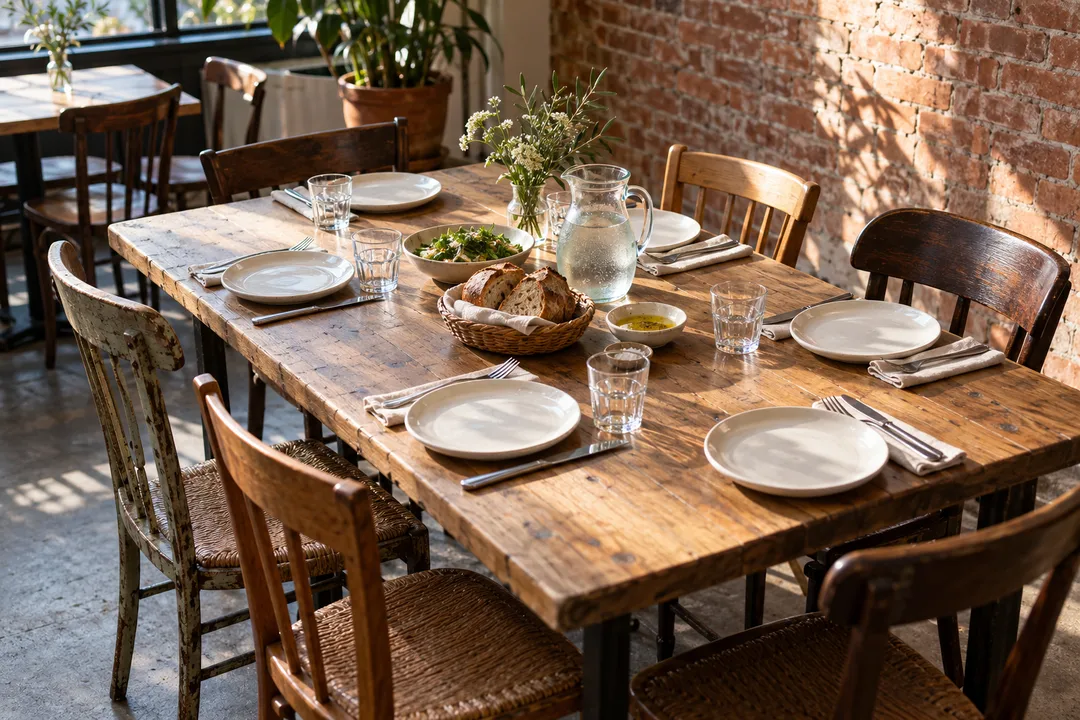
Present a choice rather than another research assignment
For each candidate, send the name, meeting area, reason it fits and the main unresolved point. Include the relevant restaurant information when you have it, instead of asking friends to open a chain of links and reconstruct the comparison themselves. Keep unsupported details out. If the suggested atmosphere is based only on photographs, distinguish that impression from an established fact about the room. A short, honest explanation gives the group enough to judge without making the recommendation sound more certain than its evidence.
Give the three choices different purposes. One could prioritize an easy meeting point, another the strongest food fit, and another the style of evening people wanted. If all three are described with the same praise, you have not helped the group choose. Ask which tradeoff people prefer among options that satisfy the essentials. You can put a concrete question to them: “Would you rather have the simpler journey or the menu with more choices for everyone?” The answer moves the plan forward even before a final venue is selected.
Ask for an acceptable choice as well as a first choice. A person may rank one restaurant first while being perfectly happy with another. Knowing the overlap makes agreement easier than treating second place as rejection. Keep the response simple: happy with it, prefer another, or cannot attend for a stated reason. These are manual planning suggestions that you can use in the group conversation. They do not imply a particular voting interface, automated poll or consensus feature inside the app.
Pick the decision rule while everyone is calm
Agree in advance how the organizer will choose if two acceptable options remain. You might pick the one with the easier journey, rotate whose preference wins, or let the person with the firmest departure time break the tie. There is no universal rule for a group of friends. The important part is that the rule is understood before the outcome, so selecting a restaurant does not feel like changing the process to favor whoever speaks most insistently at the end.
Set a point when suggestions close. New information about an essential requirement deserves attention even after that point. A late link to another appealing restaurant does not necessarily require reopening the choice. Keep those ideas for a future outing. This gives the group permission to stop optimizing a simple dinner. The organizer's role is not to prove that the chosen place is superior to every restaurant in New York. It is to arrange an evening that the attending friends can enjoy together.
If the group cannot agree, reduce the variable that is creating the dispute. Fix the area first when travel is the problem. Decide between a casual meal and a longer evening when the disagreement is about commitment. Revisit the spending expectation when people are using different definitions of “moderate.” Asking for a fresh list before resolving that variable simply restarts the same argument with different names. A better shortlist follows a clearer decision, rather than trying to substitute for one.
Practical Notes once the group says yes
Arrange the actual visit for the agreed party size through the venue's own channel. Then send one final message with the chosen place, date, meeting details and any booking information you actually received. State how individual orders or shared dishes will be handled if that affected the budget discussion. Do not label the dinner booked until the arrangement has been made. Everyone should be able to find the plan in one message instead of scrolling through the entire debate to reconstruct it.
Keep one backup only if it meets the same essential constraints. If the first choice falls through, explain the change and use the backup without launching another open-ended search. When attendance changes materially, reassess the arrangements for the new party rather than assuming the original table still works. A group decision remains useful when it can adapt to a real change. It becomes exhausting when every minor preference is treated as an emergency that invalidates the whole plan.
Bring your collected brief to Karpo APP when you want help discovering dinner ideas, and return with precise feedback when the options miss. The final choice belongs to your group, including how you handle invitations, spending and timing. A good result is more than three restaurant names: it is a shared understanding of why this dinner works. Once the visit is arranged, let the thread become a place for looking forward to the evening instead of continuing the selection process indefinitely.
Ask Karpo for more information.
Keep reading
- Bay Ridge Halal Cart Late Night Finder for a School Reunion
 Financial District Halal Cart Late Night Finder for Teams
 Jackson Heights Halal Cart Late Night Finder Off the 7 Train