 Bay Ridge Halal Cart Late Night Finder for a School Reunion
Restaurants
Jackson Heights Halal Cart Late Night Finder Off the 7 Train
Use this Jackson Heights halal cart late night finder after the 7 train to choose a cart by its griddle, ask for the right spice level and end with hot tea.
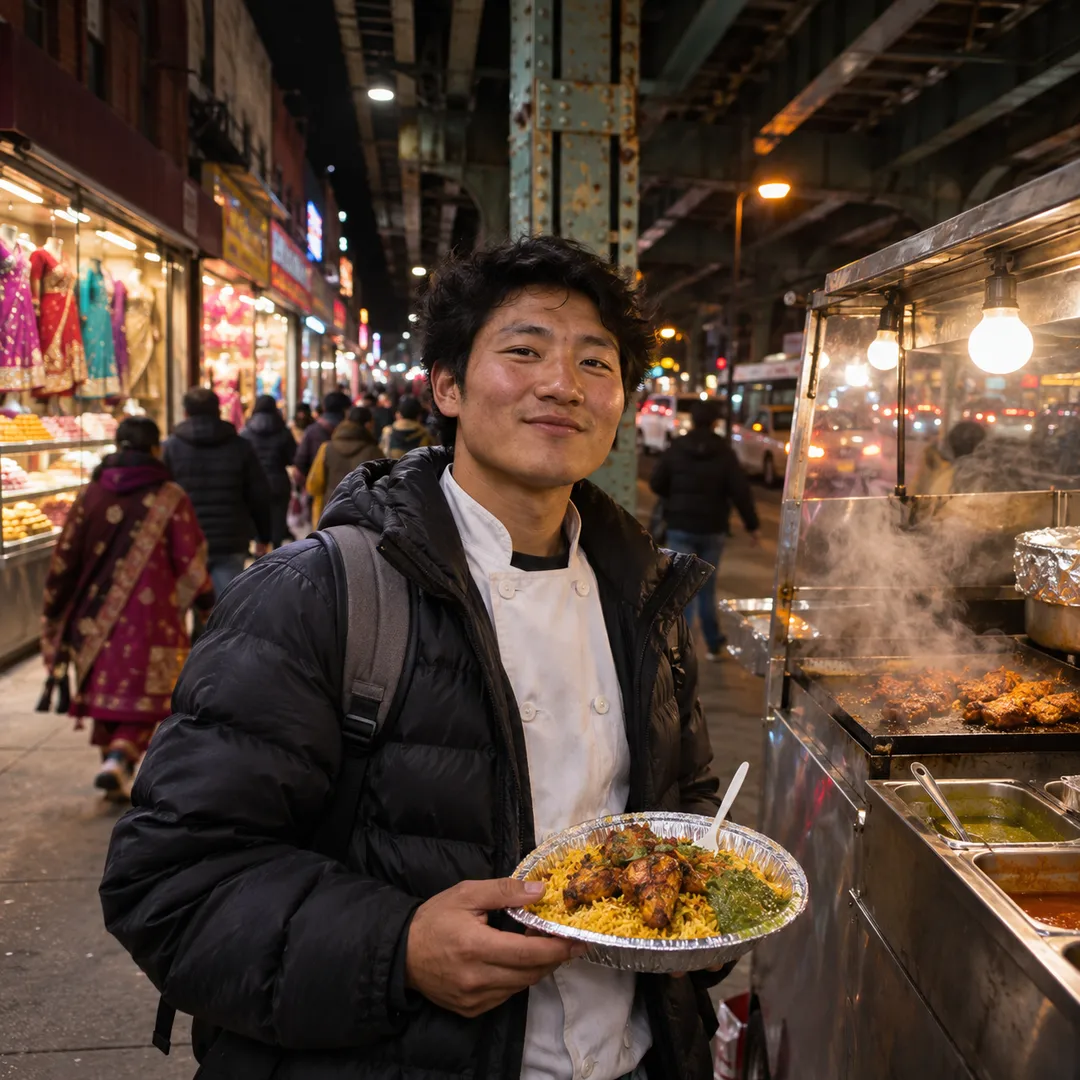
Tenzin finishes his shift on the hot line in a Manhattan kitchen long after most people have gone to bed, and the 7 train is the only thing standing between him and his couch. He used to stumble straight home. Now he gets off a stop early and walks the length of Roosevelt Avenue under the tracks, eating as he goes. For a cook, a halal cart late night finder in Jackson Heights is a professional pleasure: someone else is working the griddle, and the food tastes of a dozen different homelands.
Under the Tracks, Where the Night Never Quite Ends
Roosevelt Avenue lives beneath the elevated 7 line, and the steel girders make it feel like a long covered market. Trains thunder overhead every few minutes. Below, the sidewalks carry a mix of languages that few streets anywhere can match: Bengali, Nepali, Spanish, Tibetan, Punjabi, Urdu and Quechua, often within a single block. The carts here serve that crowd, and they cook to suit it rather than to suit a tourist idea of street food.
Tenzin likes that the avenue does not perform for anybody. Delivery riders park their e-bikes in clusters near the carts, taxi drivers on break stand in groups sharing cigarettes and gossip, and night-shift workers from the hospitals and airports pick up dinner on their way home. A cook stepping off the train in a stained chef jacket fits right in. Nobody stares, and the cart men nod at him like a colleague.
How a Cook Reads a Cart
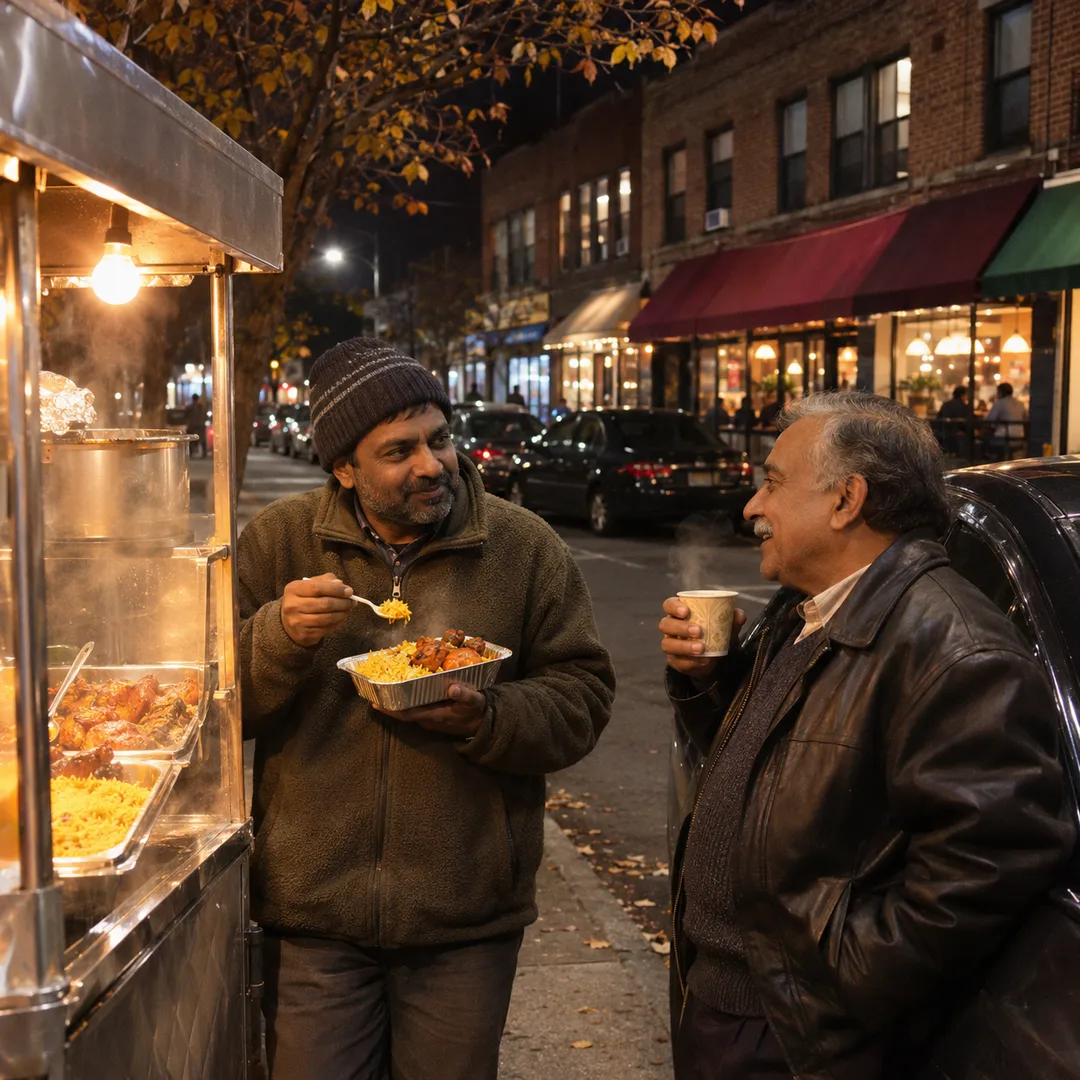
Tenzin judges a cart the way he judges a line during service. First he listens. A good flat-top hisses steadily as the cook keeps chopping and turning meat in small batches. A quiet griddle with a big mound of meat pushed to one side means food is sitting. Then he watches the rice. Fresh rice is fluffy and bright with turmeric. Rice that has been held too long goes dense and dull, and no amount of sauce saves it.
He also watches the cook's hands. The sharpest cart cooks work with economy, the same few motions repeated perfectly, the tongs clean between orders. They taste their sauce. They fold the foil lid in one movement. These details tell him more than any sign could. If you are not a cook yourself, the shortcut is simple: follow the delivery riders. They eat from these carts every night and they know which ones stay consistent.
Asking for Spice the Jackson Heights Way
Many carts in Jackson Heights are run by Bangladeshi families, and their cooking reflects it. Beyond the familiar chicken over rice, you may find a curry-style chicken, a beef kebab, a chickpea side or a green chilli sauce that is far more aggressive than the usual red. Some carts will ask if you want it jhal, a Bengali word for spicy heat. Saying yes is a commitment, so think about how much sleep you want to get.
Tenzin learned to ask for medium and then add more from the bottle himself. He also likes to ask the cook what they are eating on their own break, which often leads to a dish that is not on the board at all. A polite question, a smile and a little patience go a long way here. The carts are busy, but most cooks enjoy talking about food with someone who obviously cares about it.
Momos, Kebabs and Other Detours
The halal cart is only one part of the late scene. Jackson Heights is also home to one of the city's largest Himalayan communities, and small momo counters and carts serve steamed dumplings with fiery tomato sauce. Tenzin grew up eating momos and treats them like comfort food. Some nights he starts with a few dumplings from a Tibetan stall, then moves to a cart for a chicken platter to take home for tomorrow's lunch.
Late sweet shops and bakeries line the avenue too, with trays of bright mithai under glass. A few of them keep tea urns going into the night. On the side streets you can find kathi rolls, chaat and Colombian arepas, all within a short walk of the station. A halal cart late night finder here is really a map of choices, and the Karpo APP can help you see what is still serving near your stop.
Diversity Plaza and the Walk Home
Diversity Plaza is a pedestrian stretch close to the station, carved out of what used to be a small slice of street. During the day it hosts vendors, community events and long conversations among older men on folding chairs. Late at night it is quieter, but still a natural spot to stand with a plate, out of the flow of traffic, and watch the trains slide overhead through the glow of the shops.
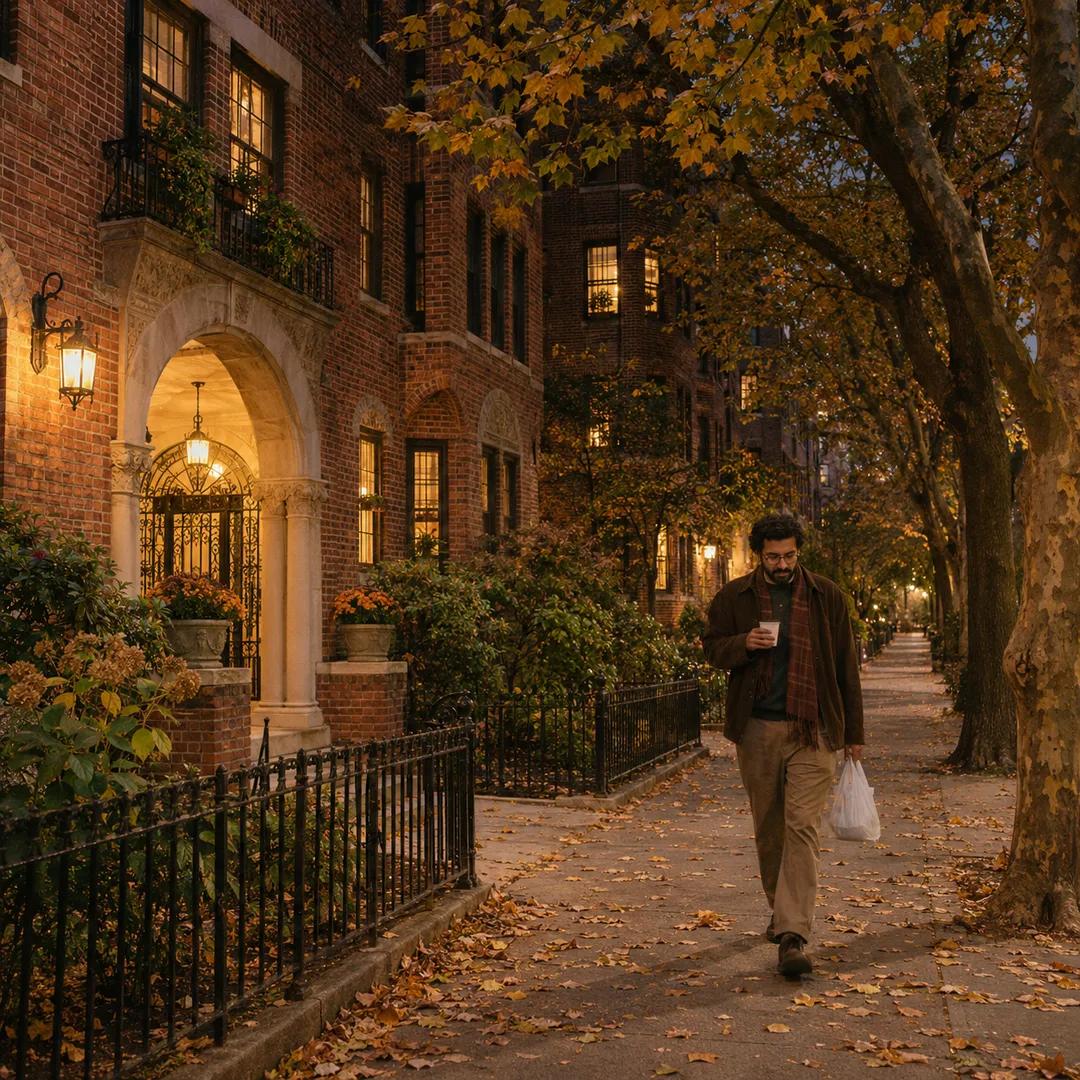
From there, Tenzin walks north into the Jackson Heights Historic District, where the mood changes completely. The streets are lined with elegant garden apartment buildings from the 1910s and 1920s, built around private courtyards in what was then a bold new idea of suburban living inside the city. At midnight, with leaves on the sidewalks and the noise of the avenue fading, it is one of the calmest walks in Queens.
Tea Before Bed, and an Honest Warning
Tenzin ends most nights with a small cup of milky tea, sweet and heavy with cardamom, from a stall near the station. It is the perfect closer after a spicy plate, and it settles him before sleep in a way coffee never could. If you are new to the area, ask for the tea with less sugar the first time. Some stalls make it very sweet, and that is half the charm once you get used to it.
Now the honest part. Do not walk under the tracks with an open platter while trains are pulling in. The vibration, the grit and the occasional drip from above can land in your food. Close the lid, carry the bag and eat once you reach the plaza or a quieter side street. And skip the extra green chilli sauce if you have an early shift tomorrow, because your stomach will remember.
The 34th Avenue Option on Mild Nights
On milder evenings, 34th Avenue offers another way to enjoy a cart meal. Part of it became an open street during the pandemic years, with long stretches closed to traffic for walking, cycling and play. Families use it heavily by day. Late at night it is mostly empty, wide and tree-lined, with benches here and there. It is a peaceful place to sit with a platter before the final walk home.
Tenzin sometimes brings a coworker who lives in Elmhurst, and they eat on 34th Avenue while recapping the service: who burned the fish, which ticket came back, which customer asked for the sauce on the side and then complained. It is a version of the family meal that kitchens rarely have time for anymore. The cart platter, shared on a quiet street, has become their real staff dinner.
Practical Notes for the Last Train
Carry some cash and a card, since carts and tea stalls handle payment differently. Keep a plastic bag in your backpack for the foil platter so sauce does not leak onto your work clothes. If you are vegetarian, ask about falafel or chickpea curry, and ask whether it is cooked on the same griddle as the meat. Be patient during the rush after the bars let out, because the carts get swamped and the cooks are moving fast.
Before you leave work, open the Karpo APP and save a few carts, momo stalls and tea counters near your station, plus a backup by the next stop in case the avenue is unusually busy. Tenzin calls the walk under the tracks his decompression ritual. By the time he reaches his door, he has eaten well, talked to three people in two languages and left the heat of the kitchen behind.
Ask Karpo for more information.
Keep reading
- Bay Ridge Halal Cart Late Night Finder for a School Reunion
 Financial District Halal Cart Late Night Finder for Teams
 Astoria Halal Cart Late Night Finder for Rideshare Drivers