 Garment District Mending Supplies Shop Route: 4 Blocks
Hidden Gems & Odd Finds
Astro Gallery: Midtown Crystal Shop, Fossil Browsing Guide
Astro Gallery at 417 Fifth Avenue offers public mineral, fossil, and crystal browsing in Midtown. Start with the large specimens, then compare smaller finds.
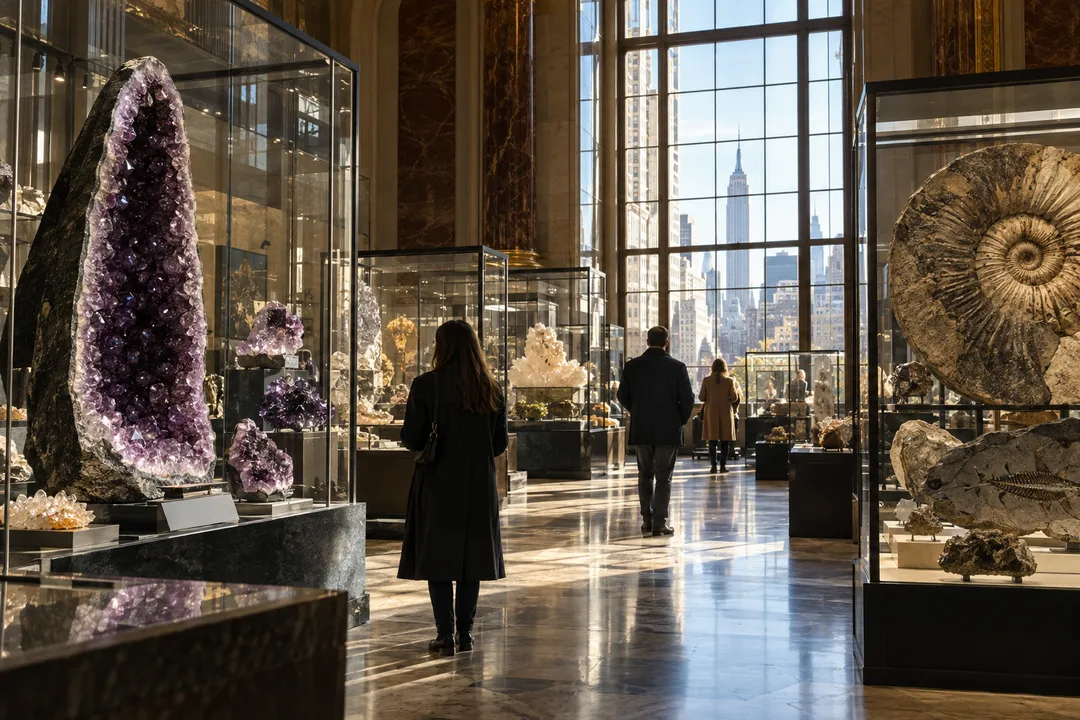
Astro Gallery turns a Midtown crystal shop visit into a geological browse. The public gallery now lists 417 Fifth Avenue, with long daytime hours and a room full of crystals, fossils, meteorites, and large specimens that reward a slow first lap before you decide what belongs at home.
Why Astro Feels Bigger Than A Typical Crystal Shop
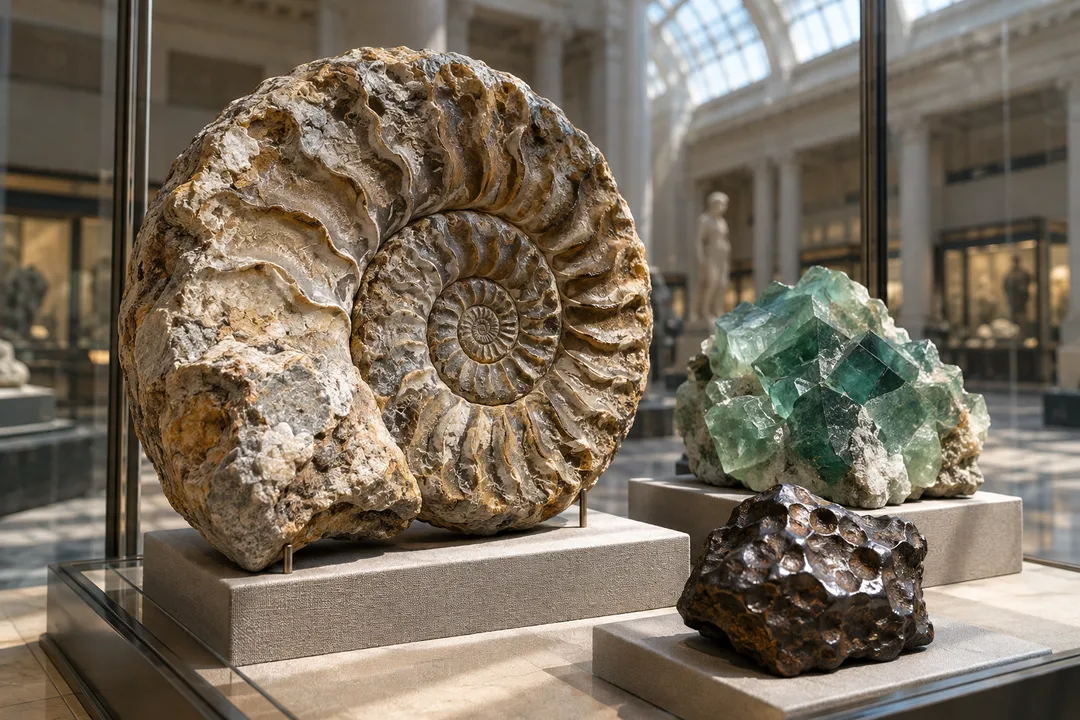
Astro Gallery is the place to choose when a crystal shop near me search really means “show me the geology.” The current public gallery at 417 Fifth Avenue is arranged more like a cabinet of curiosities than a small metaphysical boutique. You can move from amethyst and quartz to fossils, meteorites, polished slabs, and sculptural specimens without leaving the same interior.
The scale changes how you shop. Begin with the largest objects because they establish the color and texture vocabulary for the rest of the visit. A towering purple geode makes a palm-sized amethyst feel different. A metallic meteorite makes a polished mineral look less like décor and more like a fragment of planetary history.
A Useful Route Through The Displays
Walk the room in three passes. First, look at the large geodes and statement specimens without trying to buy anything. Second, examine fossils and meteorites, which give the visit its gallery identity. Third, return to smaller minerals and gifts with a better sense of whether you want sparkle, texture, history, or a conversation piece for a shelf.
The signature pieces are the ones with a visible story in their surface: banding, crystal points, fossil chambers, or an unexpected metallic sheen. I would skip the first tiny polished stone that looks familiar. Astro is strongest when you let the scale and variety lead you toward something you could not have chosen from a thumbnail online.
How To Shop Without Treating It Like A Museum
Astro sits between retail and exhibition, so ask before assuming a display piece is meant to be handled. The quiet rule is to keep hands off large specimens and glass cases unless a staff member invites you closer. That matters when several visitors are photographing textures or comparing a fossil’s details from different angles.
Families often pause at the meteorites and fossils, while design-minded visitors focus on polished slabs and geodes. A good question for staff is “What can I safely move or display at home?” That produces more useful guidance than asking for the most powerful crystal. If the purchase is a gift, ask for a piece with a clear geological feature rather than a vague promise.
Timing, Crowds, And The Midtown Pace
Astro Gallery lists hours as Monday through Friday, 11 AM to 8 PM, Saturday, 10 AM to 8 PM, and Sunday, 11 AM to 7 PM. A weekday opening hour is best for close looking, while Saturday makes sense if you want to pair the gallery with Fifth Avenue shopping. Leave at least 35 minutes. Ten minutes is enough for a quick browse but not enough to understand the range.
The gallery does not need a queue strategy in the restaurant sense, but it does reward patience around the cases. If the room fills with school-age visitors or weekend shoppers, start with the farthest display and return to the entrance pieces later. Your plan B is to focus on one category—fossils, meteorites, or crystals—rather than trying to see every object equally.
A Fifth Avenue Walk With A Geological Detour
From 417 Fifth Avenue, stay south for a short architecture-and-shopping loop, or head toward Madison Square if you want a more open break from the cases. The gallery works well as the middle stop: a quiet indoor hour after a busy street start, followed by a walk where the city’s stone façades become part of the same visual theme.
Keep the route flexible around weather and carrying weight. A large mineral is not a casual souvenir, and the most enjoyable ending may be a nearby drink or bench rather than another store. If you buy a small specimen, photograph its texture before leaving. The image helps you remember the detail that made it worth choosing.
Practical Notes Before You Go
Astro Gallery is at 417 Fifth Avenue, New York, NY 10016. Its published hours are Monday through Friday, 11 AM to 8 PM, Saturday, 10 AM to 8 PM, and Sunday, 11 AM to 7 PM. Wear shoes that make standing easy, because the best visit involves several slow passes rather than one quick lap.
This is a strong stop for a crystal shopper who wants context, not only color. Set a budget before you enter, decide whether you have room for a substantial piece, and ask staff how to transport anything sharp or heavy. The gallery’s advantage is comparison: you can see how fossils, meteorites, and crystals each tell a different story about the material world.
A Better Souvenir Than A Random Shiny Stone
If you are visiting Astro as a traveler or buying for a design-minded friend, think in terms of geological evidence. A fossil with a visible chamber, a meteorite with an irregular metallic surface, or a crystal with clear growth lines gives the recipient a story to ask about. The object can be beautiful without pretending to be rare, magical, or more important than its material history.
Photograph the display label only if the gallery permits it, then keep the purchase information with the object when you leave. Large specimens need stable transport and a destination surface. Small pieces still deserve a pouch so they do not scratch against keys. Asking one care question at the register is more valuable than adding a second object you have nowhere to place.
Astro is worth the extra time because the gallery expands your definition of a crystal shop. You can leave with a small mineral, but you can also leave with a clearer sense of why a fossil, meteorite, or geode looked different from the next one. Let that comparison be the souvenir, even if the final purchase is modest.
A Last Look Before Checkout
Before leaving Astro, compare the chosen object with one specimen from a different category. A fossil, meteorite, or crystal can all be beautiful for different reasons, and the comparison helps you explain the purchase later. Look for the feature you will still notice after the object has sat on a shelf for a month.
Ask how to transport the piece, especially if it has points, a thin edge, or meaningful weight. Keep the receipt and any label with it, then let the object be the ending of the visit rather than adding another random souvenir. The gallery is most useful when it makes one choice clearer.
Ask Karpo for more information.
Keep reading
- Garment District Mending Supplies Shop Route: 4 Blocks
 Greenpoint NYC Mending Supplies Shop Route: Sunday Walk
 Astoria Queens Mending Supplies Shop Route: 3 Loop Stops