 Inwood Winter Greenmarket Picker for Hikers on Cold Mornings
Weekend Plans
Creepy Doll Museum Near Me in Brooklyn: The Morbid Anatomy Library
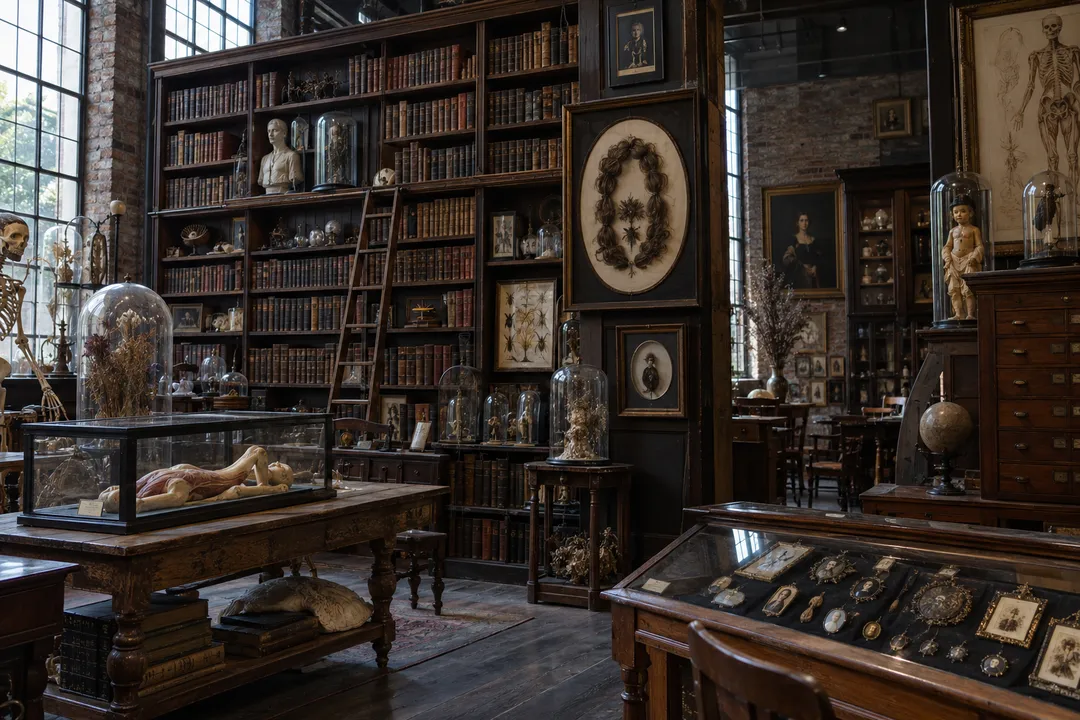
The Morbid Anatomy Library at 254 36th Street in Industry City exhibits Victorian mourning hair dolls and anatomical wax curiosities with free admission on weekends.
If you are searching for a creepy doll museum near me in New York City, The Morbid Anatomy Museum Project provides a fascinating destination. Located at 254 36th Street, Building 2, Room C251, Brooklyn, NY 11232, this dedicated collection features historic figures, antique curiosities, and rare exhibits. The venue operates Saturday and Sunday from 12 pm to 5 pm, with free admission with no advance reservation required. Visitors can easily reach the site via D, N, or R train to the 36th Street subway station in Sunset Park, making it an accessible weekend cultural plan for enthusiasts of antique dolls, folk sculpture, and gothic history.
Finding Room C251 Inside the Industry City Complex
Industry City stretches across six million square feet of former shipping terminals along the Sunset Park waterfront, so finding The Morbid Anatomy Library requires navigating to the right doorway. The collection is housed in Building 2 at 254 36th Street, positioned between Second Avenue and Third Avenue. Enter through the main glass doorway of Building 2 on 36th Street, turn right past the ground-floor hallway directory, and walk up a single flight of stairs to the second floor, or use the passenger elevator to access Room C251. Signage outside the door indicates the Morbid Anatomy research library and exhibition space.
The journey from Manhattan takes approximately twenty minutes on the express D or N train to the 36th Street station, where exits at Fourth Avenue place you three blocks east of Building 2. Local R trains also serve the 36th Street stop directly. Once you cross Third Avenue under the Gowanus Expressway overpass, the brick industrial courtyard of Building 2 is clearly marked on the north side of 36th Street. The research room and curiosities gallery operate on Saturdays and Sundays from 12 pm to 5 pm, with weekday access reserved for scheduled research fellows and private symposiums.
The Leila Cohoon Victorian Hair Dolls and Memorial Relics
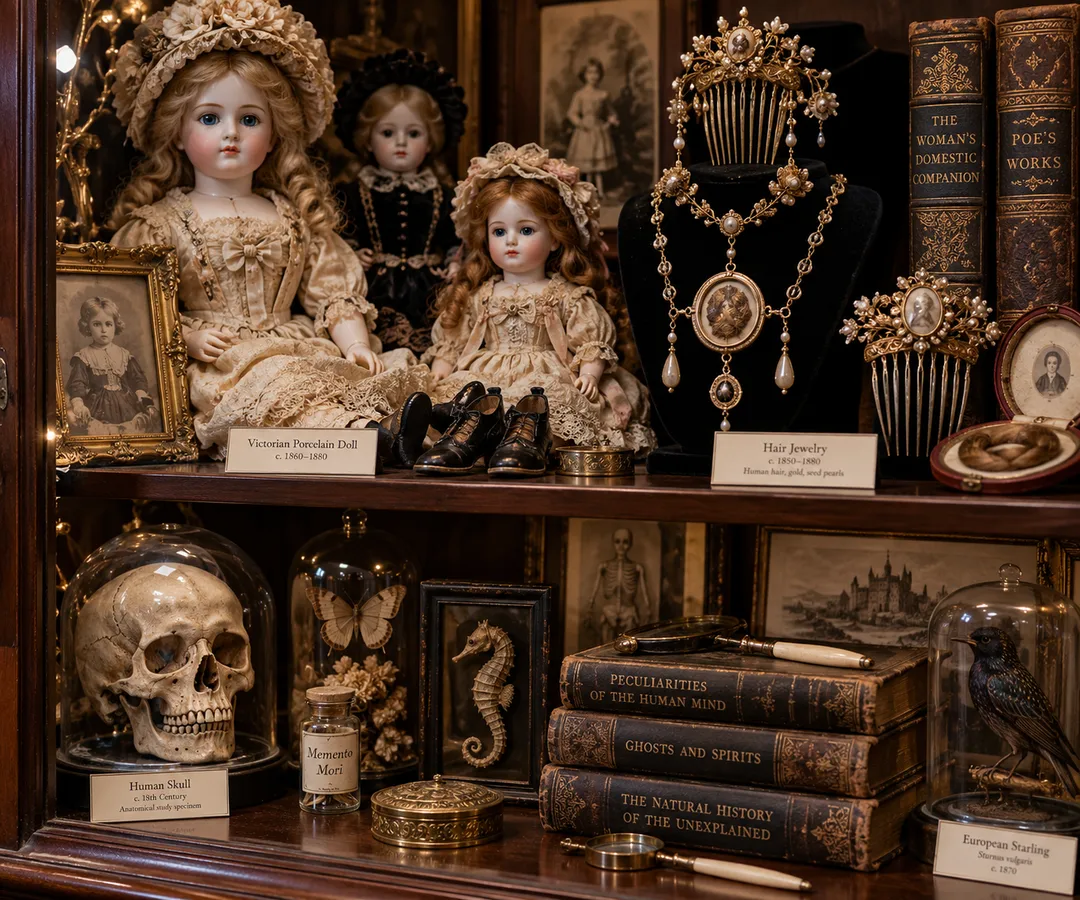
The centerpiece of the doll and figurative exhibits inside Room C251 is the historic collection of Victorian hair work and mourning figures donated from Leila's Hair Museum in 2024. Leila Cohoon founded her pioneering repository in Missouri in 1986, gathering thousands of miniature portraits, ornamental figures, and doll-sized shadow boxes crafted entirely from human hair. Following Cohoon's passing, her estate entrusted nearly fifty museum-grade pieces to Morbid Anatomy as a permanent East Coast sanctuary.
Visitors can inspect miniature memorial dolls, framed shadowbox effigies, and dollhouse-scale funeral scenes braided from lockets of brown, auburn, and silver strands. In nineteenth-century mourning traditions, families commissioned artisans to weave departed loved ones' hair into porcelain-faced miniature keepsakes and doll figures dressed in black crêpe garments. Standing before these glass-topped vitrines, you observe micro-braided doll dresses, intricately woven floral wreaths clutching porcelain infant heads, and miniature wax-dipped effigies that served as domestic shrines across American parlors between 1850 and 1900.
Several prominent display cases contain elaborate hair shadow boxes that mimic Victorian dollhouse parlor interiors. Within these frames, artisans constructed miniature parlor furniture from coiled horsehair and human locks, setting tiny seated porcelain figurines beside miniature hair-woven floral urns. Because each lock retained the natural color and physical DNA of deceased family members, these uncanny miniature tableaux functioned as both sacred reliquaries and tactile mementos, bridging Victorian domestic decorative arts with the solemn etiquette of private mourning.
Victorian Hair Craftsmanship and Nineteenth-Century Mourning Rituals
Examining these memorial figures reveals the exacting craftsmanship required to manipulate human hair into doll sculptures. In the mid-nineteenth century, guidebooks such as Mark Campbell's 1867 manual Self-Instructor in the Art of Hair Work taught domestic artisans how to boil locks in soda water, separate individual strands, and braid them over circular wooden braiding tables weighted with lead bobbins. The resulting hollow tubes and delicate lacework were shaped over wire armatures to construct miniature limbs, doll parasols, and floral garnishes surrounding hand-tinted porcelain faces.
Because nineteenth-century households faced high rates of child mortality, these hair dolls functioned as intimate tactile mementos rather than mere decorative oddities. Families preserved the hair of deceased children inside glass bell jars, crafting miniature surrogate figures that rested on parlor sideboards. The lifelike sheen of human hair, which resists decomposition for centuries, gives these antique figures a haunting physical permanence that continues to arrest the attention of contemporary museum visitors.
Anatomical Wax Models and Uncanny Cabinets of Curiosities
Flanking the hair dolls are glass cases filled with nineteenth-century wax anatomical models, dermatological moulages, and antique medical mannequins. These hyper-realistic wax figures were originally cast in European medical workshops to train physicians, featuring hand-inserted eyelashes, real human hair wigs, and painted glass eyes that stare outward with eerie stillness. Placed alongside preserved botanical preparations and articulated skeletal specimens, the wax figures establish the uncanny atmosphere that defines Morbid Anatomy's archival mission.
The surrounding shelves house thousands of rare volumes covering Victorian death customs, folk dolls, sideshow history, spiritualist photography, and cultural anthropology. Visitors can pull books from open shelves to read about the historical convergence of funeral practices, puppet craft, and domestic doll making. Antique Mexican retablo paintings, devotional saints in tin boxes, and vintage anthropomorphic taxidermy tableaux complement the central doll displays, providing rich historical context for how previous generations used stylized figures to confront mortality.
Practical Visiting Rules and Sunset Park Neighborhood Pairings
Admission to the Morbid Anatomy Library is completely free, with donations accepted at the entrance desk to fund archive preservation. Staff members welcome photography and video recording throughout the gallery, provided visitors refrain from using tripod equipment or flash lighting that could degrade antique textiles and hair fibers. The facility is fully wheelchair accessible via the Building 2 passenger elevator, and quiet reading tables allow guests to linger as long as they wish between 12 pm and 5 pm.
The library also hosts ongoing weekend programming, including guest lectures by cultural anthropologists, private object viewings for researchers, and seasonal workshops on Victorian hair braiding techniques. Visitors wishing to consult specific rare folios from the archive can request access from the on-duty librarian, who provides velvet book cradles and archival handling gloves for reviewing nineteenth-century mourning albums and antique theatrical monographs.
Pairing your afternoon visit with the surrounding Industry City campus makes for an effortless Brooklyn itinerary. The Building 2 courtyard connects directly to the Japan Village food hall on 35th Street, where steaming bowls of ramen and matcha soft serve provide a relaxed post-gallery meal. Walking four blocks north along Third Avenue brings you to the historic perimeter gates of Green-Wood Cemetery at 25th Street and Fifth Avenue, where nineteenth-century Gothic revival mausoleums and winding woodland paths offer an outdoor counterpart to the memorial art inside Room C251.
Ask Karpo for more information.
Keep reading
- Inwood Winter Greenmarket Picker for Hikers on Cold Mornings
 Carroll Gardens Winter Greenmarket Picker for Holiday Bakers
 Jackson Heights Winter Greenmarket Picker for a Family Day