Searching concerts in New York produces a list sorted by date, which is the least useful ordering possible. The variable that actually determines your evening is capacity. New York's venues form a ladder with unusually distinct rungs, bands climb it in a predictable order, and where a show sits on that ladder tells you the ticket price, how hard the on-sale will be, how far you will stand from the stage and whether the night is worth building a weekend around.
The rung decides the night — 250 capacity and 5,000 capacity are different events at the same price. Ask Karpo what is playing near you this week and which rooms still have tickets.
The ladder, rung by rung
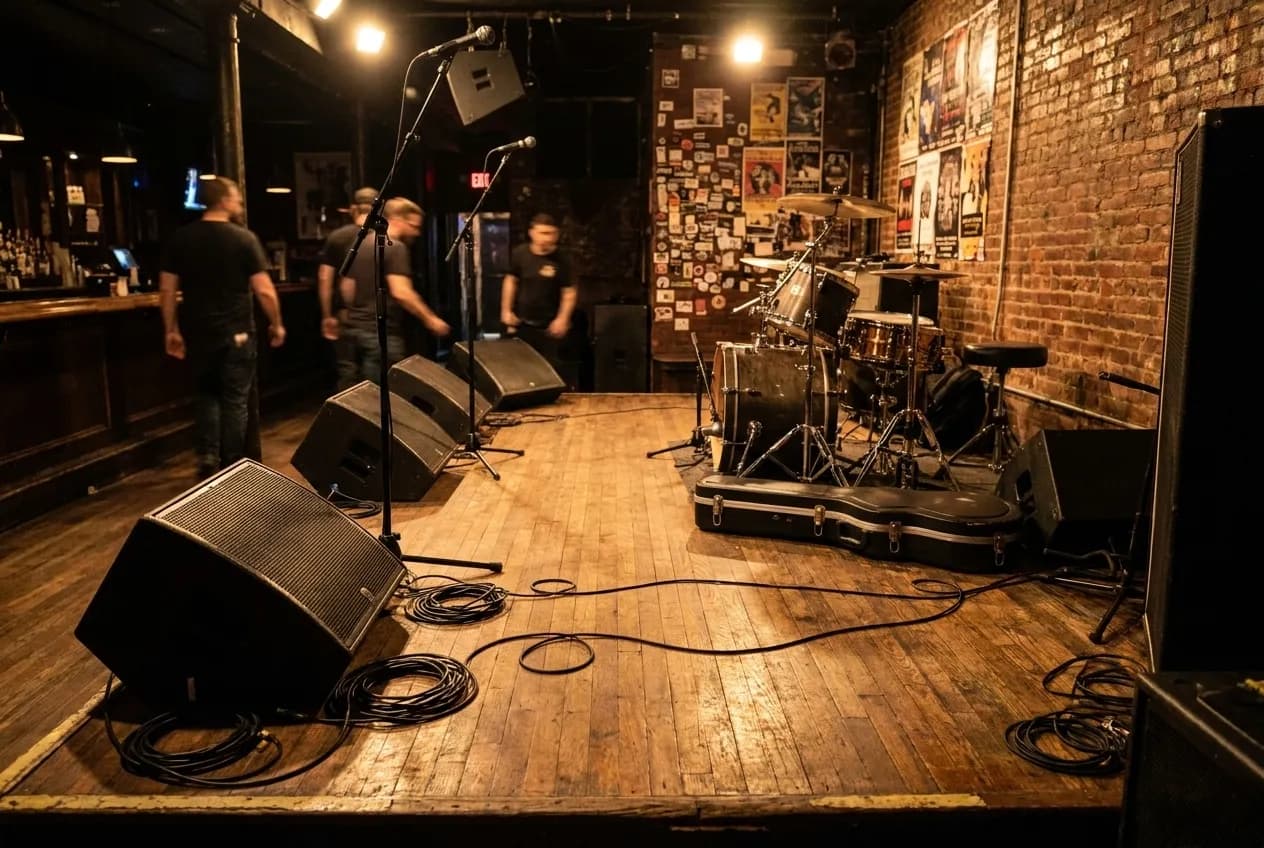
The bottom of the professional ladder in Manhattan is Mercury Lounge, at 217 East Houston Street, with a capacity of 250. It has been the room where bands play their first properly booked New York show since the early nineties, and it is deliberately unglamorous — a back room with a stage, no production to speak of, and a sightline from essentially anywhere in it.
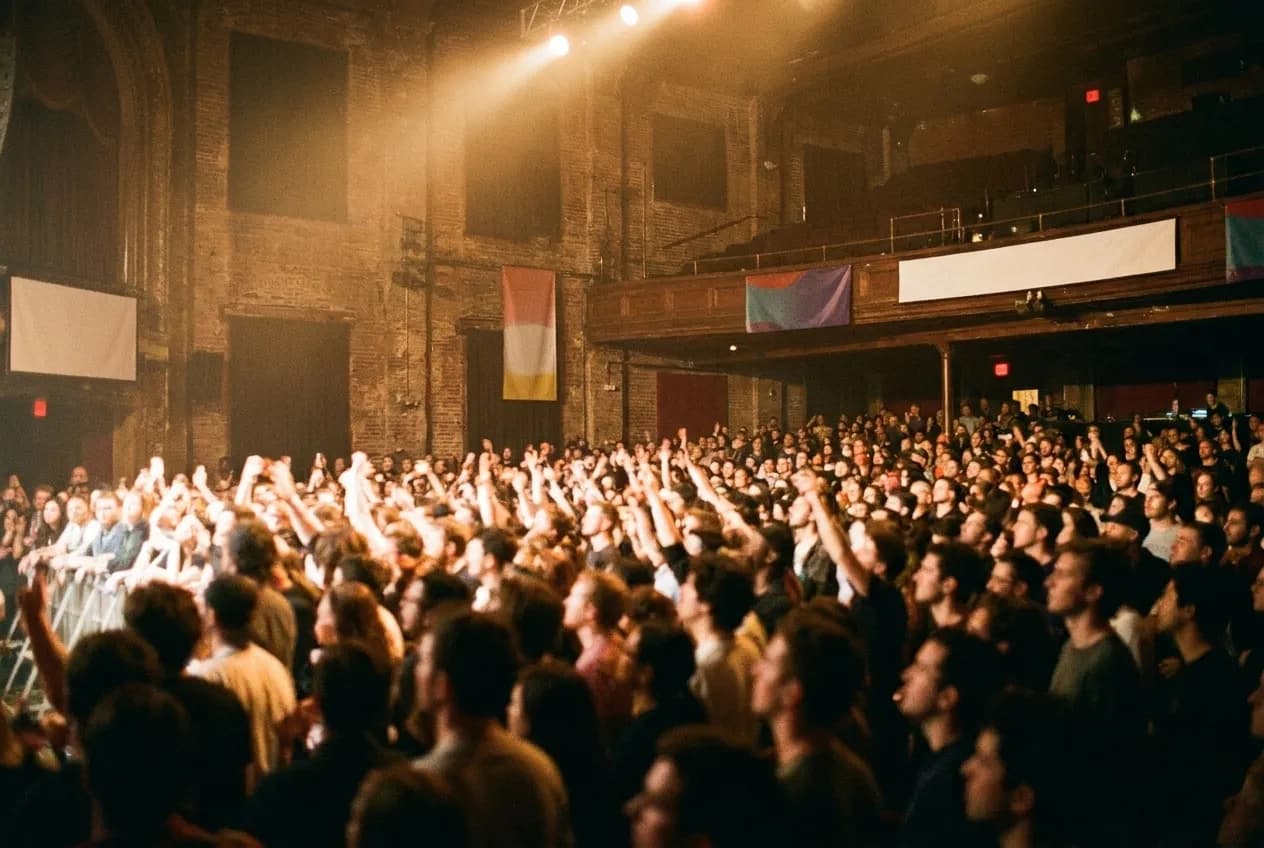
The next rung up is Bowery Ballroom, at 6 Delancey Street, which opened in 1998 and holds 575, or around 600 when the mezzanine is seated. It is widely considered the best-sounding room of its size in the city, and it is the venue a band plays when they have gone from a cult concern to something people fly in for. Across the river, Music Hall of Williamsburg holds 650 and is the Brooklyn equivalent — with the significant caveat that it is slated to close at its current North 6th Street address, which makes any show there now worth catching for its own sake.
The rung tells you what the ticket will actually cost
Face value moves much less across these rungs than people expect — the gap between a 250-capacity show and a 600-capacity one is often ten or fifteen dollars. What changes dramatically is the fee load. At the small end, fees can add thirty to forty per cent to a twenty-dollar ticket, because the platform's costs are close to fixed per transaction. At the ballroom level the proportion falls even as the absolute number rises.
The practical consequence: buy the small-room tickets at the box office if you can. Several venues sell in person without fees, and for a cheap ticket that is a meaningful saving rather than a rounding error. Buying four tickets in one transaction rather than four separate ones also matters more than it should, for the same structural reason.
How on-sales actually behave
Most New York club shows go on sale Friday morning at 10am local time, following a presale window on the Wednesday or Thursday. The presale codes are not scarce — they come from the venue's mailing list, the promoter's newsletter or the band's own list, and signing up for the first two takes about a minute and covers most of what you would want to see in this city.
The genuinely useful thing about the small end of the ladder is that it rarely sells out at on-sale. A 250-capacity show by a band nobody has heard of yet will have tickets the week of, and frequently on the door. The scramble is concentrated almost entirely on the handful of shows where a much larger act is playing a small room deliberately, and those are obvious in advance. If you are not chasing one of those, the 10am alarm is unnecessary.
Reading a room before you buy
Capacity alone does not tell you whether you will enjoy standing in a place for three hours. Two other numbers matter. The first is whether the room has a balcony or mezzanine, because that is the difference between a guaranteed sightline and a coin flip — Bowery Ballroom's mezzanine is the reason it works for people who do not want to be in the crowd. The second is whether the floor is flat or raked. Almost every New York club floor is flat, which means your view is determined entirely by who arrives before you.
Door time and set time are also different numbers, and the gap is usually between ninety minutes and two hours in a club with support acts. Turning up at doors for a headliner who goes on at 10:30 means three hours standing. Turning up thirty minutes before the headline set is the move most regulars make, at the cost of standing further back.
It is worth knowing what sits above the ballroom rung, because the character changes sharply. Beyond roughly a thousand capacity you move into rooms where the production is the point rather than the band's ability to fill a space with sound, and beyond a few thousand you are into arena logistics — timed entry, bag policies, a twenty-minute walk from the door to your position. None of that is worse, but it is a different product, and a band you loved at 575 capacity may be a considerably less interesting proposition at ten times that.
Practical notes
Almost everything at club level in New York is general admission and standing; if you need to sit, check for a balcony before buying rather than after. Coat check exists at the ballroom rung and generally not below it, which matters in January. Most of these venues are 18-plus or 21-plus and will card at the door regardless of what you look like. And if a show is sold out, check the venue's own page on the day — genuine returns get released and they are not always announced.
Tags: #Concerts #NYCConcerts #BoweryBallroom #MercuryLounge #NewYorkCity #LiveMusicNYC #NYCVenues #Williamsburg #LowerEastSide #GigTickets #NYCNightlife #WeekendPlans #MusicNYC #Brooklyn
All trademarks are the property of their respective owners.
Ask Karpo first
Want to know what is actually playing near you this week and whether it is worth the ticket? Ask Karpo which rooms have shows tonight, what is still available at the small end, and what time the headliner really goes on.