 Astoria Chess Cafe Night Planner: How to Become a Regular
Sports Social

Upper West Side Chess Cafe Night Planner for a Young Player
An Upper West Side chess cafe night for a parent and a young tournament player: go early on a school night, play slow games with regulars, review over cocoa.
If your child plays in weekend scholastic tournaments, an Upper West Side chess cafe on a weekday evening is the training session they will actually look forward to. This chess cafe night planner is for one parent and one young player, roughly seven to twelve, who want real games against new opponents without the pressure of a rated section. Go early, keep it to a couple of hours, and let the cafe regulars do the teaching.
Why the Neighbourhood Breeds Young Players
The Upper West Side has one of the deepest scholastic chess scenes in the country. Many local schools run chess as a class or an after-school club, and on winter weekends the hallways of school buildings fill with kids carrying roll-up boards and clocks to tournaments. That means neighbourhood adults are used to children who play seriously. A nine-year-old asking for a game at a cafe here gets curiosity, not eye-rolling, and sometimes a surprisingly strong opponent.
It also means your child is probably playing the same classmates every week. A cafe night breaks that loop. Adult regulars play differently: slower, more positional, less interested in the opening traps kids pass around at school. Losing to a patient seventy-year-old who quietly swaps everything off and wins an endgame teaches more than a dozen wins against friends. That variety is the real point of the evening, more than any result.
Timing a School Night Right
Plan to arrive soon after an early dinner, with homework already done. In November it is dark by late afternoon, so the walk itself already feels like a night out to a child. Set the finishing time before you leave the apartment and tell your young player what it is. Arguing about one more game at the table is far harder than agreeing on the deal at the front door with coats on.
Skip the night before a tournament. A child who plays four games on a Thursday evening arrives at a Saturday event tired and overconfident, and a cafe loss can rattle them right before the games that count. Midweek, two or three days before the weekend, works far better. Some families make it a fixed ritual, the same evening every week, which helps the regulars remember your child and start saving a board.
Choosing a Cafe Where Kids Are Welcome
Look for a place with a mix of tables, some quiet corners, and staff who do not mind a child staying for a couple of hours over a hot chocolate. Cafes with a chess shelf or a regular evening game are easy to spot because there will be boards out when you walk in. A cafe that is mostly laptops and silence is not right for this, because chess with a child involves a little talking and the occasional groan.
Before you leave home, open the Karpo APP and search for chess or board game cafes near Broadway on the Upper West Side to see what is within a short walk. Bring your child's own tournament board and clock in a backpack. Familiar equipment calms nerves, and it means you never have to borrow a set from a busy table.
Finding Opponents Without Pushing
The usual cafe crowd includes retirees who have played in the neighbourhood for decades, graduate students from up the hill at Columbia, and the odd parent who used to play competitively. Let your child ask for a game themselves, standing politely beside the table until there is a pause. If they are shy, you can open the conversation, but the request should come from them. Most regulars respond well to a polite young player.
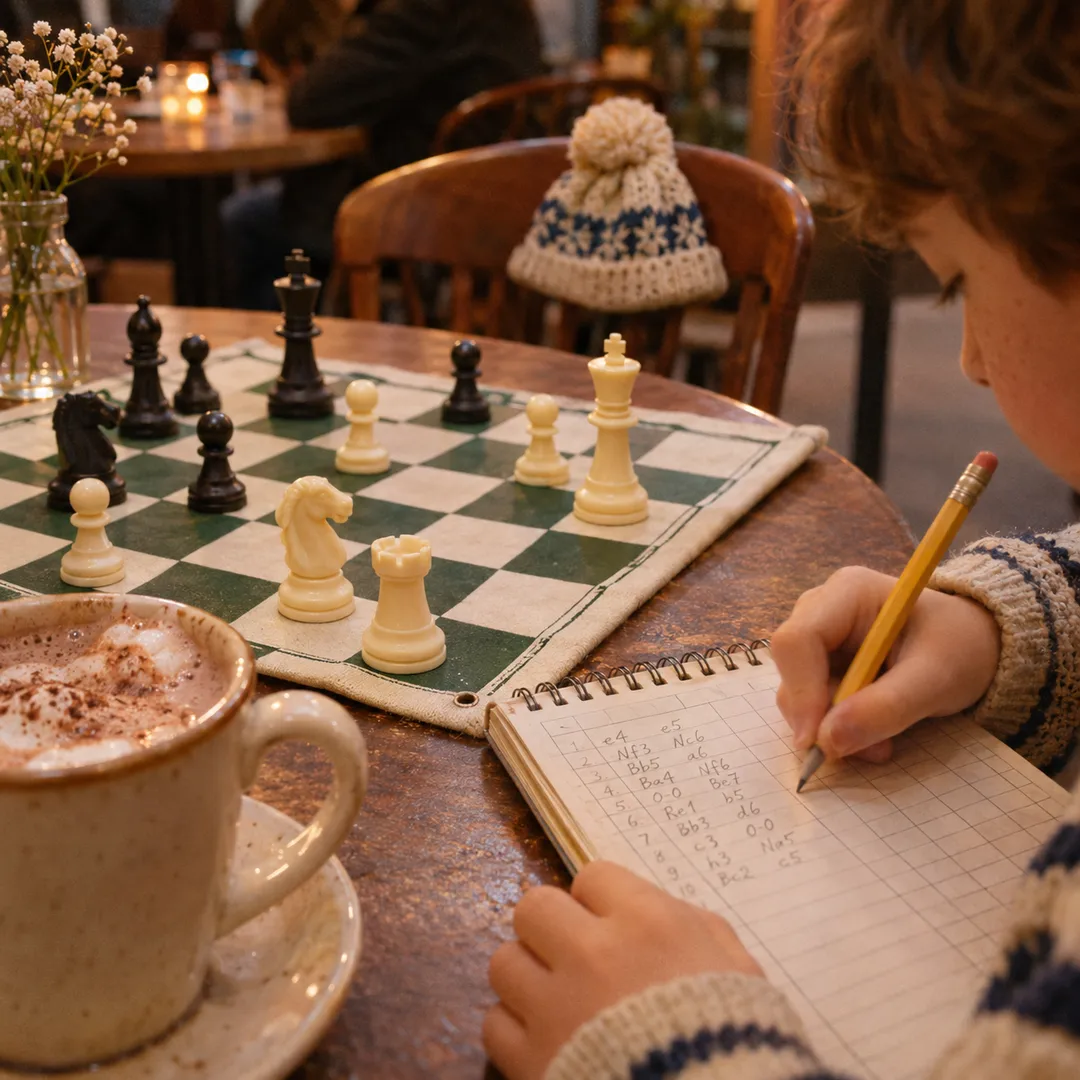
Encourage slower games. A child raised on speed chess at school will want to play blitz all evening, but games of fifteen minutes or more with notation are what transfer to tournaments. Writing the moves down also gives you both something to look at later. If an adult offers to play fast, it is fine to say your child is practising longer games tonight. Nobody minds.
The Parent's Job at the Table
Your role is to sit a little back and stay quiet. No pointing, no sighing, no faces when a piece hangs. Children read their parents' expressions far more than the board, and a groan from the next chair can turn a fine game into a collapse. Bring something to read on paper and treat the evening as your own hour of peace. The regulars respect parents who stay out of it.
After each game, do a short review together over the hot chocolate. Three questions are enough: where did you feel good, where did it change, and what would you play instead. Do not run an engine on the spot. Let your child explain in their own words, then thank the opponent together. Those three minutes are often the most valuable part of the whole night.
The Walk Home Along Broadway
Broadway stays lively in the evening, with food shops, bakeries and the famous appetising counters all lit up, which makes the walk home part of the treat. At the meeting of Broadway and West End Avenue in the West 100s, the small Straus Park holds a memorial to Isidor and Ida Straus, the couple who stayed together on the Titanic. It is a good story to tell a curious child on a cold night.
If you live near the river, loop back through Riverside Park, where the promenade is calmer than the avenue. On weekends in daylight, consider the Chess and Checkers House in Central Park as a different kind of outing, with outdoor tables and a lot more space. Keep that for spring, though, since November afternoons there are cold for small hands.
If the Evening Goes Wrong
Some nights there is nobody to play. Rather than leaving disappointed, play each other, then try a puzzle challenge from a pocket puzzle card set where the first to solve five wins a pastry. If every table is taken, take a short walk to a second cafe you scouted in advance, and if that is full too, call it a success anyway and promise next week. The 1 train runs along Broadway if little legs give out. A night of losses is also fine, as long as your child goes home wanting to play again.
Watch for the signs that it is time to stop before the agreed hour. Rubbing eyes, quick careless moves and a sudden interest in the pastry case all mean the useful part of the night is over. Leave on a good note rather than after a bitter loss, even if that means skipping the last game. Children remember how an evening ended far more than how many games they won, and that memory decides whether they ask to come back.
Ask Karpo for more information.
Keep reading
- Astoria Chess Cafe Night Planner: How to Become a Regular
 Upper West Side Billiards Bar Night Planner for Old Friends
 Park Slope Chess Cafe Night Planner: A Date With Odds