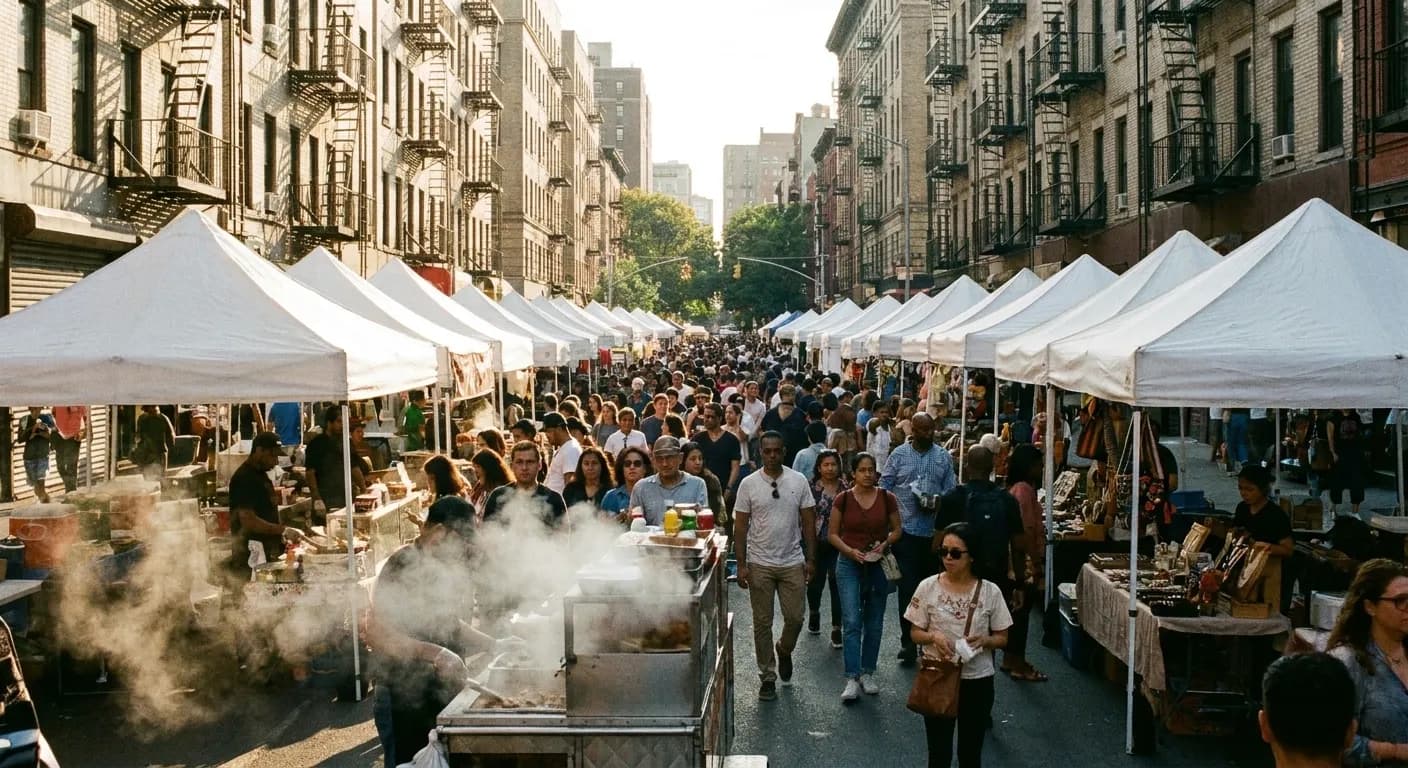
Astoria has never pretended to be precious. The neighborhood hums with the confident energy of third-generation Greek bakeries, Egyptian grocers who double as steam-table canteens, and Brazilian spots where a full feijoada plate still rings up under ten dollars. Late May means sidewalk tables reappear, the 31st Street corridor smells of charcoal and cumin by noon, and the under-twelve-dollar meal—once an urban myth in Manhattan—remains Astoria's everyday arithmetic. This is not about scraping by. It's about eating well without ceremony, where value is baked into the culture rather than marketed as a virtue.
Greek gyros and the $9 threshold
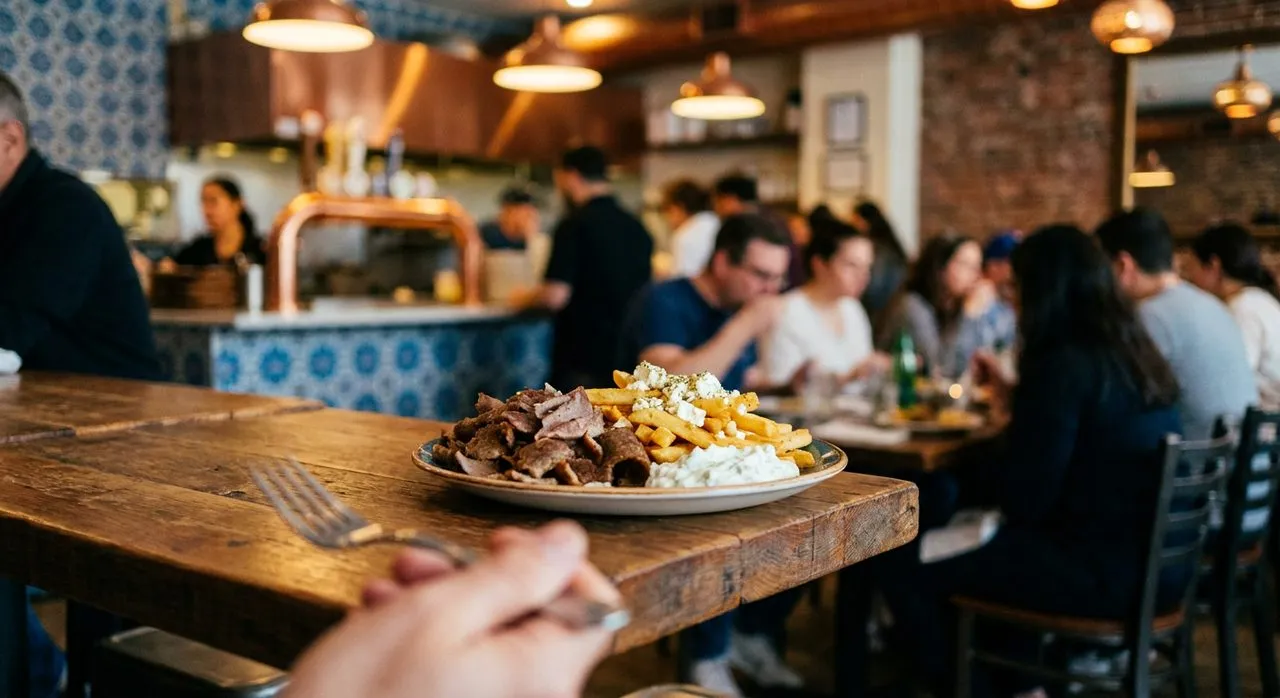
The Greek institutions along Broadway and Steinway Street have held the line. A lamb-and-beef gyro wrapped in warm pita, layered with tomato, onion, and tzatziki, costs between eight and nine-fifty depending on the counter. The meat arrives on a vertical spit each morning, the fat rendering slow and steady under gas flame. By lunch the corner smells like oregano and browning protein. You order, you pay, you unwrap foil at a standup shelf or carry it two blocks to Astoria Park. No fanfare.
Souvlaki plates edge closer to twelve dollars—chicken skewers over rice, a mound of fries, side salad, extra pita—but remain within range. The rhythm is quick: line forms around 12:30, moves fast, sidewalk tables fill with construction crews and postal carriers. The Late May sun warms the Formica. This is Astoria's cheapest theater, and the curtain goes up six days a week.
Egyptian koshary counters where $7 is standard
Steinway Street between 28th Avenue and Astoria Boulevard hosts a cluster of Egyptian grocers and steam-table spots where koshary—rice, lentils, chickpeas, pasta, crispy onions, and tangy tomato sauce—costs six-fifty to eight dollars for a container that defeats most appetites. The dish is architecture: layers of starch and legume, texture shifting with every forkful, heat optional via plastic squeeze bottles of chili vinegar. Order at the counter, grab napkins, sit on a folding chair near bags of imported rice. The aesthetics are spartan. The economics are generous.
A few of these places also offer koshari with extra fried eggplant or a side of mahshi—stuffed grape leaves—for another dollar or two. The overall ticket rarely tops nine. The clientele skews Egyptian and Bangladeshi, regulars who nod at the counter staff and collect their containers without needing to ask what's inside. Late afternoon the light slants gold through the front window and the smell of cumin and garlic rides the A/C exhaust onto the sidewalk.
Brazilian feijoada plates for under $10
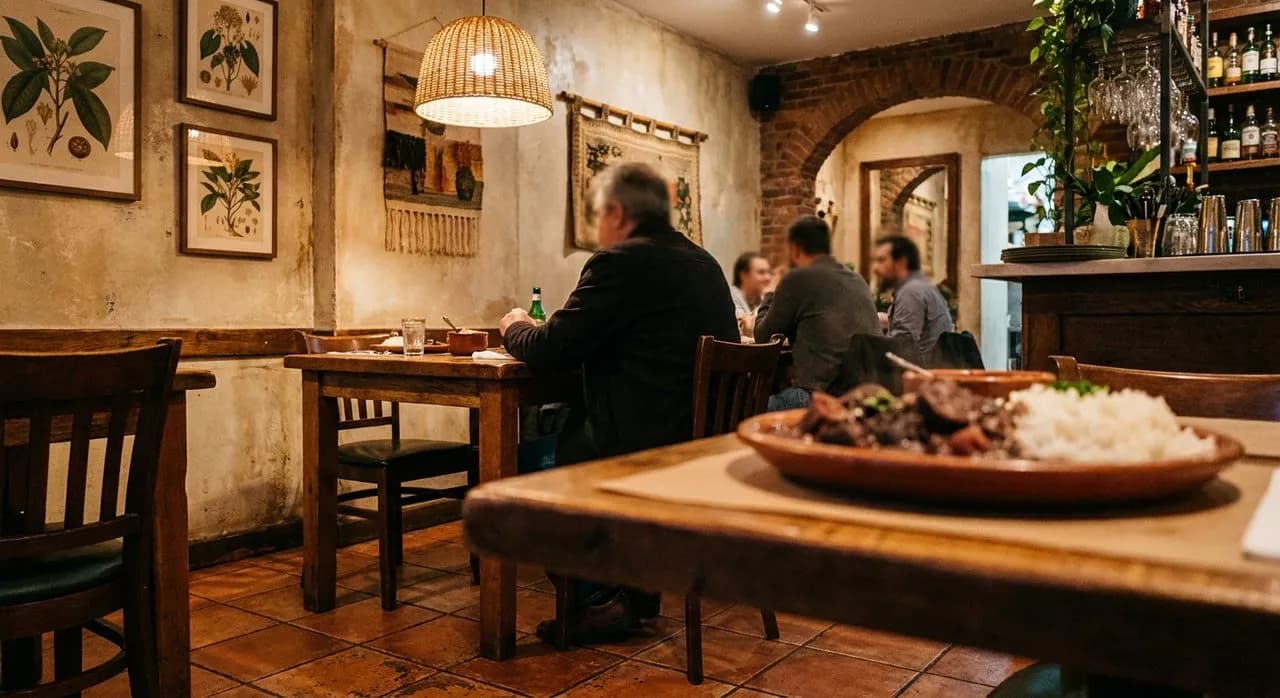
Astoria's Brazilian enclave, centered loosely around 36th Avenue, delivers feijoada—black bean stew with pork, sausage, sometimes beef—over rice with collard greens and orange slices for nine to ten dollars. The plate is heavy, in the best sense: rib-sticking, slow-cooked, the kind of meal that reorients your afternoon. Order at the counter, carry your tray to a two-top, watch Brazilian league highlights on the wall-mounted screen. The vibe is canteen, not restaurant. No one lingers long, but no one rushes you either.
Some spots also offer pão de queijo—cheese bread—for a dollar each, or a small portion of farofa, toasted cassava flour, to scatter over the beans. The total bill, even with a guarana soda, stays under twelve. Late May means the front door wedges open and street noise—buses, car horns, someone's Bluetooth speaker—mixes with the clatter of metal spoons on ceramic plates. It's not quiet. It's alive.
A Bosnian newcomer and the $10 cevapi plate
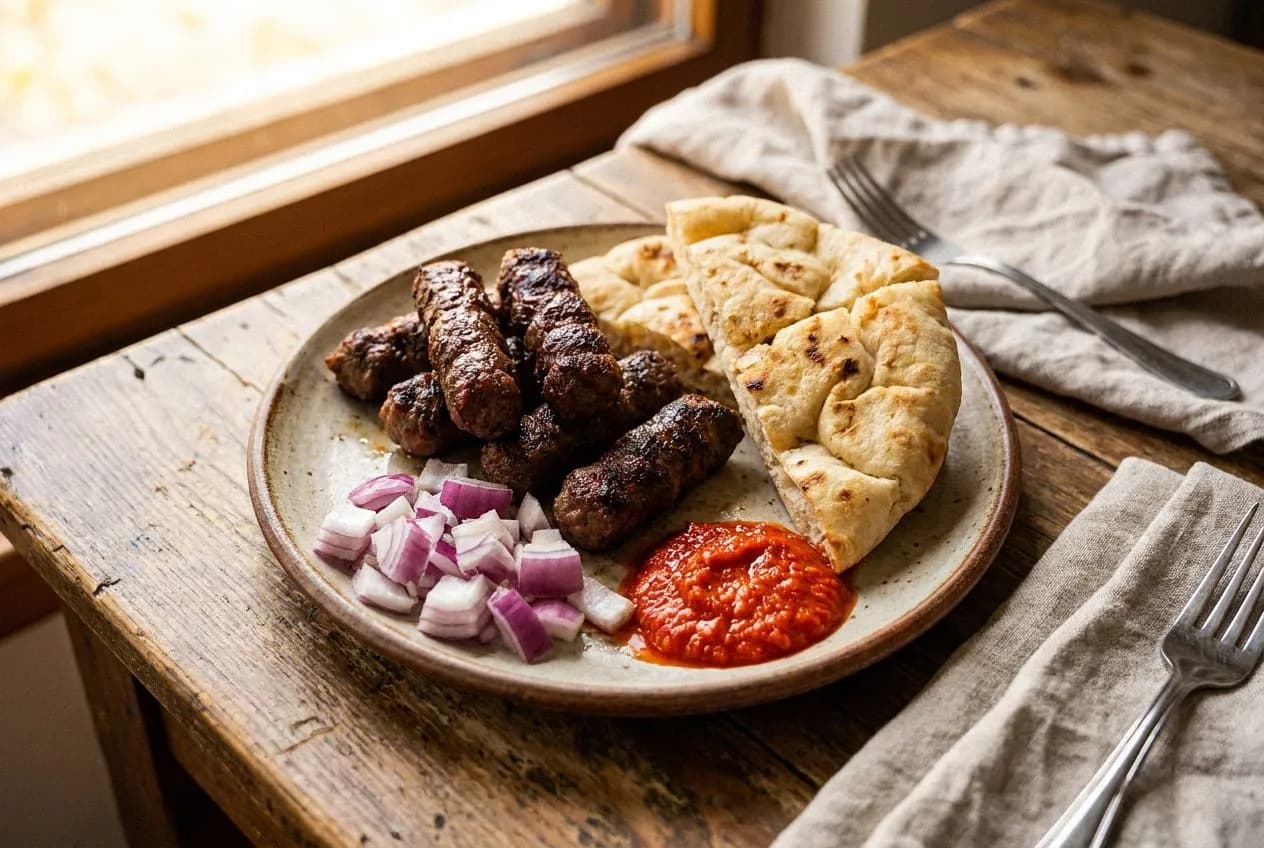
The newest addition to Astoria's cheap-eats map is a Bosnian grill tucked near Ditmars Boulevard, where ten dollars buys a full lunch: five cevapi—skinless beef sausages—served in lepinja flatbread with raw onion, kajmak (a soft cheese spread), and ajvar, the roasted red pepper relish that tastes faintly sweet and faintly smoky. The sausages are hand-rolled, grilled over charcoal, brought to your table on a metal tray still hissing from the heat. The bread is pillowy. The onion bites back.
The space is small—eight tables, white tile, a single cook visible through a half-wall. It opened recently, and word spread by mouth rather than Instagram. Regulars from the Bosnian community arrive early; everyone else follows the smell of charcoal. By 1 p.m. every seat is taken. The price, the portion, and the absence of pretense make it feel like a secret that won't stay secret long, though Astoria has a way of absorbing newcomers without fuss.
Miscellany: empanadas, tacos, and the $5 breakfast sandwich
Beyond the headline cuisines, Astoria's side streets offer Argentine empanadas—beef, chicken, spinach—for two-fifty each, which means four empanadas and a coffee land comfortably under ten dollars. Mexican taquerias along 31st Street serve three tacos—carnitas, al pastor, chorizo—for eight to nine dollars, cilantro and lime on the side, salsa bar self-serve. A few corner delis still make the five-dollar bacon-egg-and-cheese on a roll, though the price creeps toward six during the morning rush.
The through-line is consistency. Prices haven't ballooned in lockstep with Manhattan. Portions remain honest. No one asks you to download an app or scan a QR code for the privilege of ordering a sandwich. Cash is preferred at most spots, though cards work. The exchange is simple: money, food, repeat.
Why Astoria still works for the under-$12 meal
Astoria's cheap-eats resilience is not an accident. The neighborhood's commercial rent remains lower than comparable Brooklyn corridors. Family-run operations, some multi-generational, absorb labor internally rather than hiring at market wages. Immigrant communities sustain each other through repeat business, and menus reflect home-country pricing expectations as much as New York realities. The result is a culinary ecosystem where twelve dollars is not a promotional gimmick but the prevailing rate.
It also helps that Astoria resists the self-consciousness that inflates prices elsewhere. No Edison bulbs, no reclaimed wood, no menus printed on craft paper. The food is the point. The transaction is fast. The experience is repeatable. That's what keeps the under-twelve-dollar meal viable in late May 2026 and, likely, well into the summer.
Practical notes
Most venues mentioned cluster along Steinway Street, Broadway, 31st Street, and Ditmars Boulevard. Street parking is possible but competitive; the subway is faster. Hours vary—many spots open by 11 a.m. and close by 8 or 9 p.m.; a few Egyptian counters stay open later. Most are counter-service with limited seating; expect to order, pay, and carry your tray. Cash is widely preferred, though cards work at most locations. Verify hours directly before making a special trip. Accessibility varies; many older storefronts have a step or narrow doorways.
Tags: #AstoriaEats #QueensFoodScene #CheapEatsNYC #Under12Dollars #FreeAndFine #GreekFood #EgyptianKoshary #BrazilianFood #BosnianCuisine #NYCOnABudget #May2026 #AstoriaQueens #AffordableNYC #NeighborhoodEats #NYCCheapEats
Please drink responsibly. Must be of legal drinking age.
Sources consulted: Astoria, Queens · Greek cuisine · Time Out New York Restaurants · MTA transit info · NYC.gov
All trademarks are the property of their respective owners.