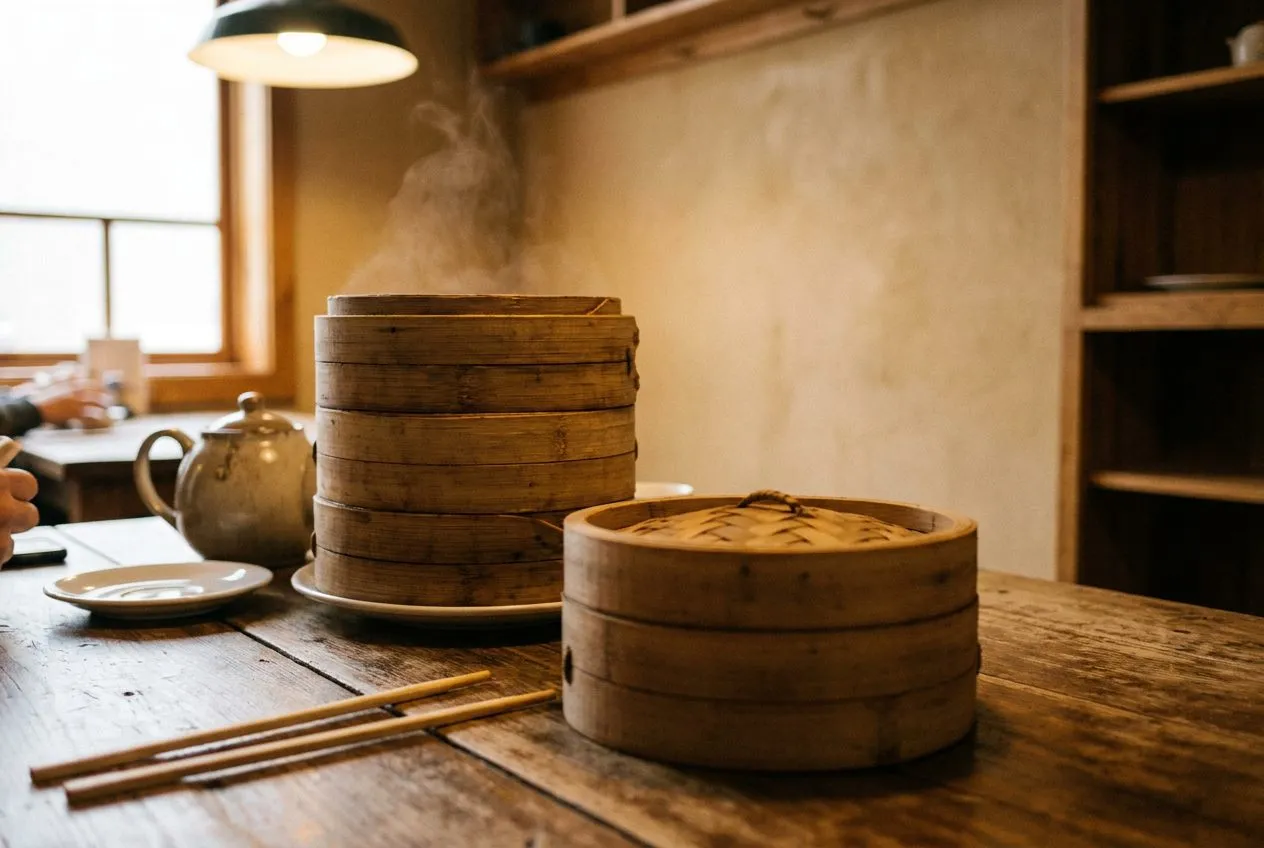
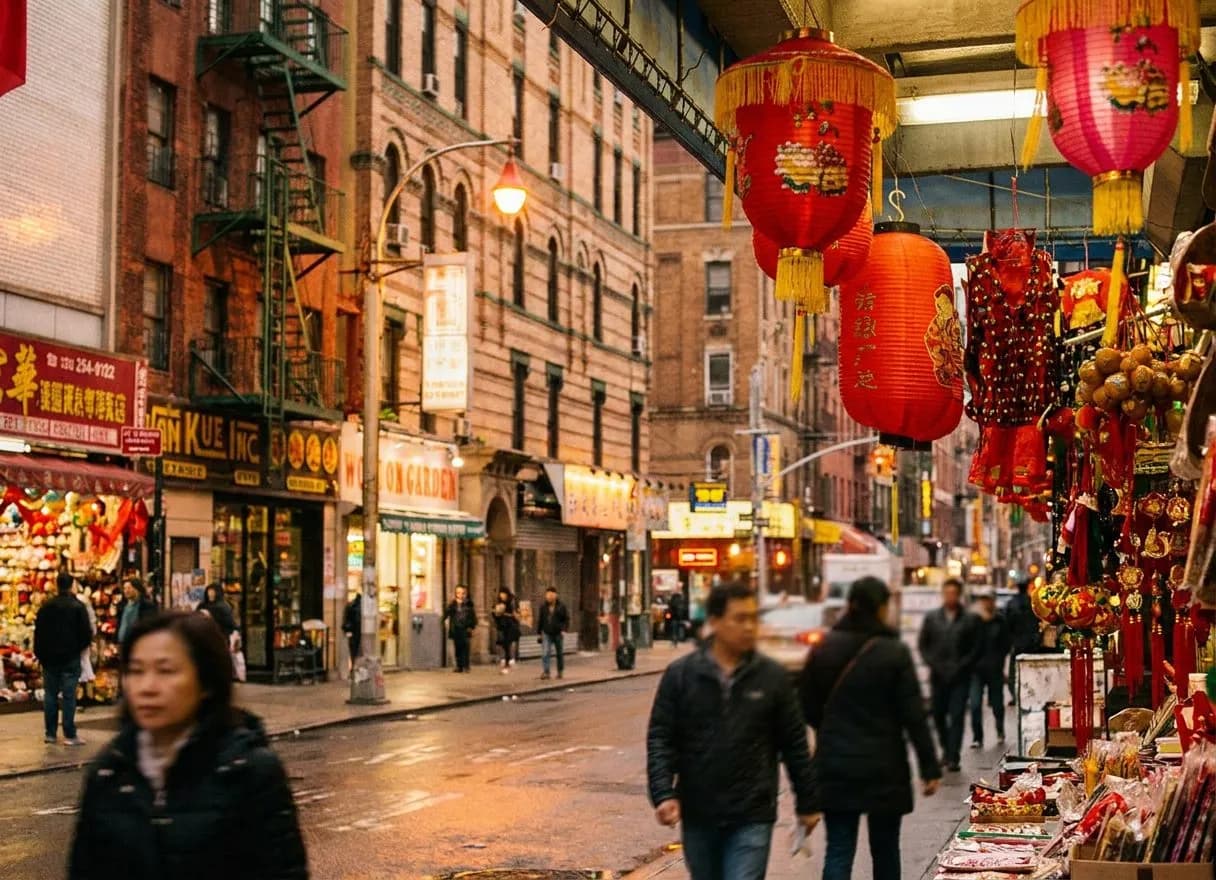
Twelve dollars in Manhattan buys you a sad desk salad, half a cocktail, or—if you know where to look—a proper dim sum feast in Chinatown. While the rest of the city climbs toward $20 entrées and $8 oat milk lattes, a cluster of dim sum parlors south of Canal Street quietly maintains an economic reality that feels almost defiant. On a warm late-May morning, steam rises from bamboo baskets, trolleys clatter past close-set tables, and you can still walk out satisfied, full, and solvent.
The morning advantage
Arrive before eleven. The early shift brings the best selection and the most forgiving pace—trolleys circulate with har gow still glistening, custard buns radiating warmth, tripe tender and precisely cut. Later, around one, the lunch surge packs tables shoulder-to-shoulder and the rhythm accelerates. But in those first hours, you can catch a server's eye, point at something unfamiliar, and receive an encouraging nod instead of a harried wave-through.
The light in June slants through storefronts differently than it did a decade ago—some buildings have been refinished, others show their age more plainly—but the essential choreography remains. Older regulars claim corner tables, unfold newspapers in Cantonese, and order without looking. Tourists hover near the door, bewildered and delighted. You position yourself somewhere in between, confident enough to point, humble enough to learn.
What twelve dollars actually buys
Four to six items, depending on the house and your ambition. Shrimp dumplings, pork siu mai, a sticky rice parcel wrapped in lotus leaf, maybe a round of chicken feet if you're feeling exploratory. Cha siu bao—those cloud-soft buns encasing sweet-savory barbecue pork—often come in threes. Taro dumplings, translucent and delicate, cost about the same as a single pastry uptown. The genius of cheap dim sum nyc isn't deprivation; it's density, a sustained argument that quality and affordability can coexist when the overhead is low and the operation is practiced.
Tea is usually a dollar, sometimes complimentary. Opt for pu-erh if your stomach tolerates depth; jasmine if you prefer something lighter and floral to cut the richness. Watch how longtime patrons signal for refills—the teapot lid propped open at an angle, a small, silent plea to passing servers. These are the gestures that separate a regular from a newcomer.
Navigating the cart versus the menu
Some parlors still run the traditional trolley service: metal carts wheeled table-to-table, each loaded with a shifting lineup of bamboo steamers and small plates. You point, the server stamps your card, and the tally builds gradually, almost gently. It's tactile and immediate, though it rewards assertiveness—shy diners get passed over. Other spots have shifted to checkboxes and paper menus, a system that offers more control but less theater.
Neither approach is intrinsically better. The cart model feels more immersive, especially for first-timers who don't yet know the Cantonese names or the English approximations. The menu model lets you pace yourself, plan combinations, avoid doubling up on shrimp. Both paths lead to the same outcome: a table crowded with small dishes, each one a minor miracle of wrapper integrity and filling balance.
The supporting cast
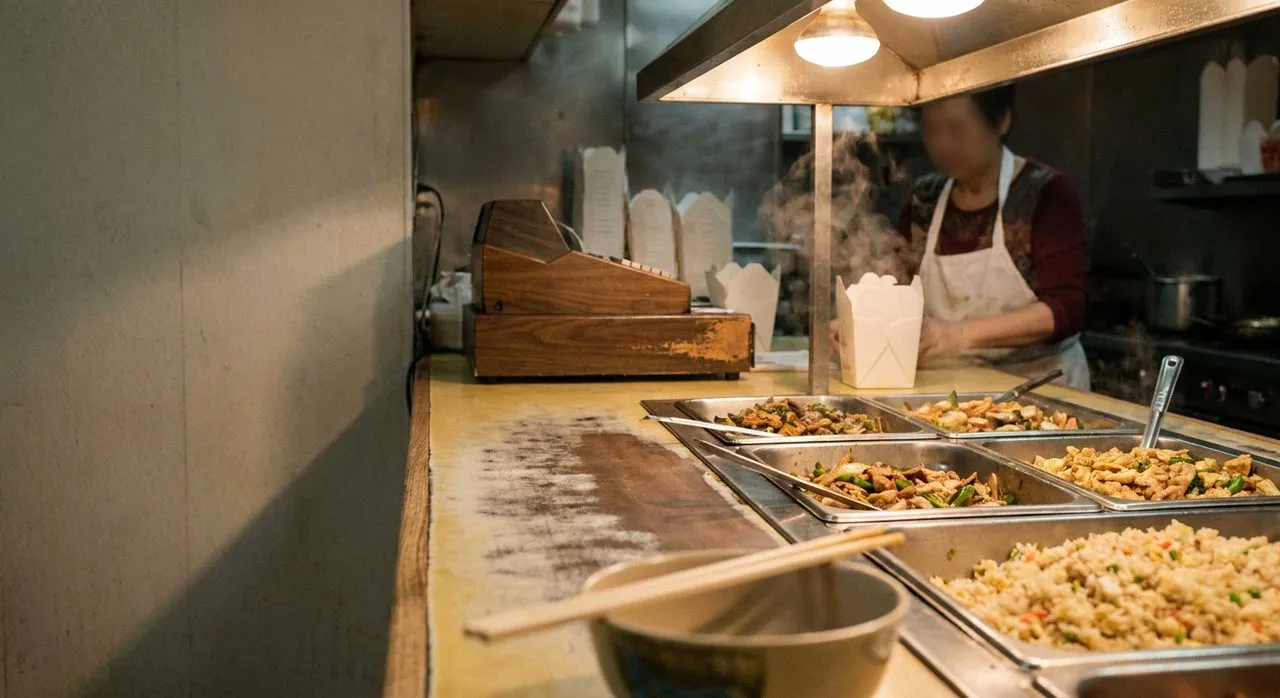
Don't sleep on the fried options. Spring rolls arrive crackling and golden, stuffed with pork and shrimp or sometimes taro, their interiors molten if you're impatient. Pan-fried turnip cake—a savory block of daikon and rice flour, crisp-edged and tender within—bridges the gap between snack and sustenance. Egg custard tarts, their shells flaky and their centers wobbly, provide a sweet punctuation for under two dollars.
Congee appears on some carts, thick and comforting, scattered with preserved egg or minced pork and century egg. It's harder to justify when you're counting dollars and maximizing variety, but on cooler mornings or when you're nursing a mild hangover, a bowl of rice porridge becomes the most logical anchor for everything else. The chinatown food budget stretches further when you include one starchy, warming anchor.
Who you'll meet
Multigenerational families colonize the large round tables, grandparents presiding over orders while children fidget and sneak shrimp dumplings when no one's watching. Solo diners claim two-tops near the wall, reading or scrolling, occasionally glancing up to flag down a cart. Friend groups—often young, often multilingual—compare notes in a happy babel of Mandarin, Cantonese, English, and Spanish.
Service ranges from brisk to brusque, rarely fawning. This isn't rudeness; it's efficiency honed over decades. The staff has seen every kind of diner, every level of confusion, every attempt to game the system or linger too long. They'll bring you what you need, clear your empties, tally your bill with startling speed, and make room for the next wave. Respect that rhythm and you'll be treated fairly.
The broader context
Chinatown's real estate pressures haven't vanished; they've merely paused, regrouped, resumed at a different tempo. By late May 2026, some storefronts that shuttered during the pandemic have reopened under new management or old family hands. Others remain dark, awaiting the next chapter. The dim sum parlors that survived did so through combination of loyal clientele, owned real estate, and an ironclad refusal to capitulate to food-hall rents or third-party delivery commissions.
Eating here is not an act of charity or anthropological curiosity. It's simply eating well for less, in rooms that hum with purposeful energy and the particular comfort of knowing exactly what they are. The neighborhood has absorbed wave after wave of change—linguistic, demographic, economic—and still serves dumplings before noon for the price of a subway latte.
Practical notes
Most dim sum parlors in Manhattan's Chinatown cluster along Mott, Pell, Bayard, and Bowery, south of Canal Street. The nearest subway stops are Canal Street (J/Z/N/Q/R/W/6 lines) and Grand Street (B/D). Street parking is scarce; municipal lots on Hester and Broome offer alternatives but expect to pay. Hours typically run 8 or 9 a.m. until 3 or 4 p.m. for dim sum service, though verify directly as schedules shift seasonally. Most venues are cash-preferred; bring small bills. Accessibility varies—many older buildings lack elevators, and narrow aisles between tables can challenge wheelchair navigation. Expect stairs, tight quarters, and minimal accommodation for strollers during peak hours.
Tags: #CheapDimSum #ChinatownNYC #NYCEats #FreeAndFine #DimSumUnder12 #ManhattanFood #BudgetDining #NYCChinatown #DumplingsNYC #AffordableNYC #NYCFoodie #ChinatownEats #June2026 #NYCOnABudget #KarposFinds
Please drink responsibly. Must be of legal drinking age.
Sources consulted: Dim Sum · Manhattan Chinatown · NYT Food · Time Out New York Restaurants · MTA Transit Info
All trademarks are the property of their respective owners.