Why Brooklyn is getting the curb first
Brooklyn Community District 2 is the city’s first shared Empire Bin pilot for residential trash, and that makes it more than a sanitation story. It is a street-space story. The Department of Sanitation says buildings with 31 or more residential units in BK2 will have to use Empire Bins when the fall 2026 rules take effect, while buildings with 10 to 30 units can choose either Empire Bins or individual NYC Bins. That difference matters on blocks where a few feet of curb decide whether a car, a delivery zone, or a trash container gets the spot.
The immediate deadline is July 31, 2026: DSNY says eligible Brooklyn property owners need to register for Empire Bin service by then. The agency’s July announcement framed the rollout as a way to get more black bags off sidewalks, starting with roughly 1,700 on-street Empire Bins across the district. For renters and weekend visitors, the visible change will be simple: fewer loose piles, more fixed bins, and a curb that feels newly assigned.
The parking-space tradeoff people will notice first
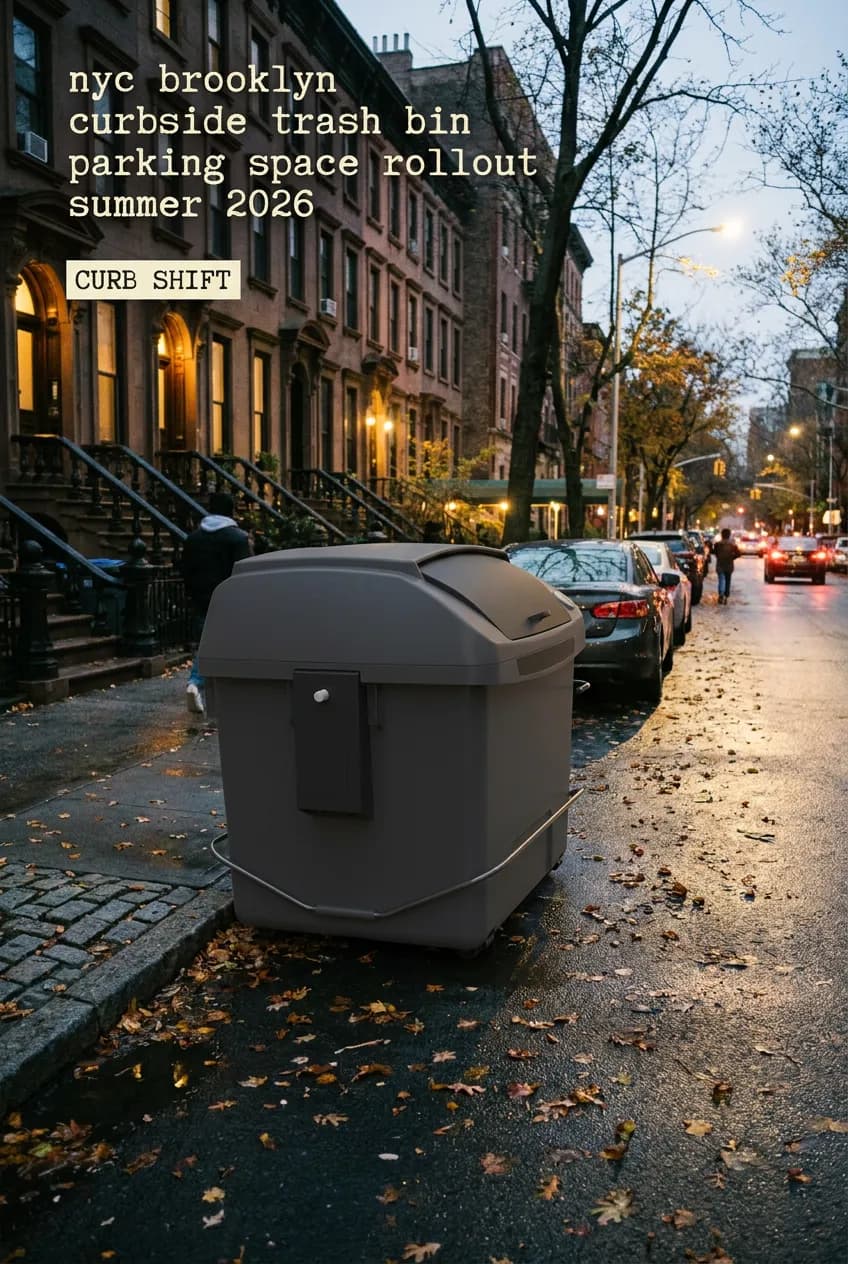
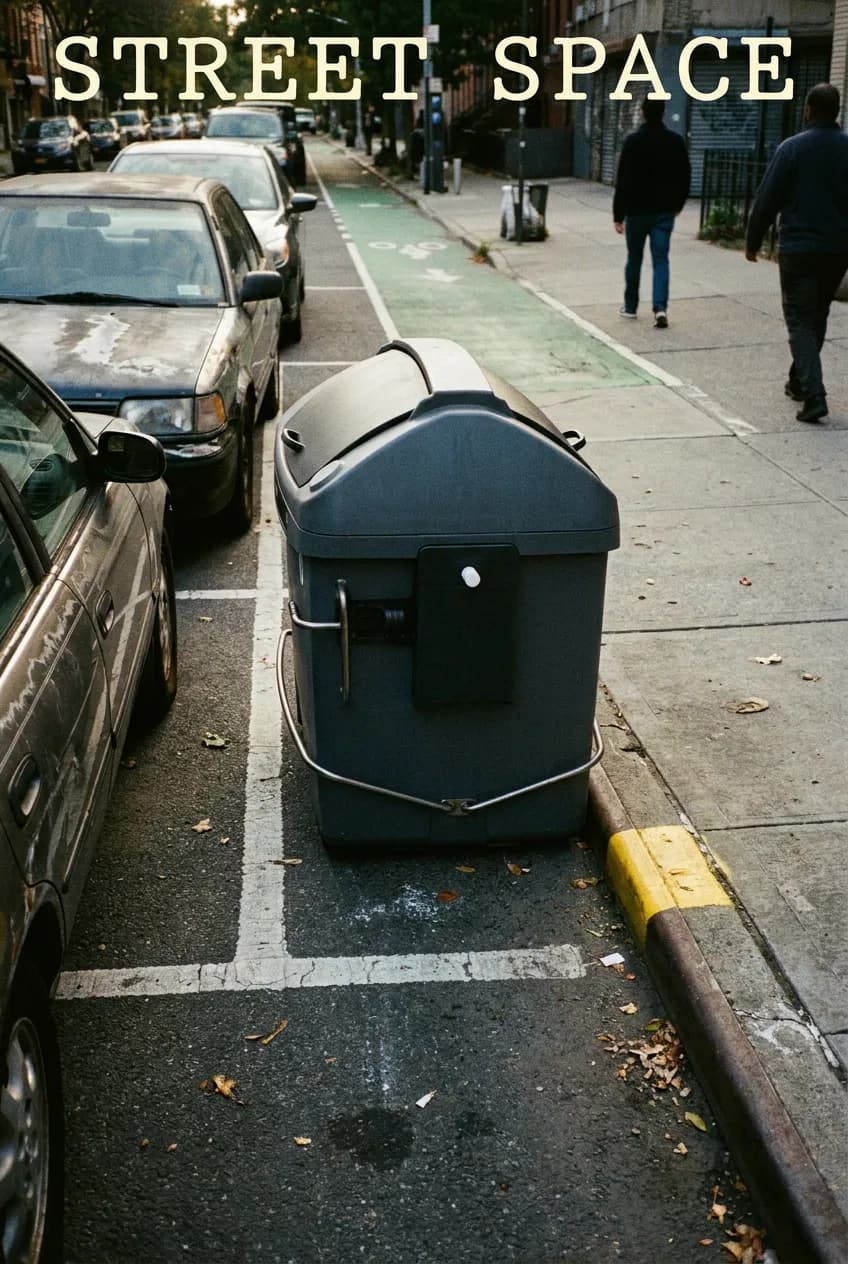
The most shareable part of the rollout is also the least glamorous: a container can replace curb space that once worked like parking. That is the point of containerization. New York has spent years moving bags from sidewalks into bins for smaller buildings and businesses; BK2 is where the larger residential-block version becomes easier to picture. The question for residents is not whether cleaner sidewalks are useful. It is which curb functions get compressed when containers become permanent street furniture.
Brooklyn Community District 2 includes dense brownstone, apartment, school, retail, and waterfront blocks, so the rollout will not look identical from street to street. A narrow Fort Greene block will experience a bin differently from a wider Downtown Brooklyn corridor. The useful way to read this news is block by block: look for where collection access, hydrants, bike lanes, daylighting, loading, and residential entrances already fight for space.
What the bins are supposed to solve
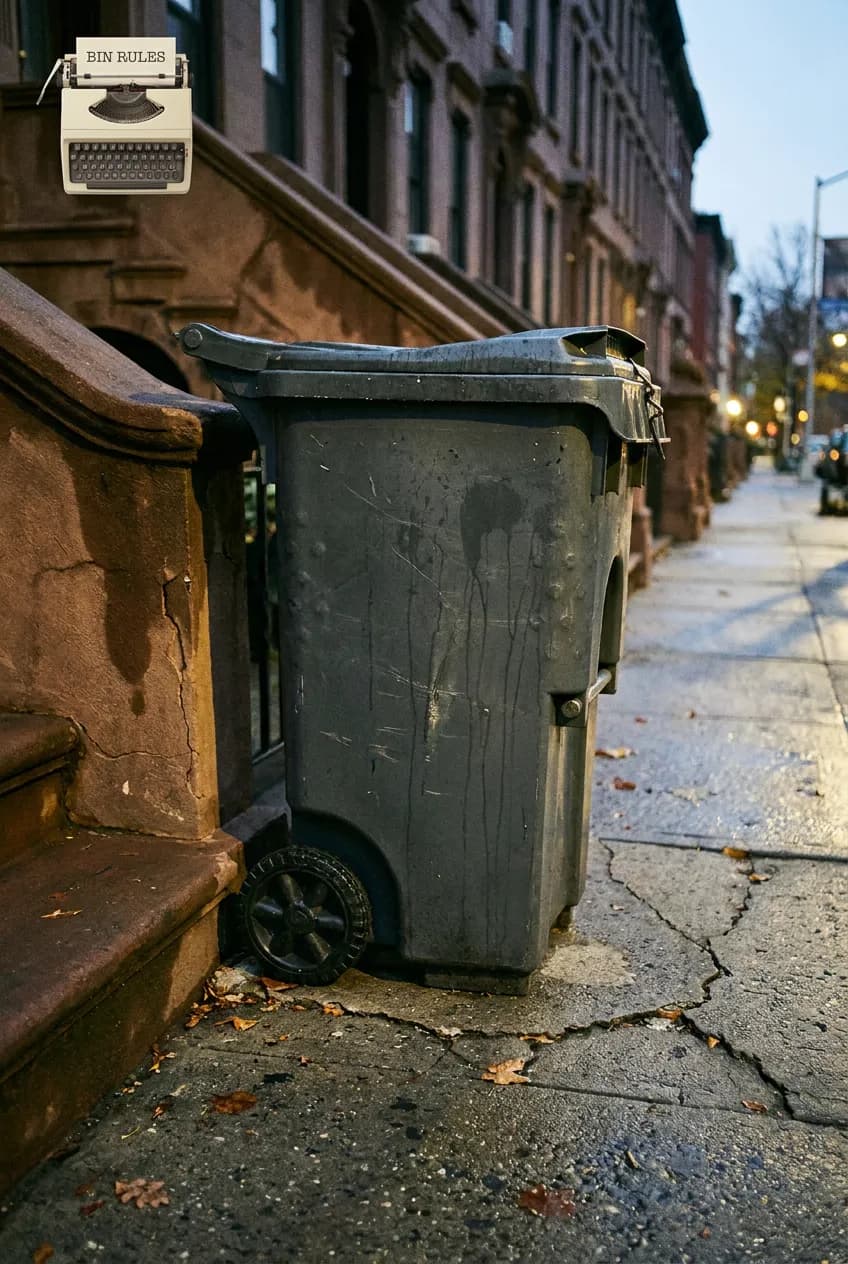
The public-health logic is straightforward. Black trash bags on sidewalks attract rats, leak, block pedestrian space, and make collection messy. Containerization gives trash a defined place and makes the curb easier to service. DSNY’s Empire Bin page describes the on-street containers as stationary curbside bins for larger buildings; the separate individual NYC Bin remains the tool for smaller buildings that fit that system.
That does not mean every operational detail is settled for the casual observer. Placement, building participation, pickup cadence, and curb conflicts will decide whether the pilot feels like a clean upgrade or a new source of block tension. For now, the confirmed thing is the direction: larger Brooklyn buildings are being pulled into a more formal curbside waste system.
How to read the rollout if you live nearby
Start with your building size. DSNY’s BK2 page separates the mandate by unit count, which is the most practical fact for residents and property managers. If your building has 31 or more residential units, the Empire Bin requirement is the key line. If it has 10 to 30 units, the choice between shared Empire Bins and individual NYC Bins becomes the local conversation.
Then look at the curb outside your actual building, not the generic policy headline. A container that works cleanly on one block can feel disruptive on another. The most useful questions are physical: where will the bin sit, how far is it from the entrance, what curb use does it replace, and how will sanitation trucks reach it without blocking the street longer than necessary? None of those questions require panic. They require watching the curb as a piece of civic infrastructure.
Why this belongs in a city guide
Karpo city guides usually chase the small pleasures of a place, but this one is about the city’s background layer: the stuff that changes how a block feels before you even decide where to eat. Cleaner sidewalks can make a walk to a bar, a school pickup, or a Saturday coffee route feel calmer. Lost curb space can also make errands more annoying. Both can be true.
The rollout is especially relevant because it lands in Brooklyn, where the curb is never just a curb. It is storage, loading, pickup, seating, bike access, and neighborhood argument all at once. The Empire Bin pilot turns sanitation into something you can actually see on the street.
The details still worth checking before fall
The pilot is confirmed, but residents should treat the next few months as a practical observation window rather than a finished map. DSNY has announced the district, the building-size thresholds, the registration deadline, and the broad fall 2026 start. What a specific tenant still needs to learn is more local: whether their building registered, where the shared container will be placed, and whether management plans to change the building’s internal trash room or setout routines before the first pickup.
That is why the rollout matters even for people who do not manage a building. A cleaner sidewalk only works if the daily habit is easy enough for residents, supers, and collection crews to follow. The first few weeks will likely reveal the real friction points: overflow around holidays, narrow sidewalks, blocked access after deliveries, and neighbors who are still used to leaving bags where they always did.
Practical notes
- Scope: Brooklyn Community District 2, with residential buildings segmented by unit count.
- Key date: DSNY says eligible property owners should register for Empire Bin service by July 31, 2026.
- Who must use Empire Bins: buildings with 31 or more residential units in BK2 when fall 2026 rules begin.
- Who has a choice: buildings with 10 to 30 units can choose Empire Bins or individual NYC Bins.
- What to watch: curb placement, loading access, hydrants, bike lanes, and whether loose bags actually disappear from your block.
Tags: #nyctrashbins #empirebins #containerization #streetspace #urbanplanning #nyc #brooklyn #brooklyncommunitydistrict2 #downtownbrooklyn #fortgreene #cityguide #localnews #sidewalklife #karpofinds #summer2026
Sources consulted: DSNY BK2 Empire Bin Registration · DSNY Empire Bins · DSNY July 1 announcement
All trademarks are the property of their respective owners.
Ask Karpo first
Want to know which Brooklyn blocks are already changing, where the bins are likely to sit, and how to route around sidewalk work before you head out? Ask Karpo for the latest BK2 curb updates and a low-friction walk through the neighborhood.