 Garment District Mending Supplies Shop Route: 4 Blocks
Hidden Gems & Odd Finds
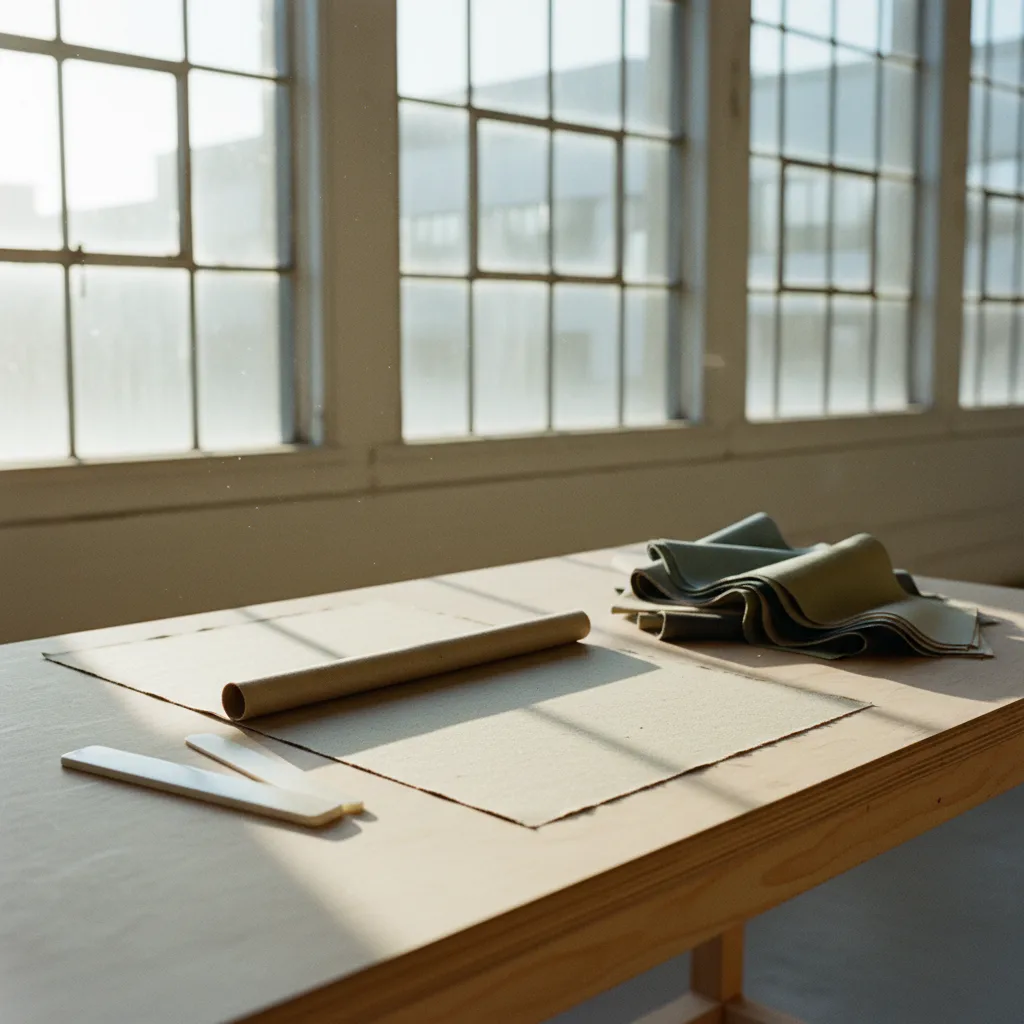
Williamsburg Bookbinding Bone Folder Picker: Bone or Teflon
Bone polishes, teflon stays matte, and wood sits somewhere between. Williamsburg's loft studios are a good backdrop for working out which surface your books really need.
The first real decision in folder shopping is not size but material, because bone, teflon and wood each leave a different mark on paper and cloth. As a bookbinding bone folder picker in Williamsburg, set your scraps of paper and bookcloth side by side and compare how each surface meets them. The neighborhood's converted warehouses, studio buildings and design-minded creative scene make it a natural setting to think about materials and finishes with a maker's eye rather than a shopper's.
What each material does to paper
Bone folders are the traditional choice. Their surface is slightly porous and polishes with use, and pressed over paper they can leave a faint burnished sheen along the crease. That shine is beautiful on a cover flap or the turned edge of a case but can be distracting on dark papers or printed areas. Bone also holds a fine bevel well, which helps for crisp creases and tight corners.
Teflon folders feel slicker and slightly softer. Their main advantage is that they rarely leave shine, even on black paper or bookcloth, which makes them popular for covering and for work on delicate printed surfaces. Wood and bamboo folders are lighter and warmer in the hand, usually blunter at the tip, and well suited to general folding where you value comfort over a razor crease.
Bevel shape across the materials
Material and bevel interact. A bone folder can be sanded to a fine edge that stays crisp. Teflon tends to be thicker with rounded edges, since a very thin teflon edge can flex. Wood folders are often thicker still. When you compare, look at the tip profile and the long edges side by side; a fine bone edge and a rounded teflon edge do different jobs, and many binders keep one of each.
If you can only choose one, decide by your most common task. Folding text signatures and making crisp creases on light paper favors bone with a moderate bevel. Covering boards with cloth and rubbing down paper over printed or dark surfaces favors teflon. Shaping soft fabrics or simply folding letters and cards comfortably can favor wood, which costs you a little precision in exchange for a friendlier feel.
Testing shine on the materials you use
Bring a strip of the darkest paper you plan to use and a scrap of bookcloth. Press a fold with each folder directly on the surface, then tilt the scrap toward a window. Bone often leaves a narrow gloss line; teflon usually leaves none; wood is somewhere in between depending on its finish. Seeing these lines with your own eyes is far more useful than any description on packaging.
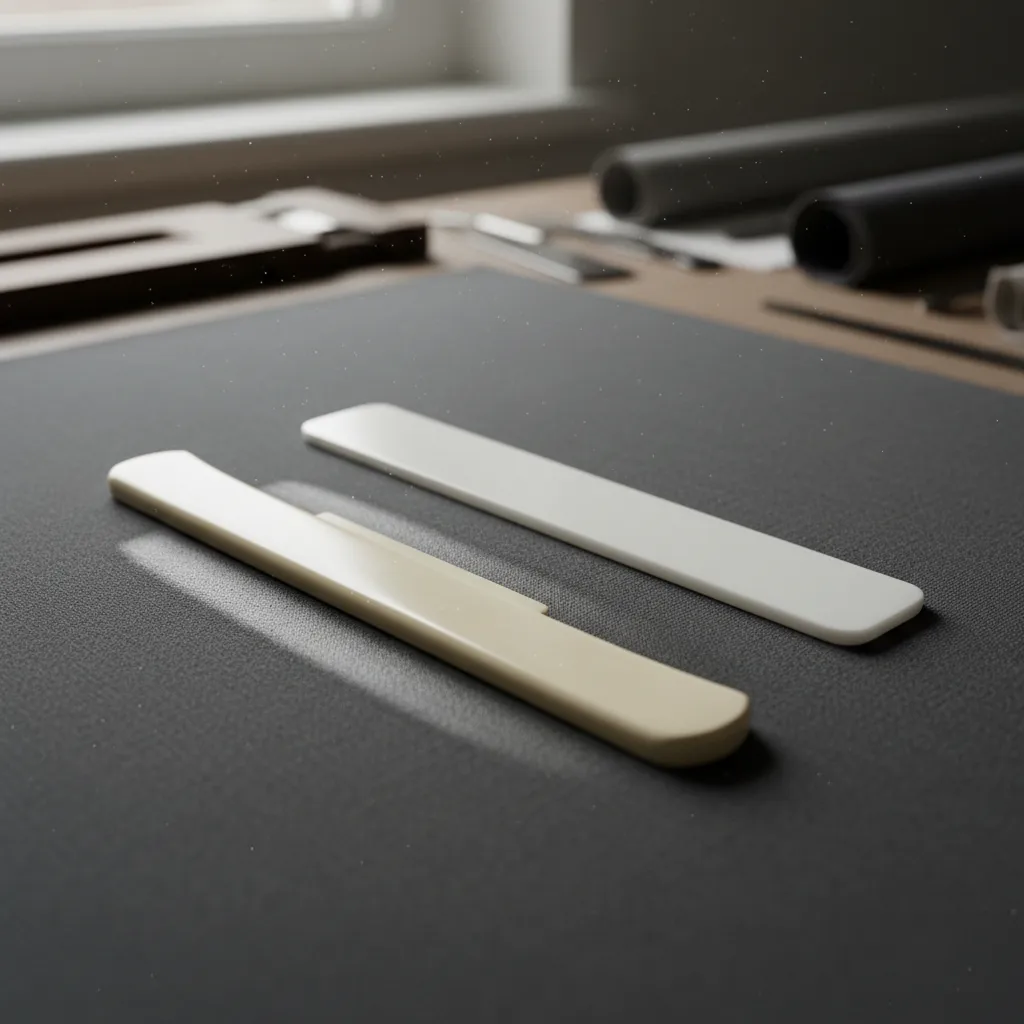
Then try pressing through a thin release sheet or scrap paper. Many binders use bone this way and avoid shine completely, gaining the crispness of bone without the mark. If that method suits you, a single bone folder plus a stack of scrap sheets covers most jobs. If you prefer to work directly on the surface, teflon spares you that extra step.
Grip, balance and comfort
Teflon is denser than it looks and can feel heavier for its size than bone. Wood is light and almost weightless. Bone sits in between, with a cool, smooth feel that warms in the hand. Hold each one with a pencil grip for detail work and a flat palm grip for smoothing. The best folder is the one whose weight helps rather than fights you in both positions.
Pay attention to thickness. A thin folder slips into tight spaces such as the gutter of a sewn book or under a turn-in. A thick one is easier to hold firmly for long smoothing passes. If you get hand fatigue, a slightly thicker body with rounded edges is gentler. If your work is detailed, a slimmer one gives more control, though it asks more of your fingers.
Browsing studio streets with a maker's eye
Williamsburg's mix of renovated industrial buildings, waterfront views and side streets of independent creative businesses makes for an easy afternoon of browsing. Pause at the waterfront parks to compare your test scraps in open daylight, which reveals shine and crease quality better than indoor light. Bring a notebook to record which material left which mark so the comparison stays clear.
For ideas on where to look, the Karpo APP can suggest nearby art supply, paper and craft spots in the neighborhood. The suggestions are a starting point only; you decide which ones fit your search and how to get between them. Some people head straight to one or two places, while others prefer to follow their curiosity from block to block.
An honest take on premium options
You do not need the most expensive teflon folder to avoid shine. A modest teflon tool and a careful hand will cover boards just as well as a premium one. Likewise, an elaborately carved bone folder folds no better than a plain one with a good bevel. Skip decoration and pay attention to the edge, surface smoothness and how the tool sits in your hand.
Where it is worth being selective is consistency of finish. A teflon folder with a rough molding seam or a bone folder with an uneven bevel will drag on paper and frustrate you. Run your fingers along every edge before choosing. A folder that feels glassy and even along its whole length will serve you well for years, whatever the material.
Practical notes for a mixed toolkit
Many binders end up with two folders: a bone one for creasing and a teflon one for covering. If you start with just one, bone is the more versatile, especially used through a scrap sheet. Keep teflon away from hot surfaces, since heat can deform it. Keep bone away from damp and soaking water; wipe glue off promptly with a slightly damp cloth.
Label your folders with a dab of tape if you own several similar ones, because mixing them up mid-project leads to unexpected shine. Over time, you will learn your own preferences: which surface you reach for when covering, which edge you trust for crisp creases. That learned preference is the real answer to the bone or teflon question, and no catalog can give it to you.
Ask Karpo for more information.
Keep reading
- Garment District Mending Supplies Shop Route: 4 Blocks
 Greenpoint NYC Mending Supplies Shop Route: Sunday Walk
 Astoria Queens Mending Supplies Shop Route: 3 Loop Stops