 Garment District Mending Supplies Shop Route: 4 Blocks
Hidden Gems & Odd Finds
DUMBO Bookbinding Bone Folder Picker for Hardcover Cases
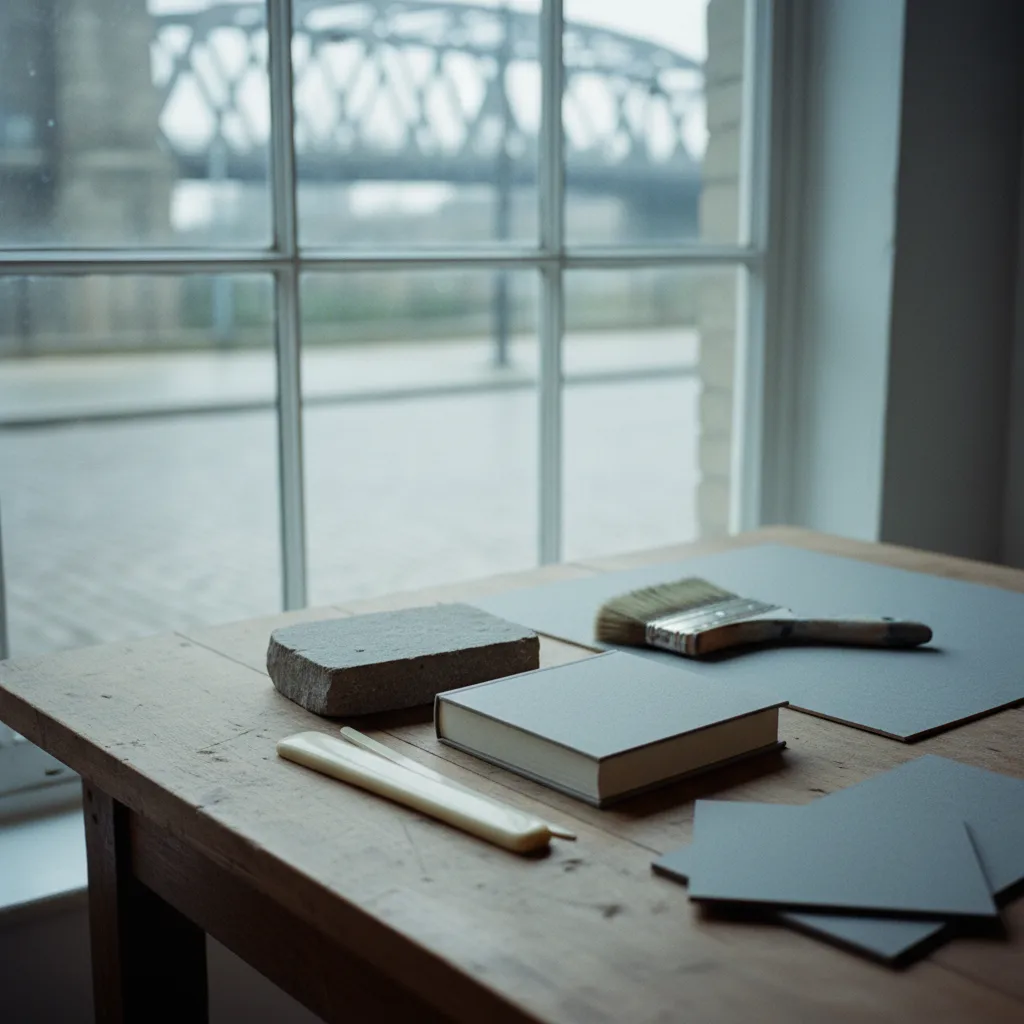
Rubbing bookcloth down over board and tucking neat corners call for a broad, smooth edge. DUMBO's cobblestones and bridge views frame the search well.
Hardcover case binding asks something different from a bone folder than folding a pamphlet does. You are rubbing glued cloth or paper down over grey board, pressing the joint where the cover hinges and tucking corners into crisp turn-ins. As a bookbinding bone folder picker in DUMBO, look for a broad, smooth working edge and a body balanced for steady pressure. The neighborhood's cobblestone streets, converted warehouses and views of the bridges make a calm, design-focused backdrop for thinking about a tool you will lean on heavily.
Why case work needs a different edge
Covering boards is a smoothing job more than a creasing job. You want even pressure across a wide area to push out air bubbles and bond cloth to board. A broad, flat or gently rounded edge spreads force, so the cloth settles without visible ridges. A narrow, pointed tip concentrates pressure and can leave lines or tear wet paper. For case work, the flat face and wide edge do most of the labor.
The tip still matters for corners and joints. Turn-ins need a fine end to push cloth neatly into the board edge and tuck corner folds. The joint between spine and cover board needs a defined line pressed along it. Many binders choose a folder with one broad end and one pointed end, which covers both smoothing and detail work without switching tools.
Edge width and smoothness
Look at the edge in profile. A good case-work folder has a wide, evenly sanded edge without flat spots or nicks that would leave marks in damp cloth. Run it across the back of your hand; it should glide smoothly. Any catch will be magnified on glued material, where the surface is soft and vulnerable. A glassy edge is essential when rubbing over adhesive.
Width is a balance. A very wide folder covers ground quickly but can feel clumsy at the joint and corners. A narrower one gives control but takes more strokes. For most hardcover sizes, a moderately wide folder with a fine tip at one end is the practical choice. It lets you smooth the board quickly, then turn the tool and finish corners with precision.
Shine on cloth and paper covers
Bone burnishes, and on bookcloth or decorative paper that burnish can show as shiny streaks once the glue dries. This is especially visible on dark or matte cloth. The usual solution is rubbing through a sheet of scrap paper or a release sheet laid over the cover, which protects the surface while still transferring pressure. Teflon folders also avoid shine, and some binders keep one for covering.
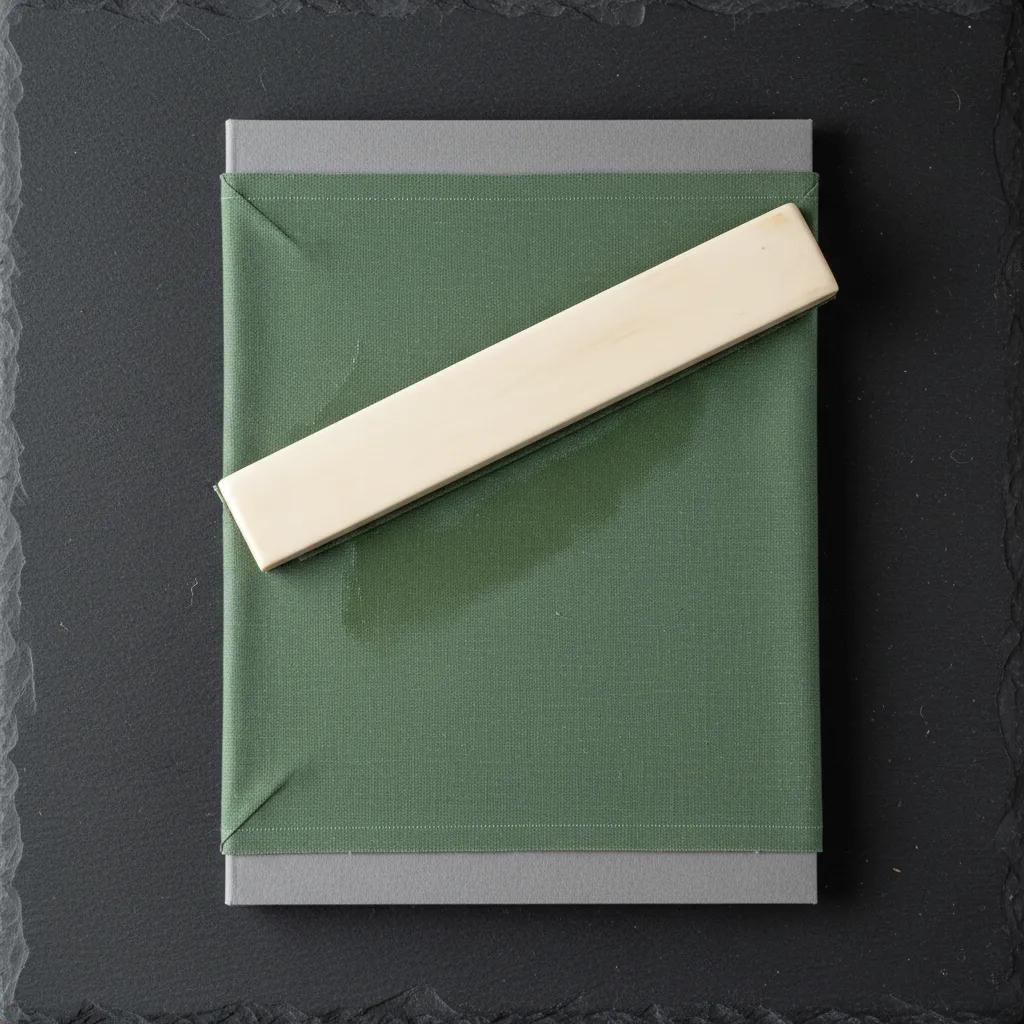
Test before choosing. Glue a small offcut of the cloth you plan to use onto a scrap of board, rub it down with each candidate folder both directly and through a scrap sheet, and let it dry. Compare the surfaces in daylight. The folder that leaves a clean, matte surface through a sheet, and a well-defined joint line, is the one suited to your covers.
Balance and pressure for longer sessions
Case work involves steady, firm pressure over several minutes per book. A folder that is too light forces you to press harder with your hand. One that is slightly heavier and balanced through the middle lets the weight help. Hold candidates flat in your palm as if rubbing down a board, then switch to a pencil grip for corners. The right tool feels stable in both positions.
Thickness affects comfort. A slightly thicker folder fills the hand and reduces strain during long smoothing passes. A very thin one can dig into the palm. If you plan to bind several hardcovers in one session, prioritize a comfortable body over sheer slimness. Your hand will thank you, and steadier pressure means fewer bubbles and cleaner joints in the finished cases.
Browsing DUMBO between material stops
DUMBO's blend of cobblestone streets, warehouse buildings and waterfront parkland makes for a pleasant browsing afternoon. Take your test boards and cloth offcuts to the waterfront and look at them in open daylight, where shine and bubbles are easiest to see. Bring a notebook to jot down how each folder performed so you can compare clearly at the end.
The Karpo APP can suggest nearby paper, art supply and craft spots around DUMBO when you want a few places to consider. It offers suggestions only; you decide which ones to visit and how to get there. Many people pair a supply stop with a walk along the waterfront or a look at the bridge views, turning the errand into an unhurried afternoon out.
Honest advice on what to skip
Skip very narrow, sharply pointed folders as your only tool for case work; they are fine for corners but poor for smoothing boards. Also skip ornate handles that make the flat face uneven, since that face is what touches the cover. A plain folder with a broad, glassy edge and a fine tip at the other end does the job better than any decorative alternative.
It is worth paying attention to how evenly the flat faces are finished. Uneven sanding can leave ridges that press visible lines into damp cloth. Run your palm along both faces as well as the edges. A folder with smooth, flat faces and a well-defined tip will give you clean covers and crisp turn-ins, book after book.
Practical notes for case binding sessions
Keep a scrap sheet or release paper handy for rubbing through, and change it when it gets sticky with glue. Wipe the folder often with a slightly damp cloth, since dried glue on the edge will mark the next cover. Work on a firm, flat surface. After covering, press the book under weight to dry, which keeps boards flat and helps cloth bond evenly.
Store the folder away from heat and damp, and clean off any adhesive before it hardens. A natural folder gains a smooth polish with use, and many binders find it improves over time. Give your new tool a few hardcovers before judging it. Once it feels steady in your hand, you will know whether you need a second folder for corners or whether one is enough.
Ask Karpo for more information.
Keep reading
- Garment District Mending Supplies Shop Route: 4 Blocks
 Greenpoint NYC Mending Supplies Shop Route: Sunday Walk
 Astoria Queens Mending Supplies Shop Route: 3 Loop Stops