 Astoria Chess Cafe Night Planner: How to Become a Regular
Sports Social
Williamsburg Billiards Bar Night Planner for Solo Newcomers
Williamsburg billiards bar night planner for newcomers going solo: claim the next game on a bar table, learn local rules and drift toward a weekly league crowd.
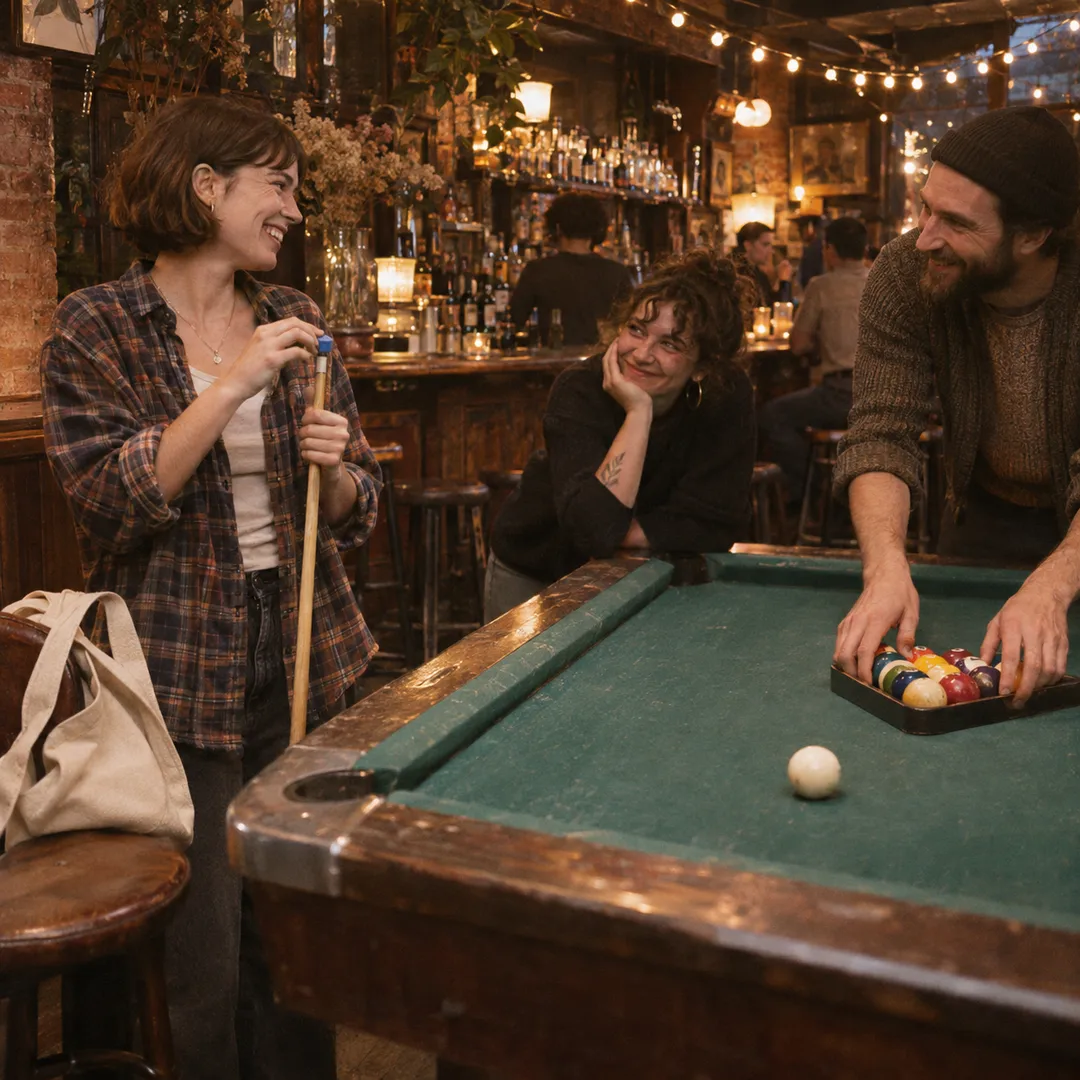
Put a coin on the rail and you have a guaranteed conversation within fifteen minutes. That small Williamsburg bar custom is the easiest social trick available to anyone who has just moved to Brooklyn and knows nobody yet. Pool turns a solo night out into something with structure: you wait your turn, play a stranger, shake hands and either stay on or step aside. This billiards bar night planner covers how to walk in alone, read the room and keep coming back until you are a regular.
Step One: Learn the Language of the Bar Table
Many Williamsburg bars keep a single coin-operated table, often smaller than a full billiard club table and called a bar box by players. The custom is simple. Whoever is on the table keeps playing as long as they win, and challengers line up by placing coins or writing names on a chalkboard. When your turn comes, you play the winner of the last game. Nobody minds a beginner, as long as they wait patiently and take the loss with a smile.
House rules vary from bar to bar, so ask before you break. Some tables play call-your-pocket eight ball, where an unannounced lucky shot does not count. Others play slop, where anything that drops is fine. Scratching on the eight usually loses the game everywhere. Asking 'what are the rules here?' is not a weakness; regulars take it as a sign of respect, and it often starts a longer chat about the table's quirks.
Step Two: Pick a Night That Suits Going Alone
Weekend nights in Williamsburg are crowded, loud and full of groups who arrived together, which makes it harder to slip into a game. Early weekday evenings are kinder. The table turns over more slowly, the bartender has time to introduce you and the people playing are often locals who come for the game itself. That rhythm suits a newcomer who wants to talk between shots rather than shout over a crowd.
Many neighbourhood bars across north Brooklyn host weekly amateur league nights, where teams of five or so play matches against other bars. League evenings are lively but welcoming. Watch one first, ask a team captain how players join, and you might find yourself drafted onto a roster the following season. Search the Karpo APP for pool bars around Bedford Avenue and Grand Street, and note which ones mention leagues or weekly tournaments.
Step Three: Play Like a Good Neighbour
Etiquette matters more than skill. Do not walk across someone's shooting line, do not stand right behind the pocket they are aiming at and do not offer advice unless asked. If you win, rack the next game for the challenger, or at least say thanks and offer a handshake. If you lose, step away graciously and put your name back in the queue if you want another turn. Those habits get you remembered for the right reasons.
A useful shortcut for anyone who feels shy: compliment a good shot from the side, then ask how they learned it. Pool players love explaining a draw shot or a bank. Within a couple of visits you will know the names of the bartender and two or three regulars, and you will find that someone saves you a spot in the chalk queue. That is how a bar quietly becomes your local.
Money games deserve a word of caution. Now and then a friendly stranger suggests putting a small bet on the next rack, and that is the moment to smile and say you only play for fun. Most people respect that instantly. Keeping the stakes at a round of fries or the next song selection protects your wallet and your new reputation, and it keeps the bar a place where you can relax rather than a place where you are being tested.
Step Four: Learn the Neighbourhood While You Wait
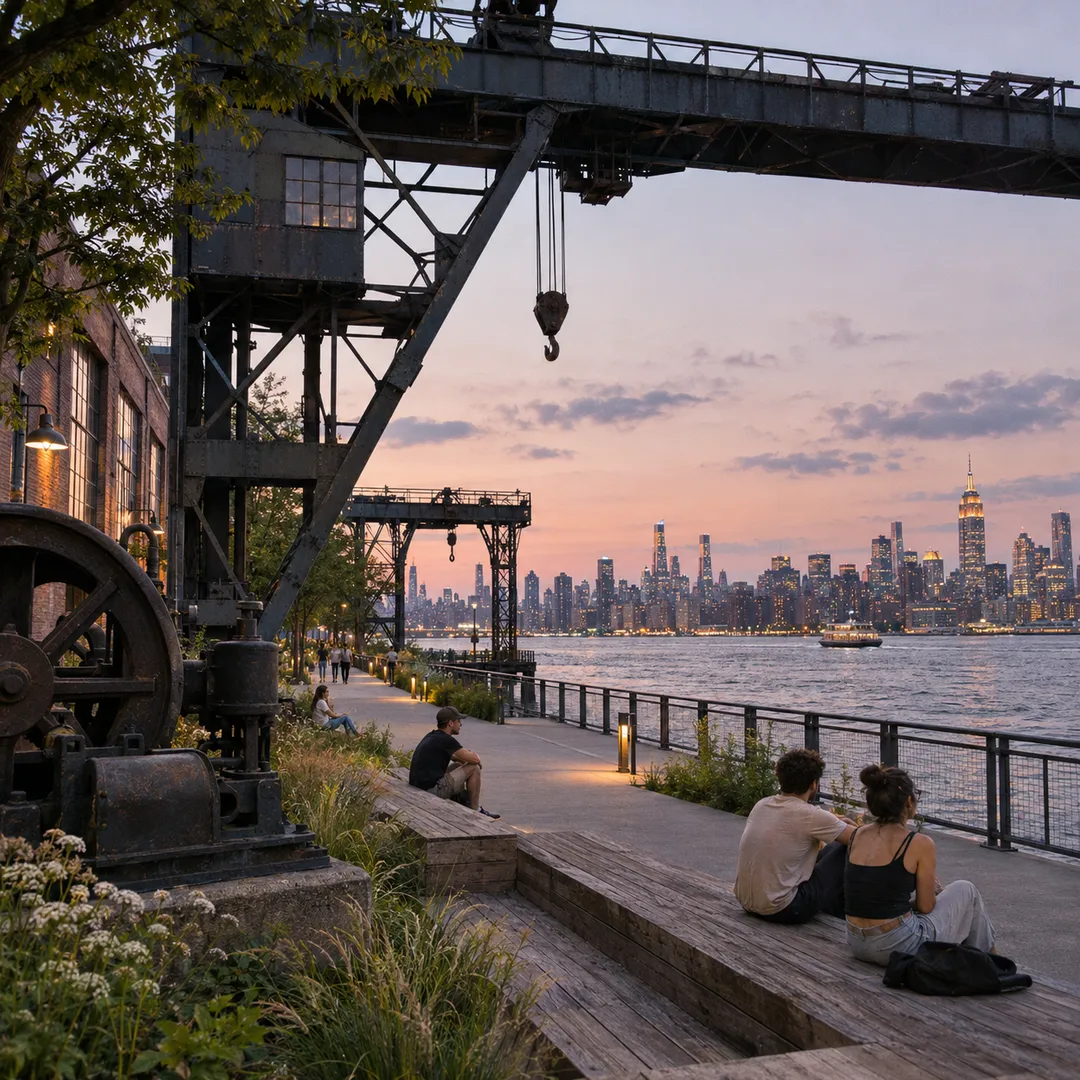
Williamsburg's waterfront was once lined with sugar refineries, breweries and warehouses, and the scale of that industry is still visible. Domino Park, built on the grounds of the old sugar refinery, keeps gantry cranes, syrup tanks and other relics along an elevated walkway. It is a fine place to sit before heading to the bar, watching ferries cross toward Manhattan while the skyline lights come on one window at a time.
A little north, Grand Ferry Park marks the spot where ferries once carried workers across the river before the bridges existed, and it remains a small, scrappy patch of shoreline with a clear view of the Williamsburg Bridge. Walking inland along Bedford Avenue shows the more recent story, with record shops, vintage stores and cafes on the ground floors of old row houses. Each stop gives you something to bring up in conversation later.
Step Five: Pace the Evening and Get Home Easily
Going solo means keeping your wits about you. Alternate each beer with a glass of water, and do not let a stranger's winning streak turn into a round of shots. Order something to eat, because a long wait for the table on an empty stomach is a poor plan. Many bars allow food from nearby pizza or taco spots, but ask first rather than walking in with a box.
Plan the way home before your third game. The L train runs straight back to Manhattan and across to Bushwick, and the waterfront ferry is a lovely way to travel on a mild night. If you are heading to a different part of Brooklyn, check the route in advance so you are not studying a map outside at the end of the evening. Leave while you are still enjoying it; there is always next week.
When the Bar Table Is Not Enough
After a few weeks of bar-box games, some newcomers get the itch to play on a full-size table, which plays longer and punishes sloppy position. A dedicated billiard club gives you more room, better lighting and the chance to practise alone for an hour without anyone waiting. Mixing the two works well: practise drills at the club on a quiet afternoon, then test them in a friendly bar game that evening.
Be honest with yourself about the goal. If you mainly want company, the neighbourhood bar is the better bet, even with its tilted table and dead cushion. If you want to improve, a club and perhaps a lesson will help far more. Either way, the people you meet across the felt become a small community in a big city, which is exactly what most newcomers are really looking for.
A Short Checklist for the First Visit
Carry a few coins in case the table is coin-operated, and keep a pen for chalkboard queues. Wear shoes you can stand in for a while. Bring a light layer, since the walk along the river can be windy. Tell a friend where you are going. And remember the opening move: watch two games, put your coin on the rail, then introduce yourself to whoever is still standing when your turn comes.
Ask Karpo for more information.
Keep reading
- Astoria Chess Cafe Night Planner: How to Become a Regular
 Upper West Side Billiards Bar Night Planner for Old Friends
 Park Slope Chess Cafe Night Planner: A Date With Odds