 Midwood Babka Bakery Crawl: Avenue J and M Pastry Route
Coffee & Dessert
Lower East Side Babka Bakery Crawl: Morning Loaf Route
Walk a Lower East Side babka bakery crawl from Grand Street to Seward Park with crumb-comparison tips, slice etiquette, and paper-bag packing advice.
Planning a Lower East Side babka bakery crawl rewards you when you pair two contrasting dough traditions within a single twenty-minute walk between Grand Street and East Broadway. My cousin arrived at the Delancey Street subway stairs carrying a canvas tote, a folding picnic knife, and a clear mission: compare a heavy, syrup-glazed old-world chocolate loaf against a flaky, laminated modern twist before the midday lunch rush filled the narrow tenement sidewalks. Rather than buying four whole loaves that dry out before dinner, a smart route splits the neighborhood into a traditional eastern block near Seward Park and a contemporary pastry strip closer to Essex Market. Along the way, you learn how bakers judge dough hydration by weight, why cinnamon streusel holds its crunch longer than warm ganache in a paper bag, and how the Karpo APP helps you map nearby espresso counters and park benches when your hands are full of warm pastry boxes.
Starting Near Grand Street for Old-World Yeast-Risen Loaves
Begin your walk on the quieter blocks south of Delancey where historic brick tenements frame old-school bakehouse counters and appetizing windows. When you step up to a traditional showcase, look past the front tray of individual cookies and ask the counter clerk which loaf pan came out of the deck oven most recently. Old-world Lower East Side babka relies on a rich brioche-like yeast dough rolled thin and spread with a thick, fudgy cocoa paste rather than melted bar chocolate. Because the baker twists the filled sheet tightly before dropping it into a deep rectangular tin, the finished loaf feels remarkably heavy in your palm, almost like a dense fruitcake wrapped in a papery, sugar-syrup crust.
If you are walking with one partner, resist the urge to order both chocolate and cinnamon at your first stop. Instead, ask whether the counter sells half-loaves or thick end cuts by weight, a common practice at traditional neighborhood shops where elderly regulars stop in for a two-slice afternoon treat with black tea. Watch how the clerk lifts the loaf with a sheet of wax paper: if the bottom crust yields slightly to thumb pressure without cracking, the interior swirl will stay moist for days. Slip that wrapped half-loaf into the bottom of your canvas bag so its flat base acts as a sturdy platform for the more delicate pastries ahead.
Comparing Laminated Twists Along the Essex and Orchard Corridors
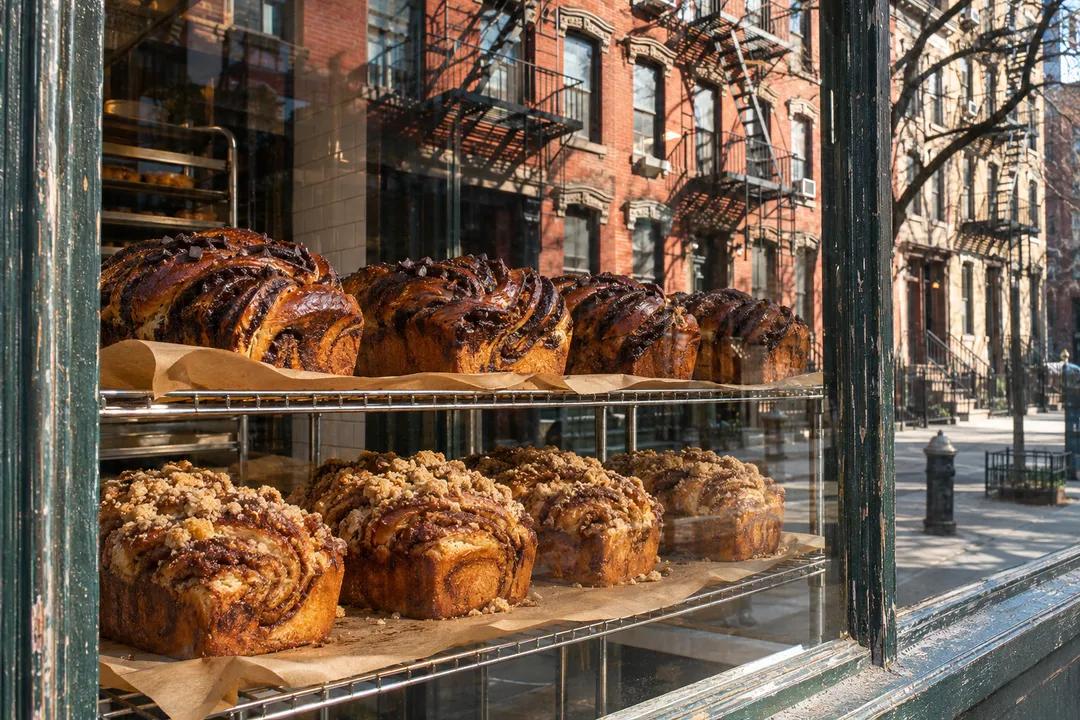
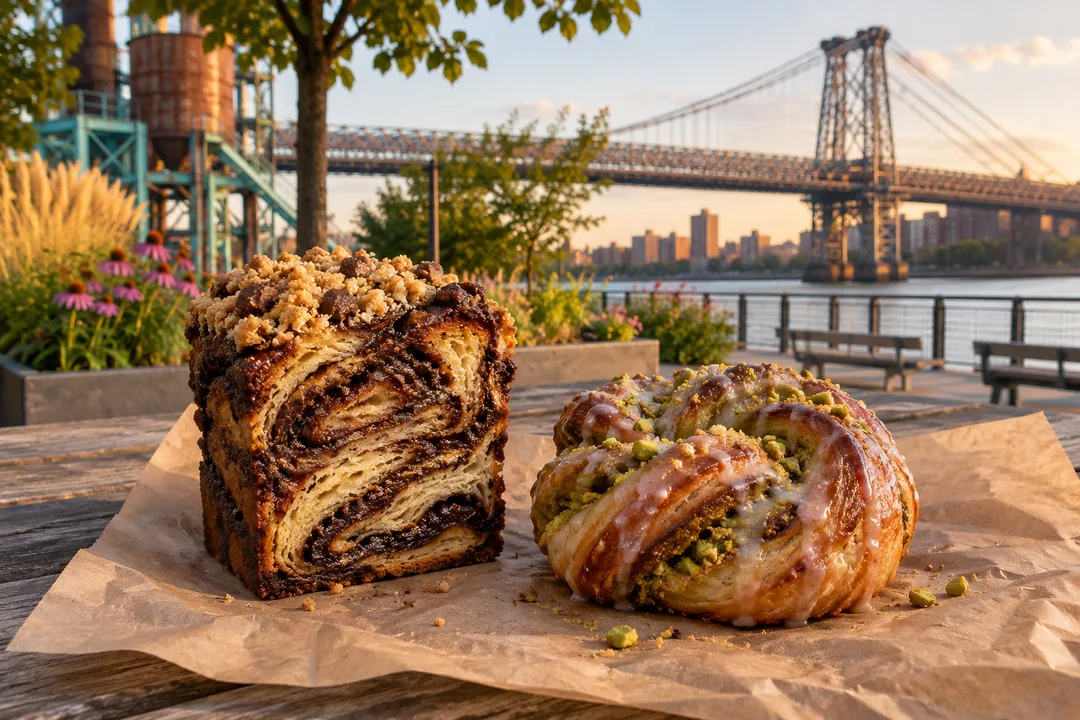
From the southern blocks, angle northwest toward the lively blocks surrounding Essex Street and Orchard Street, where third-wave bakehouses treat babka closer to a French croissant than a Sabbath challah. In these open-plan kitchens, pastry cooks fold cold butter directly into the dough before rolling in dark chocolate shards, roasted hazelnuts, or toasted sesame halva. You can spot the difference immediately on the cooling rack: instead of a compact rectangular brick, a laminated babka rises into high, separated ribbons with caramelized edges that shatter into golden flakes the moment a serrated blade touches the crust.
Timing matters at these modern counters because laminated dough loses its crisp exterior contrast once sealed inside a steaming cardboard box. Order a single warm slice or an individual knotted bun here rather than a whole loaf, and ask the staff to leave the top of the paper bag folded loosely so steam can escape as you walk. Skip the overly sweet seasonal glazes piled with crushed candies; they mask the fermented butter aroma of the dough and turn sticky on your fingers before you reach the corner crosswalk. If a sudden queue stretches past the doorway onto the sidewalk, open the Karpo APP to spot a quiet side-street espresso window two blocks over rather than waiting in a slow brunch line.
Reading the Crumb: Chocolate Fudge Versus Cinnamon Streusel
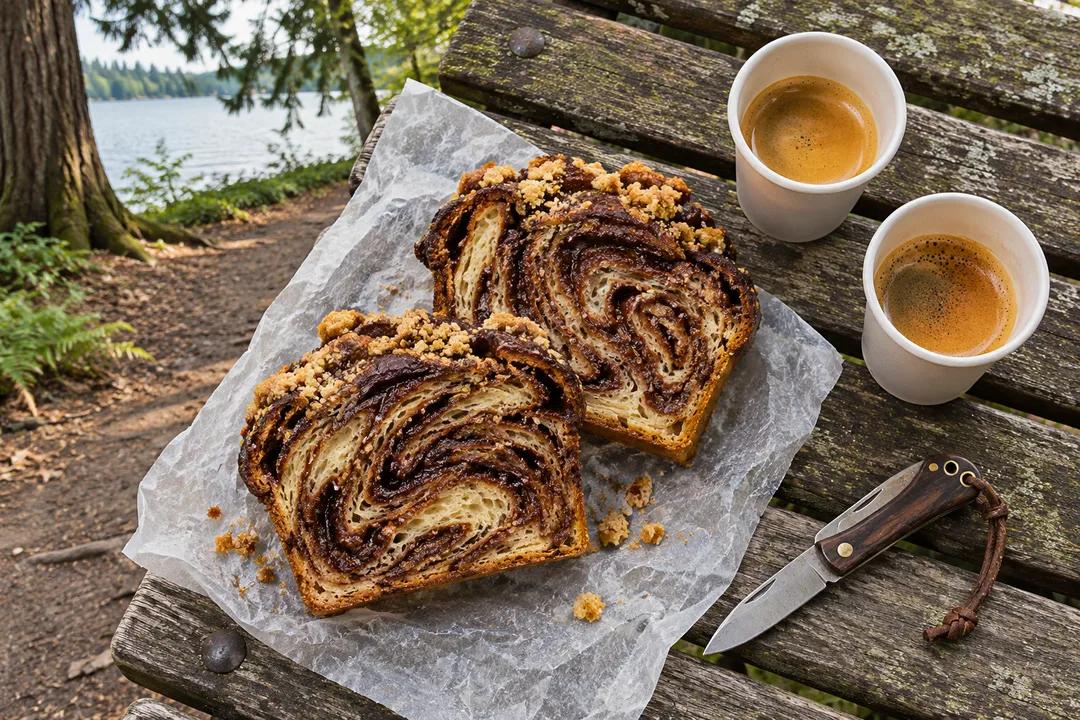
Most first-time crawlers assume dark chocolate is the only serious benchmark, yet longtime Lower East Side regulars often judge a bakehouse by its cinnamon streusel loaf. Chocolate filling naturally adds fat and moisture that can hide an overbaked dough, whereas a cinnamon swirl exposes the true texture of the baker's crumb. When you compare slices side by side, look at the thickness of the spiral lines: a well-proofed cinnamon loaf shows eight to ten distinct ribbons of brown sugar and spice without a hollow cavern gap under the top crust.
Pay attention to the streusel topping as well. Traditional neighborhood bakers rub flour, butter, and sugar between their fingers to create irregular pebbles that bake into a sandy, lightly salted crown over the braided dough. Newer shops often brush the top straight from the oven with orange-blossom or vanilla simple syrup, giving the loaf a glossy sheen that locks in moisture during a long subway ride home. Knowing which finish you prefer saves you from buying a dry loaf when shopping for a weekend dinner host.
Bench Etiquette and Slicing Strategy at Seward Park
Once you have collected a dense traditional half-loaf and a flaky modern twist, walk south toward the cast-iron gates of Seward Park by the historic library branch and the stone Schiff Fountain. The shaded benches lining the inner walkways offer the ideal open-air tasting table, far removed from the cramped standing counters inside busy bakehouses. Bring a small serrated tomato knife wrapped in a kitchen towel and a stack of extra paper napkins, since plastic takeaway cutlery bends helplessly against a crusty braided heel.
Slice from the center of the loaf outward rather than starting at the tapered end, and wipe the blade between cuts so dark cocoa smudge does not muddy the pale gold layers of a cinnamon or halva twist. If you want a savory palate cleanser between sweet bites, duck into a nearby appetizing shop along East Broadway or Grand Street for a small container of sour pickles or a plain bialy before sitting down. Sharing half-inch tasting ribbons lets a group of three or four sample three distinct bakeries without hitting a sugar wall before noon.
Packing Whole Loaves for the Subway Ride and Next-Day Toasting
Before wrapping up your Lower East Side walk near the historic tenement blocks on Orchard Street, sort your remaining loaves for the trip home. Never stack a heavy traditional fudge loaf on top of a laminated pastry box, and keep warm loaves out of airtight plastic bags until they have cooled completely to room temperature on your kitchen counter. If a loaf still feels warm through the wax paper when you reach the subway turnstile, keep the bag upright on your lap rather than wedging it beside a warm commuter backpack.
When you unpack at home, leave the cut face of the babka pressed flat against a wooden cutting board or wrapped tightly in parchment followed by foil. Traditional syrup-glazed loaves slice cleanly cold straight from the counter the next morning, while laminated butter-rich twists reward a brief warm-up on a dry cast-iron skillet over low heat, which crisps the outer ribbons and softens the dark chocolate veins without drying the tender crumb.
Ask Karpo for more information.
Keep reading
- Midwood Babka Bakery Crawl: Avenue J and M Pastry Route
 Crown Heights Babka Bakery Crawl: Kingston Avenue Walk
 Williamsburg Babka Bakery Crawl: Friday Loaf Tasting Walk