 Midwood Babka Bakery Crawl: Avenue J and M Pastry Route
Coffee & Dessert
Williamsburg Babka Bakery Crawl: Friday Loaf Tasting Walk
Plan a Williamsburg babka bakery crawl from South Williamsburg kosher bakehouses to Northside cafes with Domino Park waterfront bench stops and tips.
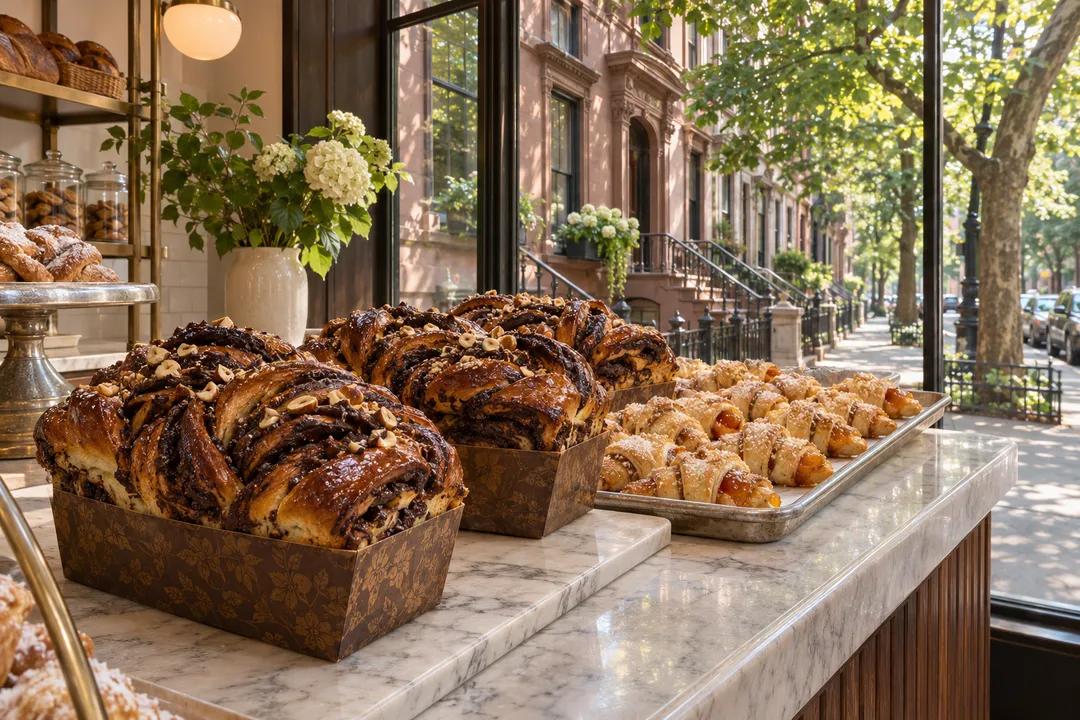
A Williamsburg babka bakery crawl offers the sharpest pastry contrast in Brooklyn because two completely different baking worlds sit less than twenty minutes apart on foot. Two studio mates from Greenpoint and I spent a crisp Friday morning walking south of Division Avenue before looping back toward the Northside waterfront, carrying paper bags from both sides of the neighborhood. In South Williamsburg, family-run kosher bakehouses turn out towering, brick-heavy pareve loaves crowned with inches of crunchy vanilla streusel for Sabbath tables. Cross north toward Bedford Avenue and Berry Street, and small-batch sourdough micro-bakeries fold dark single-origin couverture, toasted black sesame, or crushed pistachio into naturally leavened croissant dough. Checking the Karpo APP as you cross under the Williamsburg Bridge approach helps you connect traditional bakehouse blocks with specialty pour-over bars and East River park benches.
Starting on the Southern Blocks Before the Friday Midday Rush
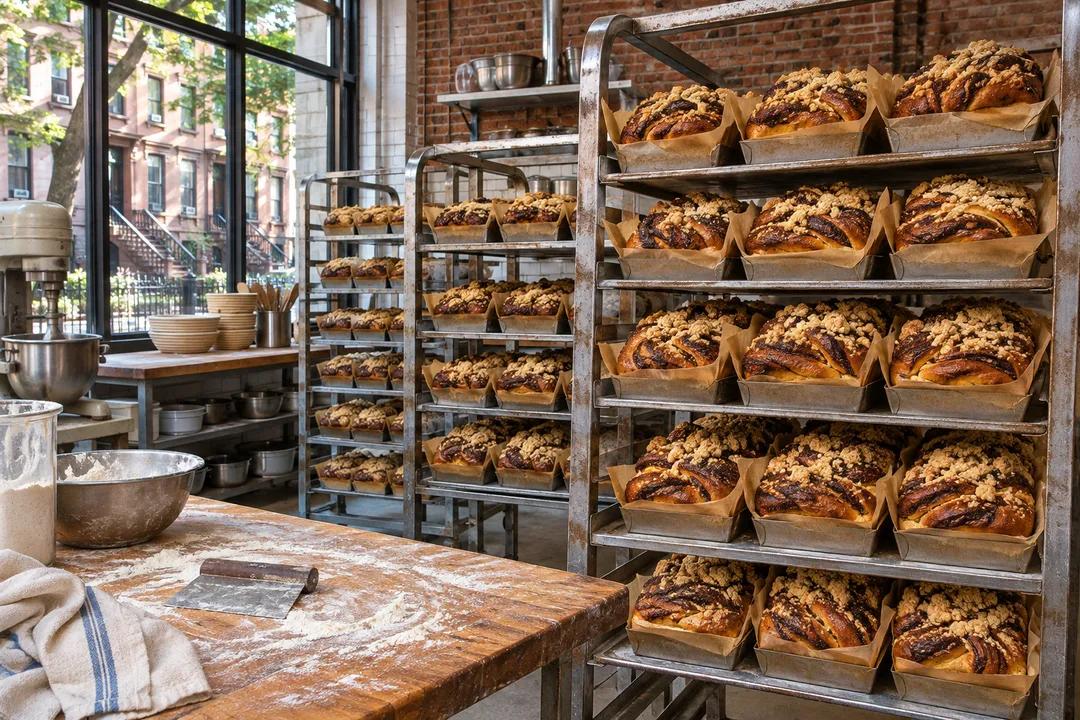
Timing determines everything when you begin in South Williamsburg along the commercial blocks near Lee Avenue and Marcy Avenue. On Friday mornings, local families fill the sidewalks pulling folding market carts as they stock up on braided challah, savory potato knishes, and tall rectangular babka tins ahead of sundown. Arrive during the mid-morning window when the overnight deck ovens are still pushing out warm racks of chocolate and cinnamon loaves, and keep your order ready before you reach the front of the glass case so the queue keeps moving smoothly.
Traditional bakeries in this pocket of Brooklyn bake almost exclusively pareve, meaning the dough and fillings contain zero butter or dairy so the cake can be served after any meal. Instead of butter, bakers rely on egg yolks, vegetable oil, and high-gluten flour whipped to a silky elasticity, layered with a thick dark cocoa fudge ribbon that stays remarkably fudgy even at room temperature. Because these loaves are built to feed large family tables, even a compact strip easily serves six people; ask the counter clerk for a short foil pan or a half-strip wrapped in heavy wax paper so your bag stays manageable for the rest of the walk.
Understanding the Sky-High Streusel Crown and Pareve Crumb
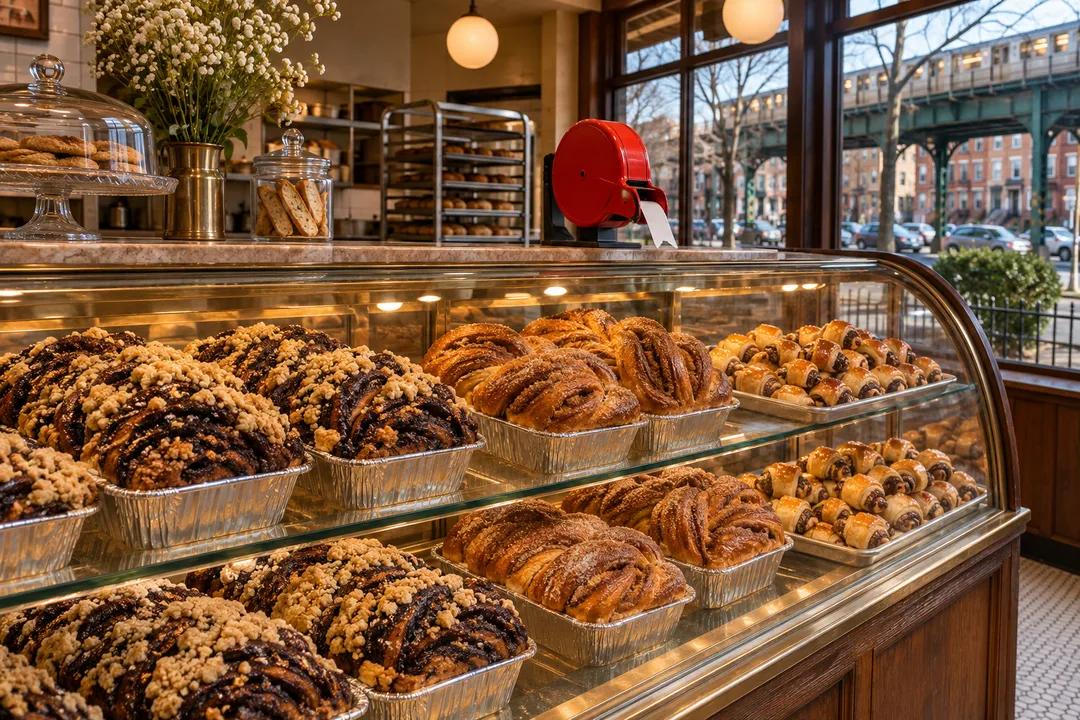
When you peer into a South Williamsburg display case, the first thing you notice is the sheer height of the crumb topping. Bakers here pile coarse clumps of flour, sugar, and oil streusel on top of the braided chocolate dough before sliding the deep paper-lined mold into the oven, creating a crunchy pale-gold crust that accounts for nearly a third of every slice. When you cut through the loaf, hold your knife blade vertically and press straight down through the streusel rather than sawing back and forth, which knocks the sweet pebbles loose into the bottom of the bag.
Skip the neon-colored fruit turnovers or jelly-filled cookies on the lower shelves if your goal is pure dough comparison; stick to the dark chocolate crumb loaf or the kokosh cake sitting beside it. Kokosh uses a similar yeast dough rolled flat like a strudel rather than braided in a deep pan, delivering a higher ratio of glossy cocoa filling to bread for walkers who love rich corner pieces and crisp edges. Many counter regulars ask for a corner cut of cinnamon kokosh alongside their chocolate loaf so they can taste both spice and cocoa without carrying a second heavy tin.
Walking North Toward Bedford and Berry for Sourdough Lamination
From the southern avenues, walk northwest past the brick warehouses and under the rumbling steel span of the Williamsburg Bridge into the Northside cafe district around Berry Street, Wythe Avenue, and Grand Street. The pace and scale shift immediately from family-size Sabbath pans to individual ceramic plates and open pastry counters where bakers laminate cold cultured butter into long-fermented sourdough starters. Here, babka is often shaped into individual braided knots, round morning buns, or compact demi-loaves dusted with cardamom sugar and orange peel.
Because wild yeast fermentation adds a subtle lactic tang to the dough, Northside pastry chefs pair their swirls with roasted nut pastes, orange zest, halva threads, or flaky sea salt that cut through the sweetness. Order a single warm knot at the counter alongside a cup of filter coffee, and notice how the butter-laminated exterior shatters into delicate, translucent layers quite unlike the soft, pillowy pareve crumb still tucked inside your tote bag. Watching the pastry team brush warm cardamom syrup over fresh trays right behind the espresso machine shows how modern Brooklyn cafes treat the loaf as a morning counter staple.
Setting Up a Side-by-Side Tasting on the Domino Park Pier
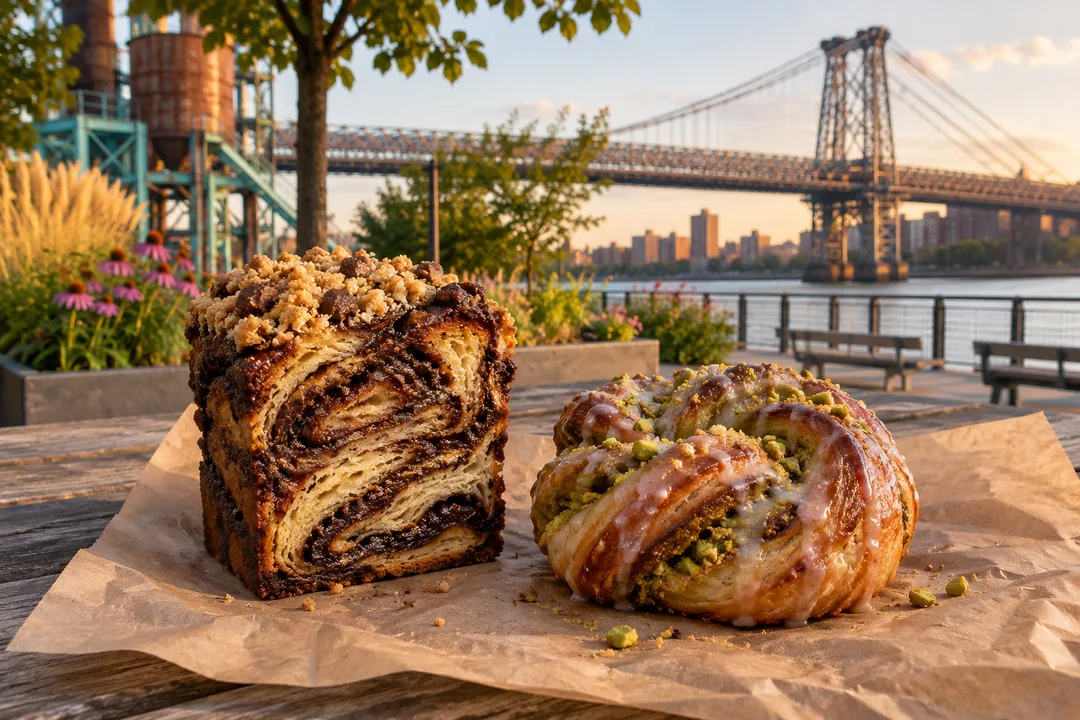
With both styles in hand, head west to the timber boardwalks and elevated seating steps of Domino Park along the East River waterfront beneath the old brick sugar refinery tower. Avoid windy pier edges where river gusts blow powdered sugar and loose streusel crumbs off your wax paper; instead, settle onto the sheltered wooden benches near the central lawn or under the steel gantry cranes. Lay a sheet of brown bakery paper across your knees and place a slice of the tall South Williamsburg pareve loaf right next to a Northside laminated sourdough knot.
Tasting the two back to back reveals why neither style replaces the other: the southern loaf eats like a comforting, fudge-streaked coffee cake built for generous family sharing, while the northern knot eats like a caramelized viennoiserie pastry built for an immediate morning coffee break. If the waterfront benches are packed on a sunny afternoon, use the Karpo APP to locate a quiet courtyard cafe table or walk a few blocks inland toward McCarren Park where shaded grass borders give you plenty of elbow room.
Carrying Brooklyn Loaves Across the L and JMZ Subway Lines
Before descending into the Bedford Avenue or Marcy Avenue subway stations, repack your remaining pastry so the tall crumb crown on your South Williamsburg loaf stays intact. Foil-pan loaves travel most safely flat at the bottom of a wide structured tote bag, with rolled paper napkins tucked around the corners so the pan does not slide sideways when the train brakes. Keep sourdough knots in a separate small paper bag so their sticky citrus or sugar syrup glaze does not dampen the dry streusel pebbles.
Once home, store the pareve fudge loaf tightly wrapped on the counter, where its oil-based crumb stays soft and sliceable for several days without refrigeration. Sourdough butter knots should be eaten the same day or refreshed briefly in a warm toaster oven to revive the crisp outer layers before serving alongside afternoon tea or cold milk. Labeling each paper bag with a pen before you leave the park bench also helps you remember which counter baked which twist when you set out slices for weekend houseguests.
Ask Karpo for more information.
Keep reading
- Midwood Babka Bakery Crawl: Avenue J and M Pastry Route
 Crown Heights Babka Bakery Crawl: Kingston Avenue Walk
 Upper West Side Babka Bakery Crawl: Sunday Loaf Walk