 Where to Eat Near Penn Station That Isn't a Chain
US Open 2026

NYC Air Quality Guide for US Open Fans This Summer
Use official real-time air-quality checks, flexible scheduling, and simple on-site habits to plan a more comfortable outdoor tennis day in New York.
A summer tennis day in New York can look simple on paper: arrive, clear security, find your court, and settle in for hours of points, changeovers, food runs, and evening plans. Air quality adds a variable worth treating like weather, not like a panic button. Conditions can change quickly, so fans should check official real-time sources such as AirNow before and during the day. The goal is not to diagnose anyone, predict tournament operations, or invent cancellation thresholds. It is to make practical decisions about timing, walking, waiting, breaks, and backup plans. Because a US Open visit can include outdoor queues, crowded paths, long sessions, and travel across the city, a little preparation can make the day easier without turning it into a medical exercise.
Text Karpo Now: Tell us what matters most for NYC Air Quality Guide for US, and Karpo can turn current US Open updates into a practical plan before you go.
Check Before You Commit
Start with the official AirNow page for New York rather than social posts, screenshots, or secondhand warnings. AirNow gives a current air-quality picture, which makes it the best first stop when deciding how to pace your day. Pair that check with the National Weather Service local forecast for the area, because heat, humidity, wind, rain chances, and general weather conditions can shape how the day feels even when tennis is the reason you are traveling.
Make the check at useful moments: before leaving your hotel or home, while approaching the grounds, and again before a long outdoor stretch. Those checks are not about guessing what the tournament will do. They are about your own logistics: whether to arrive earlier or later, whether to build in a longer meal break, whether to keep an evening plan flexible, and whether anyone in your group should follow guidance already received from a health professional.
- Open AirNow for New York and note the current reading rather than relying on yesterday’s conditions.
- Check the National Weather Service local forecast for heat, rain, wind, and timing clues.
- Review official US Open visitor information and tournament updates before changing plans.
- Make group decisions around the most cautious person in your party, not the most eager fan.
Plan Outdoor Queues
The least glamorous part of a tennis day can be the part that needs the most planning: standing still. Queues for entry, security, concessions, merchandise, transportation, or popular viewing areas may involve more outdoor time than a seated match because you are moving slowly, carrying bags, and negotiating crowds. If air quality is a concern on the day you attend, treat waiting time as something to manage. Arriving with a plan is more useful than arriving with a rigid schedule.
Build a buffer so you are not sprinting from transit to the gate or from one court to another. Choose meeting points that are easy to find, and decide in advance what you will do if one person wants a break while another wants to keep watching. If you are traveling with children, older relatives, or anyone who has been told to take air-quality precautions, avoid improvising every decision at the loudest, hottest, or most crowded moment. A calm plan made before arrival is easier to follow.
Packing also matters, but keep it practical. Bring water within the rules posted by the tournament, use sun protection, carry a portable charger, and avoid overloading yourself with bags that make every line feel longer. If your group uses any personal protective items based on professional advice, make sure those items are easy to reach rather than buried under souvenirs.
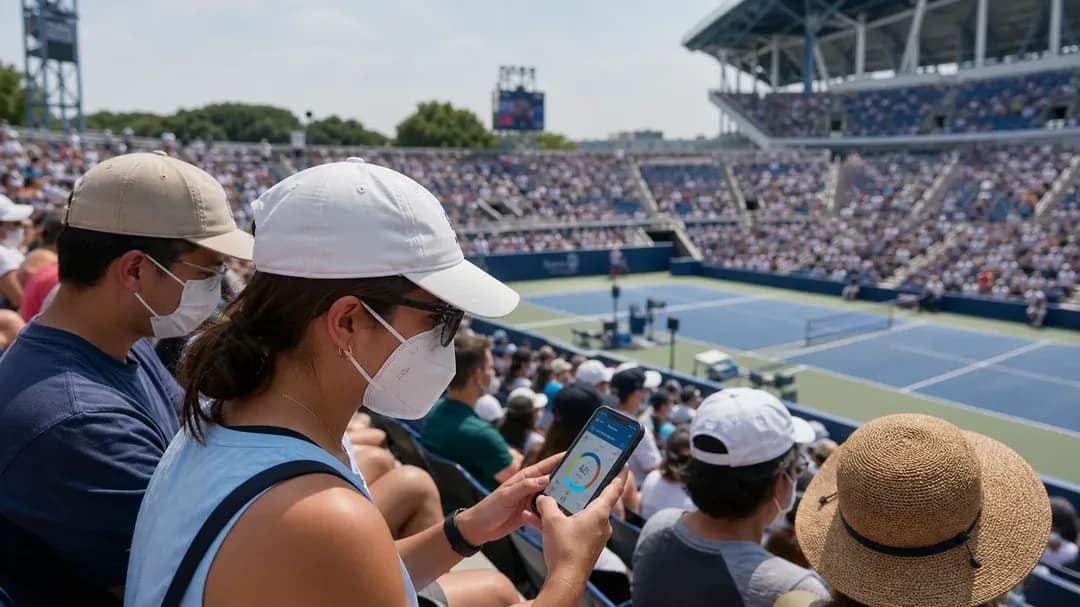
Use Breaks Strategically
A long tennis session rewards fans who think in blocks. Instead of assuming you must watch every available point, identify the matches, players, or courts that matter most to you and leave room around them. Air-quality planning fits naturally into that approach. If conditions feel less comfortable, you can shorten a roaming stretch, pause between matches, or choose a food or shopping break before returning to your preferred court.
This is not medical advice and it is not a substitute for official direction. It is basic event pacing. Outdoor tennis can involve long periods of sitting, sudden bursts of walking, crowded concourses, and repeated decisions about where to go next. Fans who wait until they are already tired often make worse choices. Fans who schedule breaks before they need them usually enjoy the day more, especially if they are visiting New York and also trying to save energy for dinner, sightseeing, or a late trip back to their hotel.
Use changeovers and set breaks for small resets, not only for photos and score checks. Reapply sun protection, drink water, review the next place you want to go, and confirm whether official air-quality and weather information still supports your plan. If your ticketed session, preferred court, or travel timing limits your options, focus on what you can control: walking speed, route choice, break length, and whether to leave extra time for transit.
Keep Travel Flexible
For New York visitors, the tennis day is often only one part of a larger itinerary. Air-quality changes can affect how appealing it feels to walk long distances, wait outside a restaurant, cross town for a view, or stack sightseeing before and after a session. The practical move is to keep the non-tennis parts flexible. Book plans with realistic transfer time, avoid scheduling every hour tightly, and keep a low-effort backup for the part of the day when your group may be tired.

Do not assume that a morning reading will describe the entire day. Recheck official information before committing to a long outdoor detour, especially if you are deciding between heading straight to the grounds and adding another stop. A fan with only one session ticket may choose to conserve energy before arrival. A fan with a longer stay in the city may shift sightseeing to a different day. Those are judgment calls, not tournament predictions.
- Put the official AirNow, National Weather Service, and US Open visitor pages in one phone folder.
- Choose a nearby indoor backup for meals or downtime if outdoor plans feel less comfortable.
- Leave extra transit time so a slower pace does not create stress at the gate.
- Agree on a simple group check-in time before splitting up around the grounds.
Official tournament updates matter most for event operations. Fans should not invent thresholds for delays, suspensions, cancellations, or entry changes. If the tournament communicates an update, follow it. If there is no such update, your personal decision is about comfort, caution, and logistics. People with health concerns should follow professional guidance, because a consumer travel guide cannot assess individual risk.
Practical Notes
The simplest plan is a repeatable routine. Check AirNow for New York before leaving, check the local National Weather Service forecast, and scan official US Open visitor information for posted updates. Pack light enough to move easily, keep water and sun items accessible, and save phone battery for maps, tickets, and official pages. If the air-quality reading changes during the day, shift your behavior before frustration builds: slow your walking pace, shorten outdoor wandering, take a longer seated break, or move a nonessential city stop to another time. For groups, pick a conservative meeting plan and make it acceptable for someone to rest while others watch. For visitors, protect the next day of the trip too; a memorable tennis session is better when it does not exhaust the rest of your New York plans.
Tags: #USOpen2026 #Tennis #GrandSlam #NewYorkTennis #ArthurAsheStadium #FlushingMeadows #USOpenGuide #TennisFans #SportsTravel #HardCourt #NewYork #KarpoFinds
All trademarks are the property of their respective owners.
Ask Karpo first
Want to know what is confirmed, when to show up, and how to make nyc air quality guide for us work for your day? Ask Karpo for current US Open updates, a respectful fan plan, and a live route around Flushing Meadows.
Ask Karpo for more information.
Keep reading
- Where to Eat Near Penn Station That Isn't a Chain
 Andytown Coffee in the Outer Sunset: The Snowy Plover Explained
- Best Things to Do in Chicago: What the City Gives Away