28 Years in the Wilderness
On June 24, 1998, Norway lost 1-0 to Italy in the Round of 16 of the World Cup in Marseille. It was their second World Cup appearance in succession — they had debuted in 1994 — and their defeat was respectable against one of the tournament favorites. Nobody in Norwegian football imagined that it would be 28 years before they returned to the global stage. The years that followed were a slow descent into irrelevance. Failed qualification campaigns in 2002, 2006, 2010, 2014, 2018, and 2022 — each one promising, each one ending in disappointment. Norway became the largest Western European nation never to qualify for a European Championship and the country with the longest World Cup absence among traditional football nations.
Loving Norway's fairytale? Ask Karpo where to watch their next match with fans.
The Qualification Miracle
Norway's return to the World Cup began with a playoff victory over Turkey in March 2026 — a match that required a penalty shootout, with Erling Haaland converting the decisive spot kick. The celebrations in Oslo, where 50,000 fans gathered in the city center, were compared to the scenes after Norway's independence from Sweden in 1905. The squad that Stale Solbakken assembled combined Premier League experience (Odegaard, Haaland, Saliba's partner Gabriel from Arsenal) with emerging talent from European leagues (Schjelderup from Benfica, Nusa from Club Brugge). The team arrived in the United States ranked 40th in the world — the lowest-ranked team to reach the 2026 quarterfinals.

The Tournament Path: Every Match a Drama
Norway's path through the tournament reads like a screenplay. Group Stage Match 1: Norway 2-0 Costa Rica (Haaland brace, controlled performance). Group Stage Match 2: Norway 1-1 Spain (a draw against the pre-tournament favorites, secured by a late Sorloth equalizer). Group Stage Match 3: Norway 1-0 Portugal (a Haaland penalty sealed the group in second place and eliminated Ronaldo). Round of 32: Norway 2-1 Ivory Coast (Schjelderup's solo goal in the 83rd minute avoided extra time). Round of 16: Norway 2-1 Brazil (the comeback from 1-0 down through two Haaland headers in the final 11 minutes). Every match has been dramatic. Every result has exceeded expectations. Every performance has added another chapter to what is now, indisputably, the story of the tournament.
The Nation's Response
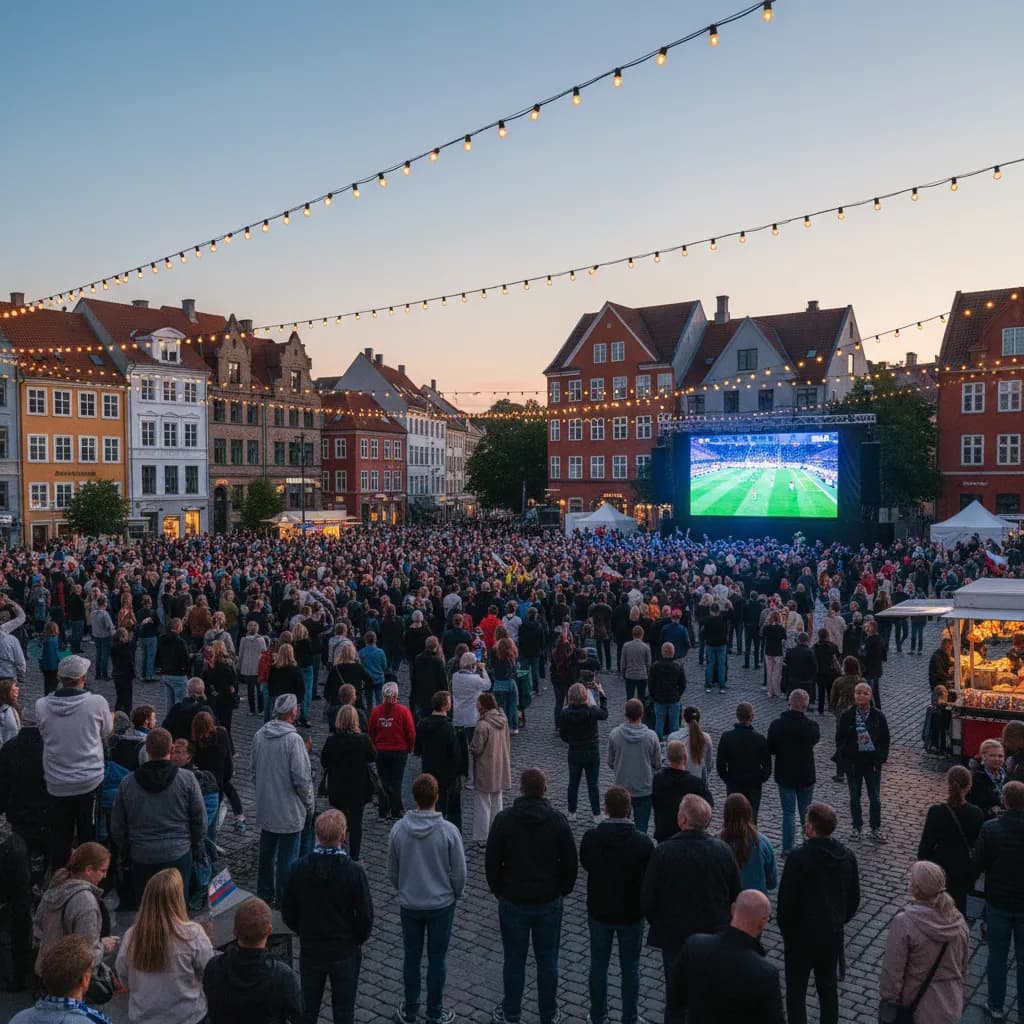
The impact of Norway's World Cup run on the nation itself has been extraordinary. Norwegian state broadcaster NRK reported that the Brazil match drew 2.8 million viewers — in a country of 5.5 million people, this represents over 50% of the entire population watching simultaneously. Bars and restaurants in Oslo, Bergen, Trondheim, and Stavanger have been packed for every match, with many venues installing outdoor screens to accommodate demand. The Norwegian crown strengthened against the euro and dollar during the tournament, which economists have attributed in part to increased national optimism and tourism interest. Norwegian Prime Minister Jonas Gahr Store attended the Brazil match in Miami and was photographed crying in the stands after Haaland's winning goal.
Comparisons: South Korea 2002, Croatia 2018
Norway's run has been compared to two previous World Cup fairytales: South Korea's run to the semifinals as co-hosts in 2002 and Croatia's journey to the final in 2018. The South Korea comparison is apt in terms of national impact — both countries experienced a surge of patriotic emotion that transcended sport. The Croatia comparison is more relevant tactically — both teams were built around a core of elite European-based players managed by a coach (Zlatko Dalic for Croatia, Solbakken for Norway) who prioritized tactical cohesion and collective spirit over individual brilliance. Norway's advantage over both predecessors is Haaland — neither South Korea nor Croatia had a player of his caliber, and his presence gives Norway a genuine chance of winning any single match.
The England Quarterfinal: Destiny Awaits
Norway's quarterfinal against England is a match loaded with sub-plots. Haaland vs Kane: the Premier League's two greatest strikers of the past decade. Odegaard vs his Arsenal teammates: the Norwegian captain facing several of his club colleagues. Solbakken vs Carsley: the veteran Norwegian tactician against England's interim manager. Norway's record against England is poor — they have won just two of their 14 previous meetings, and never in a tournament setting. But records are made to be broken, and Norway have broken every record they have encountered at this World Cup. Whatever happens against England, Norway's 2026 World Cup campaign is already the greatest achievement in the country's sporting history. The question now is whether it can become something even more.
Tags: Norway, fairytale, World Cup 2026, 28 years, quarterfinal, Haaland, Odegaard, Solbakken, underdog, England
Sources consulted: ESPN · CBS Sports · FIFA · Yahoo Sports
All trademarks, team names, league names, and player likenesses mentioned in this article are the property of their respective owners and are used here for informational and editorial purposes only.
Ask Karpo First
Want to follow Norway's quarterfinal match or relive their tournament journey? Ask Karpo for Norway's complete match results, Haaland's goal-by-goal timeline, and the greatest underdog runs in World Cup history.