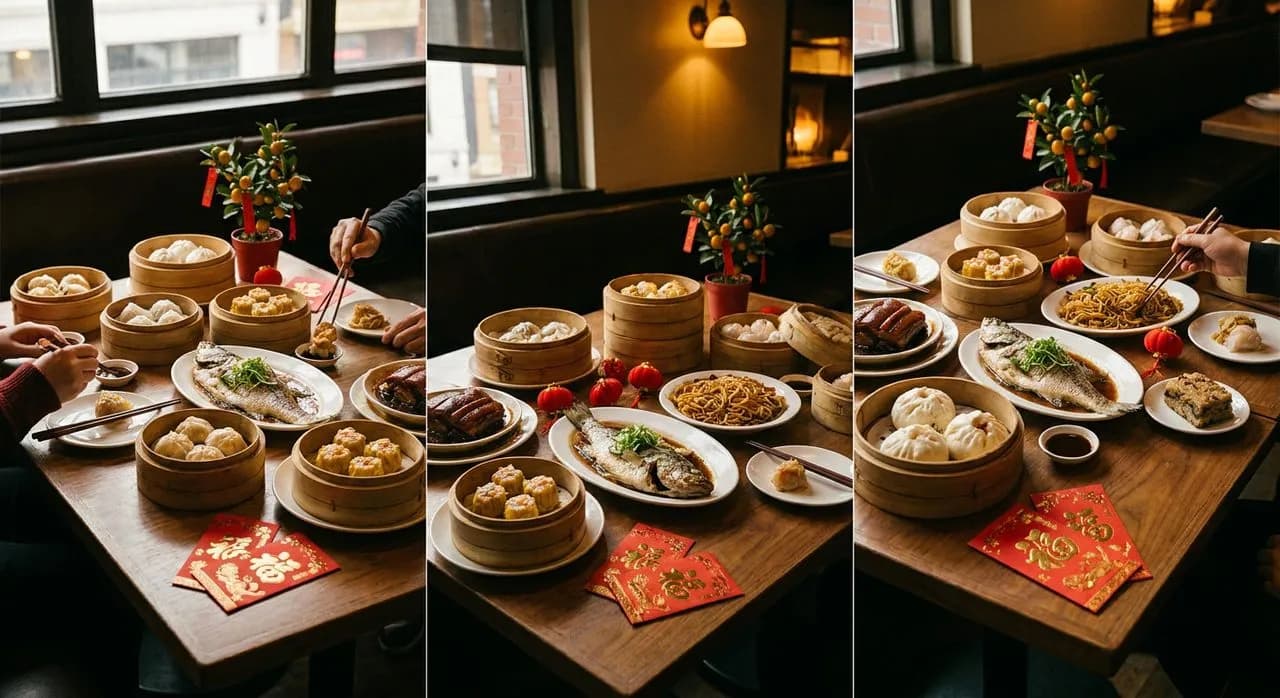
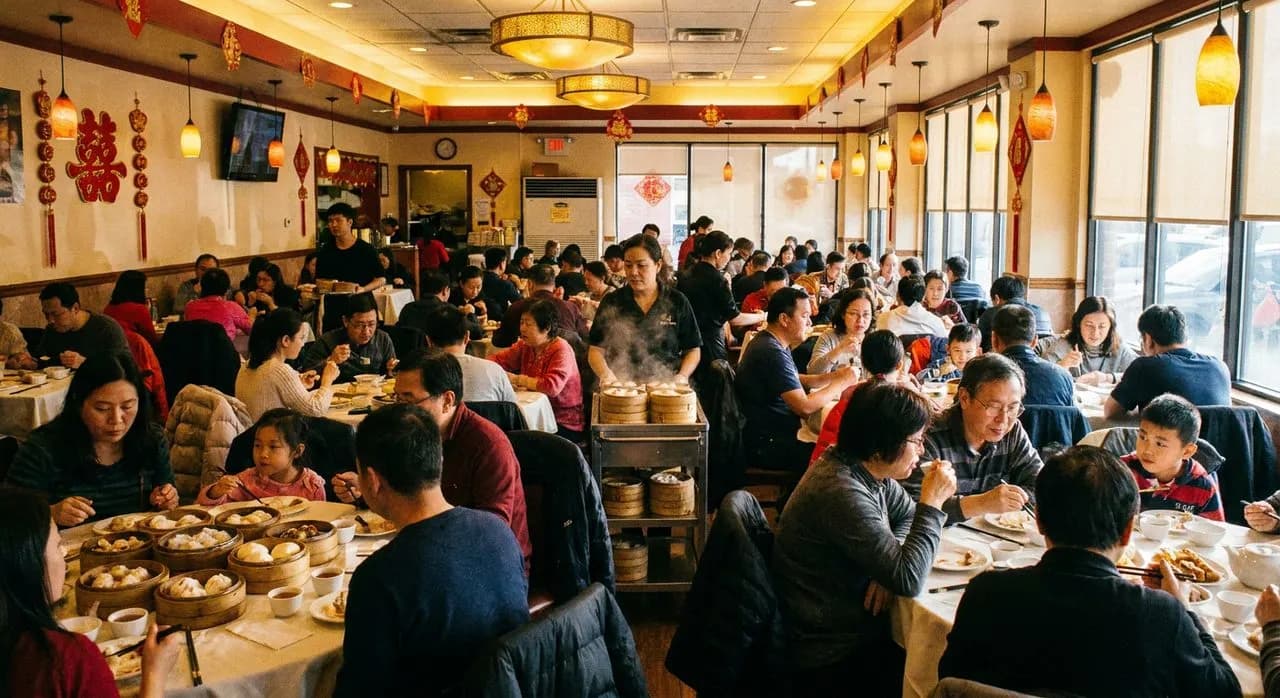
The first morning of the year in Flushing Queens unfolds in clouds of steam and the clatter of cart wheels on linoleum. While much of the city nurses hangovers or sleeps off champagne, the dim sum halls along Main Street and Roosevelt Avenue hum with a different kind of celebration—one rooted in luck, longevity, and the stubborn optimism that comes with eating well at dawn. Two establishments in particular are known for New Year's Day service that draw families who've held reservations since mid-December. The tables fill with grandmothers appraising char siu bao and uncles debating turnip cake. It's loud, purposeful, and utterly without pretense. The servers move with practiced efficiency, weaving between tables with trays held high, navigating the narrow aisles as if choreographed.
The Turnip Cake Window
If there's one cardinal rule to new years day dim sum in this neighborhood, it's this: order the turnip cake immediately. Lo bak go appears on New Year's Day only, made in limited batches that reflect both tradition and kitchen logistics. The pan-fried squares—crisp at the edges, yielding and faintly sweet inside, studded with bits of lap cheong—sell out by 11:30am, and once they're gone, that's it. No second run. No substitutions. The next batch won't emerge until next New Year's Day.
Regulars know to flag down the cart or put in a verbal order with the floor manager the moment they sit down. The turnip cake carries symbolic weight—radish for good fortune, the coin-like rounds a nod to prosperity—but more than that, it's just exceptionally good. The kitchen uses a higher ratio of preserved meat this one day, and the result is richer, more savory, more worth the year-long wait. Some families order two or three portions at once, knowing they won't have another chance for twelve months. The texture alone—that contrast between the golden, lacquered exterior and the soft, savory interior—justifies the early morning pilgrimage.
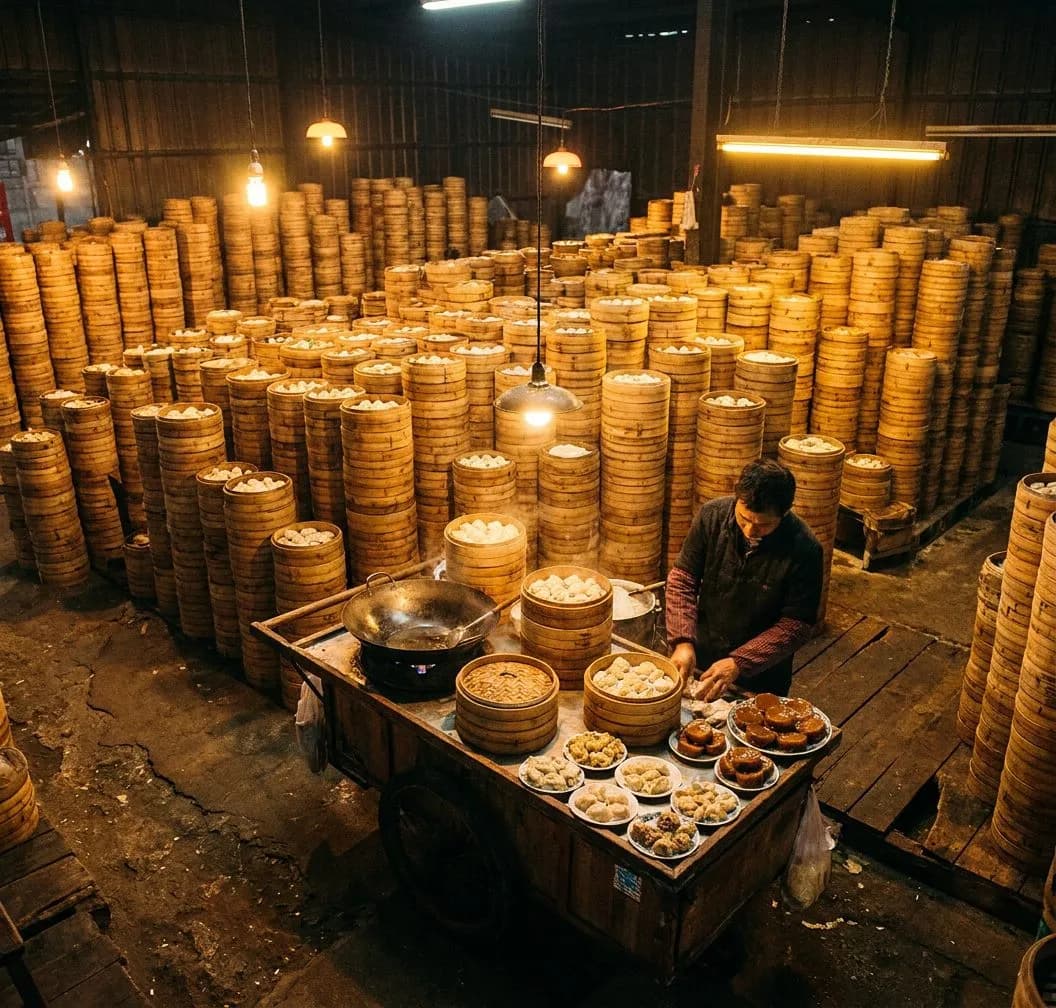
Counter Seats and the Thirty-Five Minute Gambit
Most tables are spoken for weeks in advance, but there's a workaround for the determined walk-in. Some counter seats along the front window turn over quickly. No reservations accepted. First-come seating only. The rhythm is brisk but not unkind.
Arrive before 9:30am and you'll likely snag a stool within twenty minutes. The view isn't romantic—fluorescent light, Formica, the occasional bus rumbling past—but the food arrives faster here than at the family tables in back, and you're close enough to the kitchen to hear the wok hiss and smell the scallion oil before it hits the dining room. Solo diners and couples often prefer this perch. You eat, you pay, you leave satisfied. It's dim sum as efficient ritual. The counter also offers a vantage point for watching the entire operation unfold—the dance between kitchen and floor, the steady procession of steamers, the way servers read a table's needs from three paces away.
The Lucky Eight
There's an off-menu offering that appears just once a year, and you have to know to ask for it by name. Request 'the lucky eight'—no English translation on the board, no cart announcement—and the server will nod and return with a steamer basket holding eight dumplings, each variety chosen to symbolize a different aspect of prosperity. Shrimp for happiness. Pork and chive for wealth. A single vegetable dumpling for health. The combination is available only on January 1st, and it's become something of a shibboleth among families who've been coming here for decades.
The number eight itself is no accident—ba in Cantonese sounds like the word for fortune, and the dumplings are arranged in the steamer like petals. It's the kind of detail that doesn't announce itself, the sort of thing you learn from your mother or overhear at the next table. Ordering it signals you're in on the tradition, that you understand dim sum as more than brunch.
What Else Arrives
Beyond the headliners, the rest of the New Year's Day menu holds steady: har gow with translucent skins, siu mai topped with roe, sticky rice wrapped in lotus leaf. Nian gao, the sweet rice cake that symbolizes ascending prosperity—nian nian gao sheng, higher every year—comes pan-fried with egg or steamed plain. Taro puffs shatter at the first bite. Custard buns ooze their golden filling if you're not careful.
The carts still circulate, though ordering via checklist has become more common in recent years. Either way, the pace is relentless. Teapots are refilled without asking. Plates stack up. The noise level rises as the dining room fills—Cantonese and Mandarin and English in a steady wash of conversation. Outside, the winter light is flat and pale. Inside, the air smells like soy sauce and sesame oil and the faint brine of oyster sauce. Servers stamp cards with practiced efficiency, calculating totals with mental math that would shame a calculator. The rhythm never breaks, even as the dining room reaches capacity and the wait list grows.
The Walk from the Station
Emerging from the Main Street–Flushing 7 train station on New Year's morning is its own kind of transition. The elevated platform overlooks a neighborhood already in motion—delivery trucks double-parked outside produce markets, shop owners hosing down sidewalks, the smell of roasting chestnuts from a corner vendor who's been working the same spot for fifteen years. The walk to either dim sum palace takes less than five minutes, but it passes through layers of commerce and community that feel worlds away from Manhattan's hungover quiet.
Bakeries display trays of pineapple buns and egg tarts in their windows. Herbal medicine shops arrange dried goods in wooden drawers. The fishmongers on the side streets have already been open for hours, their tanks bubbling with live crabs and lobsters. By the time you reach the dim sum hall, you've walked through a neighborhood that treats January 1st not as a day of recovery, but as a day of deliberate beginning. The dim sum itself is just the centerpiece of a larger ritual of purposeful activity, a collective decision to meet the new year head-on rather than ease into it.
Why January First Matters
There's a school of thought that says Lunar New Year is the "real" new year, and that the January 1st celebration is a Western graft. But traditions aren't static, and immigrant communities have always layered calendars. For many Flushing families, the first day of the Gregorian year has become its own meaningful marker—a chance to gather before the lunar festivities, to eat foods steeped in symbolism, to start the year in a room full of people doing the same. It's a doubling of luck, not a dilution.
The dim sum palaces understand this. They plan for it. They make the turnip cake in those small, deliberate batches. They hold the counter seats open. They remember that ritual, even transplanted and adapted, still counts for something when it's performed with care.
Practical notes
Both dim sum halls are within a few blocks of the Main Street–Flushing subway station (7 train). Street parking is scarce; the municipal lot on Prince Street is your best bet. Service runs 9am to 3pm on January 1st only—verify hours directly if planning for late 2026. Expect waits of 45 minutes or longer for tables after 10am unless you've reserved ahead or can snag one of the counter seats. The dining rooms are on ground level and accessible, though restrooms may require navigating a narrow hallway. Bring cash or a card; both are accepted. Dress is casual. Arrive hungry.
Tags: #NewYearsDayDimSum #FlushingQueens #DimSumNYC #FlushingFood #LunarNewYear #QueensEats #NYCTraditions #RightOnTime #Winter2026 #CounterCulture #TurnipCake #LuckyEight #MainStreetFlushing #DumplingCulture #NewYearsNYC
Please drink responsibly. Must be of legal drinking age.
Sources consulted: Dim sum · Flushing, Queens · MTA - Getting to Flushing · Best Dim Sum in NYC · NYT Food
All trademarks are the property of their respective owners.