 Haaland Has Seven Goals and Norway Runs Entirely Through Him
⚽️2026 FIFA WORLD CUP

New to Soccer? An American's First World Cup Match Playbook
Navigate your first World Cup match with confidence: when to stand, what to chant, and how to decode the beautiful game's unwritten rules.
The Offside Rule, Demystified in Thirty Seconds
Offside is the ghost that haunts every new fan's first match. The whistle blows, the crowd groans, and you're left wondering what invisible line was crossed. Here's the simplest version: an attacking player can't be closer to the goal than the second-to-last defender when the ball is passed forward to them. Think of it as a no-cherry-picking rule—you can't camp out by the goal waiting for a long ball.
New to soccer? Ask Karpo for a first-timer's guide to your first World Cup match.
In practice, you'll see attackers timing their runs to stay level with defenders until the exact moment the pass is played. The linesman—now called the assistant referee—watches this dance along the touchline, flag ready. When that flag goes up, the play stops, and possession flips. You don't need to master every nuance before kickoff; just knowing this much puts you ahead of half the bar-stool experts.
The beauty is that modern video assistant referees review tight calls, so the controversial ones get a second look. Your job as a spectator is simpler: when the flag stays down and your side breaks through, stand up and roar. When it goes up against you, join the collective sigh and settle back in. That's the rhythm.

When to Stand, When to Sit, When to Lose Your Mind
Soccer crowds operate on an unspoken contract. You stand when the ball enters the attacking third with real menace—a cross whipped in, a striker turning a defender, a shot winding up. You stand for corner kicks and free kicks near the box. You stand, obviously, when the net ripples and the stadium erupts. Between these moments, you sit, you watch, you lean forward.
In the supporters section—the designated home of the most committed fans—standing is the default. Drums pound, flags wave, and songs roll without pause for ninety minutes. If you're new and want to feel the full voltage, buy a ticket there. If you prefer to ease in, choose seats in the middle tiers where you can stand for the big moments and sit to catch your breath. No one will judge you for staying seated during a midfield passing sequence; they will judge you for blocking sightlines during a breakaway.
The exception: when your team scores, all bets are off. Jump, hug strangers, spill a little beer. It's the one moment where restraint is the only sin. Then, as the players jog back to the center circle, you'll notice the whole stadium exhales and resets. That's your cue to do the same.
Chants, Songs, and the Art of Collective Noise
Every national team carries a sonic identity. Some chants are ancient, passed down through generations; others are born in the stands that afternoon. You don't need to memorize a hymnal before you arrive. Listen for the first few minutes, catch the rhythm, mouth along. By the second half, you'll be shouting with the best of them.
The most universal chant is the team name, clapped or stamped in syllables. Three claps, then the name. Repeat until the goalkeeper takes a goal kick. Beyond that, you'll hear call-and-response songs, often set to pop melodies or old folk tunes. The supporters section leads; the rest of the stadium echoes. If you're lost, just clap on the beat and add volume. Participation counts more than perfect pitch.
A word on the wave: it's divisive. Purists consider it a distraction from the match. Casual fans love it. If it comes around to your section, you're free to stand or stay seated. No one's checking papers. What matters is that when your side wins a corner or the opposing keeper fumbles, you're ready to raise the decibel level until the roof rattles.
What to Eat, Drink, and Carry Into the Stadium
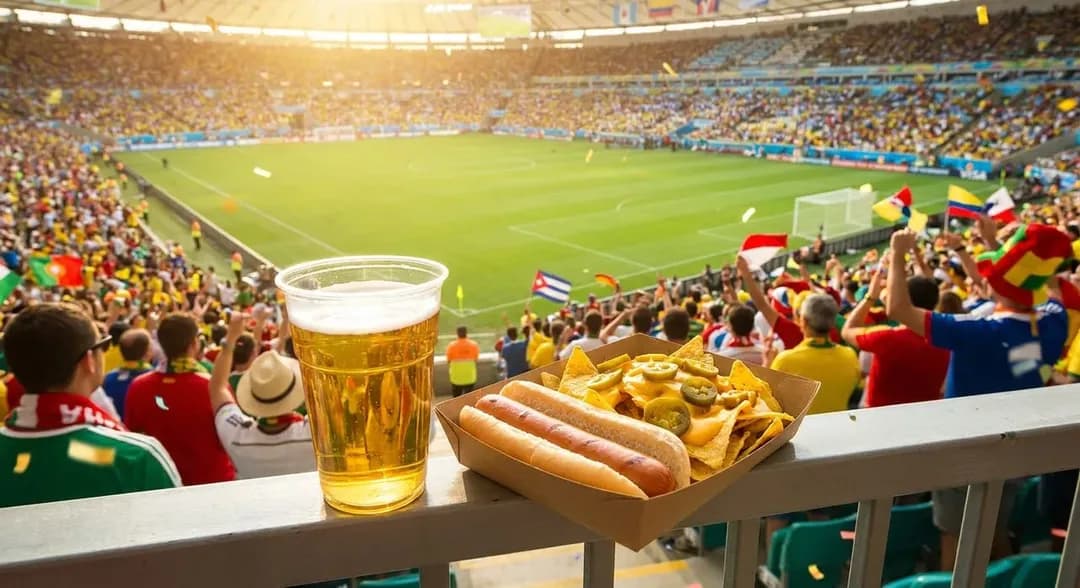
World Cup stadiums in 2026 will serve the usual American sports concessions—hot dogs, nachos, pretzels—but also nod to the host nation's flavors and the visiting teams' fanbases. Expect tacos in Texas, poutine if you're up in Canada, and plenty of international food trucks outside the gates. Arrive early enough to explore the perimeter; the best bites often live in the fan zones and plazas, not inside the bowl.
Alcohol will be available at most venues, though policies vary by stadium and local law. Beer lines swell before kickoff and at halftime, so plan accordingly. If you're in a supporters section, note that some clubs and tournaments restrict alcohol sales there to keep the focus on the chants. Hydration matters more than you think—summer sun, adrenaline, and ninety minutes of standing will dry you out faster than a February flight.
Pack light. Most venues allow small bags, but security lines move faster if you carry only essentials: ticket, ID, phone, sunscreen, a hat. Scarves are encouraged; they double as sun protection and a way to signal your allegiance. Flags on poles are typically banned inside the seating bowl, but small handheld versions pass. Leave the air horn at home—your voice is louder anyway.
Getting to MetLife for the Final Without Losing Your Patience
The 2026 World Cup final on July 19 at MetLife Stadium in East Rutherford will be the biggest single-day sporting event North America has hosted in years, and the logistics reflect that scale. There is no on-site parking for spectators, and tailgating is prohibited. Instead, fans will rely on official shuttle services and NJ Transit trains running from Manhattan, Hoboken, and other regional hubs. Pre-purchase your rail tickets and keep your return wristband—re-entry lines after the match will be long and unforgiving.
If you're staying in New York City, budget at least ninety minutes each way for the journey. The stadium sits in the Meadowlands, a sprawling complex that feels more like an airport campus than a neighborhood. Once you're there, the experience is efficient but industrial: wide concourses, clear sightlines, and a crowd that will swell past eighty thousand. The final will feature the tournament's first-ever halftime show, curated by Coldplay's Chris Martin and featuring Madonna, Shakira, and BTS. Plan your bathroom and concession runs accordingly—halftime will be a spectacle, not a break.
For those who want to soak in the atmosphere without the trek, New York and New Jersey will host multiple free fan zones. The Fan Village at Rockefeller Center, the Jersey Fan Hub at Sports Illustrated Stadium in Harrison, the Queens Fan Zone at the USTA Billie Jean King National Tennis Center, and the indoor Dream Fan Fest at American Dream will all broadcast matches on big screens with food, music, and crowds. The Liberty State Park fan festival was canceled, so scratch that from your plans.
Reading the Room and Respecting the Ritual
Soccer fandom is tribal, but it's also surprisingly welcoming if you approach with curiosity rather than bravado. Wearing a neutral jersey or no jersey at all is fine; you're there to watch, not to pledge allegiance. If you do wear colors, be prepared for friendly banter and the occasional chant directed your way. It's theater, not threat. Smile, nod, keep your phone in your pocket during play.
When the national anthems play, stand. When a player goes down injured, the stadium quiets. When the referee makes a terrible call—and he will—boo with gusto, then let it go. The unwritten code is simple: passion is celebrated, but crossing into aggression or bigotry gets you ejected and possibly banned. Security at World Cup matches is tight, and tolerance for nonsense is zero.
After the final whistle, win or lose, the stadium empties slowly. Fans linger, singing, taking photos, processing what they just witnessed. If your team won, savor it. If they lost, the walk back to the train is a communal mourning. Either way, you've joined a global conversation that will continue in living rooms, pubs, and group chats for weeks. That's the real trophy.
Practical notes
- Pre-purchase NJ Transit tickets and keep your return wristband if attending the MetLife final—no on-site parking or tailgating allowed.
- Arrive at least ninety minutes early to navigate security, find your seat, and explore food options before kickoff.
- Pack light: ticket, ID, phone, sunscreen, hat, and a scarf; most stadiums restrict large bags and flag poles.
- Stand for attacking plays, corner kicks, and goals; sit during midfield build-up unless you're in the supporters section.
- Listen to chants for a few minutes, then join in—volume matters more than perfect lyrics, and participation is always welcome.
Your first World Cup match will be louder, faster, and more emotionally dense than you expect. You'll leave hoarse, sunburned, and possibly converted. The offside rule will still confuse you occasionally, and that's fine. What matters is that you showed up, stood when it counted, and added your voice to the roar. By the time the final whistle blows, you'll understand why people plan their summers around this tournament and why a ninety-minute match can feel like both a heartbeat and a lifetime.
Tags: #WorldCup2026 #FirstSoccerMatch #MetLifeStadium #SupportersCulture #OffsideExplained #StadiumEtiquette #FanZones #NewYorkCity #NewJersey #SoccerChants #NJTransit #MatchDayGuide #SportsTravel #GlobalFandom #BeautifulGame
Please drink responsibly. Must be of legal drinking age.
All trademarks are the property of their respective owners.
Ask Karpo first
Planning your first World Cup experience—or your fifteenth—comes with a thousand questions about tickets, transit, fan zones, and which matches are worth the trek. Ask Karpo first. We'll help you sort the logistics, find the best public watch parties, and build an itinerary that puts you in the right place at the right time, so you can focus on the roar of the crowd and the ball at your feet—or at least in front of your eyes.
Ask Karpo for more information.
Keep reading
- Haaland Has Seven Goals and Norway Runs Entirely Through Him
 World Cup Trophy Ceremony Timing Medals and Postmatch Celebrations
 Olise and France's Attack: The Semifinal Tactical Question