Monday, August 10, 2026, is a good day to treat a search term like mountain dew baja blast as a classroom exercise rather than a scavenger hunt. If a student, parent, or group chat is suddenly asking whether something is happening in NYC, the useful move is not to chase screenshots. It is to turn the question into a source-checking route: what is being claimed, who can confirm it, what public resource can help, and what is the backup if the claim falls apart. For back to school, that route can run through the New York Public Library, official city pages when accessible, and transit checks before leaving home. This plan does not assume any local appearance, promotion, endorsement, event, or special access.
Want a quick read on whether a school-season tip is worth the trip? Text Karpo before leaving, and ask for the source, access check, timing risk, and backup stop.

Turn curiosity into a research question
Start by writing the claim in plain language. “I saw mountain dew baja blast online” is not the same as “there is a confirmed public NYC event today,” and it is definitely not the same as “students can show up and get something.” The first is curiosity. The second needs a source. The third needs access rules, timing, capacity, and a current official page.
For a back-to-school plan, make the question useful: “Can we use this trend to practice checking public information in NYC, then finish one school task?” That keeps the outing grounded even if the original rumor is thin. A student can compare a social post, a search result, and an official source; a parent can set a time limit; and everyone can agree that no trip is worth taking without a backup.
Use a simple three-column note: claim, source, next action. If the source is a repost, the next action is to find a primary page. If the source is an official page, the next action is to confirm date, location, access, and whether the page has changed. If the source cannot be opened, record that too instead of pretending it confirmed anything.
Start with a reliable public resource
For NYC students, the New York Public Library is the cleanest public starting point in the supplied official information. NYPL promotes “Summer at the Library” with free events, programs for kids and teens, reading recommendations, and more. Its site also points users toward a free library card, online catalog, learning resources for kids, teens, and educators, events and classes for all ages, research help, e-books, multilingual resources, accessible resources, and Ask NYPL.
That matters because a library stop turns a flimsy trend into a productive errand. Instead of hunting for an unverified brand moment, use the search term as the topic for a short media-literacy exercise: search the catalog, ask what counts as a primary source, and save one credible resource for school. NYPL’s own pages should be checked before the visit because events, access details, and program pages can change.
If you are planning around the flagship building, NYPL’s official extract includes “Plan Your Visit” language for the Stephen A. Schwarzman Building. If you are planning around a neighborhood, use the library’s event and location pages directly rather than relying on a map screenshot. The goal is not to prove a viral claim; it is to leave with a verified public stop.
Compare primary reporting before opinions
A useful NYC source-checking route should include one friction point: what happens when an official-looking source is unavailable? In the supplied extracts, the NYC records page returns “Access Denied,” and the MTA site extract also returns “Access Denied.” That does not prove a policy, a schedule, a closure, or a problem for every user. It only proves that the accessed page did not provide usable information in that moment.
Teach students to mark that honestly. “Access denied” is not confirmation, and it is not a license to fill the gap with influencer commentary. It means the next action is to try again later, use an official app or page if available to you, or choose a plan that does not depend on an unverified detail. This is especially important in NYC, where timing, routing, and access can change the value of a trip.
Before opinions, look for primary reporting: an agency page, a library page, an organizer page, or a named public institution. If the only evidence for a mountain dew baja blast-related claim is a cropped image, a repost, or a comment thread, keep it in the “unconfirmed” column. Then proceed with the public plan you can verify.
Choose a study stop that fits the task
Pick the library task before picking the location. A high-school student may need a quiet research hour, a library card, or reading recommendations. A middle-schooler may need a kids-and-teens program or help finding an age-appropriate book. A caregiver may need multilingual resources, accessible resources, or a way to ask a reference question. NYPL’s official material points to all of those categories, but the specific branch, room, or event should be verified on NYPL’s current pages.
For a citywide plan, set a narrow window. Example: leave after checking official access information, spend 45 to 75 minutes on the research question, then stop. Do not let the trend consume the day. The win is a completed school-season task: a saved catalog item, a library card step, a short source comparison, or one reading recommendation that can survive the first week of class.
Crowd risk is real around libraries with major exhibitions, author talks, or central locations, but do not guess at crowd size. Instead, reduce exposure to uncertainty. Avoid building the plan around a single timed item unless it is confirmed on the official page. Keep the task portable: if the first location is too busy, move the same assignment to another NYPL resource or an online option.
Add one low-cost reset nearby
The reset should be public, flexible, and not dependent on a rumor. NYPL’s official information includes free events and activities for all ages, exhibitions, author talks and conversations, kids and teens programming, and online resources. That gives families a sensible alternative if the original search hook turns out to be noise.
A good reset is small: browse staff picks, look for a teen summer read, check an exhibition listing, or ask for research help. The official extract mentions the Polonsky Exhibition, “E-Books & More,” book recommendations, and Ask NYPL. Any of those can salvage the outing without requiring a purchase, a branded giveaway, or a guaranteed seat at a program.
Keep the nearby part realistic. In NYC, “nearby” can mean the same building, the same library system online, or a second stop only if transit and access look sensible before departure. Do not promise a café, store, or product availability unless an official current source confirms it. The back-to-school objective is a reset, not a detour into another unverified claim.
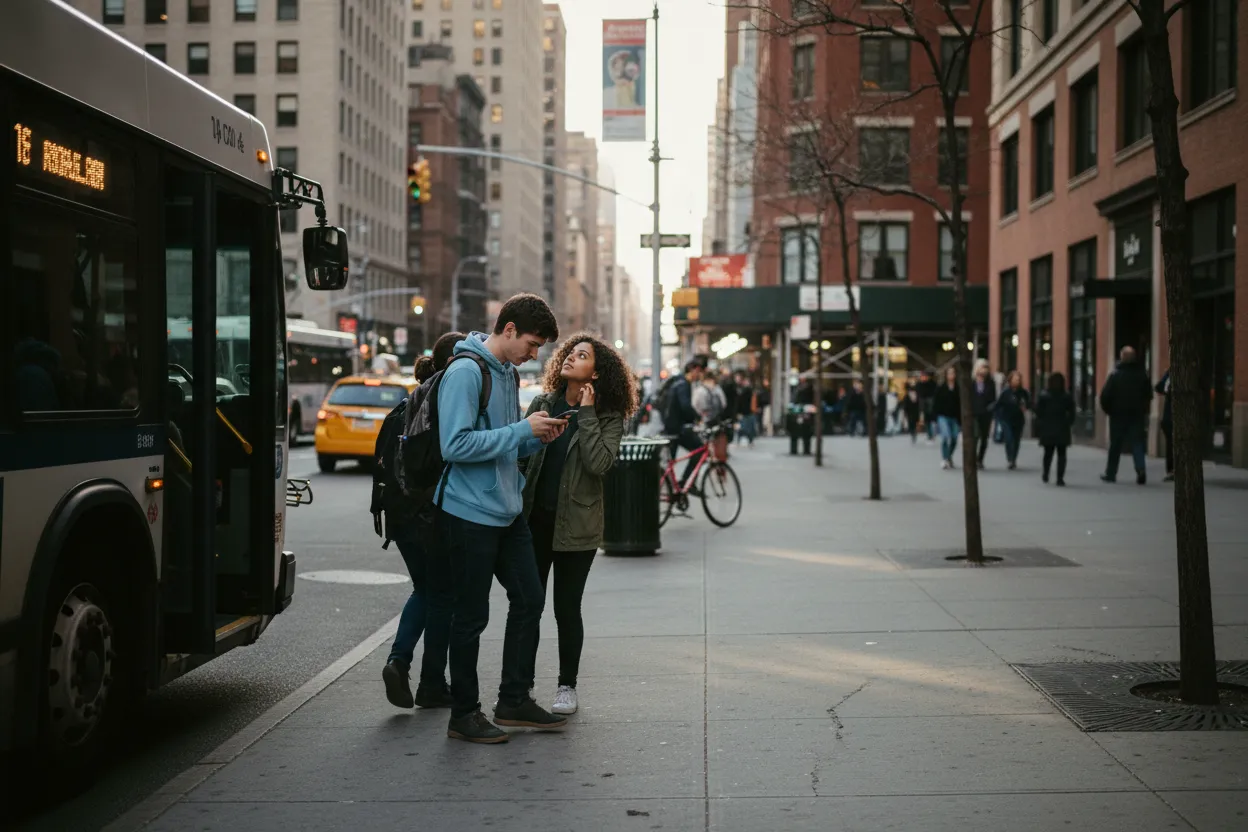
Verify hours and access before leaving
Make the final check boring on purpose. Open the official page for the library location or event. Confirm the date, time, location, online option if listed, and any access information shown there. NYPL’s extracted event examples include items at the Stephen A. Schwarzman Building and online, the Library for the Performing Arts, Inwood Library, and the Stavros Niarchos Foundation Library and online, but those listings must be checked on the live NYPL page before anyone travels.
Transit should get the same treatment. Because the supplied MTA extract shows only an access-denied response, do not use it here to claim routes, service status, fares, or schedules. Before leaving, use whatever official transit source you can access at that moment and build in time for a change of plan. If the route cannot be confirmed, choose a closer library option or an online NYPL resource.
End with a go/no-go rule. Go if the public stop is verified, the school task is clear, and the backup is acceptable. Do not go if the plan depends on an unconfirmed mountain dew baja blast appearance, a private-access assumption, or a screenshot with no primary source. In a city as busy as NYC, skepticism is not negativity; it is how you protect the afternoon.
Tags: #AskKarpo #BeforeYouGo #NYC #BackToSchool #NYPL #StudentResearch #MediaLiteracy #SourceChecking #LibraryCard #TeenReads #PublicResources #TransitCheck #CityPlanning #SchoolPrep
Sources consulted: nypl.org · nyc.gov · new.mta.info
All trademarks are the property of their respective owners.
Ask Karpo first
Ask Karpo first when a trend sounds local but the proof is thin. Send the claim, the source you saw, your starting neighborhood, and your deadline. Karpo can help you separate confirmed public information from hype before you spend time crossing NYC.