 Haaland Has Seven Goals and Norway Runs Entirely Through Him
⚽️2026 FIFA WORLD CUP
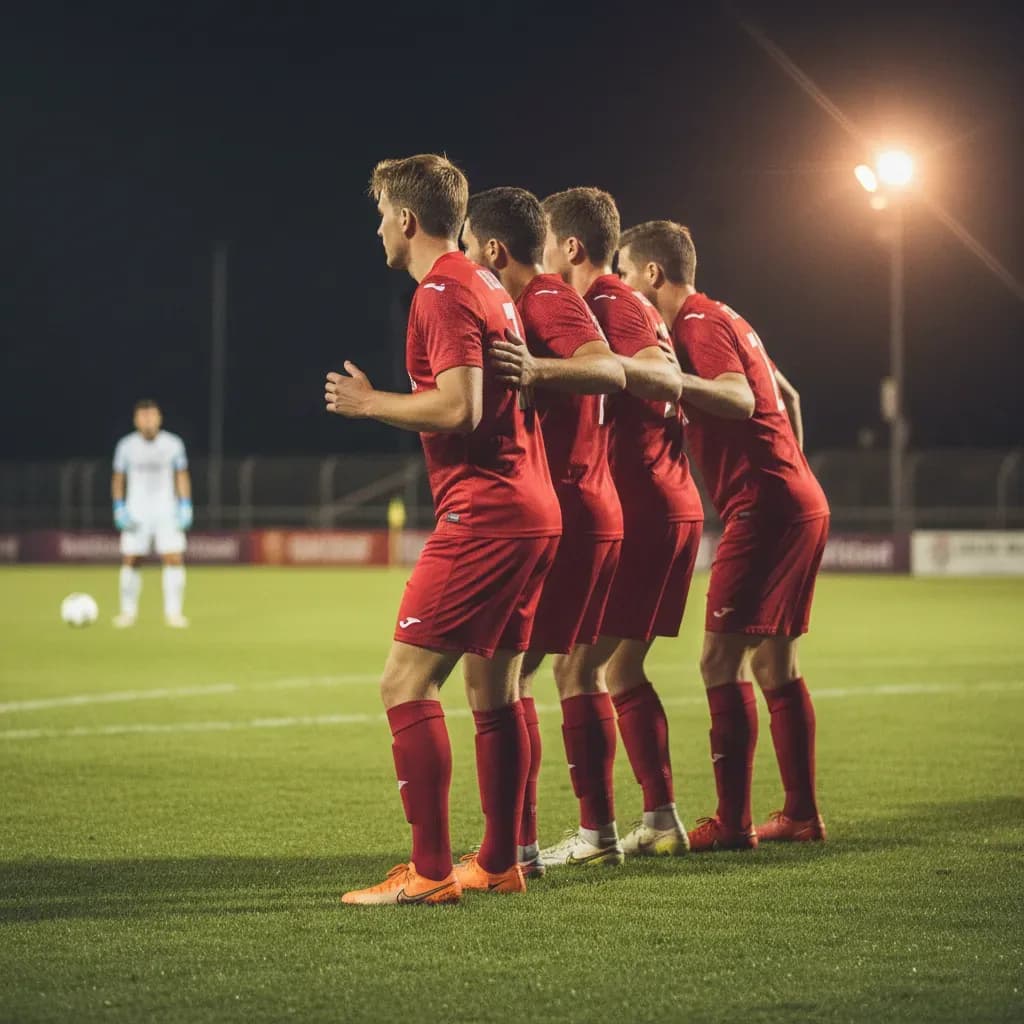
Morocco Have Conceded Zero Goals in the Group Stage and Their 2026 World Cup Run Is Starting to Look Unstoppable
Morocco completed the group stage of the 2026 FIFA World Cup with three wins, nine points, and zero goals conceded — the first team to achieve a perfect defensive group stage record since Italy in 2006 — before defeating the Netherlands on penalties in the Round of 32.
The Perfect Group Stage
In a World Cup of dramatic upsets, improbable results, and tactical chaos, Morocco have been the picture of controlled excellence. Three group stage matches against Canada, Belgium, and Croatia produced three victories — 1-0, 2-0, and 1-0 respectively — and zero goals conceded. The last team to complete a World Cup group stage without conceding was Italy in 2006, the year they went on to win the tournament. Morocco's achievement is arguably more impressive: their group contained a co-host nation (Canada), a top-10 ranked team (Belgium), and the 2022 World Cup semifinalist (Croatia). Morocco did not merely survive their group. They dominated it.
Updated August 2026: World Cup schedules, stadium policies, player statistics, broadcast details, and post-match records can change quickly. Check the linked FIFA, stadium, broadcaster, or tournament sources in the Sources section before using this guide for travel, tickets, viewing plans, or factual citation.
The Defensive Numbers That Stun Analysts
Morocco's defensive statistics from the group stage read like a video game on the easiest difficulty setting. Shots conceded: 18 across three matches. Shots on target conceded: 4. Expected goals against: 1.7 across 270 minutes. Tackles won: 87%. Aerial duels won: 71%. Interceptions per match: 14.3. Dribbles completed against them: 6 across three matches. The numbers reveal a team that does not merely defend well — they eliminate attacking opportunities before they materialize. Opponents do not test Yassine Bounou because they cannot get close enough to test him. The shots they do manage are from distance, at angles, and with the goal obscured by bodies.
The Blueprint: How Morocco Defend Without the Ball
Morocco's defensive system under Walid Regragui is built on three principles. First, compactness: the distance between Morocco's deepest defender and their highest midfielder averages just 28 meters, the smallest gap of any team at the tournament. This creates a defensive block so dense that attackers cannot find passing lanes through it. Second, pressing triggers: Morocco do not press everywhere, but when they do press — specifically when opponents receive the ball in wide areas or attempt to play out from the back — they commit five or six players to the pressing trap with choreographed efficiency. Third, transition speed: the moment Morocco win the ball, they transition from a 4-1-4-1 defensive shape to a 4-3-3 attacking shape within four seconds, using rehearsed passing patterns to exploit the disorganization caused by their pressing.
The Belgium Match: The Statement Performance
Morocco's 2-0 victory over Belgium in their second group match was the performance that announced them as genuine title contenders. Belgium, under Domenico Tedesco, entered the match having beaten Canada 2-1 in their opener. They were expected to dominate possession and create chances through Kevin De Bruyne and Jeremy Doku. Instead, Belgium completed just three passes in Morocco's penalty area across 90 minutes. De Bruyne was nullified by Sofyan Amrabat's man-marking. Doku attempted nine dribbles and completed two. Morocco's goals — an Ismael Saibari header from a corner and a Hakim Ziyech free kick that deflected off the Belgian wall — were both from set pieces, confirming that Morocco can score without needing to outplay opponents in open play.
Text Karpo Now: find a Morocco watch plan with current venue details, crowd expectations, and a backup screen near your route.

Building on 2022: Evolution, Not Revolution
Morocco's 2022 World Cup semifinal run in Qatar was built on similar defensive principles, but the 2026 version is more evolved. In 2022, Morocco relied heavily on Bounou's individual brilliance and defensive heroics — late blocks, goal-line clearances, and penalty saves. In 2026, the defensive system is so well-organized that Bounou is rarely required to make spectacular saves. He has made just four saves across three group matches — not because he is performing worse, but because the team in front of him is performing better. The evolution from reactive defending (2022) to proactive defending (2026) represents a significant tactical maturation under Regragui.
Can Morocco Win the World Cup?
The question that seemed absurd before 2022 is now being asked without irony. Can Morocco win the 2026 World Cup? Their defensive record suggests a team capable of shutting out any opponent. Their set-piece threat — they have scored five of their seven tournament goals from dead-ball situations — provides a reliable goal-scoring mechanism. Their squad depth, with 18 of 26 players featuring in Europe's top five leagues, is sufficient for the demands of a tournament that could require seven matches to reach the final. The obstacles remain significant: a potential quarterfinal against Brazil or Argentina, the physical demands of playing in Mexico's altitude in Monterrey, and the pressure of an entire continent's expectations. But Morocco have already proven, across two World Cups, that they thrive under pressure.
Tags: Morocco, World Cup 2026, zero goals conceded, group stage, Walid Regragui, Yassine Bounou, Belgium, defensive record, 2022 semifinal, title contenders
Sources consulted: CBS Sports · FIFA · Yahoo Sports · FIFA World Cup 26 match schedule and results · FIFA World Cup 26 tournament hub · ESPN FIFA World Cup
All trademarks, team names, league names, and player likenesses mentioned in this article are the property of their respective owners and are used here for informational and editorial purposes only.
Ask Karpo First
Think Morocco can go all the way to the final? Ask Karpo for Morocco's complete knockout path, a defensive stat comparison with past World Cup winners, and a preview of their next Round of 16 opponent.
Ask Karpo for more information.
Keep reading
- Haaland Has Seven Goals and Norway Runs Entirely Through Him
 World Cup Trophy Ceremony Timing Medals and Postmatch Celebrations
 Olise and France's Attack: The Semifinal Tactical Question