 Haaland Has Seven Goals and Norway Runs Entirely Through Him
⚽️2026 FIFA WORLD CUP
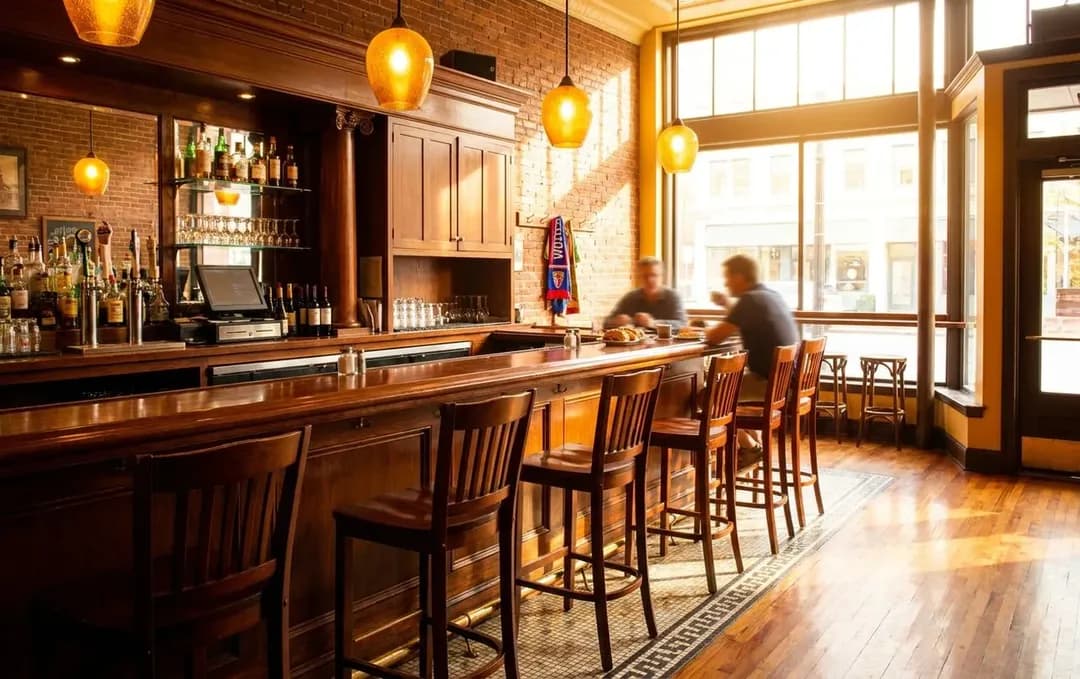
Where Moroccan Fans Gather in Boston After a World Cup Night
Boston's Moroccan fans turn neighborhood cafés and commuter hubs into jubilant gathering spots after every World Cup match, mint tea in hand.
The Commuter Rail Becomes a Victory Parade
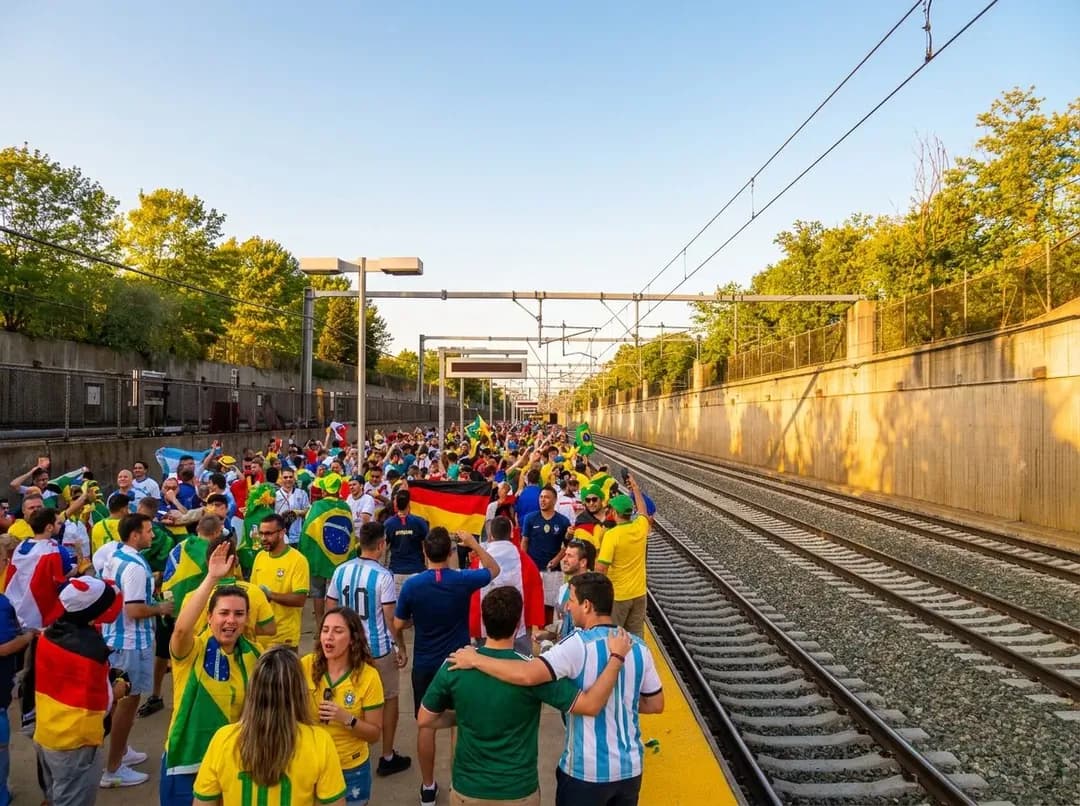
When Morocco plays at Gillette Stadium in Foxborough during the 2026 World Cup—part of the 48-team tournament running June 11 to July 19 across the USA, Canada, and Mexico—the real celebration begins on the commuter rail back to South Station. Fans in red-and-green scarves pack the purple line trains, chanting through the forty-minute ride, turning the utilitarian coaches into rolling street parties. Strangers become cousins. Phone videos loop the best moments. Someone always has a drum.
Out in Boston after the match? Ask Karpo where Moroccan fans keep the night going.
The platform at South Station becomes a second stadium. Fans spill onto the concourse, flags draped over shoulders, still singing. It's here that plans solidify: who's heading to the tea house in Allston, who's meeting cousins in Dorchester, who's grabbing late-night tagine in Cambridge. The energy doesn't dissipate—it migrates, following the T lines deeper into neighborhoods where the night is just beginning.
This isn't new. Boston's Moroccan community has been gathering this way for decades, but the World Cup amplifies everything. The 2026 tournament brings matches close enough to attend in person, and the commuter rail becomes the thread stitching stadium to city, spectacle to intimacy.
Tea Houses That Stay Open Past Midnight
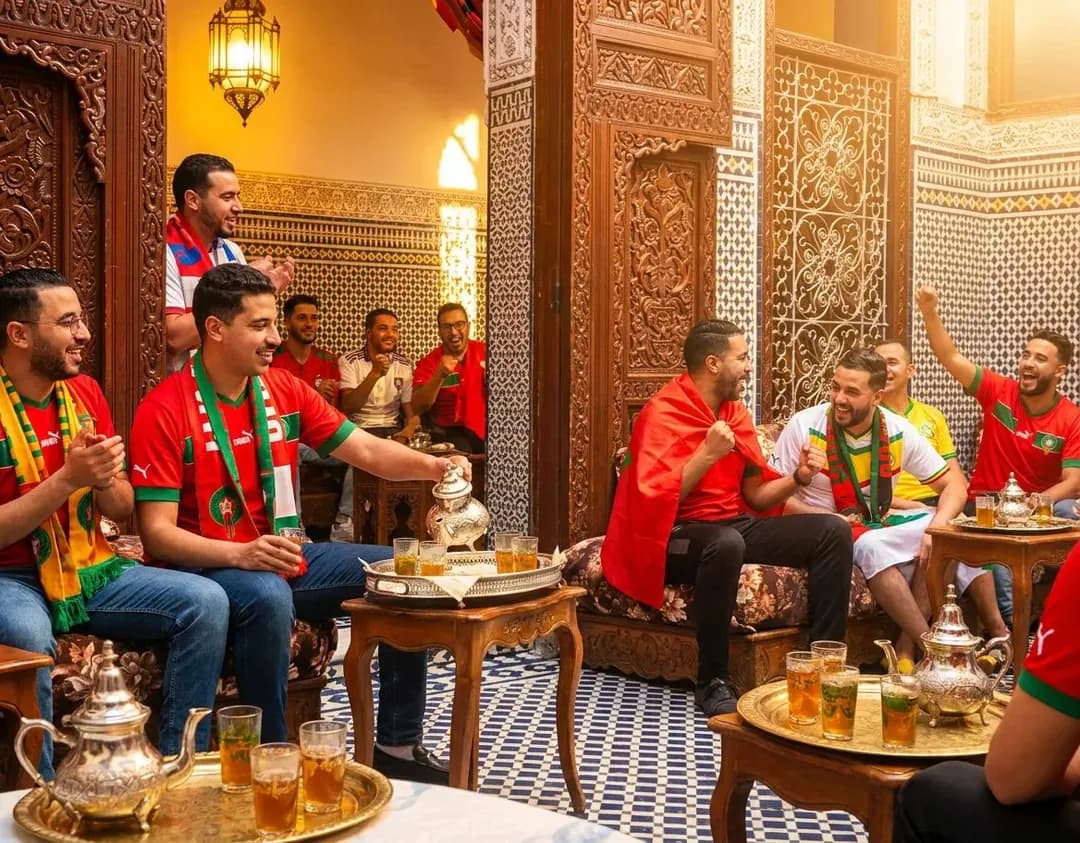
In pockets of Allston, Cambridge, and Dorchester, certain cafés understand the assignment. They stock extra mint, brew pots of sweet tea in advance, and prop the doors open when they hear the roar approaching. These aren't tourist spots—they're living rooms that happen to serve the public, with mismatched chairs, satellite TV still replaying highlights, and proprietors who know every regular by name and hometown province.
The tea arrives in ornate glasses, poured high to aerate, sweetened to the edge of syrup. Plates of dates and almond cookies appear without asking. Conversations toggle between Darija, French, and English, sometimes all three in a single sentence. Older men play cards in the corner; younger fans huddle over phones, texting friends still stuck in stadium traffic or already at other gathering spots across the city.
These spaces become archives of collective memory. The 2022 semifinal run lives on in framed photos and faded scarves pinned to walls. After a 2026 match, someone will add another Polaroid, another ticket stub, another layer to the palimpsest of diaspora and devotion.
Where the Tagine Comes Out After Eleven
A handful of North African restaurants in Boston have learned to keep the kitchen fires burning late on match nights. The tagines—conical clay pots of lamb with prunes, chicken with preserved lemon, vegetables in saffron broth—emerge steaming just as the crowds arrive from Gillette or from watch parties across the city. Bread is torn, not cut. Plates are shared, not portioned.
These meals stretch for hours. There's no rushing a proper celebration, no American efficiency applied to joy. The restaurants dim the lights slightly, turn up the music, let the tables push together into long communal arrangements. Strangers toast with mint tea or, in the spots with liquor licenses, Casablanca beer and Moroccan wine that tastes of Atlas Mountain sun.
The food itself becomes part of the narrative. A well-made tagine is a tether to home, a way of saying we carry this with us, we share this with you. After a Morocco victory, every bite tastes a little better, every spice a little brighter.
Downtown Corners and Impromptu Street Festivals
When Morocco scores, downtown Boston hears it. Car horns erupt in syncopated rhythm. Fans pour out of apartments and restaurants onto Boylston, Tremont, Cambridge Street, waving flags the size of bedsheets. Traffic stops, not because of gridlock but because drivers are out of their cars, dancing in intersections. Police usually let it run its course—this is celebration, not chaos.
These impromptu gatherings have no official sanction, no permit, no schedule. They happen because joy demands witnesses and company. A street corner becomes a stage. Someone's car stereo becomes the sound system. A fire hydrant becomes a seat for an elder wrapped in the flag, grinning as young fans dance around him like a Sufi orbit.
By two in the morning, the streets quiet again. Flags are folded, voices are hoarse, and the city returns to its usual hum. But the memory lingers on that corner, a ghost of collective euphoria that anyone who was there can summon with a single phrase: remember that night?
The Diaspora Geography of a Match Night
Boston's Moroccan community isn't concentrated in a single neighborhood—it's diffuse, spread across Allston's student-dense blocks, Dorchester's family streets, Cambridge's commercial corridors. On World Cup nights, this geography becomes visible. You can trace the community's contours by following the flags, the honking, the clusters of red and green moving through the city like a river finding its tributaries.
Some fans head to specific cafés they've claimed as unofficial headquarters. Others follow cousins or friends to house parties in Malden or Quincy, where living rooms become viewing theaters and kitchens become all-night diners. The T and commuter rail are the arteries connecting these nodes, carrying fans from stadium to city, from public celebration to private joy.
This dispersal is part of the diaspora experience—community as network rather than neighborhood, connection as choice rather than proximity. The World Cup makes the invisible visible, turns the scattered into the gathered, if only for a few hours.
Planning Your Own Post-Match Pilgrimage
If you want to join the celebration after a Morocco match at Gillette, start by understanding the commuter rail rhythm. Trains back to South Station fill fast; stake out a spot on the platform early or prepare to stand the whole ride. Once downtown, follow the noise—literally. The loudest corner is usually the right corner.
For tea houses and late-night restaurants, ask around or trust your instincts. The best spots rarely advertise in English. Look for places with satellite dishes, with older men smoking shisha outside, with handwritten menus and no Yelp presence. If you're welcomed in, buy a round of tea, respect the space, and let the night unfold at its own pace.
The 2026 tournament runs through July 19, with the final at MetLife Stadium in New Jersey featuring the tournament's first-ever halftime show curated by Chris Martin with Madonna, Shakira, and BTS. But for Boston's Moroccan fans, the real final happens in the neighborhoods, in the tea houses, on the commuter rail home—wherever the community gathers to turn a match into a memory.
Practical notes
- Commuter rail from Gillette to South Station takes roughly 40 minutes; buy round-trip tickets in advance to skip lines
- Tea houses in Allston, Cambridge, and Dorchester often stay open past midnight on match nights—call ahead or just show up
- Bring cash; many smaller cafés and restaurants don't take cards, especially late at night
- If driving downtown after a match, expect street closures and impromptu celebrations—park on the outskirts and take the T in
- Respect the spaces you enter; these are community living rooms, not tourist attractions—buy tea, tip well, and let regulars set the tone
The 2026 World Cup will bring the world to North America, but for Boston's Moroccan community, it brings the world to their doorstep—and then invites that doorstep to celebrate. Whether Morocco advances deep into the tournament or bows out early, the gatherings will happen, the tea will pour, the flags will wave. These nights aren't just about football; they're about carrying home in your pocket, about finding your people in a cold city, about turning a match into a reunion. The stadium empties, but the celebration migrates, following the T lines and the commuter rail and the honking cars until it finds the corners and cafés where it truly belongs.
Tags: #MoroccoWorldCup #BostonSoccer #WorldCup2026 #MoroccanCommunity #GilletteStadium #BostonNightlife #NorthAfricanFood #MintTeaCulture #DiasporaBoston #SouthStation #AllstonCafes #DorchesterEats #CambridgeNights #WorldCupCelebration #BostonGatherings
Please drink responsibly. Must be of legal drinking age.
All trademarks are the property of their respective owners.
Ask Karpo first
Planning to catch Morocco at Gillette or join the post-match celebrations across Boston's neighborhoods? Ask Karpo first—we'll help you map the commuter rail timing, find the tea houses that stay open late, and connect you with the corners where the real victory parties unfold. Whether you're diaspora or just a fan of the beautiful game, we'll make sure you're in the right place when the final whistle blows and the city starts to sing.
Ask Karpo for more information.
Keep reading
- Haaland Has Seven Goals and Norway Runs Entirely Through Him
 World Cup Trophy Ceremony Timing Medals and Postmatch Celebrations
 Olise and France's Attack: The Semifinal Tactical Question