 Where to Eat Near Penn Station That Isn't a Chain
US Open 2026
Montreal Open Storylines To Follow At US Open 2026
How the Montreal Open's summer storylines could shape the action, crowds, and neighborhood energy around Flushing Meadows this August and September
The Montreal Open wraps each summer just days before the US Open begins, and the storylines that emerge from Canada—surprise semifinalists, injury comebacks, new rivalries, breakthrough performances—often carry straight into Flushing Meadows. While no player appearance is guaranteed until official draws are published, the momentum, form, and buzz generated in Montreal historically influence ticket demand, crowd energy, and the narrative texture of the US Open's opening week. For fans planning a visit to Queens between August 23 and September 13, 2026, understanding how to track that momentum and translate it into a practical, enjoyable day around Flushing Meadows Corona Park is just as important as knowing which subway line to take.
Text Karpo your match session, neighborhood start point, and appetite, and we will turn this US Open 2026 local scene into a live Queens plan.
What the Montreal Open tells us about US Open energy
The Montreal Open—officially the National Bank Open presented by Rogers—serves as the final major North American hard-court tune-up before the US Open. Players test fitness, refine tactics, and build confidence on a surface that closely mirrors the DecoTurf courts at the USTA Billie Jean King National Tennis Center. Fans who follow the Montreal results often arrive at the US Open with a sharper sense of who to watch during Fan Week practice sessions, which early-round matches might draw crowds, and which players are riding genuine form versus reputation alone. This is not about predicting winners—it is about planning your visit with context, so you can make smarter choices about when to arrive, which grounds passes to prioritize, and how to navigate the energy of a tournament that welcomes more than 700,000 fans over three weeks.
Fan Week as a low-pressure entry point
Fan Week runs August 23–29, 2026, offering practice sessions, qualifying matches, and a chance to explore the grounds before the main draw begins on August 30. If you are new to the US Open or traveling with kids, older adults, or anyone who finds large crowds overwhelming, Fan Week is often the better choice. Tickets are typically less expensive, lines are shorter, and the atmosphere is more relaxed. You can walk the grounds, test sight lines from different courts, locate restrooms and shaded seating, and get a feel for the food and retail layout without the intensity of a packed stadium match. Check USOpen.org closer to the event for Fan Week ticket availability and session times, and plan to arrive early in the day when temperatures are cooler and crowds are thinner.
Getting to Flushing Meadows: the 7 train and beyond
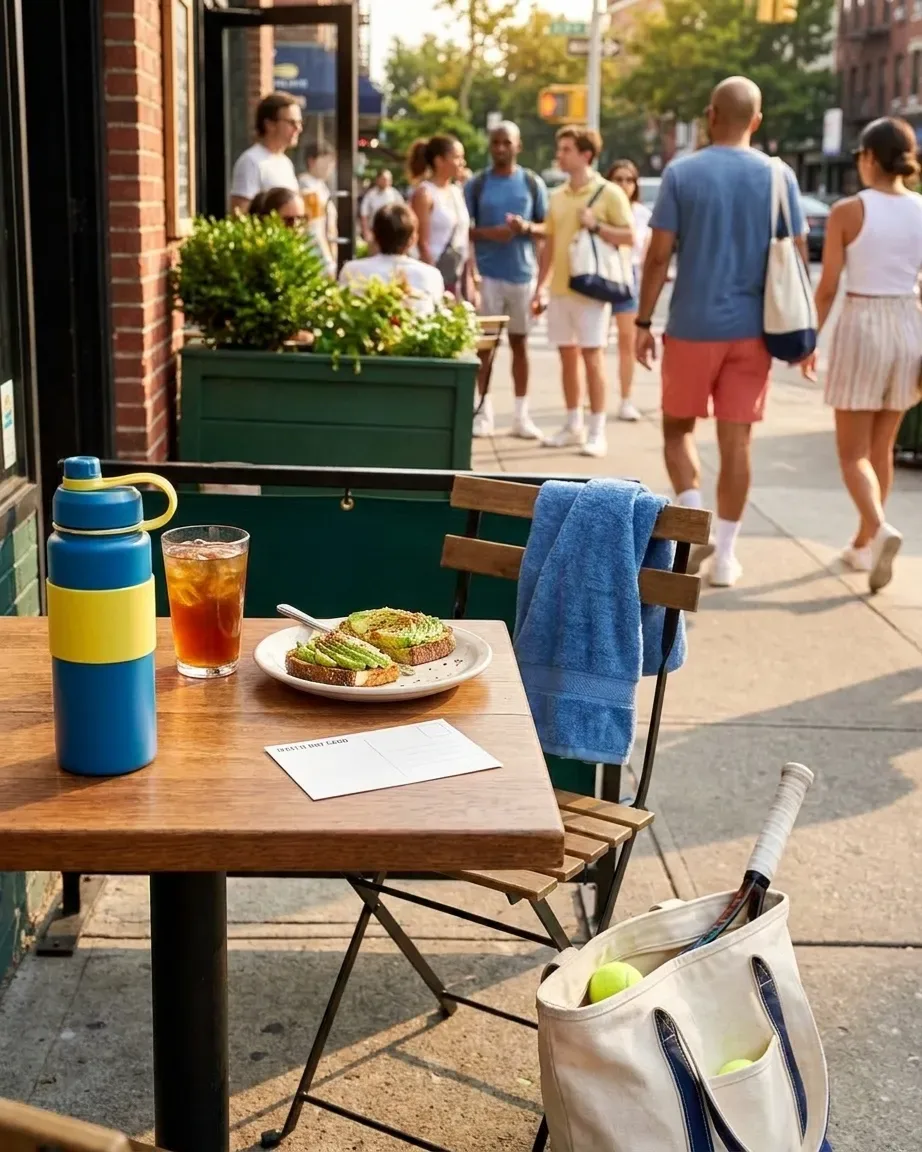
The 7 train is the backbone of US Open transit. The Mets–Willets Point station drops you a short walk from the tennis center's main gates, and the MTA typically runs extra service during the tournament. Expect crowded trains during evening sessions and weekend day sessions, and plan to stand if you board in Manhattan or Long Island City. If you are driving, official parking is available but fills quickly; check USOpen.org for parking pass details and consider arriving before 10 a.m. to secure a spot. Ride-share drop-off and pick-up zones are designated near the park's perimeter, but surge pricing and wait times can be significant during session changes. For a quieter arrival, consider taking the Long Island Rail Road to Mets–Willets Point, which offers a faster, less crowded alternative from Penn Station and other LIRR stops.
Neighborhood stops before or after your session
Flushing, Corona, and Jackson Heights offer some of the most diverse and affordable food scenes in New York City, and they are all within easy reach of the tennis center. If you arrive early or leave with time to spare, consider a detour. Flushing's Main Street corridor is known for hand-pulled noodles, soup dumplings, and bubble tea; Corona's 103rd Street and Roosevelt Avenue area offers Mexican bakeries, tacos, and fruit stands; Jackson Heights along Roosevelt Avenue and 74th Street is home to South Asian sweets, Colombian arepas, and Tibetan momos. These neighborhoods are not tourist zones—they are working communities—so be respectful, patient, and ready to navigate menus that may not be in English. Bring cash, especially for smaller vendors and bakeries, and do not expect table service or air conditioning at every stop.
Weather, shade, and hydration strategy
- Check the forecast the morning of your visit and plan for sun, heat, and occasional thunderstorms in late August and early September.
- Wear a hat, sunglasses, and sunscreen; much of the grounds offer limited shade, especially around outer courts.
- Bring an empty water bottle—refill stations are available throughout the grounds and using them saves money and reduces waste.
- If storms are forecast, know that play may be delayed or moved under the Arthur Ashe Stadium roof; check the US Open app or on-site screens for updates.
- Seek shade and rest in the food court areas or under the covered walkways between courts during the hottest part of the day, typically 1–4 p.m.
- If you are attending an evening session, bring a light layer; temperatures can drop quickly once the sun sets, especially in early September.
Respectful fan behavior and photo etiquette
Tennis has a culture of quiet respect during points, and the US Open is no exception. If you are seated in a stadium or grandstand, stay seated during play, silence your phone, and hold applause until the point is over. Flash photography is not permitted during matches, and ushers will enforce seating and movement rules strictly. On the outer courts, you can move more freely between points, but be mindful of players, officials, and other fans. If you are taking photos, keep your phone low and avoid blocking sight lines. The US Open is a public event in a public park, but it is also a workplace for athletes, staff, and volunteers—treat it accordingly.

What to confirm before you go
Do not assume anything about session times, ticket availability, player schedules, or transit conditions. Check USOpen.org for the latest session start times, grounds pass details, and any policy changes related to bags, food, or re-entry. Review the MTA's US Open transit guide for service alerts and planned track work that might affect the 7 train or LIRR. If you are planning to eat in Flushing, Corona, or Jackson Heights, search for recent reviews or call ahead to confirm hours—many small businesses adjust schedules during summer. And if you are visiting with accessibility needs, review the US Open's accessibility services page and contact guest services in advance to arrange accommodations. The more you confirm ahead of time, the less you will be surprised on the day.
Karpo is not affiliated with, endorsed by, or sponsored by the United States Tennis Association, the US Open, the National Bank Open, the MTA, NYC Parks, or any player, team, or official tournament entity. All trademarks belong to their owners.
Tags: #USOpen2026 #Queens #FlushingMeadows #KarpoFinds #Karpo #TennisTravel #NYCLocalLife #FanWeek #USTennis #NewYorkGuide #MontrealOpen #Buzz
All trademarks are the property of their respective owners.
Ask Karpo first
Want to know what is actually open, how to time the trip, and where to pause around Queens? Ask Karpo for the latest public US Open context, a respectful visitor plan, and a live route around Flushing Meadows before you head out.
Ask Karpo for more information.
Keep reading
- Where to Eat Near Penn Station That Isn't a Chain
 Andytown Coffee in the Outer Sunset: The Snowy Plover Explained
- Best Things to Do in Chicago: What the City Gives Away