The phrase monica mcnutt caitlin clark accountability is a search trend, but in New York it can be used more productively than as a scroll-war prompt. The useful question is where a student, fan, freelancer, or media worker can learn how sports narratives are built, corrected, challenged, and archived. NYC has several serious entry points: journalism schools with ethics and reporting curricula, media institutions with public programs, and research spaces where you can slow down and compare primary material. Treat this as a decision guide for choosing the right room, not a verdict on any person. Verify access before leaving, because calendars, course availability, ticketing, and building rules change.
Want a sharper read on sports-media accountability without wasting a trip? Text Karpo with your borough, schedule, and whether you need a class, archive, talk, or quiet research room.

Columbia Journalism School for Investigative Accountability Training
Columbia Journalism School is the strongest fit if your question is less about fandom and more about evidence: what can be proved, what is inferred, and what should be corrected. Its official academics page says M.S. students report from day one and that no master’s student graduates without an investigative foundation. For a sports-media accountability lens, that matters because hot takes often collapse sourcing, framing, editing, and institutional pressure into one messy argument.
The tradeoff is access. Columbia is a graduate school, not a drop-in sports bar with a standing debate night. Public events appear on its calendar, but dates and venues shift, and professional courses may fill or close. If you are not enrolled, use the events page first, then check whether a session is public, online, ticketed, or campus-restricted. Build a backup: if there is no suitable event, use Columbia’s published program descriptions as a standard for evaluating other talks.
Columbia Summer Investigative Reporting Course as a High-Bar Option
For working journalists, Columbia’s Summer Investigative Reporting Course is the serious, expensive route. The official page lists July 6-24, 2026, but also says the course is fully enrolled and applications are closed. That makes it a useful benchmark rather than a same-week plan on July 28, 2026. The curriculum focuses on developing hypotheses, finding documents and data, and testing claims through reporting, all central to accountability coverage.
The failure mode is assuming a professional course solves a public conversation. It will not help a casual reader today, and the listed tuition is $8,500 before travel or lodging. Use it only if you need career training and can wait for a future cycle. Before committing, verify the next application window, scholarship terms, prerequisite expectations, and whether your background fits. For everyone else, borrow the method: identify the claim, locate the evidence, separate commentary from reporting, and document what remains uncertain.
CUNY Newmark J-School for Local Accountability and Ethics Rules
CUNY’s Craig Newmark Graduate School of Journalism gives this topic a public-interest angle. Its catalog lists a Journalism M.A. with Local Accountability Reporting among the subject concentrations, plus required foundations that include law, ethics, safety, data, audio, and advanced reporting. That mix is useful for reading sports coverage as civic media: who is being framed, who benefits from the frame, and what evidence is missing.
The school’s code materials are also blunt about standards: no fabrication, no reckless disregard for factual accuracy, no undisclosed borrowed work, and no paying sources for access. For a student comparing sports commentary clips, those rules create a practical checklist. The drawback is that catalog pages are not event calendars. If you want to visit, confirm whether a program is open to the public, whether the 219 W. 40th St. building requires registration, and whether remote resources serve the same purpose.
NYU Journalism for Ethics, Practice, and Broadcast Framing
NYU’s Arthur L. Carter Journalism Institute is useful when the debate turns on performance, broadcast segments, and criticism. Its undergraduate information emphasizes both practical training and theoretical work, including professional ethics, media’s cultural politics, the journalist’s social role, and craft. The program requirements page lists Investigating Journalism: Ethics and Practice among the core courses, which is exactly the kind of lens needed for evaluating accountability language in sports media.
NYU is not automatically a walk-in option, and its own course pages warn that authoritative requirements live in the University Bulletin and that course information can change. That warning is helpful for readers too: do not treat one clip, syllabus page, or social post as complete context. If you are considering NYU programming, verify the current term, building location, enrollment status, and public event access. If you only need a one-day learning plan, use NYU’s framework to compare print, online, and broadcast choices.
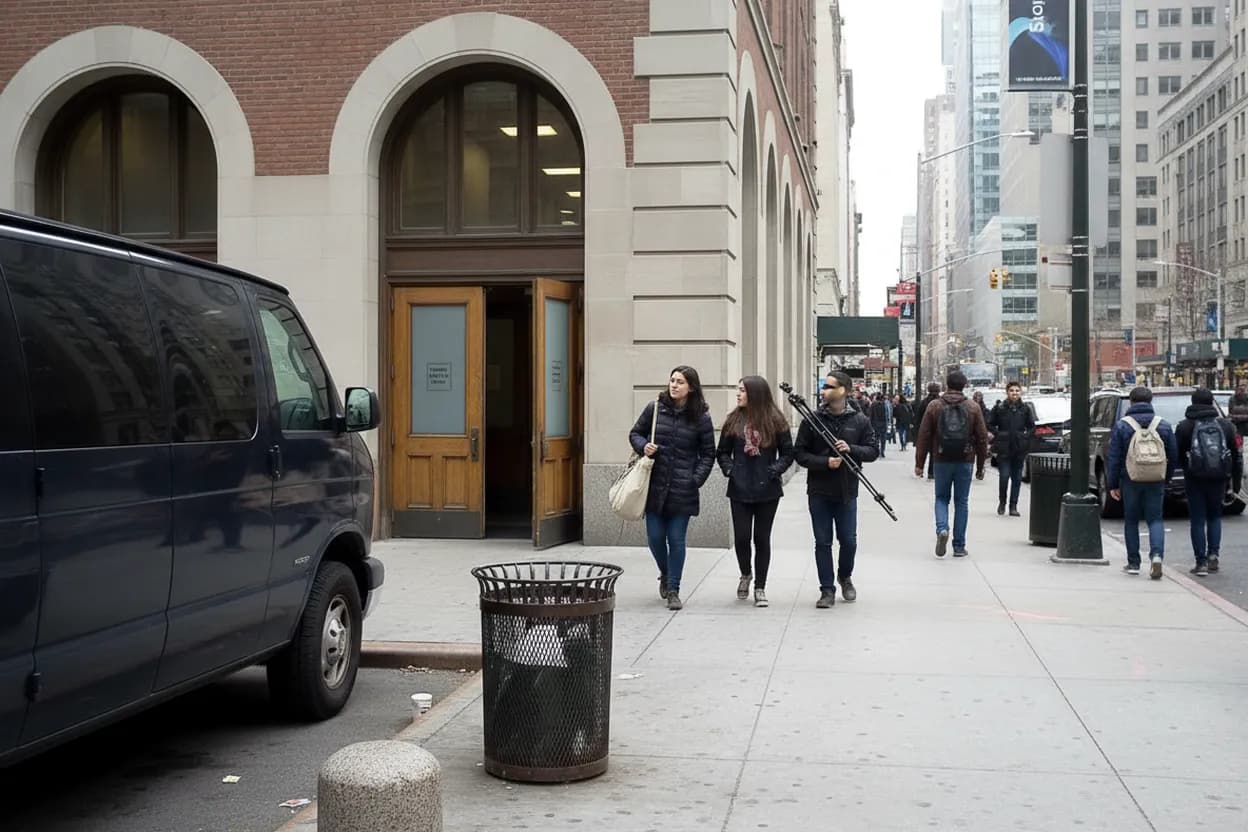
The Paley Museum for Watching Media Instead of Arguing From Memory
The Paley Museum at 25 West 52 Street is the most practical Midtown stop for someone who wants to study media as media. Its official visit page lists Wednesday through Sunday hours, noon to 6 p.m., with Monday and Tuesday closures. Admission is listed at $20, with reduced pricing for students, teachers, seniors, first responders, and veterans, and children under 12 free. The Paley Archive and screenings make it a better fit for comparing tone, format, and audience cues.
There are strict practical limits. Paley says timed-entry tickets are recommended, walk-ups depend on availability, there is no on-site dining, and food or beverages are not permitted inside. It also says photography and recording within the Paley Archive are prohibited, so plan to take written notes instead of capturing clips. Accessibility is a plus: the museum states all areas are fully wheelchair accessible, assisted listening devices are available at the Front Desk, and many archive programs include closed captioning.
NYPL Schwarzman Building for Quiet Source Checking Near Bryant Park
The Stephen A. Schwarzman Building of The New York Public Library is the right move when the conversation feels too fast. The official research page lists the flagship at Fifth Avenue and 42nd Street and describes it as a major research center with free and equal access. Some reading rooms are open for quiet study without an appointment, while some collections require advance consultation or an appointment. That distinction matters if you are chasing older media coverage, books, or archival material.
Use NYPL when you need pacing, not instant answers. Its regular hours vary by day, division hours may differ, and the page notes Midtown Renovation work that may cause noise or disruption. Accessibility details are concrete: public service units are wheelchair accessible, with accessible entrances at 40th Street and 42nd Street and elevator access to all levels. Before leaving, check today’s hours, whether your target division is open, and whether Ask NYPL can route your question faster than an in-person visit.
MTA Accessibility Checks Before Choosing a Midtown or Campus Route
Your best venue can fail if the trip does. The MTA app help pages describe trip planning with route options, departure or arrival settings, travel preferences, and accessible-trip selection. The app also has an Accessibility mode that emphasizes accessible subway stations and hides non-accessible ones in the station list. For this itinerary, that matters because Columbia, NYU, CUNY Newmark, Paley, and NYPL sit in different transit zones with different elevator realities.
Make transit verification the final editorial step, not an afterthought. MTA’s Status tab includes subway, bus, elevator, and escalator outage information, including active and planned outages. If a talk is time-specific, check service status before you leave and again before transferring. If a venue page says walk-ups are allowed, still assume capacity can close. The backup logic is simple: choose the research room for flexible time, the museum for confirmed tickets, and the school event only after registration and route access are both verified.
Tags: #AskKarpo #BeforeYouGo #NYC #SportsMedia #Journalism #MediaAccountability #CaitlinClark #MonicaMcNutt #BackToSchool #MediaLiteracy #NYU #ColumbiaJournalism #CUNYNewmark #PaleyMuseum
Sources consulted: Source 1: journalism.columbia.edu · Source 2: journalism.columbia.edu · Source 3: journalism.catalog.cuny.edu · Source 4: journalism.nyu.edu · Source 5: paleycenter.org · Source 6: nypl.org
All trademarks are the property of their respective owners.
Ask Karpo first
Tell Karpo your date, group size, budget, and starting neighborhood. We’ll check current access, timing, transit, and the cleanest plan for NYC universities with journalism programs, media watchdogs, sports journalism forums before you head out.