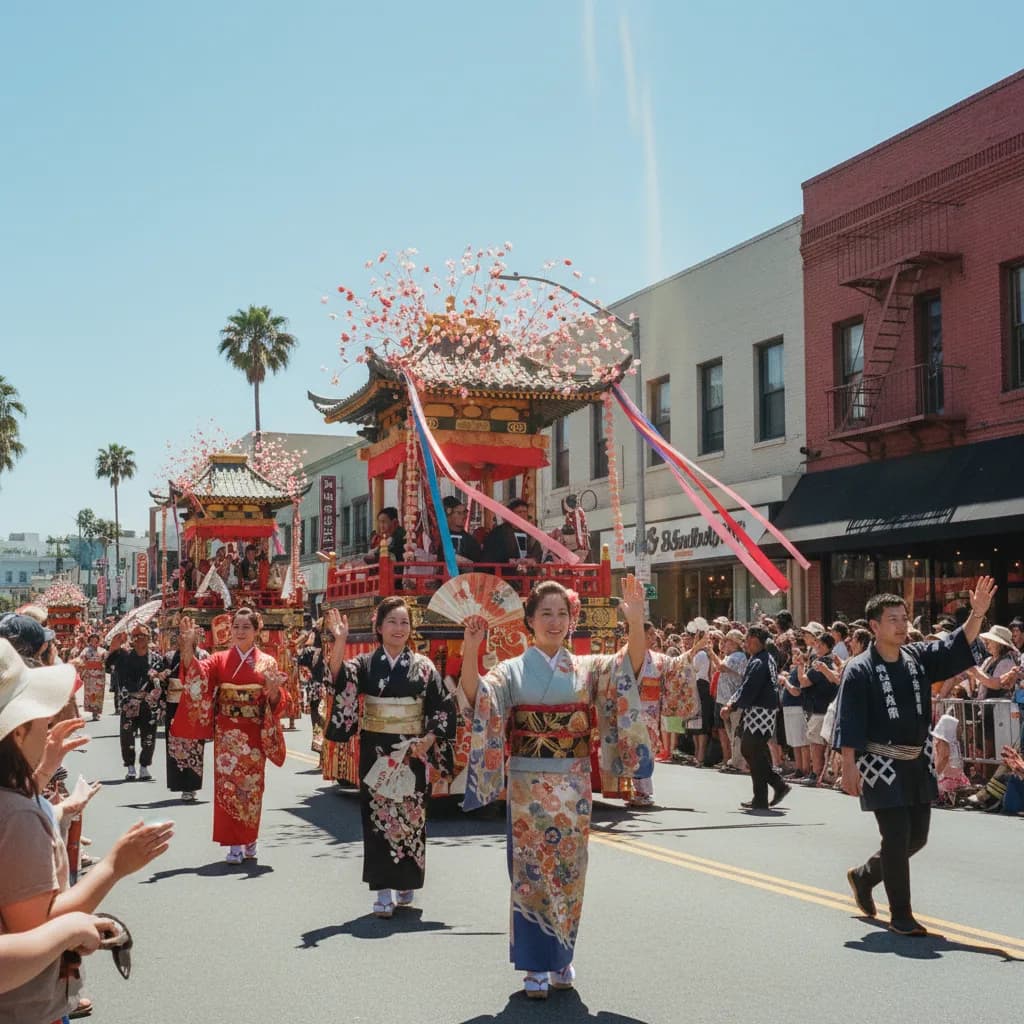
 Nisei Week Events: Little Tokyo's Enduring Japanese American Heritage Festival
Free Things to Do
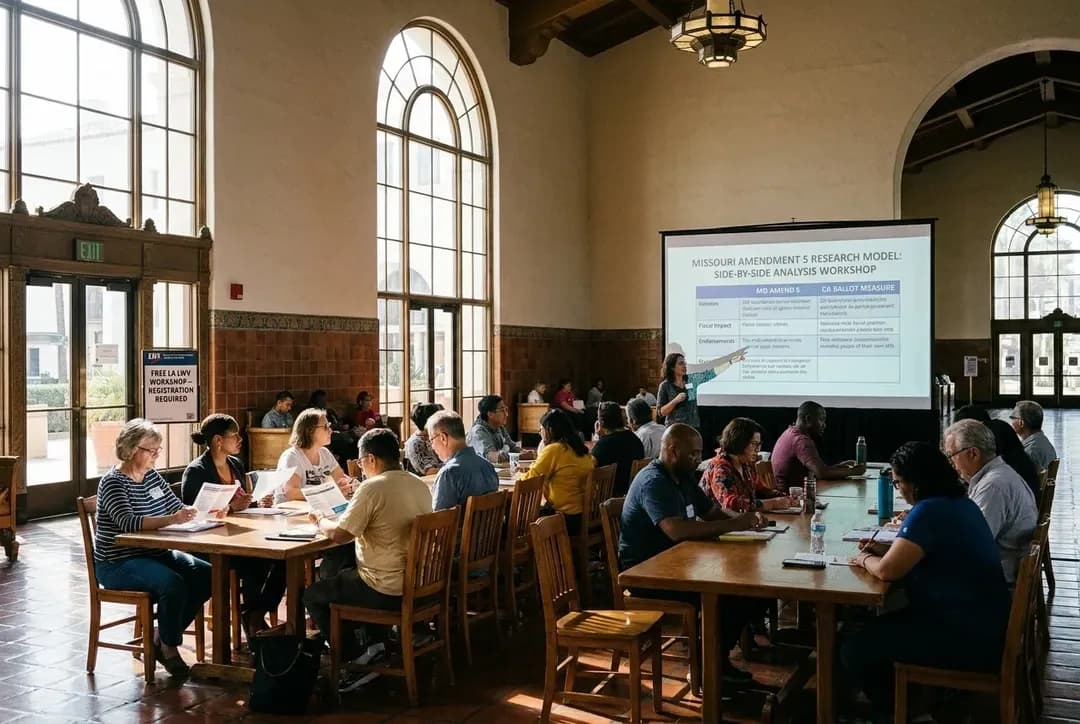
Missouri Amendment 5 Research Model: Free LA Ballot Measure Analysis Workshops
Free League of Women Voters workshops in Los Angeles teach ballot-measure analysis techniques inspired by national examples like Missouri Amendment 5. First-time voters and civics teachers can learn side-by-side comparison, fiscal-impact reading, and endorsement-source vetting in accessible weeknight sessions.
Voters overwhelmed by lengthy ballots can find clarity through free civic-skill workshops offered by the League of Women Voters in Los Angeles, where analysis techniques applied to measures like missouri amendment 5 serve as teaching models for understanding any ballot proposition. These beginner-friendly sessions, typically held on weeknights for approximately 75 minutes, walk participants through side-by-side comparison of competing measures, fiscal-impact statement interpretation, and endorsement-source vetting—skills transferable to California's own complex ballot landscape. The workshops suit solo learners or small groups, particularly first-time voters and civics teachers seeking structured methods to decode ballot language without partisan spin. Before attending, confirm whether the specific session focuses on California measures, uses out-of-state examples as instructional case studies, or blends both approaches, and verify whether advance registration is required or if walk-ins are welcome.
Text Karpo whether you're prepping for a California or out-of-state election, your biggest ballot confusion—fiscal notes, endorsements, or legal language—your free evening, and if you need childcare. We'll send you the next free LA ballot-measure workshop, what to bring, and a backup online guide if you can't make the session.
What the Workshop Format Teaches and Who Benefits Most
The core curriculum breaks ballot measures into three digestible components: the actual text and what it changes in existing law, the fiscal impact projections and their underlying assumptions, and the funding sources behind endorsement lists. Facilitators typically use a completed election—such as Missouri Amendment 5—as a neutral teaching example, walking participants through how to locate the official summary, cross-reference the full text, identify which government agencies prepared cost estimates, and trace whether endorsing organizations received funding from interested parties. This structured approach removes the pressure of analyzing a live election while building muscle memory for the research steps.
First-time voters gain confidence by practicing on a measure where the outcome is already known, eliminating fear of "getting it wrong." Civics teachers benefit from a replicable lesson plan they can adapt for classroom use, complete with handouts showing where to find Secretary of State resources, nonpartisan analysis from legislative analysts, and archived campaign finance reports. Solo attendees appreciate the quiet focus time, while small groups—such as book clubs or neighborhood councils—use the workshop to establish a shared vocabulary for future ballot discussions without devolving into partisan debate.
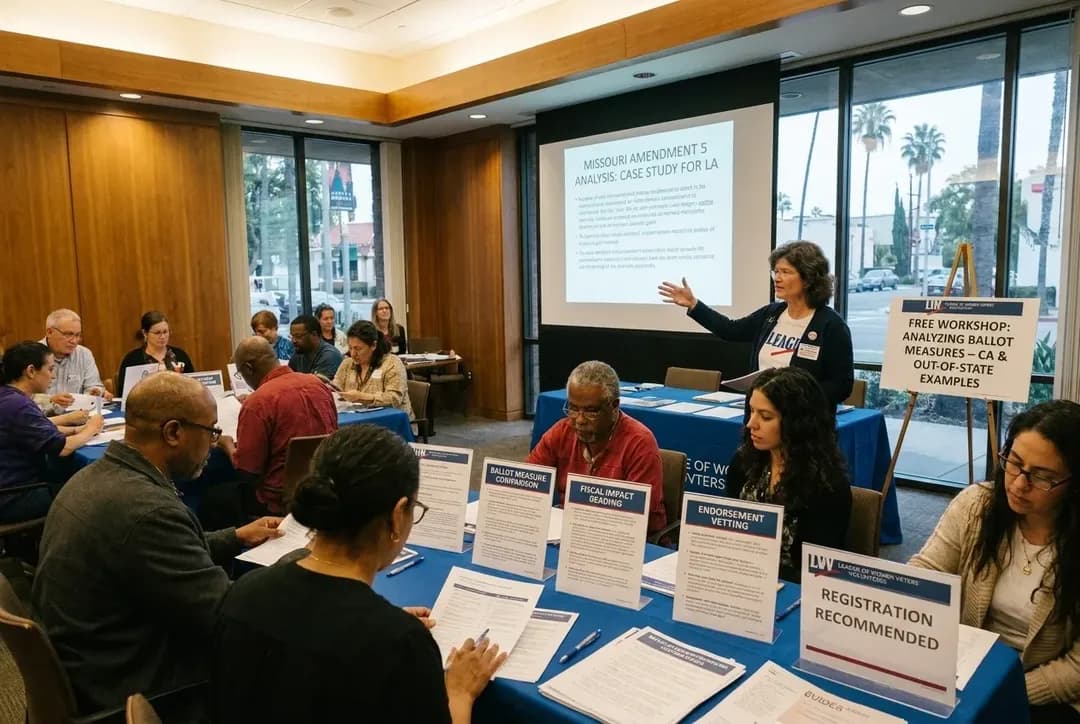
Verifying California Versus Out-of-State Focus Before You Attend
Not all League of Women Voters workshops use the same instructional model; some chapters prioritize California's upcoming ballot exclusively, while others use national examples like Missouri Amendment 5 to teach universal research skills before applying them locally. Before committing your weeknight, contact the hosting branch—many operate through local libraries listed on the Los Angeles Public Library events calendar or meet in community rooms accessible via Metro bus and rail—to ask whether the session will analyze California Proposition language or use out-of-state measures as practice scaffolding. This distinction matters if your goal is immediate preparation for an approaching election versus building long-term literacy.
If the workshop uses Missouri or another state's measures as teaching tools, ask whether handouts include parallel California examples or if participants are expected to bring a sample measure they want to understand. Some facilitators provide a side-by-side worksheet comparing a Missouri amendment's structure to a California proposition's layout, highlighting differences in fiscal impact formatting and endorsement disclosure rules. Others assume attendees will apply the generic skills independently after the session ends. Clarifying this upfront prevents the frustration of expecting a California-specific walkthrough and receiving a conceptual framework instead.
Registration Requirements and Typical Weeknight Logistics
Many League of Women Voters workshops require online registration to manage room capacity and ensure sufficient handout copies, though some library-hosted sessions operate on a first-come, first-served basis with a sign-in sheet at the door. Check the event listing—often found through the Los Angeles Public Library events page filtered by "Educational" category—for an RSVP link or contact email. Registration-required sessions sometimes close 24 hours before the start time, while walk-in events may fill all seats within the first ten minutes, especially in smaller branch libraries. Arriving fifteen minutes early secures a spot and allows time to review any pre-distributed materials.
Weeknight workshops typically run 75 to 90 minutes, starting between 6:00 PM and 7:00 PM to accommodate commuters. Plan your Metro trip using real-time arrival tools if relying on public transit; the system offers $1.75 regular fare with free transfers within two hours, and all buses and trains are wheelchair accessible. Bring a notebook or device for taking notes, though many facilitators provide printed worksheets. Some sessions include a 10-minute break midway, while others run continuously with Q&A reserved for the final 15 minutes. If attending solo, expect a mix of silent reading exercises and optional partner discussions; small groups can request adjacent seating when registering.
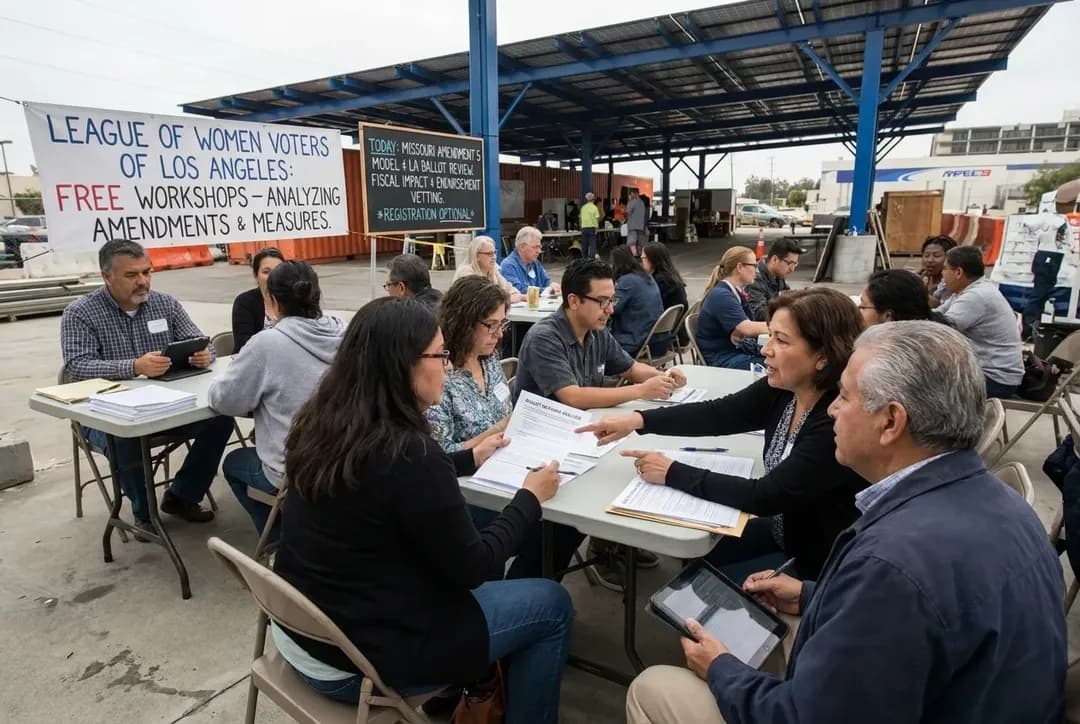
Tradeoffs Between Neutral Skill-Building and Immediate Election Prep
Workshops using completed out-of-state measures like Missouri Amendment 5 offer the advantage of hindsight: facilitators can show how pre-election fiscal estimates compared to actual implementation costs, or how endorsement patterns correlated with funding sources revealed in post-election finance reports. This retrospective lens builds critical thinking about the reliability of ballot arguments and the limitations of official summaries. However, the tradeoff is delayed application—you learn the method but must independently transfer it to California's current ballot, which may use different legal terminology or fiscal impact formats.
Conversely, workshops focused exclusively on California's upcoming measures provide immediate utility, walking through the exact propositions you'll face at the polls. Yet this approach can feel higher-stakes for beginners, who may worry about revealing political leanings when asking clarifying questions, even in a nonpartisan setting. Some attendees prefer the emotional distance of analyzing Missouri's amendment first, then tackling California measures in a second session once the research process feels automatic. Consider whether your 75-minute investment aims to build portable skills or to decode a specific ballot you'll encounter within weeks.
What to Do After the Workshop to Maintain Ballot Literacy
The workshop equips you with a research checklist, but sustaining the habit requires identifying go-to sources you'll consult for every election. Bookmark your county's official voter information page, the California Legislative Analyst's Office for impartial fiscal summaries, and the Secretary of State's campaign finance database for tracking endorsement funding. Many attendees create a simple spreadsheet template during the workshop—columns for measure number, official summary, fiscal impact range, top three funders for and against—then reuse it for each election cycle. This transforms a one-time learning event into a repeatable routine.
Civics teachers often request permission to record the workshop's framework (not the discussion) for later classroom reference, though policies vary by host organization. If recording isn't allowed, ask whether the facilitator can share a bibliography of nonpartisan analysis sources or a sample completed worksheet. Some League chapters offer follow-up "office hours" via Zoom where past attendees can ask questions about new measures using the skills learned. Connecting with other participants—especially those in your neighborhood or school—creates informal accountability for actually applying the research steps rather than letting the handout gather dust until the next election's final week.
Tags: #FreeThingstoDo #CivicEducation #VoterResources #LeagueofWomenVoters #BallotMeasures #Workshops #FirstTimeVoters #CivicsTeachers #WeeknightEvents #CommunityLearning
Sources consulted: Source 1: metro.net · Source 2: discoverlosangeles.com · Source 3: lacity.gov · Source 4: lapl.org
All trademarks are the property of their respective owners.
Ask Karpo first
Ask Karpo to turn this Los Angeles idea into a current plan for your date, budget, companion, transit preference, and energy level. Karpo can narrow the route and flag what to verify before you go.
Ask Karpo for more information.
Keep reading
- Nisei Week Events: Little Tokyo's Enduring Japanese American Heritage Festival
 Hollywood Forever Cemetery Events: Dia de los Muertos, Cinespia in Hollywood
 Unforgettable Free Summer Events: Grand Performances, California Plaza, Downtown LA