 Where to Eat Near Penn Station That Isn't a Chain
US Open 2026
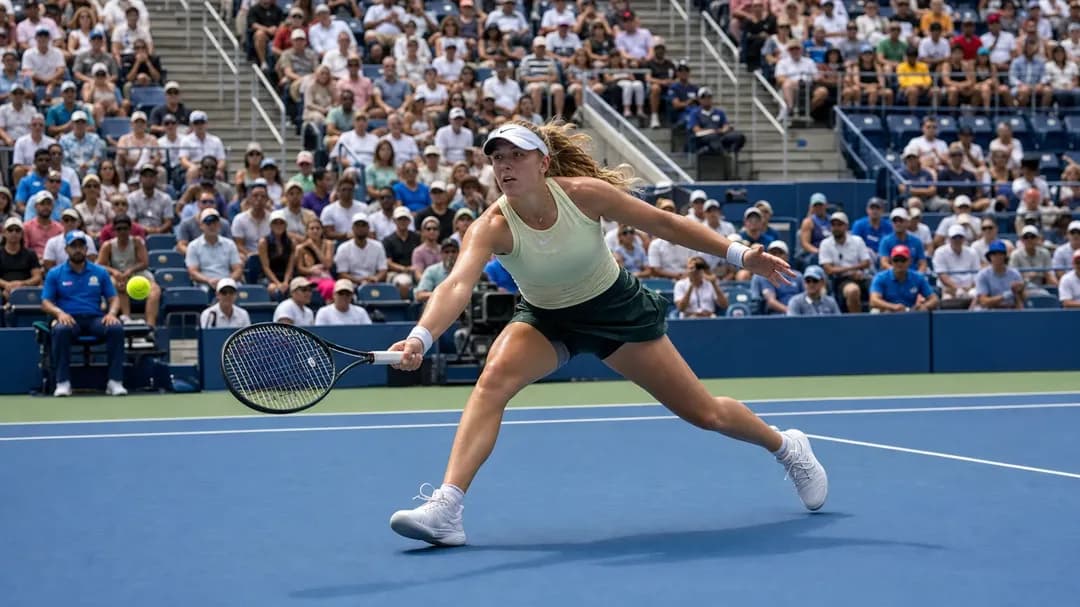
Mirra Andreeva’s US Open Challenge Against Elite Power Hitters
If Mirra Andreeva faces elite pace in New York, her court sense, defense, and controlled aggression would make the tactical battle especially compelling.
Mirra Andreeva’s possible US Open challenge against elite power hitters is best understood as a tactical question, not a prediction. Participation, draw placement, seedings, opponents, court assignments, and results must come from official tournament information, and none should be assumed in advance. What can be discussed fairly is the tennis problem her style would present on New York hard courts. Andreeva combines court sense, defense, and controlled aggression, a blend that can bother players who prefer first-strike tennis. Against the heaviest hitters, however, the issue is not simply whether she can trade hard groundstrokes. It is whether she can absorb pace, redirect it with purpose, protect her service games, and stay composed when rallies become shorter and margins shrink.
Text Karpo Now: Tell us what matters most for Mirra Andreeva s US Open Challenge, and Karpo can turn current US Open updates into a practical plan before you go.
The Pace Problem
Elite power hitters create pressure before the ball lands. Their pace takes time away, pushes returners behind the baseline, and turns neutral balls into defensive scrambles. On a hard court, that effect can be magnified because the bounce is reliable enough for aggressive players to step in and drive through the court. For Andreeva, the tactical goal would be to prevent pace from becoming rhythm. If she gives a big hitter the same rally ball repeatedly, the opponent can settle into clean contact. If she changes height, direction, depth, and tempo, power becomes less automatic.
Her court sense matters because this matchup is often decided by early recognition. A player facing heavy pace has to know when to block, when to counter, and when to buy time with a higher, deeper ball. Controlled aggression is the key phrase. Swinging bigger just to prove power rarely works against a player who already owns that lane. The better answer is selective offense: redirecting a crosscourt ball down the line, taking an early ball into space, or attacking only when court position is secure.
Serve And Return Patterns
The serve-return exchange would shape everything. If Andreeva were serving against an elite returner with major pace, she would need more than raw speed. Variety would be essential: body serves to jam the swing, wider serves to stretch the returner, and occasional serves toward the hip to prevent a full cut. The first ball after serve is just as important. A serve that produces a shorter middle return is only useful if the server steps in and chooses the right target. Against power, hesitation on that second shot can turn an advantage into a neutral rally.
- On serve, watch whether she earns neutral or attacking first balls rather than simply counting aces.
- On return, watch whether she blocks deep through the middle to take away immediate angles.
- On second serves, watch whether she steps forward early or protects court position first.
- After the return, watch who controls the first directional change of the rally.
On return, the challenge would be different. Against a huge first serve, the best return is sometimes not spectacular; it is deep, central, and annoying. A blocked return through the middle can deny the server the open angle for the next shot. Against second serves, Andreeva’s controlled aggression could become more visible. If she reads the toss and location early, she can move forward, take time away, and ask the server to defend immediately instead of starting the point on comfortable terms.
Movement Under Pressure
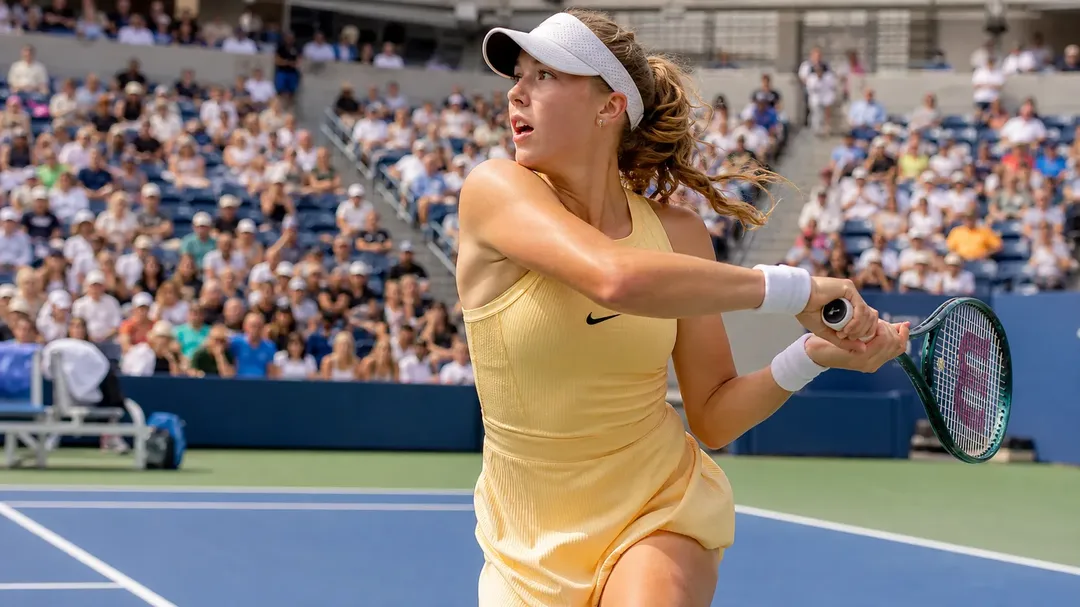
Defense against elite pace is not passive survival. It is organized movement. The first step has to be sharp, but the recovery step may matter even more. Power hitters often win by pulling an opponent wide, then finishing into the open court before the defender resets. Andreeva’s defensive ability would be valuable if she can extend points without surrendering the center too easily. The aim is not to retrieve forever. It is to force one extra strike from a player who expects the rally to be over.
New York hard-court geometry rewards players who understand space. A deep crosscourt ball buys time because it travels over the lower part of the net and pushes the opponent farther from the middle. A down-the-line change is more dangerous but can flip the rally if executed from balance. Against power, Andreeva would need to choose those changes carefully. If she redirects too early from a stretched position, she can open the court for the opponent. If she waits too long, she may never get a ball she can attack.
Footwork also affects shot tolerance. Heavy pace can make a player late by inches, not feet. Small adjustment steps before contact help turn defense into a controlled response instead of a framed ball. Fans should look at her spacing on the backhand side, her recovery after wide forehands, and whether she can regain a balanced base after being pushed behind the baseline. Those details often reveal more than a highlight winner.
Pressure And Shot Selection
The mental piece is practical, not mystical. Against big hitters, scoreboard pressure can make a player rush because points feel as if they are being decided too quickly. Andreeva’s challenge would be to separate urgency from panic. There are moments when she must take the ball earlier and accept risk, especially on short balls. There are also moments when patience is the attacking choice, because a deep neutral ball can draw the next error or create a better opening.
Fans can read pressure through patterns. If she repeatedly goes for low-percentage winners from deep positions, the power on the other side may be dictating her decisions. If she defends with depth, resets the rally, and then attacks a shorter ball, she is managing the pace rather than merely reacting to it. The best counterpunching performances usually include both restraint and courage. Too much restraint lets the power hitter walk forward. Too much courage turns the match into a hitting contest on the opponent’s terms.
- A strong sign: deep middle balls that stop the opponent from opening easy angles.
- A warning sign: rushed down-the-line attempts from well behind the baseline.
- A strong sign: early recognition of short balls and decisive forward movement.
- A warning sign: second-serve points beginning with immediate defensive scrambling.
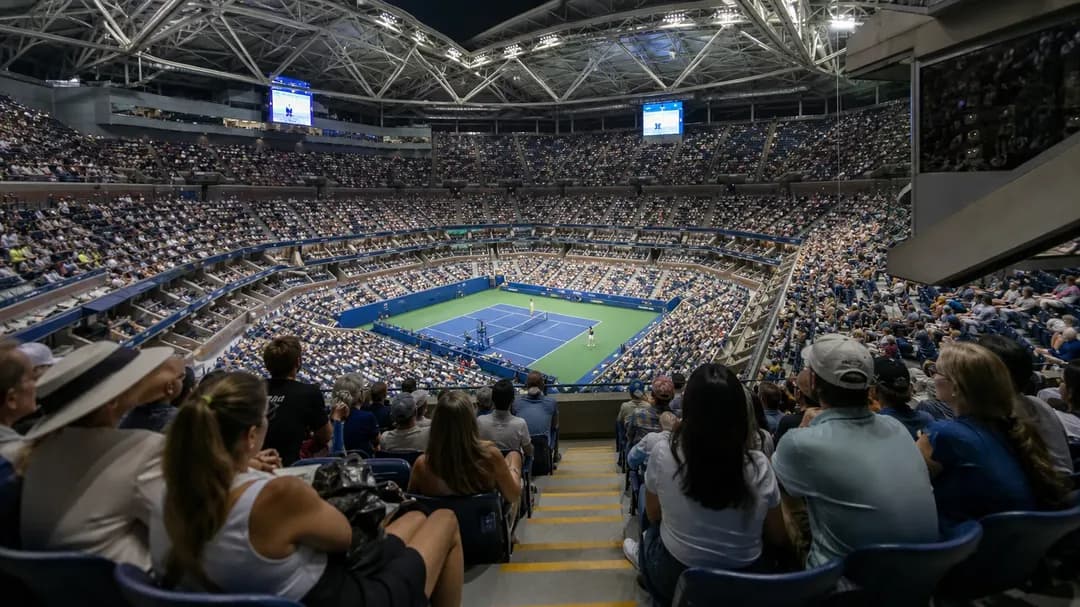
The crowd can influence that balance. New York rewards bold shot-making, and the noise around a momentum swing can make every point feel bigger. A young player with good court sense still has to manage tempo between points, choose serve locations clearly, and avoid being dragged into the opponent’s preferred speed. If Andreeva were in that environment, her ability to stay tactically disciplined after a flashy winner or a frustrating error would be one of the most important things to watch.
Practical Notes
For fans planning around the US Open, treat this as a tactical lens, not a schedule promise. Official tournament listings are the proper place to confirm entries, court assignments, and match times, because those details can change through the tournament process. If Andreeva is listed and this matchup style appears, seats behind the baseline make serve patterns, depth, and recovery movement easier to see. Side-court views are better for judging net clearance and how far a player is pulled wide. Warmups can also offer clues: return positioning, serve targets, and first-strike practice often preview the match plan before the first point.
Tags: #USOpen2026 #Tennis #GrandSlam #NewYorkTennis #ArthurAsheStadium #FlushingMeadows #USOpenGuide #TennisFans #SportsTravel #HardCourt #NewYork #KarpoFinds
Sources consulted: wtatennis.com — Official reference · usopen.org — Official reference · usopen.org — Official reference
All trademarks are the property of their respective owners.
Ask Karpo first
Want to know what is confirmed, when to show up, and how to make mirra andreeva s us open challenge work for your day? Ask Karpo for current US Open updates, a respectful fan plan, and a live route around Flushing Meadows.
Ask Karpo for more information.
Keep reading
- Where to Eat Near Penn Station That Isn't a Chain
 Andytown Coffee in the Outer Sunset: The Snowy Plover Explained
- Best Things to Do in Chicago: What the City Gives Away