 Where to Eat Near Penn Station That Isn't a Chain
US Open 2026
Minnesota Juárez Soccer Scarf Vendors Near US Open
A practical guide to finding team scarves, soccer merchandise, and street-market energy along the 7 train corridor during US Open fortnight.
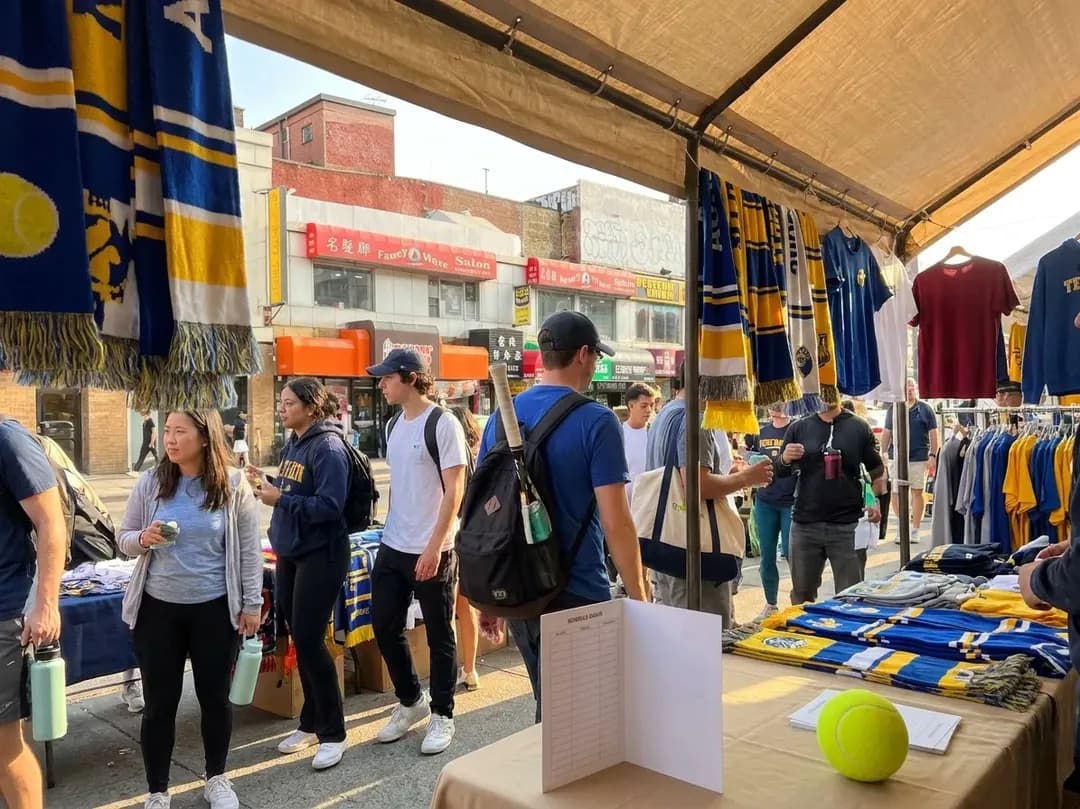
When the US Open draws tens of thousands of visitors to Flushing Meadows each August and September, the 7 train corridor transforms into a buzzing marketplace. Street vendors set up near subway exits, park entrances, and pedestrian bridges, offering everything from counterfeit visors to hand-painted signs—and, increasingly, soccer scarves bearing the colors of clubs far from the tennis courts. The Minnesota United and Club Juárez trend keyword might seem distant from the US Open, but it highlights a broader reality: Queens is a global crossroads, and the vendors who line Roosevelt Avenue, Willets Point Boulevard, and the paths around Citi Field know their audience. Soccer fans, tennis fans, and curious locals all pass through the same sidewalks, and the merchandise reflects that mix. If you're planning a US Open visit in 2026 and want to understand the informal economy that springs up around major events, this guide will help you navigate the street-market scene with respect, curiosity, and a practical eye.
Text Karpo with your US Open session time and Queens starting point, and we’ll turn this Street market stalls selling team merchandise and custom scarves in Queens during tournament week into a practical local plan.
Why Soccer Scarves Show Up Near a Tennis Tournament
Queens is home to one of the most diverse populations in the United States, and Flushing Meadows Corona Park sits at the heart of neighborhoods where Spanish, Mandarin, Korean, Hindi, and dozens of other languages are spoken daily. The vendors who work the US Open crowds aren't just selling tennis visors—they're responding to the full spectrum of passersby. Soccer scarves, especially those representing Liga MX clubs or MLS teams with passionate followings, are a natural fit. A vendor might stock Juárez scarves alongside NYCFC gear, Minnesota United colors next to generic "I ♥ NY" hats, because the foot traffic includes fans heading to or from Citi Field, families visiting the Queens Museum, and tennis spectators killing time before an evening session. The keyword pairing of Minnesota and Juárez might reflect a scheduling quirk, a trade rumor, or simply algorithmic noise, but it underscores a truth: the merchandise landscape around Flushing Meadows is as international and unpredictable as the borough itself.
Where Vendors Cluster Along the 7 Train Route
The 7 train is the primary artery for US Open visitors, and vendors know the chokepoints. Mets–Willets Point station, the official stop for both the tennis center and Citi Field, sees the heaviest concentration. On tournament days, you'll find stalls on the pedestrian bridge leading to the park, along the sidewalks near the station entrance, and in the plaza areas where crowds funnel toward the gates. But the market extends beyond that single stop. In Jackson Heights, vendors set up near the Roosevelt Avenue–74th Street hub, where the E, F, M, and R trains intersect with the 7. In Flushing, the Main Street terminus becomes a staging ground for fans heading to the park by bus or on foot. And in Corona, the 103rd Street–Corona Plaza stop often hosts smaller, more neighborhood-focused stalls that cater to locals as much as tourists. Each location has its own rhythm, and the merchandise mix shifts accordingly—closer to the stadium, you'll see more event-specific gear; deeper into the neighborhoods, the offerings reflect the community's everyday interests, including soccer.
What to Expect from Street Vendors
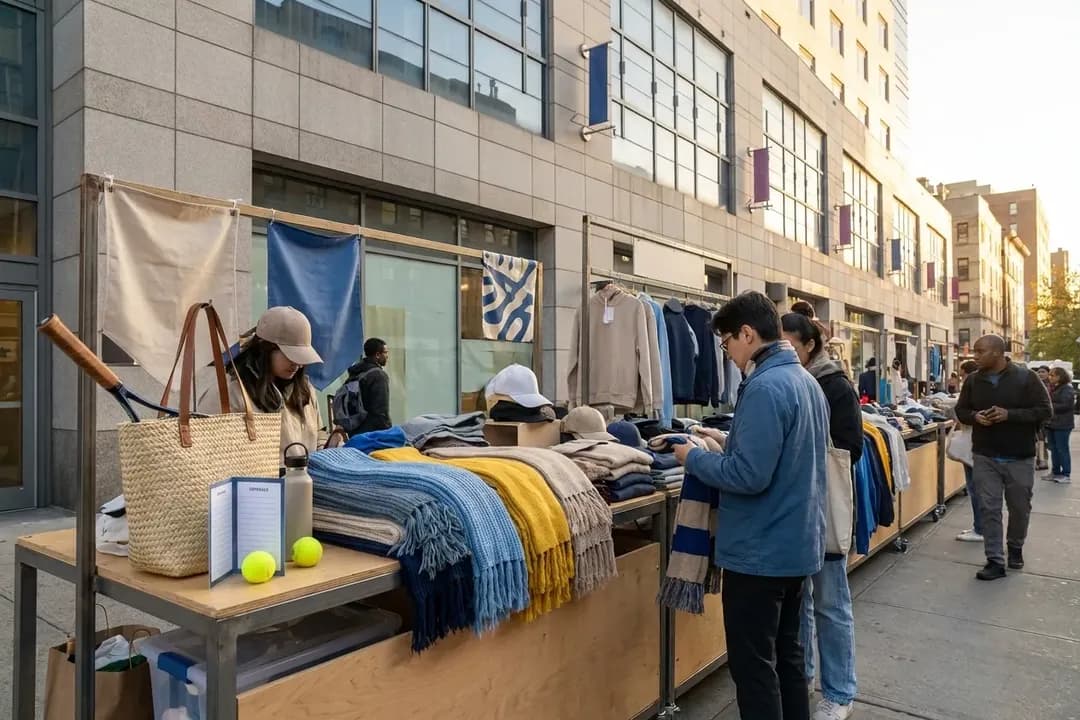
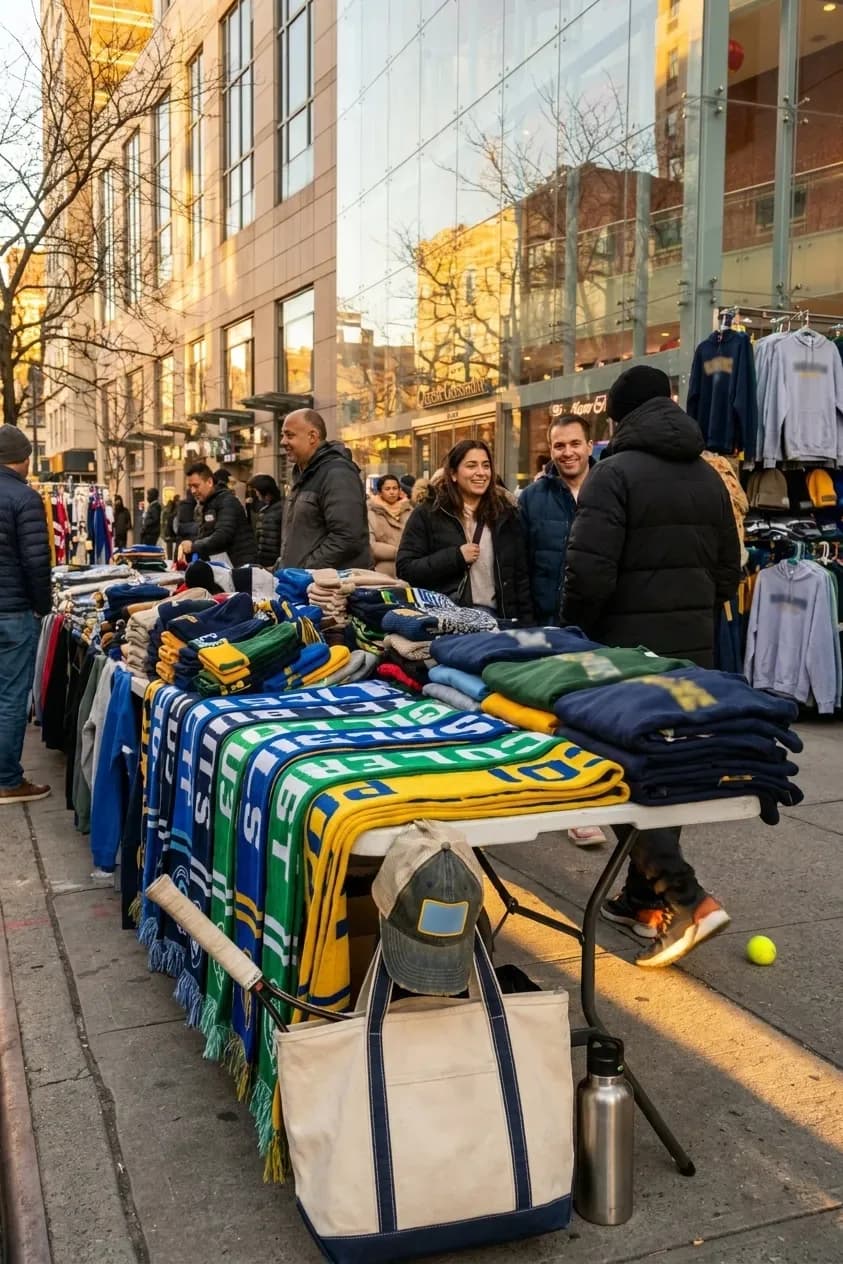
Street vending in New York City operates under a complex web of regulations, and not every stall you encounter will have a visible permit. The NYC Department of Consumer and Worker Protection oversees general vending licenses, but enforcement is uneven, and the US Open's arrival often brings a surge of informal sellers. Quality varies widely. Some vendors offer well-made scarves with accurate team colors and logos; others sell items that are clearly unlicensed, with misspelled names or faded prints. If you're buying a soccer scarf as a souvenir or a gift, inspect the stitching, check the fabric weight, and ask questions. Many vendors are happy to negotiate, especially late in the day or if you're buying multiple items. Cash is almost always preferred, and you shouldn't expect receipts or returns. The experience is part of the texture of a big New York event, but it's not a retail transaction in the traditional sense. Approach it with curiosity and a sense of humor, and you'll likely walk away with a story as much as a scarf.
Timing Your Visit Around Vendor Hours
Vendors typically arrive a few hours before the first US Open session of the day and stay until the evening crowds thin out. If you're planning to browse, aim for mid-morning or early afternoon, when stalls are fully set up but not yet mobbed. The official US Open schedule, available at usopen.org, will help you anticipate peak foot traffic—day sessions usually start around 11 a.m., and night sessions begin at 7 p.m., so the heaviest vendor activity clusters around those windows. On weekends and during the tournament's second week, when the draw narrows and crowds swell, expect longer lines and picked-over inventory. If you're hoping to find a specific team's scarf, your best bet is to visit early in the tournament week, when vendors are still testing their stock and adjusting to demand. And remember: the vendors near Willets Point are there for the tennis crowd, but the ones deeper into Jackson Heights or Flushing are serving their neighborhoods year-round, so their hours and offerings may be less tied to the tournament schedule.
Navigating the 7 Train Corridor with Vendor Stops in Mind
If you're treating the US Open as a jumping-off point for a broader Queens exploration, the 7 train offers a natural route. Start in Long Island City, where you can visit MoMA PS1 or grab coffee near the waterfront, then ride east through Woodside and Jackson Heights, pausing to browse vendor stalls and sample street food. Continue to Corona, where the Queens Museum and the Unisphere provide a pre-tennis cultural interlude, then head to Willets Point for the tournament itself. After your session, ride the 7 to Flushing, where the night markets and dumpling houses offer a completely different energy. The MTA's official US Open transit guide, available at new.mta.info, provides real-time service updates and accessibility information, and it's worth checking close to your visit—weekend track work and special event schedules can shift travel times. The vendor landscape is woven into this corridor, and treating it as part of the journey rather than a distraction will enrich your sense of Queens as a living, working, endlessly surprising place.
Respecting the Informal Economy
Street vending is a livelihood for many New Yorkers, and the US Open represents a rare opportunity to earn significant income in a compressed window. When you buy a scarf or a hat from a vendor, you're participating in an economy that operates outside the official tournament infrastructure. That comes with trade-offs: no promise, no corporate polish, but also a directness and hustle that feels quintessentially New York. If you're not interested in buying, a polite "no, thank you" is sufficient—vendors are used to rejection and won't take it personally. If you are interested, treat the transaction with the same respect you'd offer any small business owner. Don't haggle aggressively, don't photograph vendors without asking, and don't assume that because the setting is informal, the work is any less real. The scarves, hats, and signs you see are part of a larger story about immigration, entrepreneurship, and the ways New Yorkers make space for themselves in a city that doesn't always make it easy.
Practical Notes for Vendor Browsing
- Bring small bills—most vendors don't carry much change, and card readers are rare.
- Check the US Open's prohibited-items list at usopen.org before buying anything you plan to bring into the grounds; large bags and certain accessories aren't allowed.
- If you're buying a scarf as a gift, ask the vendor to wrap it in a plastic bag to keep it clean during your visit.
- Vendor inventory shifts daily, so if you see something you like, don't assume it will be there on your return trip.
- The pedestrian bridge at Willets Point can get congested; if you're browsing, step to the side to let others pass.
- For official US Open merchandise, the tournament's retail shops inside the grounds offer licensed gear with predictable quality and return policies.
- The NYC Department of Consumer and Worker Protection's website, nyc.gov/site/dca, provides information on vending regulations and how to report unlicensed activity if you encounter issues.
Tags: #USOpen2026 #Queens #FlushingMeadows #KarpoFinds #Karpo #minnesota-juárez #NewYorkLocal #TennisTravel #NYCLocalLife #TennisTravel
Sources consulted: usopen.org — Official event schedule · usopen.org — Official visitor A-Z guide · usopen.org — Official transportation directions · usopen.org — Official prohibited-items guide · MTA — Official US Open transit guide · NYC Parks — Flushing Meadows Corona Park · NYC Tourism — Queens · NYC Department of Consumer and Worker Protection
All trademarks are the property of their respective owners.
Ask Karpo first
Want to know what is actually open, how to time the trip, and where to pause around Queens? Ask Karpo for the latest public US Open context, a respectful visitor plan, and a live route around Flushing Meadows before you head out.
Ask Karpo for more information.
Keep reading
- Where to Eat Near Penn Station That Isn't a Chain
 Andytown Coffee in the Outer Sunset: The Snowy Plover Explained
- Best Things to Do in Chicago: What the City Gives Away