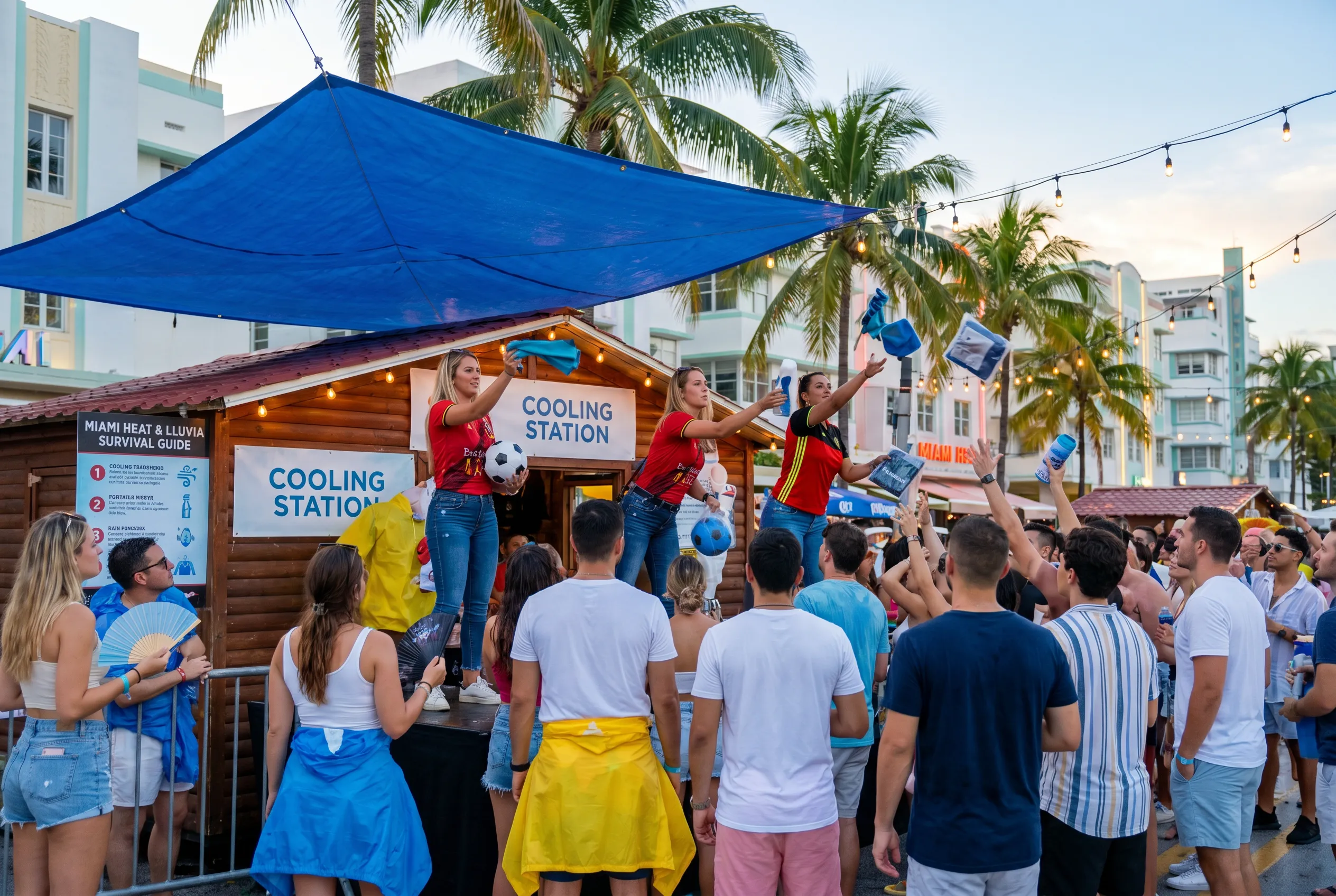
Miami will welcome the world during the 2026 FIFA World Cup, but the city's subtropical climate presents unique challenges for visitors unfamiliar with South Florida's weather patterns. Summer temperatures routinely climb into the low 90s Fahrenheit, while humidity levels make it feel considerably hotter. Afternoon thunderstorms arrive with little warning, and lightning strikes pose serious risks in open areas like stadium parking lots and fan zones. Whether you're attending matches at Hard Rock Stadium in Miami Gardens or exploring the city between games, understanding how to prepare for heat, humidity, and sudden lluvia will make your World Cup experience safer and more enjoyable.
Planning your match-day strategy around Miami's unpredictable weather? Text Karpo for a personalized itinerary that accounts for indoor cooling breaks, covered transportation options, and backup plans when afternoon storms roll in. We'll help you time your stadium arrival, suggest climate-controlled activities near your hotel, and map out the closest shelters along your route so you can focus on the beautiful game instead of the forecast.
Understanding Miami's Heat Index
The heat index combines air temperature and relative humidity to reflect how hot conditions actually feel to the human body. During June and July, when World Cup matches are scheduled, Miami's heat index frequently exceeds 100 degrees Fahrenheit even when the thermometer reads 92 degrees. This occurs because high humidity prevents sweat from evaporating efficiently, reducing your body's natural cooling mechanism. The National Weather Service Miami issues heat advisories when the heat index is expected to reach 108 degrees or higher for at least two hours, and excessive heat warnings when it climbs to 113 degrees or above.
Visitors from cooler climates should acclimate gradually rather than spending entire days outdoors immediately upon arrival. Symptoms of heat exhaustion include heavy sweating, weakness, cold and clammy skin, a fast but weak pulse, nausea, and fainting. Heat stroke is more severe and life-threatening, marked by a body temperature above 103 degrees, hot and dry skin, a rapid and strong pulse, and possible unconsciousness. If you or someone in your group shows signs of heat stroke, call emergency services immediately and move the person to a cooler environment while waiting for help.
Hydration and Sun Protection Strategies
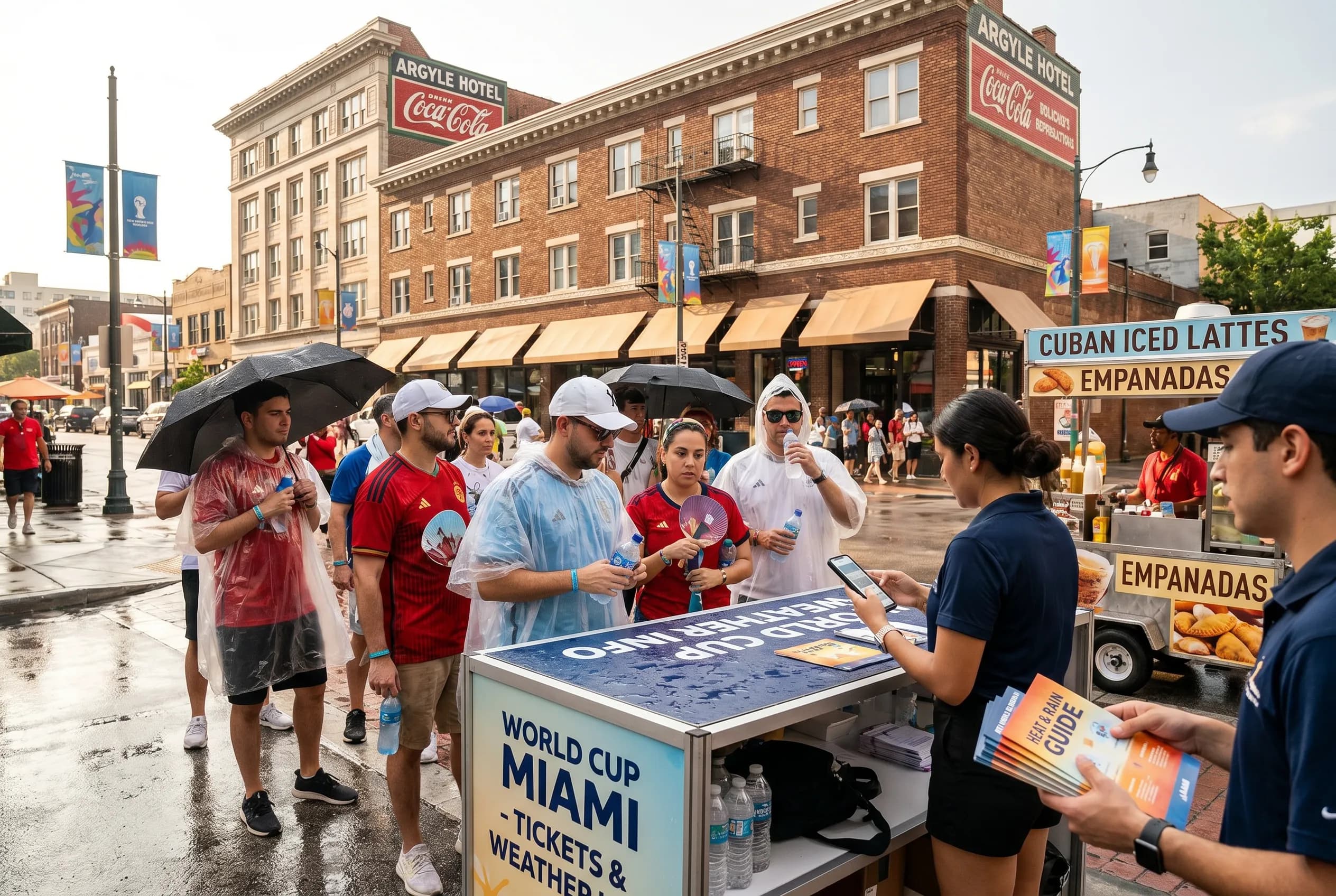
Proper hydration begins well before you arrive at Hard Rock Stadium. Drink water consistently throughout the day rather than waiting until you feel thirsty, as thirst indicates you're already mildly dehydrated. The stadium allows sealed, clear plastic bottles of water, but check current policies before your match day as regulations may evolve. Avoid alcohol and caffeine in the hours leading up to outdoor activities, as both promote dehydration. For Spanish-speaking visitors accustomed to different climate patterns, remember that Miami's combination of heat and humidity requires more frequent water intake than drier environments at similar temperatures.
Sunscreen with SPF 30 or higher should be applied 30 minutes before sun exposure and reapplied every two hours, or more frequently if you're sweating heavily. Wide-brimmed hats provide shade for your face and neck, though stadium security may restrict hat brims that obstruct other spectators' views. Lightweight, light-colored, loose-fitting clothing made from breathable fabrics helps your body regulate temperature more effectively than dark or tight garments. Polarized sunglasses reduce glare from stadium surfaces and protect your eyes from UV radiation during day matches.
Lightning Safety Around Hard Rock Stadium
South Florida ranks as one of the most lightning-prone regions in the United States, with the majority of strikes occurring between noon and 6 PM from June through September. The National Weather Service follows the 30-30 rule: seek shelter if you count fewer than 30 seconds between seeing lightning and hearing thunder, and wait at least 30 minutes after the last thunder before resuming outdoor activities. Hard Rock Stadium has lightning detection systems and established protocols for clearing the field and stands when strikes occur within a certain radius, though these delays can extend your time at the venue significantly.
If you're caught in a parking lot or open area when a storm approaches, get inside a hard-topped vehicle immediately and avoid touching metal surfaces. Do not shelter under isolated trees, which attract lightning strikes. If no substantial shelter is available and you feel your hair stand on end—indicating an imminent strike—crouch low on the balls of your feet with your head tucked and hands covering your ears, minimizing your contact with the ground. Fan zones and outdoor viewing areas should be evacuated at the first sign of lightning, so have an indoor backup location identified before severe weather develops.
Preparing for Sudden Lluvia
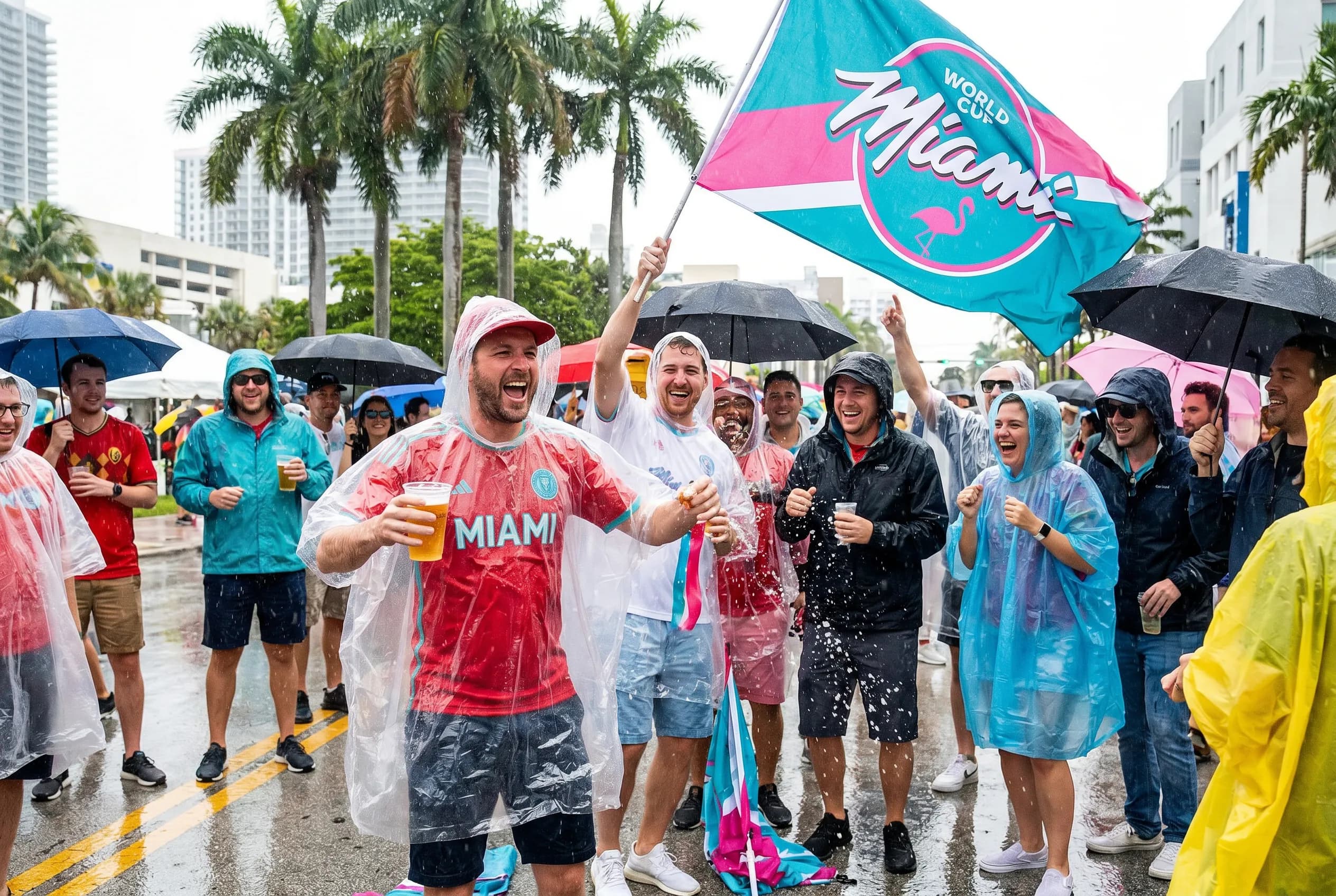
Miami's summer lluvia typically arrives in the form of intense but short-lived thunderstorms rather than all-day drizzle. These storms develop rapidly as morning sunshine heats the land, creating convection currents that build towering cumulus clouds by early afternoon. A sky that looks clear at 2 PM can produce heavy rain and lightning by 3 PM, then clear again by 5 PM. This pattern repeats almost daily during summer months, making afternoon storms predictable in general timing but difficult to pinpoint by exact location and hour.
Pack a lightweight, packable rain jacket or poncho that fits easily in a small bag. Ponchos are particularly useful at the stadium because they cover both you and your belongings without requiring you to hold an umbrella, which may be prohibited or impractical in crowded seating areas. Waterproof phone cases or resealable plastic bags protect electronics and important documents like match tickets and identification. Wear closed-toe shoes with good traction, as stadium concourses and stairs become slippery when wet. If you're using rideshare services, expect longer wait times and surge pricing immediately after storms when everyone requests rides simultaneously.
Indoor Cooling Strategies Between Matches
Miami's extensive air-conditioned infrastructure makes it easy to escape the heat between matches and during the hottest part of the day. Shopping centers like Aventura Mall and Dolphin Mall offer climate-controlled environments with dining options, entertainment, and places to rest without pressure to make continuous purchases. Museums including Pérez Art Museum Miami and the Frost Science Museum provide cultural experiences in cool comfort. Many hotels welcome non-guests in their lobbies and restaurants, though purchasing a beverage or snack is courteous if you plan to stay for an extended period.
The Metromover in downtown Miami is free and fully air-conditioned, offering a practical way to travel short distances while cooling down. Metrorail trains connecting to Hard Rock Stadium via the Orange Line and shuttle buses are also climate-controlled. Time your outdoor activities for early morning or evening when temperatures drop slightly and the sun's angle is less intense. If your schedule requires midday outdoor time, break it into shorter segments with cooling breaks every 30 to 45 minutes rather than spending multiple consecutive hours in direct sun and heat.
Real-Time Weather Resources
The National Weather Service Miami website provides detailed forecasts, radar imagery, and active weather alerts specific to South Florida. Their mobile-friendly site updates frequently and includes heat index predictions, lightning probability, and storm timing estimates. Download the NWS mobile app before your trip so you can check conditions without using significant data or relying on hotel WiFi. Local television stations WSVN, WPLG, and WFOR maintain weather apps with push notifications for severe weather warnings, though these may include advertising and less technical detail than NWS products.
Hard Rock Stadium's official website and social media channels post weather-related updates affecting match schedules, gate opening times, and safety procedures. Sign up for text alerts from the stadium if that service is offered for your specific match. Monitor conditions starting the morning of your match day rather than relying solely on forecasts made days in advance, as Miami's localized storm patterns can shift significantly in 24 hours. If severe weather is forecast for your match time, have a backup plan that includes knowing where you'll shelter, how you'll get updates, and what your transportation options are if the match is delayed or postponed.
Tags: #WorldCup2026 #Miami #HardRockStadium #WeatherGuide #TravelSafety #SummerTravel #LightningSafety #HeatSafety
Sources consulted: National Weather Service Miami · Hard Rock Stadium
All trademarks are the property of their respective owners.
Ask Karpo First
Ready to build a weather-smart World Cup itinerary that keeps you cool, dry, and safe throughout your Miami visit? Text Karpo with your match schedule and hotel location, and we'll create a personalized plan with climate-controlled activities, optimal travel timing to avoid afternoon lluvia, and emergency shelter locations along your routes. Let us handle the weather logistics so you can concentrate on experiencing the world's greatest sporting event.